AI Is the New Shelf Space: A Deep Read of Practical Ecommerce and What Brands Should Do Now
AI has become the new shelf brands compete on. We unpack Practical Ecommerce's argument, layer it with Salesforce, Mirakl and Bessemer data, and translate it into a concrete GEO and agent-ready playbook.

Key Takeaways
- Practical Ecommerce argues that the AI shopping conversation itself is the new shelf space. The brand's job is unchanged, but the competitors and the judge have been swapped out for an LLM.
- In the US, 42 to 60 percent of consumers have already started shopping through AI. Cyber Week 2025 saw AI-related traffic up 670 percent year over year, with AI agents influencing $67B in sales.
- Yet a Mirakl audit found that less than 1 percent of product pages clear the bar for LLM readiness. Brands that fix structured data, attribute coverage and reviews are the ones that will own the best spots on the AI shelf.
AI Shopping Is Now Another Shelf
AI shopping is akin to physical shelf space, a place where brands compete for visibility and consideration.
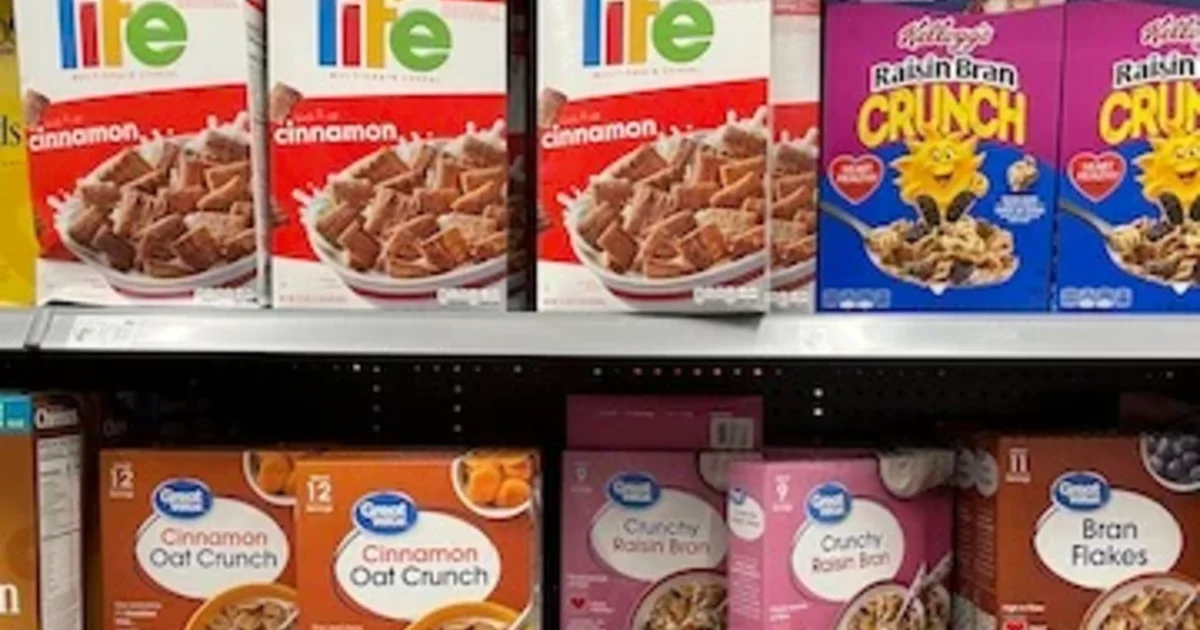
www.practicalecommerce.comOn May 31, 2026, Practical Ecommerce published a sharp piece by Armando Roggio that has been circulating quietly through commerce circles. The thesis is clean. Consumer brands have spent decades fighting for shelf space. The venue kept changing — craft fair, grocery aisle, search results — but the goal stayed the same: occupy the place where a buying decision gets made. In 2026, Roggio argues, the next venue is AI.
The piece cites a CapitalOne Shopping fact sheet showing that nearly 60 percent of consumers have used AI to shop, and a NielsenIQ survey finding that 42 percent of US consumers used at least one AI tool to shop in the past month. Salesforce's Cyber Week 2025 data puts a dollar figure on the trend: AI and agents influenced $67B in global sales, and AI-related traffic was up 760 percent year over year. AI shopping is no longer "coming soon." It is already the fastest-growing shelf in commerce.
The Three Battles Roggio Defines
Roggio sharpens the shelf metaphor into three classic battles:
- Getting on the shelf
- Securing a favorable position
- Persuading shoppers to choose you over alternatives
He then maps the same three battles onto the AI shelf. Being recognized by the AI, landing inside the answer or the citation slot, and being the one the AI ultimately recommends. Skip any of the three and you simply do not exist to the buyer.
A quote from Wayvia CEO Anthony Ferry, who Roggio interviews, captures it neatly: "The role of the brand is the same — advertise and promote to people and retailers. What is new is that the job now includes educating LLMs to recommend the brand's products over competitors'." The audience for brand marketing has expanded from consumers and retail buyers to include a third actor: the machine judge.
The Numbers Behind the AI Shelf
Practical Ecommerce stays mostly conceptual, so it is worth layering on the data that shapes the rest of the discussion.
Salesforce and Adobe published striking metrics from Cyber Week 2025. AI agent traffic converted roughly 8x higher than social media traffic. Retailers using AI agents posted 13 percent sales growth that week, while peers without AI saw just 2 percent.
From a different angle, Bessemer Venture Partners' late-2025 report Agentic Commerce: The Rise of the Delegated Buyer predicted that subscriptions and routine restocks would be the first place full delegation to AI takes hold. In Roggio's vocabulary, the last stage of the shelf — the moment a human reaches for a box — is the one most likely to disappear first. Weekly grocery orders and subscription refills are where consumer attention exits the buying loop, and where ads on screens stop being enough.
The AI Shelf Plays by Different Rules Than SEO
It is worth stepping back to compare with SEO. Traditional ecommerce SEO was linear: rank equals visibility equals traffic. Top ten results, with a clear payoff for moving up the list.
AI answers do not work that way. Instead of ten results, the model returns one recommendation, or three to five candidates. A recent Hubspot analysis found that 83 percent of products surfaced in ChatGPT shopping carousels matched the top 40 Google Shopping organic listings. The SEO foundation still matters, but anyone outside the top 20 of search faces an even harsher zero-result reality inside AI answers.
The mechanics also shift. Mirakl's GEO Readiness Analyzer report, published in April 2026, scanned hundreds of product pages across 35 countries. The average score was 48 out of 100. The bar at which AI agents reliably surface a product is 80 — and less than 1 percent of pages cleared it. Some 43 percent of pages had no reviews, ratings or Q&A at all. 86 percent shipped images that AI could not properly read. Only 9 percent provided machine-readable structured data for price, size and availability.
Translated into Roggio's metaphor: 99 percent of brands are stuck at step one. They are not even on the AI shelf yet.
Five Signals That Get You on the AI Shelf
So what actually moves the needle? Reading Roggio alongside Mirakl, Adobe and Bessemer, five signals consistently show up as the things AI weighs when picking a product. We mapped them against the physical-shelf equivalents.
| Signal | Physical shelf / SEO equivalent | What to do on the AI shelf |
|---|---|---|
| Structured data | Shelf tag / SKU | Full Schema.org Product / Offer / Review / FAQ markup |
| Attribute completeness | POP spec sheet | Size, material, use cases, compatibility — enough that AI never has to ask back |
| Reviews and third-party mentions | Word of mouth, magazine coverage | Owned reviews plus first-party mentions on Reddit, YouTube and trade media |
| Inventory and price freshness | Restock cadence | Real-time inventory APIs, machine-readable price and shipping data |
| Agent readiness | Fixtures and planogram contracts | Support for ACP / UCP / MCP and Trusted Agent signature verification |
The first two carry the most weight. A product page with full Schema.org Product, Offer, Review and FAQ markup, plus attributes detailed enough to remove ambiguity, dramatically lifts the chance that an AI judges the page "complete enough to answer the question." The HubSpot and Backlinko guides land on the same conclusion: AI hates ambiguity. Missing sizes, unclear compatibility, abstract use cases — these cause models to drop a candidate rather than ask the user a clarifying question.
Reviews and third-party mentions deserve attention too. The Mirakl finding that 43 percent of pages have zero reviews is just as much an opportunity statement: getting any meaningful review volume puts you in the top half of the universe. Reddit, YouTube and trade media first-party coverage carry weight far out of proportion to traffic, because they are the corpora the models actually train and ground on.
The 30-Channel Budget Problem
The other point Ferry raises in the piece is budget fragmentation. The TV-radio-print era collapsed into a single "internet" decision. The internet then fractured into search, social and marketplaces. Now generative AI is layered on top. As Ferry puts it, there are now roughly 30 channels.
The practical question for brand teams is which of the 30 deserve incremental dollars. The AI shelf is new enough that attribution is still messy. But when the Salesforce numbers show 8x conversion and a 6.5x sales-growth gap between AI-ready and AI-laggard retailers, the case for putting test budget against it is hard to dismiss.
The twist is that AI-shelf spend looks less like advertising and more like data and content investment. You generally cannot buy a placement on the AI shelf right now — Google may change this in the future — so the returns flow to brands that pour money into structured data, attribute coverage, review acquisition and content depth. The line item moves from media to product data engineering.
What Brands Should Do Now
For brand and ecommerce teams reading this, here is the sequence that makes the most sense.
Start with a product data audit. Walk down your top SKUs and check whether your pages meet Mirakl's GEO bar: Schema.org coverage for Product plus Offer, Review and FAQ; attribute coverage detailed enough that an AI does not need to ask follow-ups. Most brands will find easy headroom here.
Next comes reviews and third-party mention strategy. Increase the volume and diversity of owned reviews, and intentionally seed coverage on Reddit, YouTube and trade media — the surfaces models cite when grounding answers. Think of it as deliberately distributing first-party information sources outside your own domain.
In the medium term, agent-ready checkout becomes the next battleground. Stripe's Agentic Commerce Protocol, Google's Universal Cart and Visa's Trusted Agent Protocol are converging on a world where the AI completes the purchase without handing the user back to a browser tab. Brands that can carry that handoff cleanly will collect a disproportionate share of the Delegated Buyer pie Bessemer is pointing at.
One organizational note. The AI shelf cuts across SEO, CRM, product data, payments and engineering. Push it into a single function and it stalls. Spin up an "AI Commerce Lead" role with a 90-day review cadence as the first move, and the rest gets easier.
Closing Thoughts
Roggio's "AI as the new shelf space" frame is simple, but it captures the shift well. Visibility inside AI answers is no longer a marketing side project — it is becoming the main stage for brand presence and revenue.
The numbers make the urgency hard to argue with. AI-driven purchases are already a $67B market, and 99 percent of product pages are not ready for it. The brands that close that gap before the rest of the market notices will own the best slots on the new shelf. Structured data, attribute depth, reviews, agent-ready protocols — the unglamorous data work is the new shelf talk. That is the takeaway worth carrying into the second half of 2026.