AI Commerce News Digest (June 1, 2026)
Practical Ecommerce frames AI shopping as the new shelf space for brands, Reddit makes its Shopify integration globally available with 7x ROAS for EMEA retail, an Investing.com analysis asks whether agentic AI will be the internet's next gateway, UEFA signs a long-term AI partnership with Alibaba, Australia Post taps Accenture to AI-transform its media buying, and South Korea moves to lift dawn delivery restrictions. Top EC and AI commerce news from June 1, 2026.

Key Takeaways
- Practical Ecommerce reframes AI shopping as the "new shelf space" for brands, arguing that as generative AI becomes the entry point for product discovery, brand visibility strategy must shift fundamentally from SEO/SEM to "structured product data that AI selects."
- Reddit takes its Shopify integration global with 7x average ROAS for EMEA retail advertisers, Investing.com analyzes whether agentic AI can become the internet's next gateway, and Google SVP Nick Fox (AI Mode / Universal Cart) speaks to marketers — together they signal a simultaneous reshuffle of the "entry point" and "ad routing" for AI shopping.
- UEFA inks a long-term AI partnership with Alibaba, Australia Post taps Accenture to AI-transform media buying, South Korea moves to lift dawn delivery restrictions, Türkiye expands its e-export target markets to 35 countries, and Blinkit faces a food-safety inquiry — global EC and logistics are undergoing simultaneous structural shifts.
Today's Featured News
Practical Ecommerce Frames AI Shopping as the "New Shelf Space" — Brand Visibility Strategy Fundamentally Shifts from SEO/SEM
AI shopping is akin to physical shelf space, a place where brands compete for visibility and consideration.
www.practicalecommerce.comEC media outlet Practical Ecommerce published an analysis comparing AI shopping to physical retail shelf space. As generative AI, chat commerce, and agentic shopping spread, brand visibility depends not on traditional search engine rankings but on whether AI assistants include the brand in their answers and whether agents select it in their automated buying flows.
The piece outlines the requirements for being "selected" by AI: structured product data, adaptation to generative engine optimization (GEO), embedding of brand information in third-party reviews and authoritative sources, and value propositions stated in a form that AI agents can evaluate. With ChatGPT, Google AI Mode, Perplexity, and Microsoft Copilot becoming "shelves," the analogy extends from physical retail: not being on the shelf means being eliminated as a candidate.
The implication for EC operators is clear: shift KPIs from "Google rankings" to "how AI answers," and prioritize structured product pages, agent-evaluable facts, and channel registration with AI assistants for direct transactions.
Detailed article: AI Shopping's New Shelf Space — Practical Ecommerce Deep Dive and Visibility Strategy for Japanese EC Operators
Reddit Takes Shopify Integration Global — 7x Average ROAS for EMEA Retail

Reddit's native Shopify integration is now globally available, while a new TransUnion study shows 7x average ROAS for EMEA retail advertisers.
ppc.landReddit opened its native Shopify integration — previously limited to certain regions — to all global markets. Shopify merchants can implement Reddit conversion tracking tags with a few clicks and connect their product catalogs directly to Reddit's ad targeting.
A companion TransUnion study reported that EMEA retail advertisers achieved an average 7x ROAS on Reddit. The drivers include Reddit users' high-intent behavior — they use subreddits as "purchase decision research locations" — and a 3.2x stronger influence of Reddit-driven traffic on purchase decisions, as the study shows.
Alongside the broader trend of "LLM answers" becoming the gateway to agentic commerce, a parallel movement is underway in which UGC communities like Reddit become authoritative sources for product recommendations. Merchants seeing growth in "Reddit + keyword" search referrals should consider monetizing that traffic directly via native advertising.
Detailed article: Reddit×Shopify Global Rollout and EMEA 7x ROAS — How UGC Communities Become the "Product Recommendation Engine" of the AI Era
Agentic Commerce
Investing.com Analyzes Whether Agentic AI Can Become the "Internet's Next Gateway"
Can Agentic AI become the internet's next gateway?
www.investing.comFinancial media Investing.com published an analysis on whether agentic AI can replace Google Search and browsers as the "new gateway" to the internet. The piece centers on (1) the shift from users visiting sites directly to agents fetching information, products, and services on their behalf, and (2) the disruptive impact this brings to advertising, SEO, and SaaS distribution.
The article argues that when agents control "the entry point," site owners must use "the number of times cited by agents" and "the number of times an agent transacts directly" as KPIs instead of traffic volume. It frames the moment as a competition among Google, OpenAI, Anthropic, and Perplexity for the "next gateway" — connecting directly to the Practical Ecommerce "AI Shelf Space" thesis and the Google Universal Cart story we deep-dove on May 29.
Detailed article: Will Agentic AI Become the Internet's Next Gateway? — The Google·OpenAI·Anthropic·Perplexity Race and the KPI Shift for EC Operators
Nick Fox (Google AI Mode / Universal Cart SVP) Speaks to Marketers (Follow-up)

Google SVP Nick Fox explains how AI Mode, agentic commerce, Universal Cart, and Gemini are reshaping search advertising for marketers.
ppc.landFollowing our May 29 deep dive on Google's Universal Cart, lead SVP Nick Fox spoke with PPC Land in an interview targeted at advertisers. The three main points: (1) AI Mode and Universal Cart are positioned as extensions of search advertising rather than replacements, (2) ad formats for Gemini and AI Mode will expand in phases, (3) retailers supporting Universal Cart will gain easier exposure in "agent-on-behalf" purchase flows.
While the May 29 announcement focused on protocol specs and partner retailer lists, this interview articulates "what PPC operators and brands should prepare now" — making it a high-value follow-up for hands-on practitioners.
AI Commerce Tools & Company Moves
UEFA Signs Long-Term AI Partnership with Alibaba — A New Intersection of Sports Properties and EC Platforms
UEFA announced a long term partnership with Alibaba Group on artificial intelligence, cloud services and e commerce.
thepeninsulaqatar.comThe Union of European Football Associations UEFA announced a long-term partnership with Alibaba spanning AI, cloud services, and commerce. The scope envisions reshaping fan digital experiences for UEFA's flagship competitions (e.g., Champions League), expanding official merchandise sales channels via Alibaba's generative AI and commerce platform, and applying AI to streaming and ticketing.
The pattern of sports properties partnering with cloud/commerce giants like Alibaba — treating their fan bases of hundreds of millions as "agentic-AI-served commerce targets" — could be followed by the Olympic Movement and major leagues. Japan's sports business may face a more realistic option of partnering with Alibaba/Tencent-style platforms.
Australia Post Taps Accenture to AI-Transform Advertising and Media Buying

Australia Post is embracing automation to decentralise its media buying operations as it steps up to increased competition.
www.theaustralian.com.auAustralia Post partnered with Accenture to decentralize and automate its marketing and ad purchasing operations using AI. The move is a response to intensifying competition from Amazon Logistics, DHL eCommerce, and regional last-mile players, shifting media buying from external agencies to in-house AI workflows.
For EC players, this represents a shift in how delivery partners — gaining autonomy as "advertisers" — promote during peak periods like Black Friday, Christmas, and EOFY. Logistics operators becoming AI ad operators with direct customer touchpoints is a structural shift worth watching for Japan Post, Yamato, and Sagawa.
Global EC Trends
South Korea Moves to Lift Dawn Delivery Restrictions — Legislating "Dawn Delivery Zones" and Easing Holiday Closures
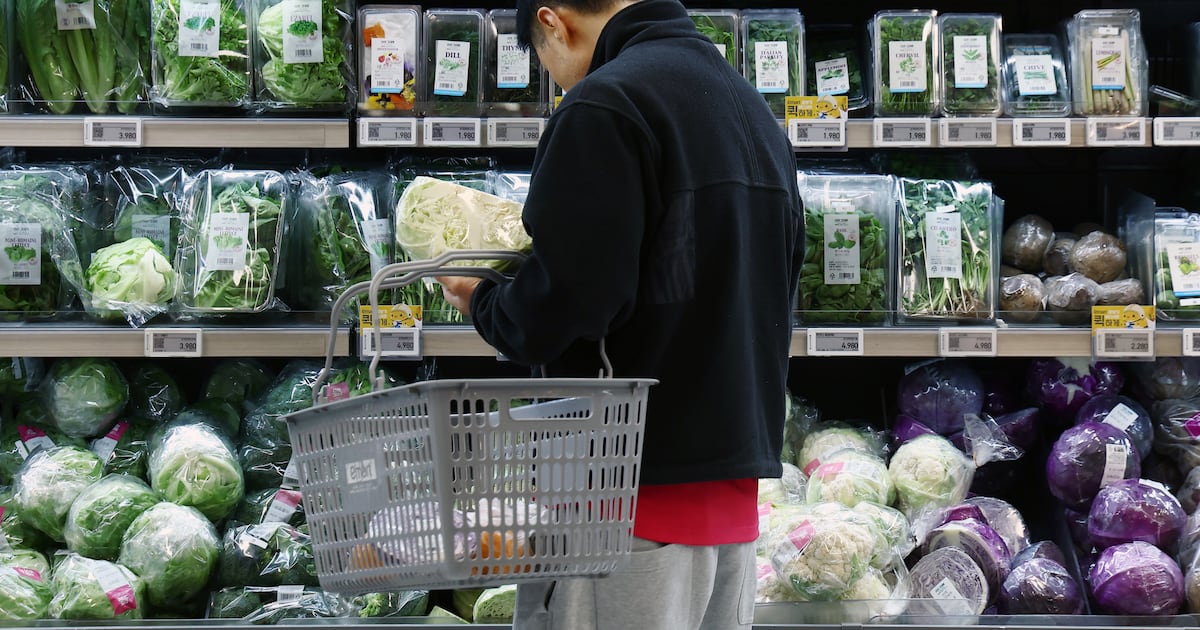
South Korea moves to let big-box retailers offer dawn delivery, shift closures.
biz.chosun.comThe South Korean government has begun reviewing legislation to allow dawn delivery by big-box retailers and ease the current mandatory holiday closures. To protect traditional markets, Korea had imposed late-night operating and delivery restrictions and twice-monthly mandatory closures on Emart, Homeplus, and other big-box stores. EC-pure-plays like Coupang and Kakao grew rapidly outside these constraints, creating a heavily skewed competitive landscape — the trigger for this review.
In the agentic commerce context, "agents place bulk orders overnight → dawn delivery" becomes a realistic experience. Korea's deregulation prepares the prerequisites and offers insights for Japan's debates on 24-hour delivery and the intersection of logistics regulation and work-style reform.
Türkiye Expands E-export Target Markets from 18 to 35 Countries

A senior Trade Ministry official says measuring e-export data remains challenging and argued that the actual figures are higher than reported.
www.turkiyetoday.comThe Turkish Ministry of Trade announced an expansion of its government-supported "e-export target markets" from 18 to 35 countries. As Turkey-based EC and marketplaces like Trendyol and Hepsiburada press into the GCC, North Africa, and Europe, the government is doubling down with logistics subsidies, tariff preferences, and local partnerships. A senior official also noted that actual cross-border EC volume exceeds official statistics.
For cross-border EC into the Middle East and North Africa, Turkey is emerging as a supply hub after China and the UAE, and "expanding into the GCC via Turkey" becomes a viable option for Japanese brands.
Blinkit Faces Inquiry from Food Safety Authority Over Consumer Quality Complaint

FSSAI seeks explanation from Blinkit after a consumer allegedly fell ill after consuming curd ordered through the quick-commerce app.
www.business-standard.comIndia's food safety regulator FSSAI sought an explanation from Zomato-owned quick-commerce player Blinkit over a consumer complaint of poor-quality curd. The consumer allegedly fell ill after consuming curd (yogurt) ordered via Blinkit, and FSSAI demanded answers on the distribution path, temperature control, and quality-at-shipment processes.
The quick-commerce industry (Blinkit/Zepto/Swiggy Instamart) is rapidly scaling its handling of fresh and dairy products in line with its 10-minute delivery model. Food safety responsibility for platform-direct shipments is being held to a higher standard than traditional EC marketplaces — part of the same global trend in which "platform direct responsibility" is being tightened (as also seen in the EU's DSA action against Temu).
Conclusion
The central theme today is the redefinition of the "entry point" and "shelf" in agentic commerce. Practical Ecommerce's "AI Shelf Space" thesis, Investing.com's "Can AI become the internet's next gateway?" analysis, and Google's Nick Fox follow-up on Universal Cart together demand a redesign of brand visibility KPIs — away from SEO/SEM and toward "the structure that AI selects."
In parallel, Reddit's Shopify integration going global signals UGC communities being reappraised as "product recommendation sources for the AI era," and UEFA × Alibaba — along with broader sports-property commerce moves — opens a new frontier of AI-assistant-mediated fan engagement. Meanwhile, Korea's dawn delivery deregulation, Türkiye's cross-border EC expansion, and Blinkit's food safety issue remind us that the logistics, regulation, and quality assurance realities supporting agentic commerce remain unevenly distributed across regions.