Priceline, Iberia, and Alipay+: Three Designs for Agentic Travel Booking and Where Checkout Lives
In June 2026, Priceline's fully agentic Penny, Iberia's ChatGPT app, and Alipay+ Voyager in Thailand revealed three distinct designs for agentic travel booking. We compare where each places discovery and checkout, and what retail operators should take away.

Key Takeaways
- In June 2026, Priceline relaunched Penny as fully agentic, Iberia shipped an app inside ChatGPT, and Thailand's tourism authority and Alipay+ unveiled AI travel tools, a cluster that made the agentification of travel booking unmistakable
- The three cases answer one design question differently, namely which channel hosts discovery and where checkout is completed, mapping the customer-touchpoint choices agentic commerce forces on merchants
- AI agents book from whoever answers fastest with the cleanest data, so machine-readable inventory and pricing become the new shelf-space contest for retail and e-commerce operators as well
Every step of travel booking is moving into conversation

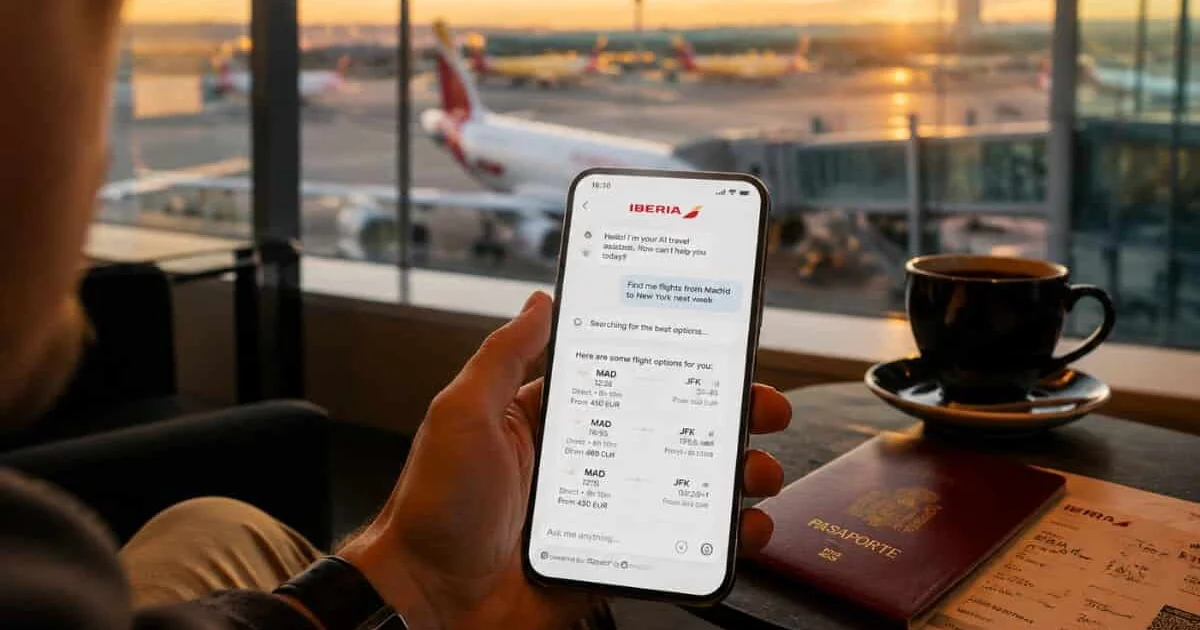
Iberia launches ChatGPT app for AI travel planning, enabling flight search and booking through conversational tools for global travellers.
www.travelandtourworld.comJune 2026 brought a run of announcements pointing at the same shift in travel booking. On June 3, Priceline relaunched its AI assistant Penny as fully agentic. On June 8, Iberia unveiled an app that runs inside ChatGPT. On June 17, hotel-distribution company ZentrumHub published a report arguing that AI agents have started booking hotel rooms, and the next day the Tourism Authority of Thailand and Alipay+ announced AI-powered trip-planning tools.
Each is a separate story, but bundled together they describe one change. Search, comparison, booking, and payment are moving out of filter-heavy screens and into conversation. Agentic commerce is the term for transactions in which an AI agent advances discovery through purchase on the user's behalf, and travel, a high-ticket category where prices and inventory shift by the minute, is one of the industries implementing it fastest.
What deserves attention is that these players, while heading in the same direction, chose different designs. Which channel hosts discovery, and where is checkout completed? Priceline, Iberia, and Alipay+ each place them differently. This article compares the three designs and draws out decision axes that apply to any business holding products, inventory, and customer data.
Priceline's Penny carries users from discovery to a completed booking in-house
Priceline offers the most concrete picture of where agentification is headed. On June 3, 2026, the company relaunched its AI travel assistant Penny, describing it as having gone fully agentic. Agentic here means the system understands complex requests, evaluates real-time pricing and availability, surfaces tradeoffs, and carries the booking to completion without the user leaving the conversation.
Behind the scenes, more than 10 specialized agents work in concert. Separate agents handle hotel search, recommendations, flights, rental cars, and customer service, coordinating within a single conversation. Anthropic's Claude powers the core reasoning and planning, with Google Cloud supporting search and OpenAI supporting voice. It is Priceline's first integration of Anthropic's models into a consumer-facing product. Guillaume Princen, who leads Anthropic's work with international technology companies, noted that the value of AI in travel comes from connecting models to the real context of inventory, deals, and trip purpose.
Read as a commerce design, this is an OTA (online travel agency) pulling everything from discovery to booking completion inside its own channel. Before users take their travel questions to an external AI, Priceline makes its own site and app the conversational entry point. Dialogue history and preferences accumulate as first-party data, meaning customer data the business collects and holds itself. It is a design that plays offense and defense at once, keeping the customer touchpoint and its data out of external channels.
Priceline has also published results. In early testing, travelers who used Penny showed stronger engagement and higher conversion than those who did not, and customer-support contacts declined. The company estimates that Penny users saved roughly ten minutes per trip compared with travelers who called support. A 2026 Evercore ISI analysis rated Penny the strongest end-to-end booking experience among the AI travel tools it tested. Note, too, that customer service sits among the specialized agents. The ambition extends past the booking into post-purchase support.
Iberia opens discovery to an external AI and keeps checkout at home
The same month, Iberia placed things in almost the opposite spot. On June 8, at the South Summit event in Madrid, the airline announced its own app running on ChatGPT. Typing "Iberia" in ChatGPT brings the app into the conversation, where plain-language requests such as "somewhere with good weather in October" or "a weekend getaway from Madrid" return candidates in a visual calendar reflecting availability and prices.
The pivotal choice is where the final step lives. Once travelers narrow their options, they are redirected to Iberia's usual booking environment, where payment and ticketing are completed. Discovery and comparison open up to an external AI channel, while control over pricing, inventory, checkout, and customer data stays with the airline.
The backdrop is ChatGPT's own transformation into a purchasing entry point. Through the Apps SDK, which lets external apps run inside ChatGPT, and the Agentic Commerce Protocol it developed with Stripe, OpenAI has built the infrastructure for booking and buying inside a conversation. The Apps SDK is constructed on MCP, an open standard for connecting AI to external tools. In travel, Booking.com and Expedia have connected apps as well. There is, however, no announcement that Iberia has adopted in-ChatGPT checkout. The airline puts only discovery on the external channel and routes the transaction home, a pragmatic middle path between the open garden and the walled garden.
Thailand and Alipay+ build discovery on top of a payment platform
The third design emerged from the payments side. On June 18, the Tourism Authority of Thailand and Alipay+, the cross-border payment and wallet platform run by Ant International, announced AI-powered recommendation and trip-planning tools, aimed first at Chinese visitors. The campaign personalizes recommendations across four categories of attractions, food, activities, and accommodation, and the in-app assistant Alipay+ Voyager supports the journey end to end, from destination discovery and itinerary building to reservations for flights, hotels, attractions, and ride-hailing, through to payment.
Starting from the wallet carries an advantage of its own. A payment app already holds identity verification and the payment instrument, which means the hardest problems in agentic commerce, payment delegation and identity, sit inside its walls from day one. Where Priceline and Iberia approach checkout from the discovery side, Alipay+ climbs from payments up toward discovery. That the initiative runs as national tourism strategy signals how broad this contest has become.
Laid side by side, the three designs differ visibly in discovery channel and checkout placement.
| Player | Scope of agentic automation | Discovery channel | Where checkout lives |
|---|---|---|---|
| Priceline (Penny) | From search to completed booking inside one conversation | Own site and app | Completed inside its own channel |
| Iberia | Conversational discovery and comparison (booking redirected) | App inside ChatGPT | Iberia's own booking environment |
| Thailand x Alipay+ (Voyager) | Discovery, itinerary, booking, and payment in one flow | Inside the Alipay app | Alipay+ wallet payment |
Agents book from whoever answers fastest with the cleanest data
Beneath the design contest is a shift on the buyer's side. Drawing on more than 1.5 million real bookings across 90-plus OTAs, hotel-distribution platform ZentrumHub projects that 5-8% of OTA bookings could come through AI agents by the end of 2027. In the words of CEO Abhinav Sinha, an AI agent does not scroll through pretty pictures. It checks prices and books from whoever answers fastest with the cleanest data. Inventory lag or messy data a human shopper would forgive becomes an instant lost sale against an agent.
Humans, meanwhile, are adopting AI as their travel entry point. Adobe reports that AI-referred traffic to U.S. travel sites rose 194% year over year in May 2026, up 2,215% since tracking began in October 2024. AI-referred visitors are 21% more engaged, spend 70% longer per visit, and bounce 41% less. In the same research, 86% of travelers said AI assistants improved their planning and budgeting experience. Supply-side implementation and demand-side behavior are moving in tandem.
Where retail and e-commerce operators should start
The first question is whether your inventory, prices, and product information can be read instantly and accurately by an AI agent. Agents choose counterparties on response speed and data cleanliness, so the polish of a human-facing interface counts for little. The unglamorous work of machine-readable product data is the new fight for shelf space.
Next comes the fact that discovery and checkout can be designed separately. Completing both in-house like Penny, opening only discovery like Iberia, or mounting discovery on a payment platform like Alipay+, none of these is the single correct answer. The right combination depends on the depth of your customer base, your tolerance for fees, and your data-ownership policy. A realistic path is to treat the split between discovery and checkout as a given and decide in stages how far in-house control should extend.
Finally, delegating checkout to an external channel carries costs worth pricing in. Mechanisms like OpenAI's Agentic Commerce Protocol reduce the friction of in-conversation purchases, but the questions of sales commissions, customer data, and where post-purchase work such as cancellations and refunds lives do not go away. Iberia keeping checkout at home is one answer to that question, and the weight of cancellations and changes in travel maps directly onto returns handling in physical retail.
Conclusion
The June 2026 announcements showed that travel purchasing moving into conversation is no longer one company's experiment but the industry's default course. The implementations have not converged, though. Priceline carries users from discovery to completed booking in-house, Iberia opens discovery to an external AI while keeping checkout, and Alipay+ mounts discovery on a payment platform, three designs advancing in parallel. Whichever path a business picks, the shared precondition is machine-readable inventory and pricing data. In a world where agents book from the fastest, cleanest response, data readiness becomes the new shelf-space contest. Where are you discovered, where does checkout happen, and who holds the data? Travel is answering these questions first, and they will land on every retail and e-commerce operator that holds products and inventory soon enough.