China's 618 Festival Goes All-In on AI Amid Weak Demand: From Price Wars to AI Commerce
China's 2026 618 festival closed subdued, with AI becoming the core infrastructure that redesigns recommendation, service, and purchasing. A deep dive into the retreat from price wars by Alibaba, JD, and Pinduoduo, and Beijing's pressure on discounting.

Key Takeaways
- China's mid-year 618 festival closed on a subdued note amid weak demand, as platforms shifted their focus from price wars to AI-driven experience design.
- Alibaba integrated Qwen into Taobao, while JD and Douyin pushed AI deep into recommendation, service, and logistics, turning 618 into a technology battleground.
- Beijing's pressure to curb excessive discounting and "involution"-style competition is accelerating the move away from discount dependence toward AI commerce.
A subdued 618 reflects a plateau in Chinese consumption

China's second-biggest shopping festival is drawing to a subdued close, underscoring weak consumer confidence and government pressure on e-commerce platforms to disengage from excessive discounting.
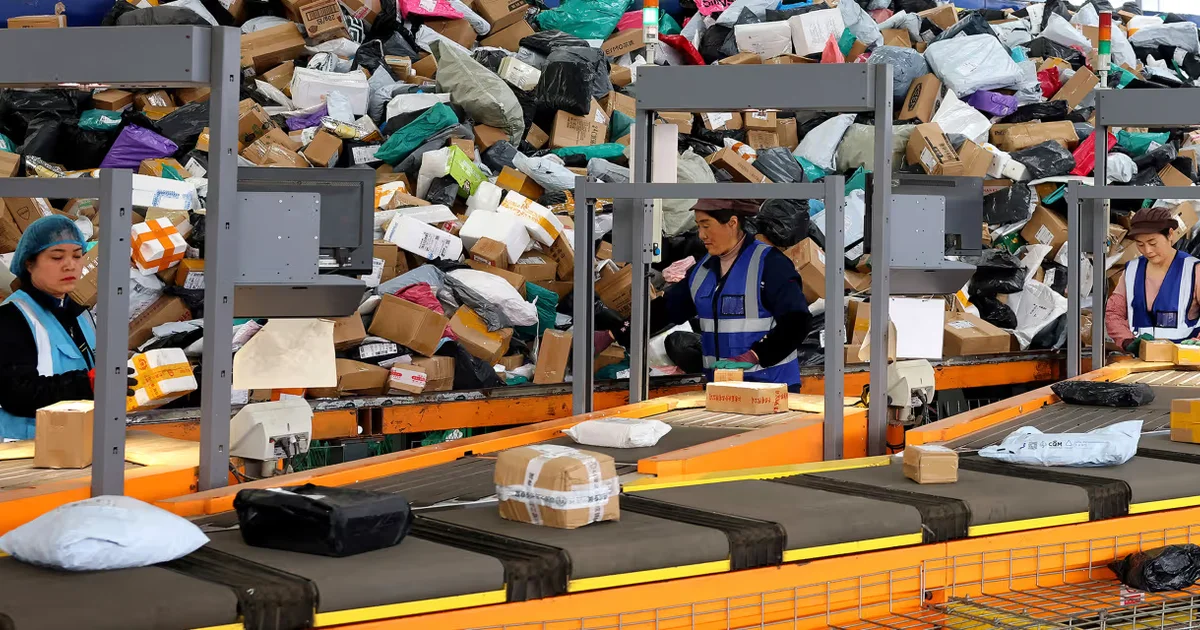
www.reuters.comHeld on June 18 to mark the founding of JD.com, 618 is China's second-largest shopping festival after Singles' Day. Once a one-day sale, it has become a sprawling event in which every major platform runs discounts for roughly 40 days, from mid-May through around June 20. The 2026 edition showed that this festival is no longer the consumption-stoking carnival it once was.
The mood was captured by a Beijing IT engineer who told Reuters: "I bought some laundry detergent, but not because it was discounted, it's just I ran out of it." Buy what you need, only as much as you need. That matter-of-fact attitude set the tone for this year's festival.
The numbers confirm the caution. China's retail sales fell 0.6% year-on-year in May, the first decline since December 2022, when the economy was still under COVID-era restrictions. Big-ticket categories such as autos, home appliances, furniture, jewellery, and building materials all slumped, and even government purchase subsidies failed to provide a floor. Bain & Company's head of consumer products in Greater China called the quiet "a good thing for the market," noting that consumption is normalizing away from the stock-up-during-carnivals pattern.
A "healthy shift" and pressure from regulators
Behind the subdued festival lies not only soft sentiment but also explicit policy pressure from Beijing.
Chinese regulators had been pushing hard against excessive competition — the war of attrition known locally as "involution" (neijuan). Ahead of the festival, the Beijing Municipal Administration for Market Regulation summoned five major players — Taobao/Tmall, JD.com, Pinduoduo, Douyin, and Xiaohongshu — and ordered corrections. The issues flagged were vaguely substantiated discount claims and overstated subsidies.
Specifically, regulators pointed out that the "CNY 10 billion (about $1.5 billion) subsidy" campaign promoted by Taobao/Tmall, JD.com, and Pinduoduo lacked evidence that the platforms had actually invested that sum. Following the public rebuke, Hong Kong-listed shares of Alibaba and JD.com fell as much as 6%. The way discounts were presented had itself come under the regulatory knife.
That pressure strips away one of the levers platforms have long relied on to drive traffic. That is precisely why Alibaba framed this year's 618 as a "decisive shift," saying brands had prioritized "healthy margins over headline sales figures." The retreat from discount wars was a narrative pitched in step with the regulators' intent. Revenue is expected to rise only single digits thanks to the longer window, and volume expansion is no longer the headline act.
AI takes center stage at the festival
With discounting blunted as a weapon, the platforms pushed AI to the front instead. The general manager of CTR Market Research said the big e-commerce firms were all using 618 as a testing ground for their AI, describing it as "not just a battleground for e-commerce, but more of a technology battleground for all these big platforms."
Alibaba is the clearest example. It integrated its Qwen AI model across the full product range on Taobao, letting consumers browse, compare, and purchase by chatting with an AI agent rather than manually navigating listings. Replacing keyword search with natural-language conversation, and completing selection, ordering, and payment inside the Qwen app, is a redesign of the very funnel that e-commerce has long built around search.
Chinese industry research backs up the shift. The 618 Consumer Insights Report (2026), released on the festival's first day by Xinhua-affiliated research bodies and partners, framed 2026's 618 as the first promotion with full AI implementation. According to the report, AI has been upgraded into the underlying infrastructure of promotions, penetrating everything from marketing and customer service to live streaming and advertising. On the consumer side, AI shopping guides, intelligent recommendations, and automated after-sales service went mainstream; on the industrial side, AI was embedded into supply-chain links such as selection, inventory, and logistics.
The AI strategies were far from uniform, however. The table below summarizes where the three major camps concentrated their AI investment.
| Camp | Core AI strategy | Key moves |
|---|---|---|
| JD.com | Full-funnel penetration built on self-operation and logistics | AI digital-human livestreaming, AI customer service, a consumer-facing agent, and a logistics optimization engine |
| Taobao/Tmall | Rebuilding the shopping entry point (the long game) | Fully connecting the Qwen app with Taobao so selection, ordering, and payment all happen in-app |
| Douyin | Content-driven AI closed loop | Keeping everything from recommendation to automatic ordering inside the main app |
JD chose full-funnel penetration in line with its strengths in self-operation and logistics, threading AI digital-human livestreaming, AI customer service, a consumer-facing agent, and a logistics optimization engine into a single chain. Taobao/Tmall bet on rebuilding the shopping entry point through Qwen integration, while Douyin competed with a content-driven AI closed loop that keeps recommendation through automatic ordering inside its main app. Even with the same AI, the investment targets diverged along each company's DNA — the most telling storyline of this year's 618.
The reality: AI did not revive the festival
It is worth keeping a cool head here: the deployment of AI did not, in itself, revive consumption.
AI smoothed the purchasing experience and reduced the friction of choosing products. Whether consumers loosen their purse strings in the first place is a separate question. At the macro level, growth in consumer-goods retail sales for January through April 2026 decelerated sharply to 1.9% from 4.7% a year earlier, and AI-driven experience improvements were not enough to mask that underlying weakness in demand. The very fact that Alibaba was leaning on AI to coax consumers into spending is the flip side of a market where demand does not grow on its own.
Even so, this year's 618 is not insignificant. With discounting — an external incentive — held down by regulators and shoppers shifting to a cautious "need over want" mindset, platforms have been forced to move their competitive axis from "how to sell cheaply" to "how to sell smartly." As the report notes, the focus of competition has shifted from "price wars" to "efficiency wars" and "ecosystem wars." AI is no magic that creates demand, but it is becoming the infrastructure that decides how limited demand gets captured.
What e-commerce operators should take away
China's 618 is a testing ground at the global frontier of agentic-commerce implementation. For e-commerce operators in Japan and worldwide, three points stand out.
First, breaking free of discount dependence is becoming a shared challenge. In China the force came from regulators, but the limits of relying on thin-margin sales to drive traffic are common to every market. Experience value delivered by AI is emerging as a differentiator in place of price.
Second, AI is rebuilding the purchasing funnel as a replacement for search. Just as Qwen became Taobao's entry point, the move from an era of manually scrolling listings to one of consulting an agent and buying has genuinely begun. Whether product data and reviews are correctly read by AI is increasingly what determines visibility.
Third, a sober recognition that AI is not a magic that creates demand but infrastructure that captures it. Experience improvements matter, but they do not lift sales on their own. The effect of AI investment has to be evaluated separately from the underlying strength or weakness of demand.
Conclusion
The 2026 618 was a festival where two currents crossed: a plateau in consumption and the rise of AI. The discount carnival is quietly winding down, and AI is moving to fill the gap. What to watch next is the final 618 sales data due next week, and the share of "people who bought via AI" it reveals. That AI became the star of the festival is clear; whether it can actually move demand itself is something the coming numbers will tell.