AI Commerce News Digest (February 23, 2026)
Forbes publishes a practical guide for getting agentic AI to recommend e-commerce sites, InMobi CEO calls for transparency in agentic commerce, and retail media enters a maturity phase.


Key Takeaways
- Forbes publishes "A Practical Guide for Getting Agentic AI to Recommend Your E-Commerce Site"
- InMobi CEO advocates for transparency and accountability in agentic commerce
- Retail media enters maturity phase, while cross-border payments and global e-commerce expansion accelerate
Top Stories
A 2026 Practical Guide for Getting Agentic AI to Recommend Your E-Commerce Site

As AI agents increasingly influence online shopping decisions, e-commerce brands must adapt their strategies to be recommended by these autonomous systems.
www.forbes.comForbes has published a practical guide for e-commerce brands on how to get recommended by agentic AI (autonomous AI agents). As AI agents search, compare, and purchase products on behalf of consumers, the guide outlines optimization strategies that e-commerce brands should implement now.
Just as traditional SEO was optimized for Google's search algorithms, the guide argues that a new approach — "AEO (Agent Engine Optimization)" — is needed to align with AI agents' recommendation logic. It provides specific actions including structured data preparation, API support, and trust score improvement.
For e-commerce brands, whether they are selected by AI agent recommendations will become a critical inflection point for future revenue. This is a theme every e-commerce operator should watch closely as the next battleground beyond SEO.
Full article: A Practical Guide to Getting 'Chosen' by AI Agents
InMobi CEO: "Agentic Commerce Must Be Transparent and Accountable"

Naveen Tewari, the founder and CEO of InMobi Group says that while agentic AI holds tremendous potential for commerce, companies must ensure these systems operate transparently and ethically
www.business-standard.comNaveen Tewari, founder and CEO of Indian ad-tech giant InMobi, emphasized the importance of transparency and accountability in agentic commerce. In a world where AI agents make purchasing decisions on behalf of consumers, the decision-making process must not be opaque, he argues.
Tewari pointed out that consumers need mechanisms to understand which products an AI agent recommended and why. He also raised concerns about the risk of AI recommendations being biased by advertising or affiliate revenue, calling for industry-wide governance.
As the adoption of agentic commerce accelerates, how to ensure transparency for its healthy development is a challenge the entire industry must address.
Full article: InMobi CEO Sounds Alarm — Transparency and Accountability Are Essential for Agentic Commerce
Agentic Commerce
Appier Achieves Record Results Driven by Agentic AI Strategy
Appier Delivers Record Results Driven by Agentic AI Innovation
www.manilatimes.netTaiwan-based AI marketing company Appier announced record-breaking results driven by its agentic AI-centered strategy. The company provides advertising optimization and personalization solutions powered by AI agents.
Appier primarily serves e-commerce and retail companies in the Asia-Pacific region, and its early investment in agentic AI has directly translated into business performance. Its AI-driven autonomous campaign optimization and customer engagement capabilities have been highly valued.
This is a strong example demonstrating that agentic AI is not just a buzzword but is actually generating tangible business results.
Full article: Taiwan's Appier Achieves Record Results with Agentic AI
AI Commerce Tools
"True AI" in Email Marketing Has Yet to Arrive

Current AI email-marketing tools are impressive but fall short of true intelligence. Expectations are high for the future.
www.practicalecommerce.comPractical Ecommerce analyzes the current state and challenges of AI adoption in e-commerce email marketing. While current AI email tools excel at subject line optimization and send-time adjustment, they are still far from truly intelligent autonomous operation.
Current tools remain at the stage of adding AI elements to rule-based automation, not yet reaching the level of deeply understanding customer behavior patterns to autonomously generate and deliver content. However, tool vendors are rapidly enhancing capabilities, with significant evolution expected in the latter half of 2026.
For e-commerce brands, it's important to understand the current limitations of AI email tools while preparing for migration to next-generation tools.
Corporate News & Partnerships
Retail Media's "Easy Money Era" Is Over, Entering the Next Phase
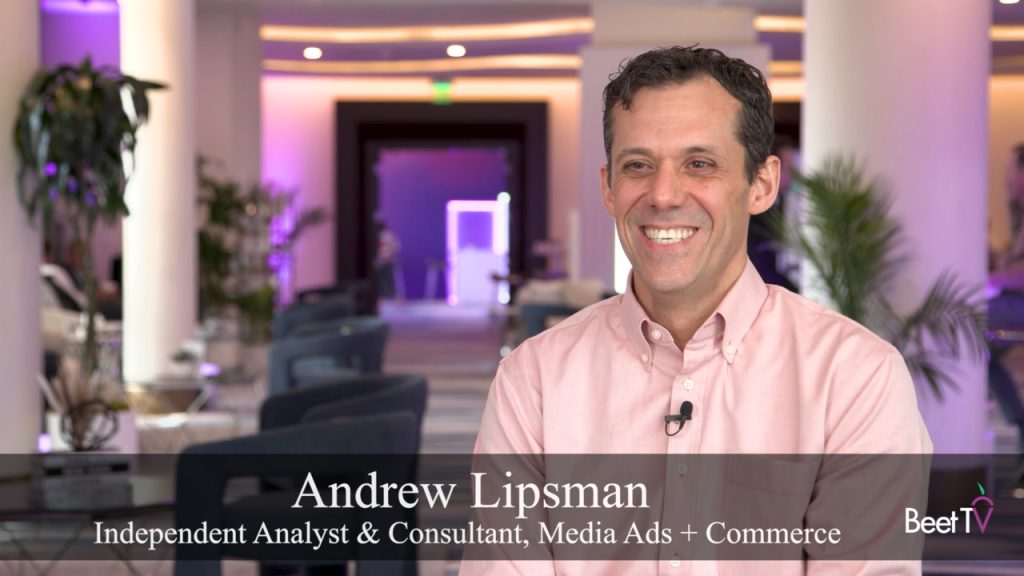
As retail media grows into a $100 billion-plus market, the era of easy expansion is over. Retailers face a critical choice: invest in real measurement and technology, or risk losing ground to more sophisticated competitors.
www.beet.tvBeet.TV reports that the retail media market, having grown beyond $100 billion, has entered a maturity phase where the easy growth of earlier years is ending. Retailers are now entering a phase that demands serious investment in measurement technology and infrastructure.
In its early stages, retail media could generate high advertising revenue simply by leveraging existing first-party data. However, as more players have entered the market, competition has intensified, and advertisers now demand more precise ROI measurement and performance proof. Retailers who fail to invest risk losing market share to more sophisticated competitors.
For e-commerce brands operating retail media, investment in measurement and attribution technology is becoming the key to competitiveness.
Full article: Retail Media's Easy Money Era Is Over
7-Eleven Scales Frictionless Shopping Technology

RTIH rounds up the stand out retail technology deals, launches, deployments and pilots from the past seven days.
retailtechinnovationhub.comRetail Technology Innovation Hub's roundup of last week's notable retail technology developments highlights 7-Eleven's deployment of frictionless shopping technology. The initiative brings register-free, cashless purchasing experiences to convenience stores.
Leveraging the characteristics of small-format stores, 7-Eleven is effectively implementing frictionless technology similar to Amazon Go. Customers scan an app upon entry, pick up items, and simply walk out — payment is completed automatically.
The convenience store environment, with its high-frequency, low-value transactions, is one of the areas where frictionless technology delivers the greatest impact.
Payments & Fintech
Payoneer Partners with Bridge for Stablecoin Payments

Payoneer Global Inc. (NASDAQ:PAYO) has partnered with Bridge, a stablecoin payments platform, to bring real-time stablecoin disbursements to its global merchant network.
www.insidermonkey.comCross-border payment giant Payoneer has formed a strategic partnership with Bridge, a stablecoin payments platform. The collaboration will provide real-time stablecoin remittance services to Payoneer's global merchant network.
This partnership enables e-commerce brands and freelancers in emerging markets to receive international transfers faster and at lower cost than traditional bank transfers. By leveraging stablecoins, it enables reduced currency risk and instant 24/7 payments.
This represents an important step toward eliminating payment friction in cross-border e-commerce.
Global E-Commerce Trends
U.S. Tariff Policy Volatility Creates Uncertainty and Cost Increases for Retailers

The uncertainty of on-off tariffs is forcing retailers and brands to react quickly and absorb costs
www.forbes.comForbes reports on the uncertainty facing retailers and brands as U.S. tariff policies continue their "on-off" cycle, forcing rapid responses and cost absorption.
The repeated imposition and withdrawal of tariffs over short periods makes supply chain planning extremely difficult. Many retailers are scrambling to file claims and recover tariff costs, struggling to balance price pass-through with margin maintenance.
For companies engaged in global e-commerce, building supply chain strategies that account for tariff risk is an urgent priority.
Thailand's DITP Recommends Exports to Vietnam's $268.5B Retail Market

The Department of International Trade Promotion (DITP) is encouraging Thai exporters to capitalise on Vietnam's rapidly growing retail market
www.nationthailand.comThailand's Department of International Trade Promotion (DITP) is encouraging Thai exporters to enter Vietnam's rapidly growing retail market ($268.5 billion). Vietnam is one of the fastest-growing e-commerce markets in ASEAN.
Vietnam's expanding digital-native consumer base centered on younger demographics, rising smartphone penetration, and maturing e-commerce infrastructure are all driving market growth. DITP plans to support Thai companies in entering the Vietnamese market through cross-border e-commerce platforms.
This move signals the activation of cross-border commerce within the Southeast Asian e-commerce market.
Top Global Expansion Markets for U.S. E-Commerce Brands

Passport reports U.S. ecommerce brands are expanding globally, with Canada, the UK, EU, and Australia as prime markets for growth.
krdo.comBased on a Passport report, this article ranks the global markets where U.S. e-commerce brands are accelerating expansion. Canada, the UK, the EU, and Australia rank highest.
Language proximity, regulatory similarity, and consumer purchasing power are the primary factors driving market selection. Canada in particular is positioned as the lowest-barrier overseas market for U.S. e-commerce brands due to its geographic proximity and shared language.
This data serves as a useful reference for e-commerce brands considering global expansion.
Summary
Today's news highlighted both the practical and ethical dimensions of agentic commerce. The Forbes guide to optimizing for AI agent recommendations clearly defines what e-commerce brands need to tackle now as "the next thing after SEO." Meanwhile, InMobi CEO's call for transparency and accountability represents an essential element for the healthy development of agentic commerce.
With retail media maturation, stablecoin payment advances, and accelerating global e-commerce expansion, the entire commerce ecosystem continues to evolve. Going forward, watch whether AI agent "recommendation optimization" will take concrete shape as a new marketing methodology replacing SEO.