AI Commerce News Digest (May 8, 2026)
Today's roundup: AWS unveils AgentCore Payments (with Coinbase and Stripe), Amazon expands Rufus with 'Join the Chat,' Ant International open-sources its Agentic Mobile Protocol, Mindtrip×Sabre×PayPal launch agentic flight booking, plus the WTO 19-nation e-commerce moratorium and major Q1 earnings.


Key Takeaways
- AWS unveiled AgentCore Payments together with Coinbase and Stripe, while Amazon rolled out "Join the Chat" to make product pages themselves conversational — a clear signal that US cloud giants are accelerating their entry into agentic commerce infrastructure.
- Ant International published the open-source "Agentic Mobile Protocol (AMP)" from Asia, and Mindtrip launched the industry's first all-in-one agentic AI flight booking with Sabre and PayPal — implementation is moving forward both at the infrastructure layer and in vertical use cases.
- The WTO e-commerce moratorium landed as a 19-nation "coalition of the willing" agreement, and Q1 earnings from MercadoLibre, VTEX, and Cafe24 showed strong momentum in AI and e-commerce — structural change is becoming visible across the industry.
Today's Top Stories
AWS Announces "AgentCore Payments" with Coinbase and Stripe — Wallets for AI Agents

AWS unveils AgentCore Payments with Coinbase and Stripe, letting AI agents pay for APIs, MCP servers, and content mid-task. In preview today on Bedrock.
theaieconomy.substack.comAWS released a preview of "AgentCore Payments," a payment infrastructure that lets AI agents on Bedrock autonomously pay for things mid-task. With Coinbase (crypto rails) and Stripe (existing card rails) as launch partners, the design enables AI agents to charge by the second for API calls, MCP server access, and content consumption.
Following the May 7 Solana × Google Cloud "Pay.sh" launch, the agentic commerce infrastructure layer is now contested by multiple camps: AWS×Stripe×Coinbase, Google Cloud×Solana, Visa Trusted Agent Protocol, and Mastercard Agent Pay. For e-commerce operators and SaaS providers, redesigning APIs into units that agents can charge against is becoming a real architectural choice.
Detailed article: AWS AgentCore Payments — Giving AI Agents a Wallet on Bedrock and the Race for Agentic Commerce Infrastructure
Amazon Rolls Out "Join the Chat" — Product Pages Become Conversational

'Join the chat' enables real-time questions and answers while listening to AI-generated product summaries.
www.retaildive.comAmazon announced "Join the Chat," a new feature that lets shoppers ask questions and get answers in real time while listening to AI-generated audio summaries on product pages. Built on the same generative AI stack as Rufus, it turns the product page itself into a conversational interface and is rolling out to a subset of US shoppers.
Coming on the heels of Rufus user growth (+115% YoY, May 1) and the Marketplace Pulse analysis of Rufus and ChatGPT ad model convergence (May 7), Amazon is shifting from "product page = search result" to "product page = conversation surface." For sellers, structuring catalog data so it answers conversational queries well is becoming a new optimization axis.
Detailed article: Amazon "Join the Chat" — Turning Product Pages Into Agentic UI and How Sellers Should Respond
Ant International Unveils Open-Source "Agentic Mobile Protocol (AMP)"

Ant International has launched the Agentic Mobile Protocol (AMP) for the agentic commerce industry.
futurecio.techAnt International, the parent company of Alipay, open-sourced its "Agentic Mobile Protocol (AMP)" on GitHub. AMP is a standard that makes mobile apps operable by AI agents, covering authentication, payment, and task completion notifications in a single flow.
Compared to payment-protocol-centric proposals like Visa Trusted Agent Protocol, Mastercard Agent Pay, AmEx Intent Contracts (May 5 deep dive), and AgentCore Payments (today), AMP stands out by being mobile-first and tuned for Asian markets such as India, Southeast Asia, and the Middle East. For e-commerce operators, the question of how to support different standards in different regions is becoming a practical issue.
Detailed article: Ant International "Agentic Mobile Protocol" — Asia's Open-Source Answer to Agentic Commerce Standards
Mindtrip × Sabre × PayPal Launch "Industry-First All-in-One Agentic Flight Booking"

Mindtrip, an AI-powered platform that empowers people to travel differently, today announced the launch of Mindtrip Flights, powered by partnership with Sabre and PayPal.
www.webwire.comTravel AI platform Mindtrip launched "Mindtrip Flights," what it calls the industry's first conversational, all-in-one experience for searching, comparing, and booking flights. It combines Sabre's AI-native booking platform "Sabre Mosaic" with PayPal's agentic commerce services — Air APIs redesigned for agent use plus agent-ready payments — to replace the traditional pattern of jumping across travel sites.
Following the May 4 deep dive on "Ascott's AI-ready agentic travel commerce strategy," agentic implementation is now visible across hospitality, airlines, and OTAs. For travel and e-commerce operators, "agent-ready" versions of existing PMS and PSP infrastructure are becoming a real selection criterion.
Detailed article: Mindtrip × Sabre × PayPal — Industry-First Agentic Flight Booking and the Travel Sector's Agentic Commerce Frontline
Agentic Commerce
Anchorage Digital Launches "Agentic Banking" with Google Cloud

Anchorage Digital launches Agentic Banking with Google Cloud to help institutions manage AI agents, digital assets and agentic commerce.
fintechnews.sgInstitutional digital asset bank Anchorage Digital announced "Agentic Banking" in partnership with Google Cloud's AI stack. The product helps enterprises manage AI agents alongside digital assets and agentic commerce in a unified way, with compliance audit logging and risk controls baked in for AI agents handling treasury operations.
This is a concrete example of the "financial access control" layer needed when e-commerce operators delegate operations to AI agents — comparable in importance to Stripe's agentic API (May 5) and AmEx Intent Contracts (May 5 deep dive) on the fintech side.
Marqo Launches Commerce Superintelligence "Sibbi"

Marqo, the AI-native product discovery platform behind Mejuri, Kicks Crew, and SwimOutlet, today launched Sibbi, a unified commerce agent.
www.prnewswire.comAI-native product discovery platform Marqo, which already powers Mejuri, Kicks Crew, and SwimOutlet, launched "Sibbi" — a unified commerce agent positioned as an intelligence layer that crosses product data, user intent, and inventory. It now competes head-to-head with the "PXM × agent" layer staked out by Salsify's SalsifyIQ (deep dive May 6).
For e-commerce operators, PIM/PXM vendors are uniformly repositioning as "intelligence layers for the agent era," and the selection criteria are shifting from "data quality" toward "depth of agent integration."
Alibaba.com Reframes B2B as "A2A" — Refreshes $1M+ AI-Powered Pitch Competition

Alibaba.com today announced the return of CoCreate Pitch, now reimagined as an AI-powered product.
www.prnewswire.comAlibaba.com rebranded its B2B negotiation platform as "A2A (Agent-to-Agent)" and announced a refreshed "CoCreate Pitch" competition with a $1M+ prize pool. The premise is that AI agents will handle supplier discovery, negotiation, and contracting — positioned as a layer above the "Accio Work" platform that hit 230,000 business adopters (May 4 deep dive).
International B2B trade friction is being compressed by AI, and supplier discovery automation is becoming a realistic option for e-commerce and wholesale operators.
Marketplace Pulse Analysis: Rufus, ChatGPT, and the Agentic Ad Convergence

Amazon disclosed in its Q1 earnings call that nearly 20% of shoppers who interact with a sponsored brand prompt in Rufus continue the conversation about that brand.
www.marketplacepulse.comMarketplace Pulse argues that Amazon's Rufus advertising and OpenAI's ChatGPT shopping advertising are converging on the same monetization model. Amazon disclosed in its Q1 earnings that nearly 20% of shoppers who interact with a sponsored brand prompt in Rufus continue the conversation about that brand.
For e-commerce and brand operators, the evaluation axis is shifting from search-ad metrics (CPM/CPC) toward conversational metrics (continuation rate, conversation contribution), and ad operations design needs a refresh.
Payments & Fintech
Glenbrook: Stripe's AI Commerce Launches Pressure Subscription, Billing, and Trial Controls

Payments consultancy Glenbrook Partners argues that the AI commerce features unveiled at Stripe Sessions 2026 (covered May 5) are pressuring SaaS and DtoC subscription operators to redesign checkout, billing, and trial controls. Sign-ups, cancellations, and trial issuance executed via AI agents don't behave the way human-centric UX rules assume, so subscription terms, cancellation flows, and trial logic all need to be revisited.
Combined with the EU's "one-click cancellation" rule (covered May 1), the second half of 2026 is shaping up as a significant compliance and operations re-tooling moment for subscription businesses.
Mastercard × Checkout.com Report Record Tokenization Growth in MENA

The global report highlights the importance of tokenization as the foundation for the future of digital commerce.
techafricanews.comMastercard and Checkout.com published a joint report showing record growth of network-tokenized payments in the MENA region. Agentic commerce can't scale without "safe authorization flows that don't expose raw card numbers," and tokenization is the foundation. Tokenization plays well with Visa's Trusted Agent Program, Mastercard Agent Pay, and Stripe/PayPal agentic services — regional payment maturity is becoming a precondition for agentic readiness.
Q1 Earnings
MercadoLibre Q1 Revenue Up 49% — Fastest Pace in Almost Four Years

E-commerce and fintech giant MercadoLibre Inc. reported first quarter results that topped analysts' expectations for revenue.
www.bloomberg.comLATAM e-commerce and fintech giant MercadoLibre posted Q1 revenue growth of +49%, the fastest pace in nearly four years. Profit, however, missed consensus for the fourth straight quarter as strategic investments weighed on margins. The fintech segment continued expanding lending, payments, and account services — the "e-commerce + finance" two-engine model is paying off.
VTEX Q1 Operating Profit Doubles — "AI-Native Commerce Strategy" Delivers

VTEX reported first-quarter 2026 results showing solid top-line growth and sharply higher profitability.
www.tipranks.comE-commerce platform VTEX doubled operating profit YoY in Q1, citing traction from its "AI-Native Commerce" strategy. Against Salesforce Commerce Cloud and Adobe Commerce, VTEX is leaning into "modular commerce primitives built for an AI-first world" — a stance that echoes Shopify's "13× AI-driven orders" (deep dive May 6).
Cafe24 Q1 Returns to Profit — Korea's E-commerce Pivot from "Lowest Price"

Cafe24 said in a filing on the 7th that its preliminary first-quarter results came in higher.
biz.chosun.comKorean e-commerce platform Cafe24 returned to Q1 profit. The backdrop is a market in transition from "race to the lowest price" toward "service quality competition" — pressured by Coupang's data breach fallout (next item) and Naver Smart Store's gains. Cafe24, a Shopify-style platform for retailers, lifted profit with new AI features and global expansion.
Coupang: Data Breach Costs Continue to Drag Q1 (Follow-up)

In its latest earnings report, Coupang posted revenue of US$8.5 billion, an 8 per cent increase from a year earlier.
insideretail.asiaInside Retail Asia followed up on Coupang's Q1 swing into the red (covered May 6) with more detail. Revenue grew 8% YoY to $8.5B, but compensation and remediation costs from the data breach continue to weigh on results, with net loss reaching $266M. Combined with the recent push into Japan and Taiwan (May 7), the company is accelerating its move to reduce dependence on the Korean market.
Global Policy
WTO: 19 Members Reach Their Own E-commerce Moratorium After Brazil Talks Collapse

The U.S. and more than a dozen other countries including Japan, South Korea, Singapore and Australia launched their own pact to not impose duties on e-commerce.
www.reuters.comAfter negotiations with Brazil collapsed at the WTO, 19 members — including the US, Japan, Korea, Singapore, and Australia — announced their own coalition deal not to impose duties on e-commerce. A globally unified framework is off the table, but the 19 will keep current duty-free treatment among themselves.
For cross-border e-commerce operators, this means duty treatment will diverge between participating and non-participating countries for the foreseeable future, putting destination-based duty logic back in the spotlight.
Indonesia Eyes E-commerce Ban for Under-16s — Citing Scam Concerns
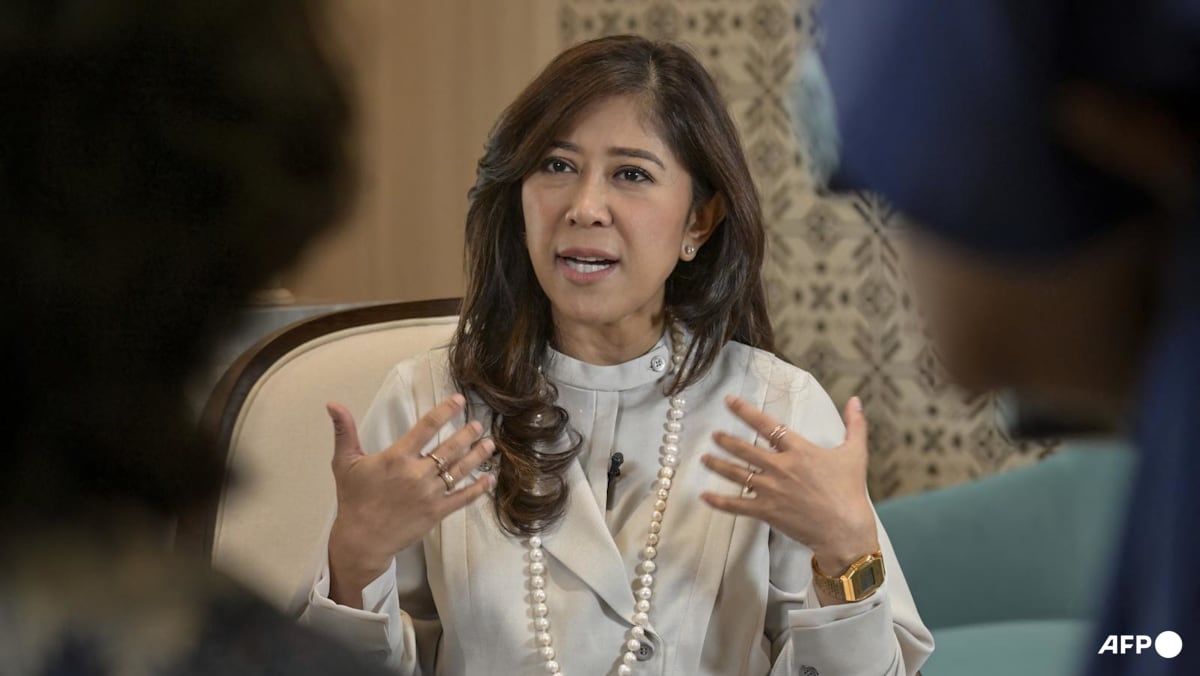
Indonesia may extend its recent under-16 social media restrictions to online shopping platforms.
www.channelnewsasia.comThe Indonesian government said it is considering extending its recent under-16 social media restrictions to e-commerce, citing scam prevention and minor protection. It fits a broader pattern of stricter regulation in major Southeast Asian e-commerce markets, and marketplace operators will need age-verification logic and ad restrictions for minors.
Logistics & Marketplaces
Asendia × SingPost Form Strategic Partnership for APAC Cross-Border E-commerce

Local customers will be able to sell and scale their online retail business in new markets with this tie-up
www.businesstimes.com.sgSwitzerland-based Asendia (a La Poste × Swiss Post joint venture) and Singapore Post announced a strategic partnership to strengthen the APAC cross-border e-commerce gateway. SingPost customers gain low-cost access to Europe, North America, and Australia via Asendia's network, and the reverse flow is also enhanced.
With the EU's tightening of low-value import duties (May 7) and US scrutiny of de minimis exemptions, cross-border duty and customs environments are shifting structurally, and partnerships across logistics providers continue to multiply.
Mirakl Launches "Trust & Safety" — Marketplaces Enter the "Industrial Moderation" Era

Pendant des années, les marketplaces ont vécu sur une promesse simple : ouvrir massivement leur catalogue.
www.ecommerce-nation.frMarketplace SaaS leader Mirakl announced "Trust & Safety," a new module that automates monitoring of seller and product trust signals. It's a direct response to tightening EU regulations (May 1: 75% of foreign marketplace listings in violation; one-click cancellation rule), marking the end of the "open-the-catalog-as-wide-as-possible" phase and the start of moderation as a baseline operating requirement.
Lightspeed Commerce Names New CTO Bhawna Singh — Strengthens AI, Payments, and Wholesale

Lightspeed Commerce Inc. (NYSE: LSPD) (TSX: LSPD), the unified omnichannel platform powering ambitious retail.
www.prnewswire.comPOS and omnichannel commerce platform Lightspeed appointed Bhawna Singh (formerly of Glassdoor) as CTO and shipped a wave of AI, payments, and wholesale features. The unified POS/e-commerce/wholesale/payments stack squarely targets Shopify, with the AI layer aimed at North American mid-market retail.
Closing Thoughts
May 8 was a symbolic day for the e-commerce and AI commerce industry: "a serious entry by US cloud giants into agentic payment infrastructure" and "the appearance of an Asia-born open-source standard" happened in parallel. AWS AgentCore Payments (Coinbase, Stripe) and Ant International's Agentic Mobile Protocol (open-source, mobile-first) represent contrasting approaches — "US/Western cloud × existing payments" vs. "Asia × mobile × open-source" — and signal that the agentic commerce infrastructure layer is fragmenting along regional and ideological lines rather than consolidating.
At the operator layer, Amazon's "Join the Chat," Mindtrip × Sabre × PayPal flight booking, Marqo's commerce SI, and Alibaba.com's A2A pitch competition stood out on the UX side. Across payments, logistics, and policy, structural change continues. E-commerce operators have entered an operational phase that requires both "running on multiple infrastructures in parallel" and "designing region-specific operations."