AI Commerce News Digest (May 29, 2026)
Google unveils Universal Cart and Agent Payments Protocol (AP2) at I/O 2026, Travelport partners with Anthropic and Cognizant to deploy Claude across travel platforms, Visa invests in Replit to bring agentic payments into the developer stack, and ASOS launches a Stylist app in ChatGPT powered by Bambuser. Plus EU's first major DSA fine on Temu and the $10B USPS-DHL last-mile deal — top EC and AI commerce news from May 29, 2026.


Key Takeaways
- Google unveiled Universal Cart at I/O 2026, along with expansions to its Universal Commerce Protocol (UCP) and the formal launch of Agent Payments Protocol (AP2), giving agentic shopping a coherent backbone across Search, Gemini, YouTube and Gmail
- Travelport partnered with Anthropic and Cognizant to deploy Claude across travel platforms, Visa invested in Replit to embed agentic payments into the developer stack, and ASOS launched a Stylist app inside ChatGPT powered by Bambuser — three signals that agentic commerce is moving from horizontal infrastructure to vertical implementations
- The EU hit Temu with its first major DSA fine of €200M, USPS and DHL eCommerce signed a $10B-plus last-mile exclusive deal, and Mirakl research showed most retailers still lack the foundations to be discovered by AI shopping agents — a day where regulation, logistics and readiness gaps all surfaced together
Today's Headlines
Google Unveils Universal Cart — UCP and AP2 Push Agentic Shopping Onto a Single Backbone

At Google I/O 2026, we introduced an intelligent cart that corrals everything you're shopping, expansions to UCP, tech to power agents that buy for you and more.
blog.googleAt Google I/O 2026, Google introduced Universal Cart — a single shopping cart that follows users across Search, Gemini, YouTube and Gmail — alongside major expansions to its Universal Commerce Protocol (UCP) and the formal launch of Agent Payments Protocol (AP2). The pitch: shoppers tell their agent which brands, products and price ceilings they care about, and the agent buys when conditions (price drops, restocks, brand availability) are met.
Launch partners include Nike, Sephora, Target, Ulta Beauty, Walmart, Wayfair and Shopify merchants such as Fenty and Steve Madden. UCP-powered checkout rolls out first in Canada and Australia, with the UK following later. Just weeks ago, Google also revealed a Google Pay × Agentic AI Wallet — now combined with Universal Cart, Google is pinning down both the cart and the payment layer.
For retailers, the practical question is whether traffic still funnels into "Google search → my checkout," or starts shifting to "Google's Universal Cart → UCP-compatible checkout API." Lack of UCP support could quietly become a CVR drag in the months ahead.
Deep dive: Inside Google's Universal Cart — How UCP and AP2 Redefine the Agentic Shopping Battleground
Travelport Taps Anthropic and Cognizant to Deploy Claude Across Travel Platforms

Travelport partners with Cognizant and Anthropic to deploy Claude across travel retailing and distribution platforms.
www.businesstravelnewseurope.comTravel GDS giant Travelport announced a strategic partnership with Cognizant and Anthropic, deploying Claude across its travel retailing and distribution stack. The collaboration covers AI-assisted engineering (code generation, test creation, PR review) and customer-facing features inside Travelport Trip Services — bookings, exchanges, refunds and disruption handling — with traveler-facing capabilities expected in market within the year.
The notable design decision is an MCP-based architecture that turns conversational travel requests into confirmed bookings against live inventory. A natural-language query like "London to Fukuoka, one-way, Tuesday night, in-flight Wi-Fi required" can be processed end-to-end — bringing agentic commerce squarely into a legacy, high-value vertical.
The pattern matters beyond travel: ecommerce categories that wrap inventory, conditions and payment (subscriptions, tickets, experiences) face the same shape of problem. Agents calling inventory directly via MCP is the next step.
Deep dive: Travelport × Anthropic × Cognizant — Why MCP-based Travel Agentic Commerce Matters
Agentic Commerce
Visa Invests in Replit — Bringing Agentic Payments Into the Developer Stack

Visa said that over 1,000 employees have been using Replit for prototyping and development.
techcrunch.comVisa took an undisclosed strategic stake in AI coding platform Replit and is integrating Visa Intelligent Commerce directly into Replit's developer environment. Developers building apps or agents can now wire in Visa-powered payments and acceptance from the very first prototype.
Replit is also being added to Visa's Trusted Agent Protocol registry, so agents born inside Replit can be authenticated as "Visa-trusted" by merchants. Visa says more than 1,000 of its own employees use Replit daily — making the card network itself a heavy user of the "vibe coding" stack.
Replit also rolled out a Self-Serve Enterprise tier (contracts up to $200,000 without involving sales) plus SSO, audit logs and advanced permissions — yet another sign that AI-native challengers are aiming to absorb the entire SaaS procurement loop into agent and codegen surfaces.
Deep dive: Visa × Replit — Where "Vibe Coding" Meets Payments in the Agentic Commerce Stack
ASOS Launches Stylist App Inside ChatGPT — Powered by Bambuser Video Commerce
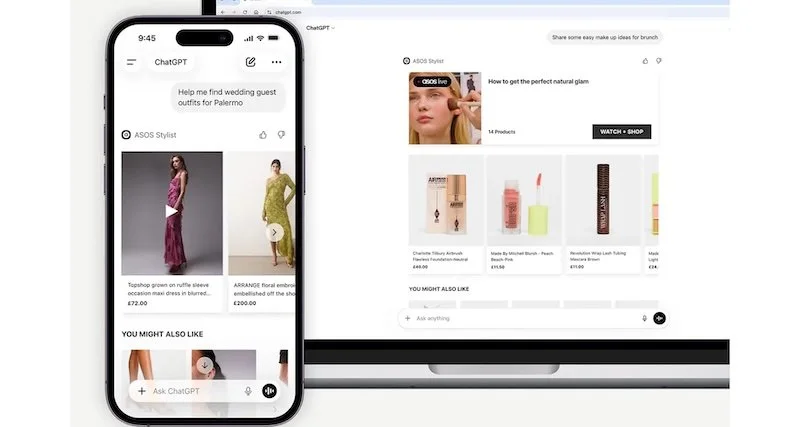
ASOS launches Stylist app inside ChatGPT, powered by Bambuser's video commerce intelligence layer.
retailtechinnovationhub.comUK fast-fashion giant ASOS formally launched ASOS Stylist, an app running inside ChatGPT. The backend uses Sweden-based Bambuser's new Intelligence Layer and video-player widget, turning ASOS's full product catalog and live/recorded video into machine-readable, shoppable surfaces for the LLM.
Prompts like "show me pastel floral A-line dresses for spring" pull a curated edit across hundreds of brands and translate it into styling suggestions — all inside ChatGPT. Where previous ChatGPT Shopping experiences were "text + still image," Stylist is the next step: video and live commerce become first-class inputs.
For categories like fashion and cosmetics where combinatorial suggestion drives purchase intent, the bundle of LLM + video + inventory is a step-change asset. How quickly other fashion retailers can ship comparable ChatGPT Apps will start to separate channel strategies.
Deep dive: ASOS × Bambuser ChatGPT Stylist — Video Commerce Enters Agentic Fashion
Mirakl Study: Most Retailers Are Not "Agentic Commerce Ready"
Leading tech partners rate retailer AI commerce readiness at just 4.4/10. Survey reveals critical gaps in catalog, GEO and operations—plus why marketplaces win.
www.mirakl.comMarketplace platform Mirakl published a survey of leading tech partners showing retailer AI commerce readiness averages just 4.4/10. The gaps span product catalog structure, generative engine optimization (GEO), and operational alignment.
A companion Mirakl analysis found that less than 1% of product pages clear an "LLM-ready" threshold (GEO score 80+). 43% of pages lack reviews/ratings/Q&A, and 86% have images AI struggles to read. Combined with Bessemer's "Delegated Buyer" essay (May 22) and PYMNTS's "Agentic Commerce Checklist" (May 26), the strategic question is becoming: how do retailers restructure their product data for agents?
PYMNTS: Card Networks Frame Agentic Commerce as Trust, Identity and Tokenization

Visa's Olaseni Alabede says existing commerce rails must be adapted to support a new class of AI-initiated transactions.
www.pymnts.comPYMNTS distilled Visa and Mastercard's agentic commerce moves into three layers: trust, identity and tokenization. Building on Alipay's AI Wallet (May 27) and Mastercard's trust-layer framing, card networks are pushing into registries and protocols that identify "agents" rather than just humans.
Insider One Acquires Bluecore — Expanding the Agentic Customer Engagement Stack

Insider One acquires Bluecore, a retail martech unicorn serving 400+ enterprise brands, to expand its agentic customer engagement platform.
www.prnewswire.comInsider One, the agentic customer engagement platform, acquired Bluecore, a retail martech unicorn whose customers include Sephora, J.Crew, The North Face and Ralph Lauren. Bluecore's "Transparent ID Network" processes more than 10B shopper events daily — combined with Insider One's "Agent One" suite, the deal strengthens an autonomous personalization layer purpose-built for retail.
The category is shifting from feature-by-feature CDP/personalization tools toward a "tell agents the outcome, let them choose the path" model — a setup that maps onto how Salesforce, Optimizely and Bloomreach are also re-positioning.
AWS Launches "Agentic Shopping Assistant" — Externalizing Alexa for Shopping
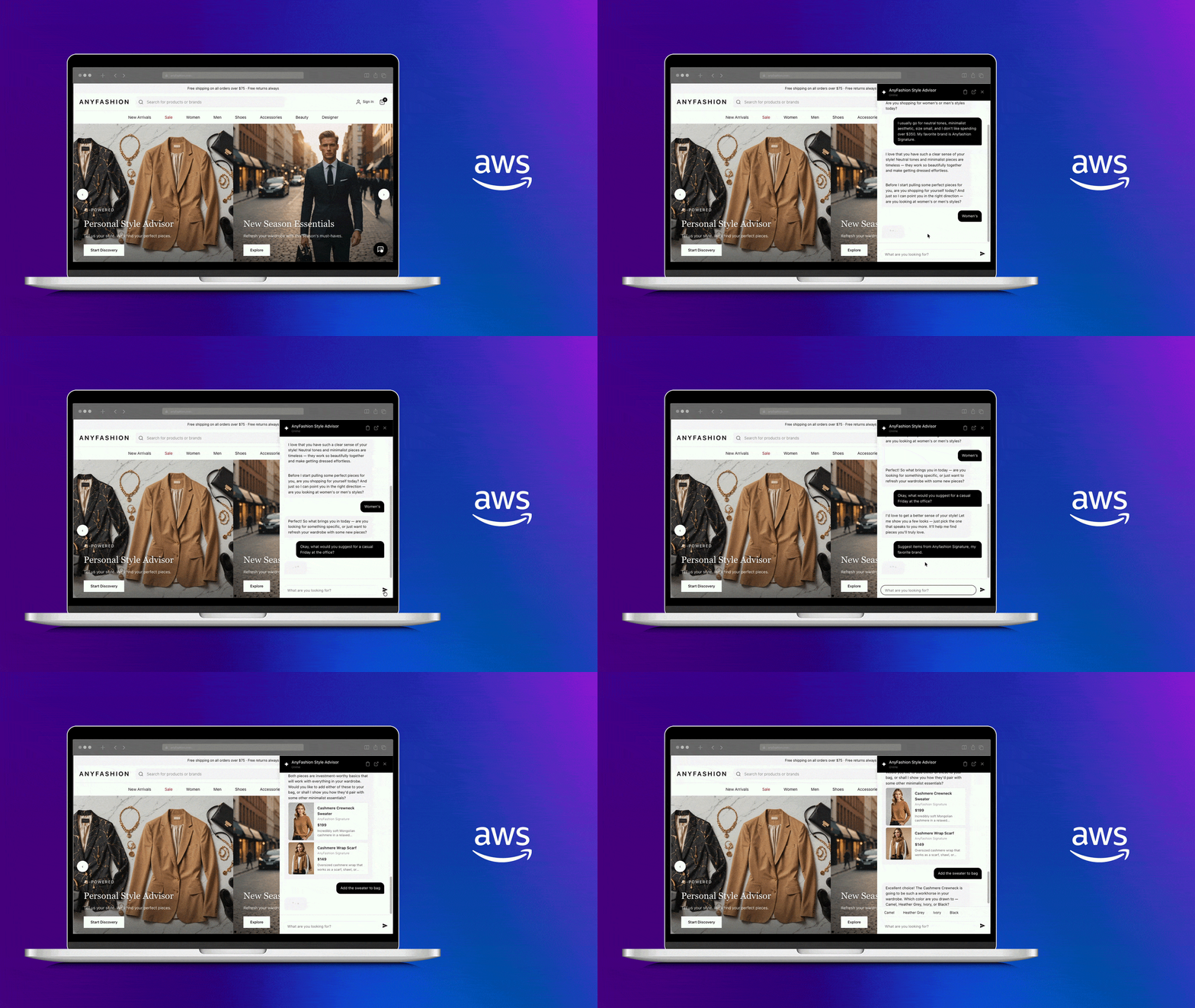
AWS brings the technology and learnings behind Amazon's successful Alexa for Shopping agentic assistant to retail customers.
www.aboutamazon.comAWS launched the AWS Agentic Shopping Assistant, offering the conversational shopping tech that powers Amazon.com's "Alexa for Shopping" to third-party retailers. Retailers keep ownership of their product catalog, brand and business rules, and AWS says a custom AI assistant can be stood up in roughly 60 days.
Early adopter Kate Spade rolled out a "gift concierge" agent in April. Combined with Amazon's external commercialization of its in-house AI shopping tech (May 28), this completes a cloud-side line-up for "white-label agentic experiences" alongside Google, Microsoft Copilot, OpenAI (Shopify/Walmart) and Walmart Sparky.
Payments & Fintech
Robinhood Expands Agent Card and Agentic Stock Trading (Follow-up)

Robinhood announced that customers can now use agents to conduct stock trading and shop with its credit card.
fortune.comFollowing our May 28 deep dive on Robinhood's agent credit card, more details emerged on the 3% cash-back structure and the scope of agentic stock trading. Beyond the BNPL/card competitive narrative, the real signal is a consumer financial product designed from the ground up for AI agents to spend with.
Tencent Connects PayPal to WeChat Pay — US Users Can Now Pay at Chinese Merchants

Tencent connects PayPal to WeChat Pay via TenPay Global, letting US users scan QR codes at Chinese merchants with 90-day fee waivers and $5,000 transaction limits.
cryptobriefing.comTencent bridged PayPal and WeChat Pay via its cross-border payment platform TenPay Global. US-based PayPal users go first, and can scan QR codes at WeChat Pay merchants across mainland China. The first 90 days come with fee waivers; per-transaction cap is $5,000.
This is one of the cleanest legal bridges yet between China's QR rail and an overseas payment network. Tencent reports foreign-visitor WeChat Pay transaction volume grew ~80% YoY in Jan–April 2026 — a direct signal for inbound ecommerce and travel/subscription products targeting China.
Global Ecommerce
EU Fines Temu €200M Under DSA — A New Bar for Platform Liability

The European Commission issued a record €200 million Digital Services Act penalty against Temu after independent testing confirmed unsafe baby toys and faulty chargers.
www.techtimes.comThe EU fined Chinese ecommerce giant Temu €200M (about $232M) for violations of the Digital Services Act (DSA) — sales of illegal/unsafe products, weak risk management, and inadequate handling of consumer reports. It is the second major DSA enforcement action against a leading platform.
Temu must submit a corrective action plan by August 28, with periodic penalties possible if the plan falls short. Non-EU platforms operating in the EU now face explicit upstream responsibility for product safety and risk assessment. Shein, TikTok Shop and AliExpress are obvious analogs — cross-border operators in Europe should expect tighter scrutiny of seller management and compliance.
TikTok Shop Expands to Four New European Markets — Austria, Belgium, Netherlands, Poland
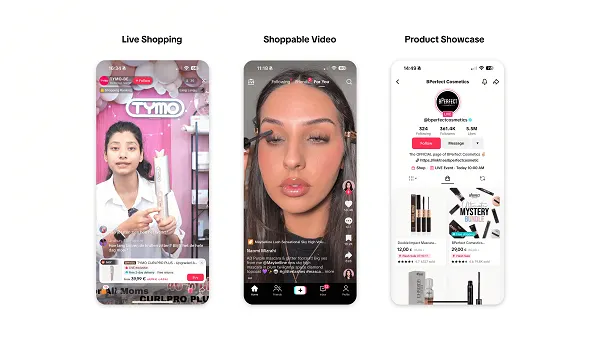
TikTok Shop launches in Austria, Belgium, the Netherlands and Poland on June 15, with sellers able to sign up from June 1.
www.socialmediatoday.comTikTok Shop opens in Austria, Belgium, the Netherlands and Poland on June 15, with seller sign-ups starting June 1. With the UK, Germany, Spain, Ireland, Italy and France already live, that brings TikTok Shop to ten European markets.
The "Sell Across Europe" program lets sellers launched in one market expand to the rest of TikTok Shop's EU footprint. Daily GMV on existing EU markets has been growing triple-digits between August 2025 and February 2026, per TikTok's own numbers — making it a fast-rising entry point for cross-border ecommerce.
Logistics & Fulfillment
DHL eCommerce and USPS Sign $10B+ Last-Mile Exclusive

Before USPS takes over for final mile, DHL eCommerce will continue to handle nationwide pickup, sortation across its 19 fully automated hubs, and linehaul on its air and ground network.
www.dcvelocity.comDHL eCommerce and the US Postal Service signed a $10B-plus multi-year exclusive: USPS handles the last mile across 170M+ US delivery points after DHL completes pickup, sortation at 19 automated hubs, and linehaul. The agreement extends a 25-year partnership.
USPS gains a substantial last-mile revenue stream less dependent on Amazon; cross-border merchants gain clearer delivery economics. Regional last-mile carriers and alternative parcel networks see a big chunk of share locked up.
Companies & Funding
Zoovu Acquires XGEN AI — Unifying Discovery and Generative AI

Zoovu acquires XGEN AI to merge search, guided selling, recommendations and conversational AI into one AI-native product discovery engine.
www.shopifreaks.comProduct discovery and recommendation vendor Zoovu (Microsoft, Bosch, Canon, Honeywell) acquired XGEN AI (Marc Jacobs, Valentino, Sonos). The merged platform aims to unify search, guided selling, bundling, recommendations and conversational AI on one data model — answering the common complaint that enterprises run product discovery on a stack of five to seven disconnected vendors.
Kopa.ai Raises €2M Seed — An AI OS for Shopify Brands

Kopa.ai develops AI agents that automate marketing, inventory, campaigns and storefront management for e-commerce teams.
tech.euVilnius-based Kopa.ai raised €2M co-led by XTX Ventures and Practica Capital. The platform runs autonomous agents across ads, inventory forecasting, pricing and landing-page generation for Shopify brands. Public launch was December 2025; by May 2026, the company reports €2M+ ARR and 2,000+ customers.
The pitch is to flip ecommerce ops teams from "operators" to "orchestrators" — early proof that delegation-to-agents is becoming a viable layer for mid-market Shopify brands.
Rep AI Raises $6.2M — Shopify AI Shopping Assistants Get a Boost

Rep AI, an AI platform purpose-built for ecommerce brands, raised $6.2M strategic follow-on led by Silicon Road Ventures with participation from Zendesk.
www.prnewswire.comRep AI, a Shopify-focused AI shopping assistant, closed a $6.2M strategic follow-on led by Silicon Road Ventures with strategic participation from Zendesk — about 20 months after its $8.2M Series A.
Rep AI's pitch is shared shopper intelligence: detect intent from behavior, then surface it to marketing, CX and sales teams rather than only conversational shoppers. Conversational-selling layers on top of Shopify continue to attract capital.
Takeaway
The structural story of the day is Google bundling Universal Cart × UCP × AP2 into one I/O announcement, sharpening what the agentic commerce backbone actually looks like. Around that, vertical implementations are landing fast: Travelport in travel, ASOS × Bambuser in fashion video, Visa × Replit in the developer layer.
At the same time, the EU's Temu fine, the DHL × USPS megadeal and the Mirakl readiness study expose the parts still lagging: regulation, logistics and operator readiness. Before "agents buy," there is still upstream work on product safety, data structure and delivery networks — and that is where differentiation continues to live.