Google Universal Cart Explained: How UCP and AP2 Are Reshaping the Agentic Shopping Battleground
A deep dive into Google I/O 2026's Universal Cart, Universal Commerce Protocol (UCP), and Agent Payments Protocol (AP2): how they work, who is on board, and what merchants need to do next.

Key Takeaways
- Universal Cart, unveiled at Google I/O 2026, is a single cart that follows shoppers across Search, Gemini, YouTube, and Gmail, rolling out in the U.S. this summer.
- Two open protocols sit underneath it: UCP for commerce mechanics and AP2 for signed-payment authorization. Their roles are distinct, and merchants need to plan for both at once.
- With Amazon's Alexa for Shopping going inward and ChatGPT Instant Checkout stalling, Google's stack is positioning to own both the discovery surfaces and the payment rails simultaneously.
What Universal Cart Actually Is: One Cart Across Google's Surfaces

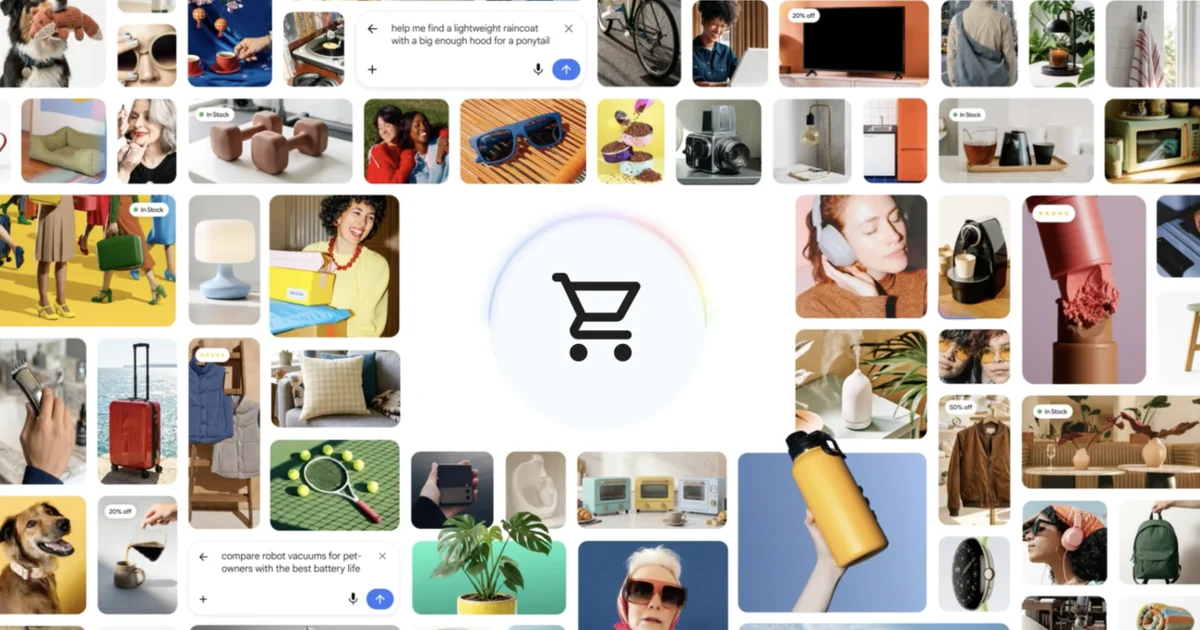
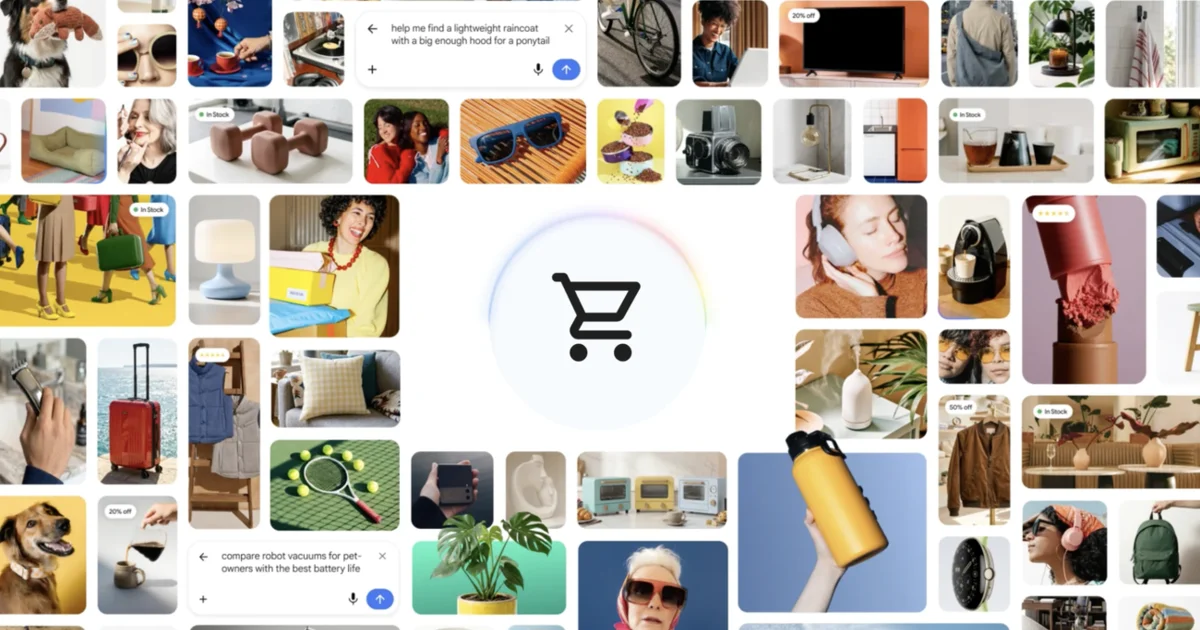
At Google I/O 2026, we introduced an intelligent cart that corrals everything you're shopping, expansions to UCP, tech to power agents that buy for you and more.
blog.googleOn May 19, 2026, Google Shopping VP/GM Vidhya Srinivasan introduced Universal Cart on the I/O 2026 keynote stage. On the surface it sounds simple: whether you stumble onto a product through Search, Gemini, YouTube, or Gmail, it all funnels into one cart. The implication, though, is much bigger than that.
Picture the user flow. You save a pair of running shoes from a YouTube creator review. Later you ask Gemini, "any better options?" and it lines up alternatives next to the saved item. A discount code arriving in your Gmail gets applied automatically. All of that happens inside the same cart object, with Gemini running price history, inventory, restock, and compatibility checks in the background and nudging you toward the right moment to buy.
The rollout starts on Search and the Gemini app in the U.S. this summer, with YouTube and Gmail to follow. Launch partners include Nike, Sephora, Target, Ulta Beauty, Walmart, Wayfair, and Shopify merchants such as Fenty and Steve Madden. Checkout supports two paths — finishing the purchase right inside Google with Google Pay, or handing the cart off to the merchant's site — and crucially, the brand remains the merchant of record in either case.
One demo on the I/O stage is worth dwelling on. A user building a custom PC drops parts from several retailers into Universal Cart, and the cart flags that the selected motherboard and CPU socket don't match. It then proposes a compatible board from a different retailer. As Wisepim CTO Diego Nijboer pointed out, the retailer that won that sale never showed the buyer a homepage, a hero banner, or a product detail page. The win came from having socket-type attributes structured in a way an agent could read. We'll come back to why that matters.
UCP vs. AP2: Two Protocols Doing Two Very Different Jobs
A lot of coverage blurs these together, so it's worth being precise. Behind the visible Universal Cart product sit two distinct open specifications: Universal Commerce Protocol (UCP), which Google introduced with retail partners at NRF in January 2026, and Agent Payments Protocol (AP2), which Google Cloud announced in September 2025.
| Dimension | UCP | AP2 |
|---|---|---|
| Scope | End-to-end commerce: discovery, buying, post-purchase support | Authorization, execution, and audit of payments |
| Primary subject | Retailers and product data | Users and payment instruments |
| What it carries | Inventory, price, fulfillment, and cart interop signals | Three-layer signed mandates: Intent / Cart / Payment |
| Interop | Works with A2A, MCP, and AP2 | Operates as an extension of A2A and MCP |
| Anchor partners | Shopify, Etsy, Walmart, Target, Wayfair, and PSPs | Mastercard, Amex, PayPal, Adyen, Stripe and 60+ payments players |
| Merchant homework | Product feed, inventory APIs, cart hand-off integrations | Designing the signed-receipt audit trail for returns and disputes |
UCP is the shared language between agents and merchants for the commerce side of the transaction. Its repository lives at Universal-Commerce-Protocol/ucp and was co-developed with Shopify, Etsy, Wayfair, Target, and Walmart, with explicit interop into A2A and MCP. AP2, by contrast, exists to prove — cryptographically — who authorized what payment, for how much, under which conditions.
Once you hold the line between them clearly, the merchant homework also becomes clearer. UCP is about commerce data: feeds, inventory APIs, cart hand-off. AP2 is about payment receipts: returns, chargebacks, fraud handling. The two are complementary; neither stands alone.
The Three Mandates That Make AP2 Work
The heart of AP2 is the Mandate — a tamper-proof, cryptographically signed digital contract. Google decomposes it into three layers.
The first is the Intent Mandate: a signed record of the user's goal and constraints, like "white running shoes under $150." The second is the Cart Mandate, signed at the exact moment the user approves a specific cart at a specific price — closing the door on "what I saw is not what got charged." The third is the Payment Mandate, the derived credential the payment network ultimately sees. Chained together, these produce a non-repudiable audit trail that survives any later dispute.
Today's payment systems assume a human is clicking 'buy' on a trusted surface. Autonomous agents break that assumption. AP2 is a common foundation that answers three questions: authorization, authenticity, and accountability.
In practice, the split is between two shopping modes. For human-present purchases the chain is Intent → Cart, both signed in real time. For human-not-present delegations like "buy concert tickets the moment they go on sale," the user signs a detailed Intent Mandate up front with price and timing limits, and the agent generates a Cart Mandate automatically once those conditions are met. AP2 is backed by more than 60 payments and technology firms — Adyen, American Express, JCB, Mastercard, PayPal, Worldpay, Coinbase, and others — and it covers everything from cards to stablecoins. Google has said it will begin embedding AP2 into its own products starting with Gemini Spark.
Why Spanning Google's Surfaces Is the Real Punchline
The strategic weight of Universal Cart sits less in the feature set and more in which surfaces it stitches together. Search, Gemini, YouTube, and Gmail cover the funnel from the very first product spark, through consideration and re-engagement, all the way to delivery notifications. Drop a unified cart across all of that and you've effectively created a single rail where, regardless of how the shopper found the product, the exit ramp leads either to Google Pay or to a UCP-aware merchant hand-off.
The footprint is widening fast. UCP-powered checkout is moving to Canada and Australia later this year and the U.K. after that, and the protocol is expanding into hotel booking and local food delivery. Hotels UCP already has live developer documentation, which means travel inventory bought through agents is no longer hypothetical.
Here is the competitive picture as it stands today.
| Player | Flagship AI shopping surface | Strength | Current weakness |
|---|---|---|---|
| Universal Cart / UCP / AP2 | Cross-surface reach across Search, YouTube, Gmail, Gemini plus the Shopping Graph | Concerns about Google Pay lock-in and merchants losing the storefront moment | |
| Amazon | Alexa for Shopping (formerly Rufus) | First-party purchase data and a reported 3x lift in conversion on Rufus sessions | Blocks external AI agents, sits out of UCP, betting on its walled garden |
| OpenAI | ChatGPT Instant Checkout | Distribution, brand awareness, head start in agentic discovery | Roughly 30 live merchants six months in, conversion reportedly one-third of Walmart.com |
| Shopify | UCP support / Shopify Sidekick | Long-tail inventory across millions of stores, deep developer ecosystem | Agent policy is left to individual merchants, creating fragmentation |
The thing to notice is that the competition is less locked-in than headlines suggest. OpenAI effectively wound down ChatGPT's Instant Checkout in March 2026 after six months of low merchant adoption — around 30 live merchants, with conversion reportedly running at one-third of Walmart's own site. Amazon folded Rufus into Alexa for Shopping, doubling down on its own walled garden while continuing to block external agents. By staying out of UCP, Amazon is making a clear long-term bet that its first-party data and conversion lift are enough to keep shoppers inside.
What Merchants Should Do Now: A Two-Front Plan
The merchant response splits cleanly into two streams of work — product data and payment receipts — and they need to run in parallel, not in sequence.
Start with product data. The Universal Cart premise is that an agent narrows the choices on the shopper's behalf. When it does, it isn't only looking at price and stock. The PC-build demo is the tell: the attributes that used to "help the human decide" — socket types, sustainability certifications, warranty terms — become the basis for differentiation in the agent era. Specs buried in marketing prose are invisible to an agent. The work is to break those attributes out into structured fields in your feed, and to walk through that exercise with whoever owns feed optimization on your team.
The second stream is the receipt layer. Once AP2's mandate chain is live in production, returns and chargebacks happen with both sides looking at the same signed record. That tilts the dispute floor in the merchant's favor, but only if your order-management system can store and surface Mandate IDs, version them correctly, and let support agents pull them up in a CS workflow. Mandate versioning, signature-log retention policies, internal tooling — these are engineering and legal items, and they need to be on the next planning cycle.
There is also a quieter risk that is easy to miss. As shoppers complete more purchases inside Google's surfaces, your own GA and MMP instrumentation will see fewer of those conversions natively. If your team is still measuring ROAS on the assumption that all conversions land on your site, the budget allocation models for next year will systematically misread agentic channels. Re-thinking attribution to count UCP-originated off-site conversions is a small project that pays for itself quickly.
Closing Thought: Two Fronts, One Calendar
Universal Cart is the moment when agentic commerce stops being a future-tense conversation and becomes a line item in this fiscal year's channel plan. Google is reaching for both the discovery surfaces (Search, Gemini, YouTube, Gmail) and the payment rails (Google Pay, AP2), with UCP as the open glue that the rest of the industry can plug into.
For merchants the assignment is straightforward to describe and substantial to deliver: structure your product data so agents can choose you, and design the signed-receipt operations AP2 assumes. How Amazon responds, how Shopify automates the merchant experience, and which PSPs you can switch to inside your existing contracts are all open questions. None of them are reasons to wait.