AI Commerce News Digest (June 16, 2026)
Akamai unveiled an AI agent identity-verification framework, the IMF flagged the risks of autonomous AI, and Adobe reported that ChatGPT and Gemini shoppers spend more. A digest of agentic commerce news from June 15, 2026, with takeaways for online retailers.


Key Takeaways
- Akamai unveiled an "Agentic Security Framework" that bundles AI agent identity verification, risk scoring, and monetization, marking a serious push to build the trust layer for agentic commerce.
- The IMF published a report mapping the risks and promises of autonomous AI in payments and e-commerce, bringing a policy and regulatory lens to the debate.
- New Adobe data shows shoppers arriving from ChatGPT and Gemini linger longer and spend more, making "how to capture AI traffic" a practical priority for online retailers.
The AI commerce news on June 15 converged on a single question: how do we trust and welcome AI agents? Akamai announced infrastructure to verify agent identities, and the IMF examined the risks and benefits of autonomous AI in payments and e-commerce. Meanwhile, on the consumer side, Adobe data put concrete numbers behind the idea that AI-referred shoppers spend more. Today's digest organizes the day's key news through four lenses: trust infrastructure, policy, consumer data, and corporate M&A.
Today's Top Stories
Akamai unveils "Agentic Security Framework" to verify AI agent identities

New Akamai framework links identity, risk scoring and edge enforcement so merchants can authenticate AI agents, manage fraud risk and monetize traffic.
www.stocktitan.netAkamai announced an "Agentic Security Framework" that combines identity verification, risk scoring, and edge enforcement for AI agents, or "AI shoppers." Merchants can now authenticate whether an agent visiting their site is legitimate and manage the associated fraud risk.
Until now, AI agent traffic tended to face a binary choice: block it wholesale as bots, or let it through undefended. Akamai's framework offers a third path, identifying agents and accepting them conditionally, and goes further by treating agent traffic as something to monetize.
Alongside Visa's Trusted Agent Protocol and Cloudflare's efforts, the picture is now clear: infrastructure providers are racing to own the "trust layer" of agentic commerce.
Full article: Akamai unveils "Agentic Security Framework" to verify AI agent identities
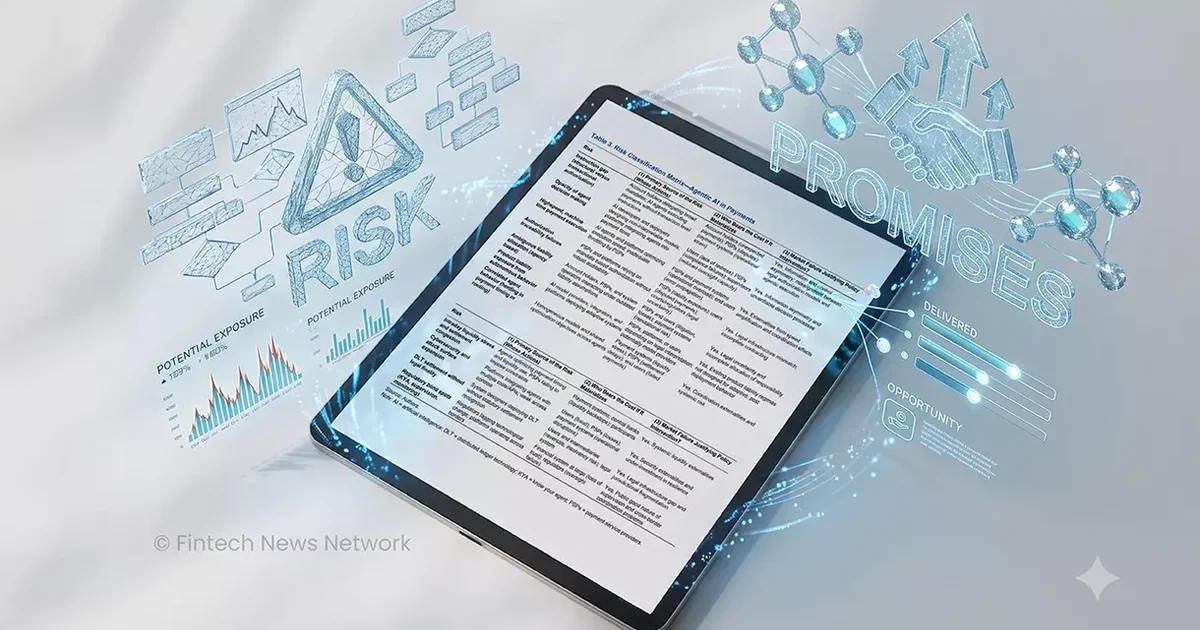
IMF outlines the risks and promises of autonomous AI in payments and e-commerce

Agentic AI has the potential to transform payment systems and e-commerce by shifting from basic automation to autonomous systems capable of complex reasoning and task management.
fintechnews.chThe International Monetary Fund published a report mapping the risks and promises of agentic AI in payment systems and e-commerce. It argues that the shift from simple automation to autonomous systems capable of complex reasoning and task management will reshape how transactions themselves work.
The report addresses not only the benefits but also risks such as consumer protection, fraud, accountability, and market concentration. As card networks and fintechs rush to implement, it matters that a public institution is now framing the institutional questions.
With policy and regulatory perspectives now added to a field that companies have driven so far, the conversation has moved one step from "what can we do" toward "how should we prepare."
Full article: IMF outlines the risks and promises of autonomous AI in payments and e-commerce
Agentic Commerce
Shoppers from ChatGPT and Gemini linger longer and spend more (Adobe data)

According to new May data from Adobe Analytics, U.S. consumers who click through to retail websites from these large language models (LLMs) are lingering longer and spending more.
news.azAccording to new May 2026 data from Adobe Analytics, U.S. consumers who reach retail sites via large language models (LLMs) such as ChatGPT and Gemini spend more time on site and spend more money.
Shoppers who arrive after consulting an AI have already done their comparison and consideration, landing on a site with high purchase intent. Volume remains small, but the per-visitor "quality" outpaces traditional channels.
These numbers provide a rationale for investing in AI search optimization (AEO/GEO) and structured product data. Being "correctly understood and recommended" by AI is starting to translate directly into sales.
Full article: Shoppers from ChatGPT and Gemini linger longer and spend more (Adobe data)
Dutchie launches "Consumer AI" bundling Voice AI and agentic commerce

Dutchie, the leading cannabis technology platform powering more than 6,500 dispensaries across North America, launches a Consumer AI suite.
www.prnewswire.comDutchie, which powers more than 6,500 cannabis dispensaries across North America, announced "Consumer AI," a suite combining Voice AI, agentic commerce, a register Co-Pilot, and consumer insights.
What stands out is that agentic commerce is spreading beyond general-purpose e-commerce into heavily regulated, vertical-specific platforms. Even in areas with industry-specific compliance burdens, AI-assisted purchasing is becoming a standard feature.
The trend of vertically focused platforms packaging AI features is likely to ripple out to other industries.
Corporate Moves and M&A
Nuvei to acquire Payoneer for $2.75 billion

Analysts say Payoneer is an attractive addition for Nuvei in a market where fast-moving developments in international payments, AI and digital assets are pressuring payment companies.
www.americanbanker.comCanadian payments giant Nuvei agreed to acquire cross-border payments firm Payoneer for $2.75 billion, a sale coming five years after Payoneer's IPO.
Analysts note that as international payments, AI, and digital assets accelerate, payment companies are pressured to complement their scale and capabilities. Payoneer's global remittance network is seen as an attractive addition for Nuvei.
The deal signals that consolidation among payment players is intensifying as the battle for agent-payment leadership heats up.
Meesho to acquire B2B commerce platform Kirana Club for ~Rs2 billion

Meesho has agreed to acquire Kirana Club, a community-focused B2B commerce platform, in a transaction valued at Rs2.02bn ($21.34m).
www.retail-insight-network.comIndian e-commerce major Meesho announced it will acquire Kirana Club, a community-focused B2B commerce platform, for roughly Rs2.02 billion (about $21.34 million).
Kirana Club operates a network connecting India's small retailers (kiranas). For Meesho, which has grown on a model where AI drives much of its order volume, this is a step toward strengthening ties with local mom-and-pop stores.
The move extends Meesho's consumer-facing AI capabilities upstream into B2B and distribution, hinting at a strategy to capture the layered commerce flows of the Indian market.
Alibaba weighs acquiring fresh-delivery platform Pupu (countering Meituan)

Chinese e-commerce leader Alibaba Group is weighing an acquisition of Fujian-based on-demand fresh grocery delivery platform Pupu.
asia.nikkei.comChina's largest e-commerce company, Alibaba, is reportedly weighing an acquisition of Pupu, a Fujian-based on-demand fresh grocery delivery platform, in a bid to counter Meituan in the quick-commerce race.
In on-demand delivery, shrinking the time from order to doorstep determines competitiveness. By absorbing Pupu's network of hubs and logistics, Alibaba aims to fight back in instant grocery delivery.
In the Chinese market, the line between e-commerce and delivery is dissolving, and the giant platforms continue to reshuffle around "delivery within tens of minutes."
Global E-Commerce
Walmart opens Walmart.com to Mexican shoppers

Walmart Mexico e-commerce expansion gives shoppers access to hundreds of thousands of Walmart.com marketplace products through cross-border shipping.
www.grocerytradenews.comWalmart opened its U.S. Walmart.com to Mexican consumers, letting them buy hundreds of thousands of marketplace products via cross-border shipping.
Mexico is a fast-growing e-commerce market, and Walmart has added cross-border commerce as a new entry point on top of its existing local operations. A system that ships U.S. inventory across the border reflects a strategy that treats all of North America as a single market.
As global e-commerce players compete on cross-border assortment and delivery networks, Walmart's contiguous North American expansion is likely to influence rivals' cross-border strategies.
Conclusion
What ran through the day's news was the work of building a foundation to welcome AI agents as trustworthy participants. Akamai presented an identity-verification framework, the IMF raised institutional questions, and Adobe's data confirmed that AI-referred customers are higher quality. On the corporate side, M&A-driven consolidation continued, with both payments and retail readying their formations for the next round of competition. For online retailers, the question is the order in which to prepare to be "trusted, chosen, and paid" by AI.