AI Commerce News Digest (June 26, 2026)
Agentic commerce news for June 26, 2026: Airwallex pivots to agentic commerce at an $11bn valuation, Walmart buys Vibe.co for $1.4bn to challenge Amazon's ad business, Visa's value-added services, GrailPay funding, NAVER's investment in SAZO, Amazon's India investment, and Anthropic vs. Alibaba.


Key Takeaways
- Airwallex reached an $11 billion valuation and put autonomous finance and agentic commerce at the center of its growth strategy
- Walmart acquired Vibe.co for $1.4 billion, taking direct aim at Amazon's ad business as the fight for AI-era retail media intensifies
- Capital is concentrating on the payments and trust infrastructure that underpins agent-driven transactions, from Visa's value-added services to GrailPay's raise
Today's Top Stories
Airwallex pushes into agentic commerce at an $11bn valuation

Business payments outfit Airwallex has hit an $11 billion valuation on a $320 million funding round as it gears up for a push into autonomous finance and agentic commerce.
www.finextra.comBusiness payments company Airwallex reached an $11 billion valuation on a $320 million Series H round. The company says it will direct the new capital toward a full push into autonomous finance and agentic commerce. A payments processor has placed a world where AI agents drive transactions at the heart of its growth strategy.
What stands out is how payment infrastructure firms are racing to own the agent-transaction layer. When an AI agent selects, books, and pays for a product, the behind-the-scenes work of identity verification, credit, and money movement determines the quality of the experience. Airwallex is leveraging its strengths in global transfers and multi-currency processing to claim this plumbing.
For commerce and booking operators, which payment platform supports agent transactions will soon become a selection criterion. Payments are expanding from mere settlement into the foundation on which agents can operate safely.
Walmart buys Vibe.co for $1.4bn, taking direct aim at Amazon's ad business

With a $1.4 billion deal for Vibe.co, Walmart is aiming to capture the ad dollars of smaller brands.
fortune.comWalmart announced it will acquire advertising platform Vibe.co for $1.4 billion. The goal is to capture the ad budgets of smaller brands and challenge Amazon's fast-growing advertising business. Retailers are increasingly competing not just to sell products but to build retail media — advertising powered by their own purchase data — as a new revenue stream.
Retail media grows even more important in an era when AI mediates purchases. In a world where AI agents pick products, the sponsorship mechanisms that determine which products get discovered and recommended become existential for brands. By absorbing ad technology, Walmart aims to control its purchase surface and the AI recommendation layer together.
For commerce operators, this signals the dissolving boundary between advertising and commerce. Sales channels are becoming advertising media at the same time, with AI presiding over both entry points.
Payments & Fintech
Agentic commerce fuels Visa's value-added services

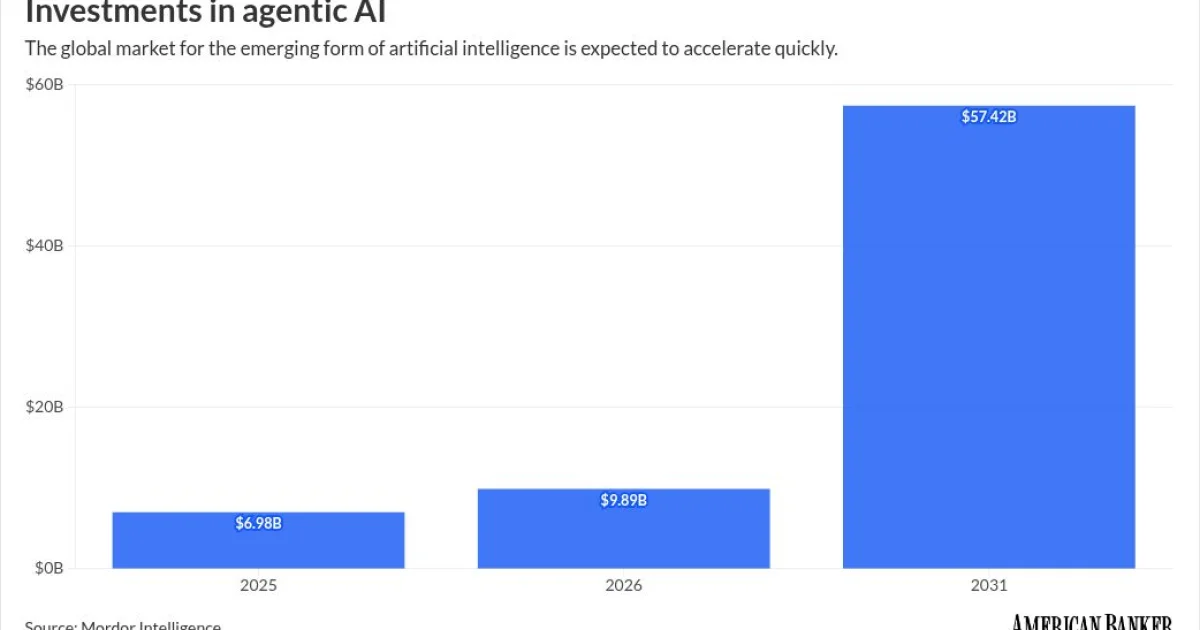
Visa's recent partnerships attempt to build demand for new forms of artificial intelligence while feeding value added revenue — a metric that payment investors watch closely.
www.americanbanker.comVisa is using partnerships with AI fintechs to drive demand for its value-added services (VAS). VAS refers not to transaction processing itself but to higher-order services such as fraud prevention, tokenization, and data analytics — a key metric investors use to gauge growth. The spread of agentic commerce is becoming a new source of demand for this upper layer.
As card processing fees mature, Visa positions the machinery that lets agents transact safely as a fresh revenue opportunity. Verifying the identity of AI agents and the legitimacy of transactions is exactly where VAS shines. Payment networks are shifting their footing from pipes to platforms that provide trust.
For operators, the value-added features that payment networks offer matter as options for securing the safety of agent transactions.
Full article: Why agentic commerce fuels Visa's value-added services — the new revenue structure of payment networks
GrailPay raises $10.5M to scale fraud infrastructure for agent payments

Series A capital brings total funding raised to $17.2M, fueling expansion of GrailPay's Payments Identity Network for instant payments and agentic commerce.
www.01net.itGrailPay, which handles payments risk decisioning, raised a $10.5 million Series A. Total funding now reaches $17.2 million, earmarked for expanding its Payments Identity Network for instant payments and agentic commerce. The premise is that as instant, irreversible payments grow, upfront risk decisioning becomes more important.
In agent transactions, there is little room for humans to approve each step. That is precisely why infrastructure to judge transaction legitimacy in an instant is essential. The flow of capital into specialist players like GrailPay is part of building the brakes and guardrails for agent payments.
Agentic Commerce
Manhattan Associates unveils Manhattan Marketplace, a shared engine for AI agents

Manhattan Associates announced a major addition to ActivePlatform: Manhattan Marketplace, where customers and partners discover and deploy intelligent agents, extensions, and accelerators.
www.manilatimes.netSupply chain and commerce software leader Manhattan Associates added Manhattan Marketplace to its ActivePlatform. It is a shared ecosystem where customers and partners discover and deploy AI agents, extensions, and accelerators. The aim is to scale AI use across logistics and commerce on a common foundation rather than through one-off builds.
As agent adoption reaches the front lines, the question of who builds which agents and how they are distributed becomes a challenge. A marketplace-style foundation makes verified agents easier to reuse and lowers the friction of adoption. It is a practical step toward embedding agents in enterprise supply chains.
Full article: What is Manhattan Marketplace — why Manhattan Associates is building a shared engine for AI agents in the supply chain
Revora raises $2M to scale conversational commerce in MENA
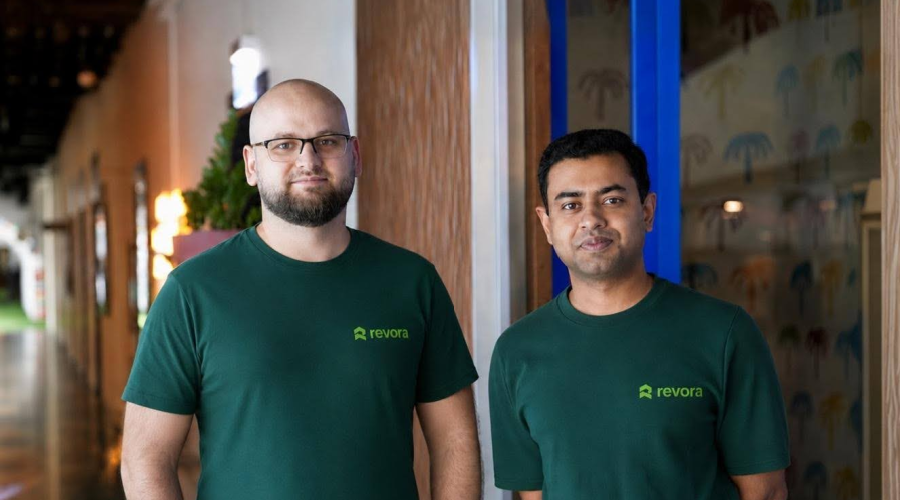
Saudi Arabia-headquartered e-commerce AI startup Revora, formerly known as MyAlice, has raised a $2 million seed round.
www.wamda.comSaudi Arabia-based Revora (formerly MyAlice) raised a $2 million seed round. The company is scaling AI-driven conversational commerce across the MENA region. The core mechanism suggests products through dialogue on messaging apps such as WhatsApp and carries customers through to purchase.
Messaging-based shopping is well established in MENA, providing fertile ground for conversational commerce. Revora uses AI to automate customer interaction and sales, helping brands complete the purchase experience on their own channels. It is an example of agentic commerce rooted in regional characteristics.
Full article: Revora (formerly MyAlice) raises $2M for conversational commerce — messaging purchases and agentic commerce in MENA
NAVER D2SF invests in cross-border agentic commerce startup SAZO
NAVER D2SF, the corporate venture capital arm of NAVER, has made a new investment in SAZO, a cross-border commerce startup.
www.prnewswire.comNAVER's corporate venture arm, NAVER D2SF, made a new investment in SAZO, a cross-border agentic commerce startup. SAZO uses AI agents to streamline transactions that span borders. It matters that a major Korean platform company is putting capital into the agentification of cross-border commerce.
Cross-border trade is a complex domain involving language, currency, tariffs, and logistics — exactly where AI agents can deliver value. Asia-originated agentic commerce is beginning to move concretely in the form of investment. In a field previously dominated by US players, regional players are gaining presence.
Global E-commerce
Amazon to invest $48 billion in India, accelerating AI and quick commerce

While Amazon's latest investment is largely earmarked for AI and cloud infrastructure, the e-commerce giant's growing commitment to India comes as it scales Amazon Now.
www.moneycontrol.comAmazon revealed plans to invest a cumulative $48 billion in India through 2030. Much of the capital is earmarked for AI and cloud infrastructure, but it also coincides with expanding its quick-commerce service Amazon Now to some 300 cities. It could further heat up competition in India's instant-delivery market.
The simultaneous push of large AI infrastructure investment and quick-commerce expansion is notable. By using AI for demand forecasting, inventory placement, and last-mile optimization, Amazon aims to improve the economics of quick commerce. Competition with Flipkart and Q-commerce players is set to grow longer and fiercer.
Also Notable
Anthropic accuses Alibaba of illicitly extracting AI capabilities

The firm alleged that Alibaba used fraudulent accounts to access data from its Claude AI model.
www.bbc.comAI company Anthropic accused Alibaba of using fraudulent accounts to access data from its Claude model and illicitly extract AI capabilities. While not a direct commerce story, it reflects the competition and tension around the large language models that underpin agentic commerce.
In a world where AI agents handle transactions, the quality and trustworthiness of the models that serve as their brains become a business premise. Disputes between model providers and friction over intellectual property are not irrelevant to operators adopting agent platforms. It highlights the risk-management question of which model to depend on.
Conclusion
Today was a day when payment infrastructure clearly emerged as the main battleground for agent transactions. Airwallex's large raise, Visa's value-added services, and GrailPay's funding all show that capital is flowing into the plumbing of money and trust that lets AI run transactions safely.
Meanwhile, Walmart's acquisition of Vibe.co tells us the fight over the entry point in the AI era is happening at the boundary of advertising and commerce. Combined with cross-border efforts like SAZO and Revora's conversational commerce push in MENA, agentic commerce is no longer confined to one domain — it is spreading across payments, retail, and cross-border trade. From tomorrow, the focus is on how these infrastructure investments translate into actual transaction volume.