AI Commerce News Digest (July 3, 2026)
Nuvei and Visa prove out in-agent payments, Square integrates with ChatGPT and Claude, Naver Shopping launches a full AI agent, and Worldline, ING, and Visa complete a live agentic payment in Europe. Today's agentic commerce news, all in one place.


Key Takeaways
- Nuvei and Visa completed a first-party in-agent payment proof of concept, unveiling a merchant-led agentic payments strategy
- Square integrated with ChatGPT and Claude while Naver launched a full AI agent, accelerating the implementation phase
- Worldline, ING, and Visa completed a live agentic payment in Europe, while Cross River teamed with Stripe on card issuance for agents
Here is your AI commerce news for July 3. Payment infrastructure dominated the day: Nuvei and Visa's in-agent payment proof of concept, Cross River and Stripe's issuance partnership, and a live agentic transaction in Europe from Worldline, ING, and Visa all landed within hours of each other. On the sales-channel side, Square's ChatGPT and Claude integrations and Naver's full AI agent launch show implementation accelerating as well.
Today's Top Stories
Nuvei Completes First-Party In-Agent Payment with Visa, Unveils Merchant-Led Agentic Payments Strategy

Nuvei announced the completion of a first-party in-agent payment with Visa and unveiled its merchant-led agentic payments strategy.
www.prnewswire.comPayments provider Nuvei announced on July 2 that it has completed a proof of concept for first-party in-agent payments with Visa. The setup allows checkout to complete entirely within an AI agent conversation, without redirecting to an external payment page.
Alongside the PoC, Nuvei unveiled a "merchant-led" agentic payments strategy. Rather than letting AI platforms own the entire purchase experience, merchants retain control of the customer relationship and the payment flow while still participating in agentic commerce.
Against the platform-led model exemplified by ChatGPT's Instant Checkout, this gives merchants a meaningful alternative. The battle for payment infrastructure is now advancing along two axes: agent-led and merchant-led.
Deep dive: Nuvei and Visa's first-party in-agent payment and the merchant-led strategy
Square Launches Agentic Commerce Integrations with ChatGPT and Claude
Payments provider Square announced integrations with AI platforms, OpenAI's ChatGPT and Anthropic's Claude, to help enable agentic commerce.
www.digitalcommerce360.comSquare, the payments platform under Block, announced integrations with OpenAI's ChatGPT and Anthropic's Claude. The move puts millions of small and mid-sized Square sellers within reach of AI-assistant-driven discovery and purchasing, dramatically widening the base of agentic commerce.
Until now, AI channel adoption has centered on large e-commerce platforms and forward-leaning brands. With Square providing the integration layer on top of its POS and payments stack, even single-store operators gain an AI sales channel without additional development.
Deep dive: What Square's ChatGPT and Claude integrations mean for SMBs
Agentic Commerce
Naver Shopping Launches Full AI Agent, Accelerating Korea's Chat Commerce
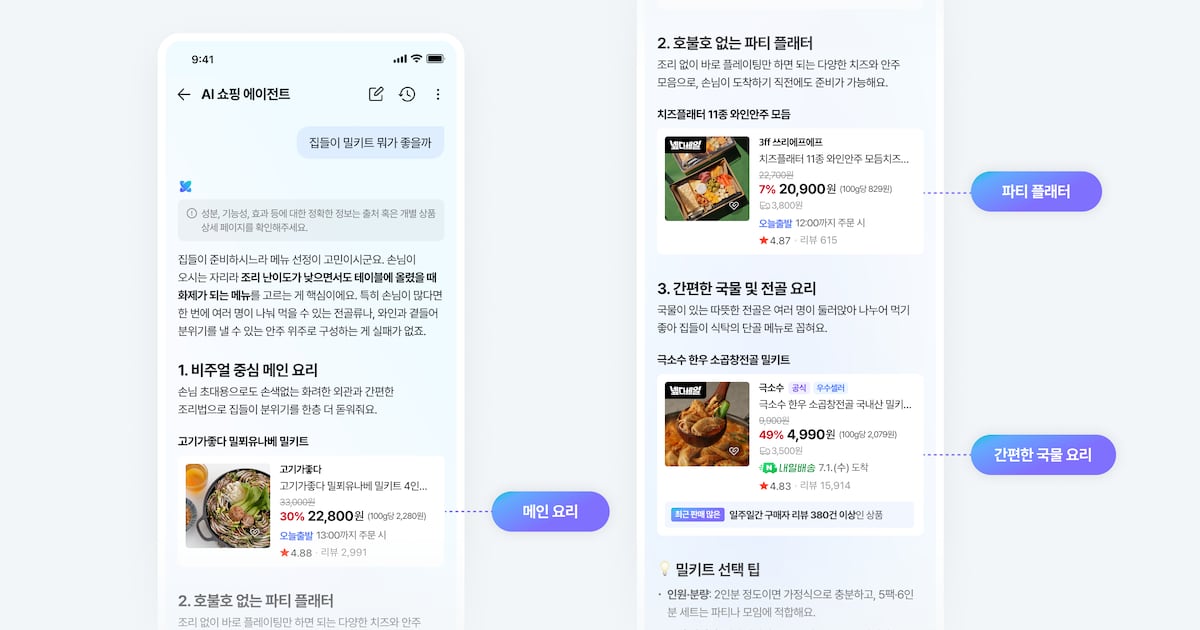
Beta ends as Naver's agent shifts from guide to doer, boosting purchases with smarter, context-aware suggestions
biz.chosun.comNaver, Korea's largest portal, has moved its shopping AI agent out of beta. According to reports, the agent's role is shifting from "guide" to "doer", driving purchases with context-aware suggestions.
Naver's vertical integration of search and commerce marks the full-scale arrival of chat commerce in the Korean market — a leading regional implementation worth watching for e-commerce operators across Asia, including Japan.
Deep dive: Naver Shopping's full AI agent and the state of Korean chat commerce
Cleverbridge Among the First to Enable Visa's Trusted Agent Protocol

Cleverbridge works with Visa to enable and test agentic commerce, helping software and SaaS companies prepare for secure AI-initiated transactions.
www.businesswire.comCommerce platform Cleverbridge announced early support for Visa's Trusted Agent Protocol (TAP) and Agentic Directory, giving software and SaaS companies a way to restrict transactions to approved AI agents only.
Deciding which agents to trust is a foundational problem for agentic commerce. Implementation vendors publicly committing to Visa's protocol suite signals a maturing ecosystem.
Sopra Steria Maps European Trust in Agentic Commerce
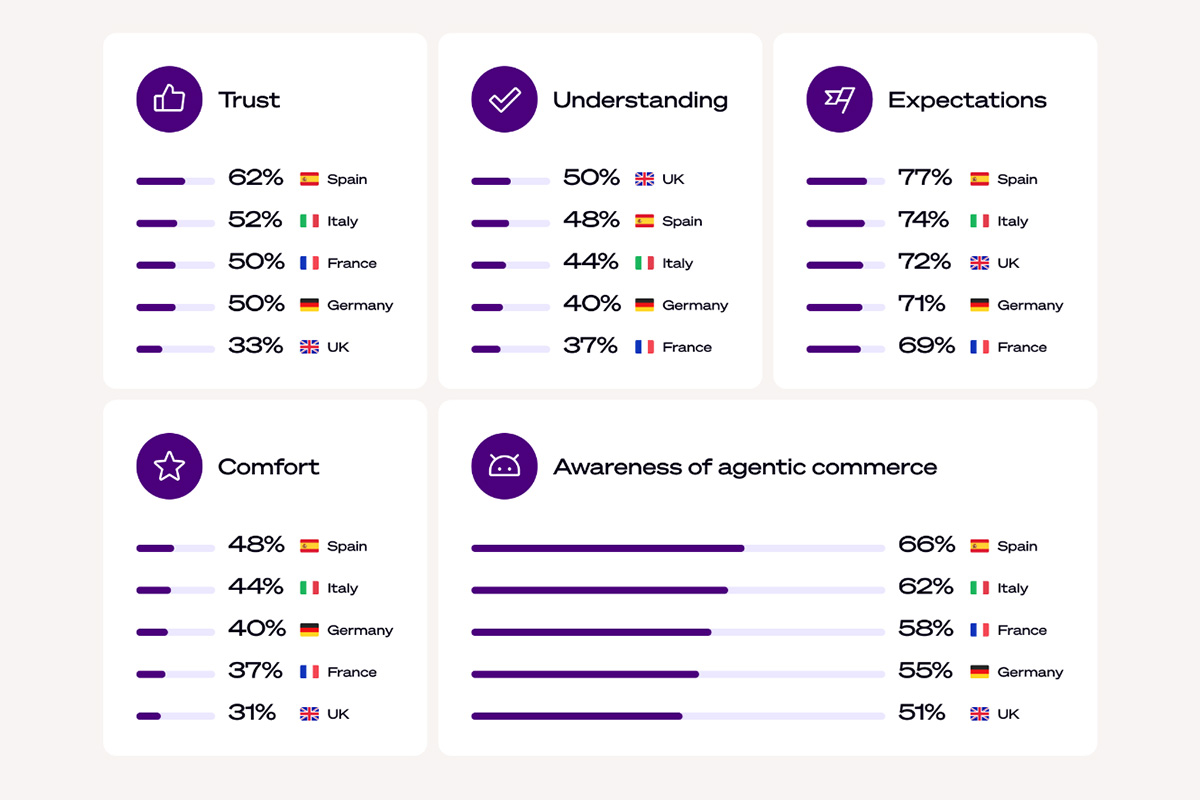
European consumers' understanding of AI agents, how they currently use AI, and how comfortable they are with Agentic Commerce
channelx.worldEuropean consulting major Sopra Steria published research mapping European consumers' awareness, usage, and comfort with AI agents. The picture that emerges: AI usage is spreading, but trust in autonomous purchasing is still being earned.
The PayPal-linked survey we covered on June 30 showed the same pattern — interest without full comfort in autonomous execution. Multiple studies now confirm that consumer trust is the biggest variable governing how fast this market grows.
Payments & Fintech
Worldline, ING and Visa Complete a Live Agentic Payment in Europe

The example, executed in Germany, illustrates how agentic payments can operate securely with strong customer and biometric authentication
www.electronicpaymentsinternational.comWorldline, Dutch bank ING, and Visa completed a live agentic payment transaction in Germany, combining strong customer authentication (SCA) with biometrics to show that AI-agent payments can run safely under Europe's regulatory regime.
This follows the Worldline–Mastercard–Crédit Agricole proof in France we covered on July 2 — meaning Worldline has announced two demonstrations with different card networks and banks within a single week. Europe's payment infrastructure players are clearly racing toward production.
Cross River Teams with Stripe on Issuance for Agentic Commerce

Cross River Bank expands its partnership with Stripe to power issuance for agentic commerce.
www.digitaltransactions.netCross River Bank is expanding its partnership with Stripe to support card issuance for agentic commerce — infrastructure for issuing payment credentials that AI agents can use, with controls on scope and spending limits.
Giving agents "their own card" is an alternative trust-building approach that sits alongside Visa's and Mastercard's agent authentication protocols. Bank–fintech partnerships entering this space signal the market is taking off.
Global E-commerce
Flipkart Is Building E-commerce LLMs; 40% of Code Now AI-Generated

Flipkart has deployed over 250 AI models across its ecosystem, with recent senior hires aimed at scaling its AI strategy after early deployments showed results.
www.moneycontrol.comIndia's largest e-commerce player Flipkart is developing e-commerce-specific LLMs, CPTO Balaji Thiagarajan revealed. The company has already deployed more than 250 AI models across its ecosystem, and 40% of its code is now AI-generated.
Building domain-specific models in-house rather than relying on general-purpose LLMs targets better accuracy and cost in product search, recommendations, and conversational purchasing — emblematic of emerging-market platforms internalizing AI as core technology.
Early Signs of Slowdown in Chinese Parcels After EU's €3 Fee (Follow-up)

A temporary slowdown appears to be emerging in the large volume of low-value online imports from China into Greece following the introduction of a €3 EU duty per customs code.
www.ekathimerini.comFollowing the EU's €3 duty on low-value parcels that took effect July 1, early signs of a slowdown in Chinese small-parcel imports are appearing in Greece. The duty applies to parcels under €150 from third countries, hitting the cross-border models of Shein, Temu, and AliExpress directly.
These are first-days numbers and could reflect temporary wait-and-see behavior, but the structural erosion of cross-border price advantages makes parcel volumes worth tracking from here.
Closing Thoughts
Today's theme was making agent-driven transactions trustworthy, with moves landing across the payments stack in quick succession. Nuvei's merchant-led strategy, Cleverbridge's Visa TAP support, and Cross River's issuance partnership all build the trust infrastructure needed to hand transactions to AI agents. The live transaction in Germany from Worldline, ING, and Visa showed these mechanisms can run safely under Europe's regulatory regime.
As Square and Naver demonstrate, the agentification of sales channels is reaching small businesses and everyday consumers. With infrastructure build-out and consumer trust proceeding in parallel, e-commerce operators now face concrete choices: which protocols to adopt, and how much of their data to open to agents.