Square Launches ChatGPT and Claude Integrations: How AI Orders Flow Straight to the POS With No Added Commissions
Square announced a ChatGPT app and Claude plugin. We break down how the zero-setup, zero-commission agentic commerce integration routes AI orders into existing POS systems, the Alexa+ and UCP roadmap, and what it means for sellers.

Key Takeaways
- Square announced a ChatGPT app and Claude plugin on July 1, 2026. Customers can discover restaurants, browse menus, and complete orders inside AI conversations, starting with food and beverage sellers in the US
- Eligible sellers are enrolled automatically with no development work, no setup, and no added marketplace commissions. Orders route through existing Square Online Ordering straight into the POS and kitchen display system
- Square is also working with Amazon on Alexa+ and co-developing the Google-led UCP standard. Payment platforms are absorbing the work of connecting to AI channels, turning AI readiness for small businesses into a question of which platform they run on
Square Announces a ChatGPT App and Claude Plugin
Payments provider Square announced integrations with AI platforms, OpenAI's ChatGPT and Anthropic's Claude, to help enable agentic commerce.
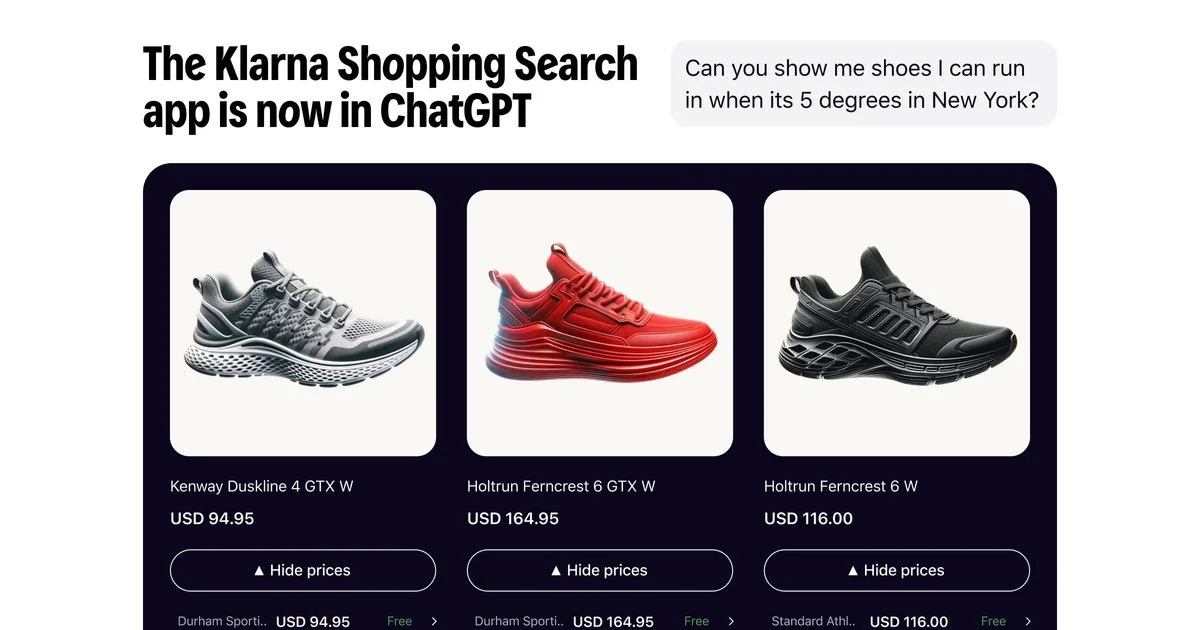
www.digitalcommerce360.comOn July 1, 2026, US payments platform Square announced integrations with OpenAI's ChatGPT and Anthropic's Claude. According to the official announcement, the integrations ship as an app for ChatGPT and a plugin for Claude, and the goal is to let sellers get discovered and transact at the exact moment customers are making purchasing decisions through AI-powered conversations.
The first sellers to go live are US food and beverage businesses with an activated Square Online Ordering profile. Users can find nearby restaurants inside ChatGPT or Claude, browse menus, and complete the purchase through the Order by Cash App experience. As more people ask an AI where to eat and what to order, Square wants its sellers standing inside that conversation. That is the vision behind the launch.
Taken on its own, the announcement looks like a modest first step confined to one category. But the fact that a platform controlling payments and the POS has made AI assistant connectivity a standard feature carries weight well beyond the initial scope.
Zero Setup, Zero Added Commissions: How Orders Reach the POS
The most distinctive part of this launch is how little it asks of sellers. Eligible businesses are enrolled automatically, with no API to build, no new tool to configure, and no added cost. AI discoverability is managed from the existing Square Dashboard, while Square handles the infrastructure layer, syncing business information, menu data, hours of availability, and ordering status in real time.
Order flow rides on existing operations as well. Orders placed through ChatGPT or Claude route through Square Online Ordering directly into the POS and kitchen display system. The order source is visible in Square's reporting, so operators can track how much revenue the AI channels are actually generating. Not having to learn a new operation for a new channel matters a great deal to restaurants running a busy floor.
The fee design goes a step further. Square stated it charges no additional marketplace commissions on orders placed through these integrations. The official announcement frames this as a meaningful distinction at a time when commission structures on traditional delivery platforms continue to compress restaurant margins.
There is a backstory to this ordering infrastructure. In October 2025, Block introduced Neighborhoods, a way to order from local restaurants inside its consumer payments app Cash App. As Restaurant Business reported, the network connects Square sellers with Cash App's 57 million active users, and participating restaurants pay a processing fee of just 1%. The new ChatGPT and Claude integrations effectively open that ordering network to a new front door: AI assistants.
An Expansion Strategy Built on Absorbing the Burden
A theme repeated throughout Square's announcement is that adapting to the AI era should not be homework for business owners. Morgan Kuntze, Global Partnerships Lead at Block, put it this way.
Consumer behaviors and preferences are constantly evolving, and business owners can easily find themselves playing an impossible game of catch-up. Our investment into agentic commerce aims to offload that responsibility by giving operators time back, helping connect them with customers in their communities, and keeping them at the industry's cutting edge.
The roadmap is concrete. ChatGPT and Claude are only the first integrations, and Square is working with Amazon to bring sellers into Alexa+ voice commerce experiences. Rather than forcing sellers to handle each new AI channel individually, visibility expands automatically for anyone on Square. The company, which already helps more than 4.5 million sellers surface across search, maps, and social, describes this as building the connective layer.
Square is also deeply involved in standardization. It announced participation in the AAIF Agentic Commerce Working Group, the W3C Web Payments Working Group, and the Google-led Universal Commerce Protocol (UCP), where it is co-developing the spec for local food ordering and delivery. That positions Square for discovery and checkout capabilities across Google Search's AI Mode and the Gemini app.
Ahead of the launch, Square refined these experiences in the field with Partners Coffee, a Brooklyn-based specialty coffee brand. Andrew Costaris, the company's Digital VP, says that with agentic commerce and AI tools working in the background, the shops preserve their lo-fi, coffee-first environment while still growing digital discovery and operational efficiency.
The Competitive Map in a Market Where 42% Shop With AI
The NielsenIQ research Square cited in its announcement finds that more than 42% of consumers already use AI tools for shopping tasks such as product discovery and comparison. Morgan Stanley estimates that agentic shoppers could drive nearly $385 billion in US ecommerce spending by 2030.
Payments and commerce platforms are rushing into this market. As a Zacks analysis points out, PayPal has been building payment capabilities inside ChatGPT, and Shopify has been connecting its merchants to AI chat experiences. In the restaurant POS space, Toast and SpotOn have built their own ordering networks, so the contest over which platform captures AI-originated orders is already underway.
Consumer adoption, meanwhile, is uneven. A PYMNTS analysis notes that consumers remain cautious about handing full purchasing authority to AI and prefer collaborative uses such as recommendations and price comparison. Square's Q1 2026 gross payment volume grew 13% year over year to $61.2 billion, but whether agentic commerce adds meaningfully to that number is something the market is only beginning to test.
What This Means for Sellers
The first thing to recognize is that connecting to AI channels is shifting from a project you build to a feature your platform ships. For small and mid-size businesses without the resources to integrate with OpenAI or Anthropic individually, how much of that work their payments or commerce platform absorbs is becoming a key criterion for choosing one.
Even with the burden absorbed, data upkeep remains the seller's job. Whether an AI can recommend a business accurately depends on the freshness of structured data: menus, prices, hours, availability. Square's system works because of real-time sync, and if the underlying data is messy, the odds of being chosen inside a conversation drop.
The zero-commission model deserves attention too. For restaurants that have watched delivery app fees eat into margins, a new channel with no added cost is plainly attractive. Still, the logic deciding which business gets recommended in a conversation lives on the AI side, and measuring and improving that visibility becomes a new discipline. The rollout is US-only for now, but the race among payments and POS providers to make AI connectivity a standard feature will reach the Japanese market as well.
Conclusion
Square's ChatGPT and Claude integrations show agentic commerce descending from an experiment between large retailers and AI companies to infrastructure that small businesses can ride without lifting a finger. No added commissions, no setup, and direct routing into the existing POS dramatically lower the bar to participating in AI channels. Together with the Alexa+ expansion and its involvement in standards like UCP, Square is going after the connective layer between sellers and the AI ecosystem. As the front door of shopping moves into AI conversations, the contest over who owns that connection is quietly being decided at the level of payments and the POS.