
AI Commerce News Digest (July 21, 2026)
AI Commerce news digest for July 21, 2026. Agentic payment standards from EPAA and HSBC, France's competition warning on AI shopping agents, Ant International's $1.2B raise, and more for e-commerce operators.

Key Takeaways
- EPAA and HSBC launched Asia's first agentic payments working group, kicking off serious work on liability and standards
- France's competition authority warned about the concentration of product visibility in AI shopping agents, and the regulatory lens is now in motion
- Ant International's $1.2 billion raise and Hecto Financial's move into x402 show funding and infrastructure for agentic payments thickening at the same time
Here is the AI Commerce news roundup for July 21, 2026. Today was a day when both the rules and the money for an era of agent-executed payments moved at once. The launch of an industry standards body and a warning from a competition regulator together signal that the groundwork for agentic commerce has entered a new phase. Alongside them, Ant International's large raise and commercetools' concrete deployment case showed progress on both the capital and the operational fronts.
Today's Top Stories
EPAA and HSBC launch Asia's first AI & Agentic Payments Working Group

EPAA and HSBC have launched an APAC working group to develop standards for liability, identity and fraud in agentic payments.
fintechnews.sgThe Emerging Payments Association Asia (EPAA) has launched the first AI & Agentic Payments Working Group in Asia Pacific, with HSBC as a founding member. Banks, payment networks, fintechs, and technology platforms are coming together to define the standards needed to scale agentic commerce safely.
The focus is the "liability gap": who is responsible when an AI agent makes a wrong payment. Agents are already transacting in production, yet existing payment rules assume direct human intent and were never designed for autonomous transactions. The working group will tackle liability frameworks, identity verification, fraud prevention, and other areas.
For e-commerce operators, this feeds into the criteria for how far to accept agent-initiated orders and where to draw the fraud line. That said, the output is expected to take shape as policy recommendations in late 2027, and it is guidance rather than binding regulation.
Full article: EPAA and HSBC Launch APAC's First Working Group to Set Liability and Standards for Agentic AI Payments
France's competition authority warns of concentrated product visibility in AI agents

France's competition authority warns of the risk of concentrated product visibility in AI agents and what merchants should prepare for.
www.ecommerce-nation.frOn July 17, France's competition authority published an opinion on the AI agent market, flagging the risk that AI agents, as new intermediaries between consumers and merchants, concentrate product visibility in a handful of large platforms. The authority points to OpenAI, Google, and Anthropic holding the bulk of the field.
What stands out is that merchant traffic acquisition is shifting from optimizing for search engines toward optimizing to be chosen in agent recommendations. If control of visibility leaves the merchant's hands and sits with a few AI providers, a new dependency structure emerges.
The authority calls for enforcing existing law and continued monitoring, while leaving concrete remedies undisclosed for now and deferring the direction to further review. For merchants, it underscores the importance of preparing product data that AI agents can read correctly, the discipline often called LLMO or AEO.
Payments & Fintech
Ant International raises about $1.2 billion in Series A to boost cross-border payments and agentic commerce
SINGAPORE & SHANGHAI, July 21, 2026 - Ant International announced the successful closing of its Series A equity financing of approximately US$1.2 billion.
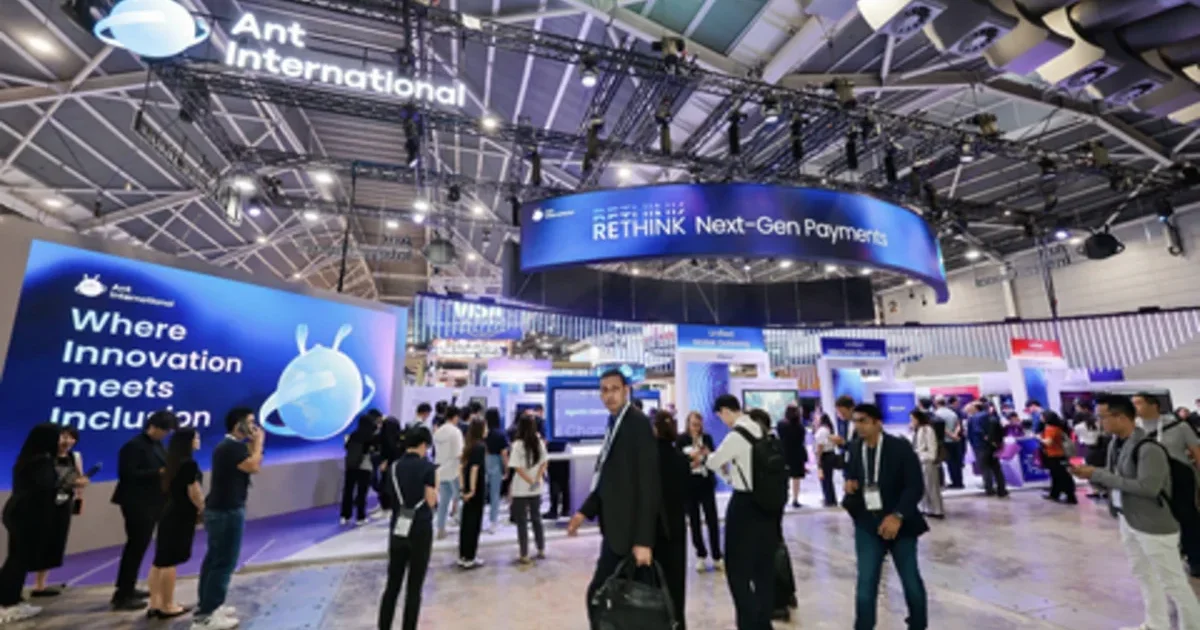
sg.finance.yahoo.comAnt International announced it has closed a Series A round of approximately $1.2 billion. Existing investors Ant Group and Alibaba Group participated, along with several international investment institutions. The proceeds will go toward strengthening cross-border payments and agentic commerce solutions for global businesses.
Last week we covered Alipay's launch of its AI open platform, and this large raise steps up the group's investment in the agent economy further. Anchored on its payment network, Ant is clearly working to build presence in the transaction infrastructure of the agent era.
For merchants selling globally, a major cross-border payment player leaning into agent support is no small matter. As agent-driven international transactions become more real, the choice of payment and settlement infrastructure will shape competitiveness.
Hecto Financial joins the AI agent payment standard x402

Hecto Financial joins the x402 Foundation to accelerate stablecoin-based AI agent payments in Korea.
biz.chosun.comKorean payments group Hecto Financial has joined the x402 Foundation, which is building a standard for AI agent payments. x402 is an open-source payment protocol that lets AI agents carry out payments and transactions with stablecoins without human intervention.
The company aims to secure next-generation AI payment infrastructure by combining traditional payment and settlement rails with a global stablecoin foundation. x402 has drawn backing from majors such as Visa, Mastercard, and Ripple; what is new here is an Asian payments provider joining that group.
The more an agent payment standard wins support across borders, the more options operators gain. Progress on agent payments in the Korean market could add momentum to adoption across Asia.
The race to build agentic commerce infrastructure heats up, with Circle's stablecoins in focus
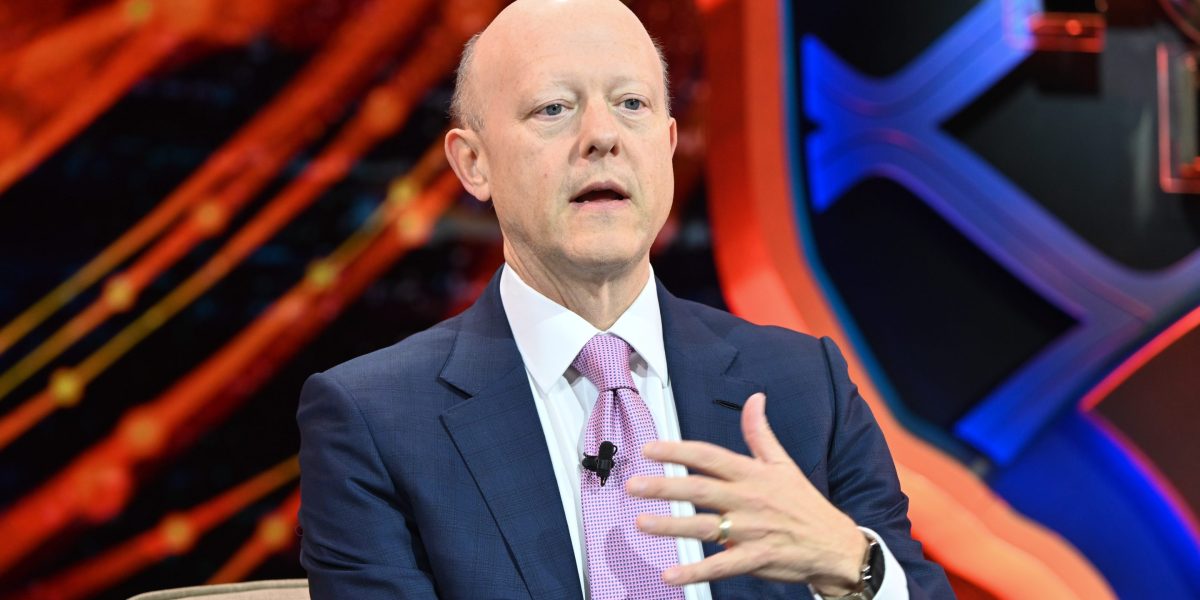
The race to build agentic commerce infrastructure is accelerating, with Circle CEO Jeremy Allaire on the role of stablecoins.
fortune.comFortune reports that the competition to build the infrastructure for agentic commerce is heating up. The piece features Circle CEO Jeremy Allaire on the role stablecoins can play as the settlement layer for transactions that AI agents execute.
In a world where agents shop autonomously, you need a way to process small, high-frequency payments at low cost. Whether card payments or stablecoin payments take the lead role is unsettled, but the debate over how the two divide the work is intensifying.
For merchants, this offers signals on which payment rails will become the standard for agent transactions. The choice of payment infrastructure could determine how much future agent-driven revenue you capture or miss.
Agentic Commerce
commercetools and Mirion launch the co-developed B2B Intake Agent

commercetools and Mirion launch the B2B Intake Agent, turning emails, PDFs, and spreadsheets into ready-to-action quotes and carts in minutes.
www.demandgenreport.comCommerce platform commercetools has partnered with manufacturer Mirion Technologies to launch the B2B Intake Agent, an AI agent that automates B2B order intake. It matches part numbers and quantities scattered across emails, PDFs, and spreadsheets to the catalog and generates quotes and carts tied to the right account and pricing in minutes.
In B2B sales and service, manual re-entry remains a heavy burden. The agent aims to cut that entry work and shrink quote turnaround from hours to minutes. The output stays a draft that sales reps review and edit, keeping the human as the decision point.
Agentic commerce tends to draw attention for consumer purchase delegation, but B2B ordering is where the room for automation is largest. Keeping human review in an accuracy-critical process makes this a useful reference for realistic deployment.
Full article: commercetools and Mirion Launch the B2B Intake Agent to Turn Emails and PDFs Into Quotes in Minutes
Etsy positions agentic commerce as a growth driver
Etsy is betting on agentic commerce, AI partnerships and on-platform agents to turn high-intent search traffic into a long-term discovery catalyst.
sg.finance.yahoo.comHandmade marketplace Etsy is actively embracing agentic commerce as a new starting point for traffic and product discovery. The company is deepening partnerships with major technology players including OpenAI, Microsoft, and Google to capture high-intent users arriving from agent-driven search.
Etsy has high brand awareness but has struggled with consideration across diverse purchase occasions. More high-intent visitors via agent channels could help close that gap. Early data reportedly shows encouraging signs in traffic and engagement from agentic search channels.
For a marketplace of distinctive products, preparing data that agents can discover easily is central to its acquisition strategy. How well it advances platform integrations will decide its fortunes in the agent era.
visualAI launches discoverGPT, an MCP-native AI discovery platform
One unified REST API and a 24-tool MCP gateway power AI-native search, data quality, agentic feeds, and virtual try-on.
www.einpresswire.comProduct-visual AI company visualAI has launched discoverGPT, an MCP-native AI discovery platform for commerce. A unified REST API and a 24-tool MCP gateway power AI-native search, data-quality management, agentic product feeds, and virtual try-on.
MCP (Model Context Protocol) is a standard for connecting AI agents to external tools and data, and adoption is spreading into product discovery. Whether agents can correctly understand and recommend a product hinges on this kind of foundation.
As agent-driven purchasing grows, interest is rising in the product-data infrastructure needed to get your goods found by AI. Free access up to a set number of developers also lowers the barrier to trying it.
Global E-Commerce & Regulation
EU fines AliExpress about 550 million euros, its largest DSA penalty yet

It is the largest penalty imposed so far under the EU's Digital Services Act.
www.theverge.comThe European Union fined Alibaba-owned AliExpress about 550 million euros (roughly $630 million) for failing to adequately curb the sale of illegal and unsafe products. It is the largest penalty imposed to date under the Digital Services Act (DSA).
At issue was the continued flow of illegal goods on the platform, including dangerous toys and non-compliant cosmetics. Alibaba has signaled it will contest the decision. The EU is stepping up scrutiny of large marketplaces.
For operators shipping into the European market via cross-border e-commerce, the trend of holding platforms strictly accountable for product oversight cannot be ignored. Sellers, too, face higher demands to ensure the legality and safety of their goods.
China's live-commerce market reaches $900 billion, closing in on all of US e-commerce

According to research firm NIQ, China's live-commerce market was valued at an estimated US$900 billion in 2025.
www.interiordaily.comAccording to a new report from research firm NIQ, China's live-commerce market was valued at an estimated $900 billion in 2025, approaching the size of the entire US e-commerce market. Asia-born formats such as live shopping, social commerce, and quick commerce are reshaping global retail.
What is notable is that these formats are more than emerging channels. The report warns that Western brands risk falling behind if they continue to treat them as niche experiments.
For merchants elsewhere, the reality that Asia-born selling formats are becoming global standards is instructive. How seriously you engage with live and social commerce will shape your future growth headroom.
AI Commerce Tools & Consumer Trends
Myntra scales AI across the business, sharply cutting seller onboarding time

Walmart-owned Myntra is deepening AI use across its consumer app, seller ecosystem, and engineering operations.
www.techcircle.inWalmart-owned Myntra, which runs a fashion e-commerce business in India, is extending AI across its consumer app, seller ecosystem, and engineering operations. The goal is to strengthen both personalization and operational efficiency in India's intensely competitive online retail market.
The numbers make the impact clear. Seller onboarding fell from 10-15 days to about one to two days, catalog generation from one day to four hours, and supply-chain simulations from two days to under an hour. On the consumer side, the company says roughly 90% of monthly active users now receive AI-driven personalized search.
Embedding AI not just in customer-facing features but into behind-the-scenes work like listing and logistics is the notable part. It is a concrete reference for how far merchants can extend the scope of AI use.
Bot attacks surge across Asia Pacific as AI commerce becomes a new target

Asia Pacific's fast-growing commerce economy is becoming a bigger target for bot-driven cyberattacks.
www.varindia.comAsia Pacific's fast-growing commerce economy is becoming a prime target for cybercriminals. Automated, bot-driven attacks are rising across retail and other platforms, according to the report.
The hard part is telling legitimate access by AI agents apart from malicious bots. As agent-driven purchasing spreads, the importance of mechanisms to distinguish the two grows. Block bots carelessly and you risk turning away genuine agent transactions.
For merchants, the need to reconcile agent readiness with security is rising. Systems that identify who, or what, is accessing your store will matter on both defense and the avoidance of lost opportunity.
Conversational AI becomes a must-have for retailers, an Infobip study finds
Research from Infobip and Retail Economics shows retail engagement shifting from one-way broadcast to two-way conversation.
www.martechcube.comResearch from cloud communications platform Infobip and Retail Economics finds that retail's customer touchpoints are shifting from one-way "broadcast" to two-way conversation. Conversational AI is becoming an essential part of that shift.
AI that converses naturally with customers through chat and voice is beginning to handle everything from inquiries to product suggestions. By having AI complement service that once relied on people, retailers can tailor responses to each customer while keeping scale.
As agentic commerce moves toward purchase delegation, how to design the customer conversation is also in question. Investment in conversational AI stands as a lever to reconcile service quality with operational efficiency.
Conclusion
Today was a day when rule-making to run agent payments safely moved forward. The launch of standardization by EPAA and HSBC, alongside the warning from France's competition authority, shows both wheels of promotion and regulation starting to turn. Ant International's large raise and Hecto Financial's move into x402 added weight on the funding and infrastructure side.
The picture of product-discovery leadership shifting to AI agents pushes merchants to rethink acquisition strategy. In the days ahead, the standardization debate, national regulatory moves, and concrete deployment cases will all be worth watching.