
AI Commerce News Digest (August 6, 2026)
AI commerce news for August 6, 2026: Shopify's Q2 shows AI-driven traffic and orders tripling, Rakuten unveils AI store managers, Kibo unifies agentic commerce with OMS, and Sumsub tackles agent identity verification.


Key Takeaways
- Shopify's Q2 results show AI-driven traffic and orders tripling year over year
- Rakuten unveils plans to place a dedicated "AI store manager" in every Rakuten Ichiba shop
- Agent trust infrastructure and post-purchase automation are advancing in parallel
Here is your AI commerce news roundup for August 6. Platform operators took turns publishing hard numbers on AI commerce today. Following Target's 2,000% surge in AI-driven traffic covered yesterday, Shopify reported that AI-driven traffic and orders tripled in Q2, while in Japan, Rakuten revealed plans for per-merchant AI store managers. DoorDash offered a counterpoint, saying agentic order volume remains low, so the gap between platforms is now visible in the data. Announcements on agent identity verification and post-purchase automation kept the infrastructure side moving as well.
Today's Top Stories
Shopify Q2: AI-Driven Traffic and Orders Triple Year Over Year
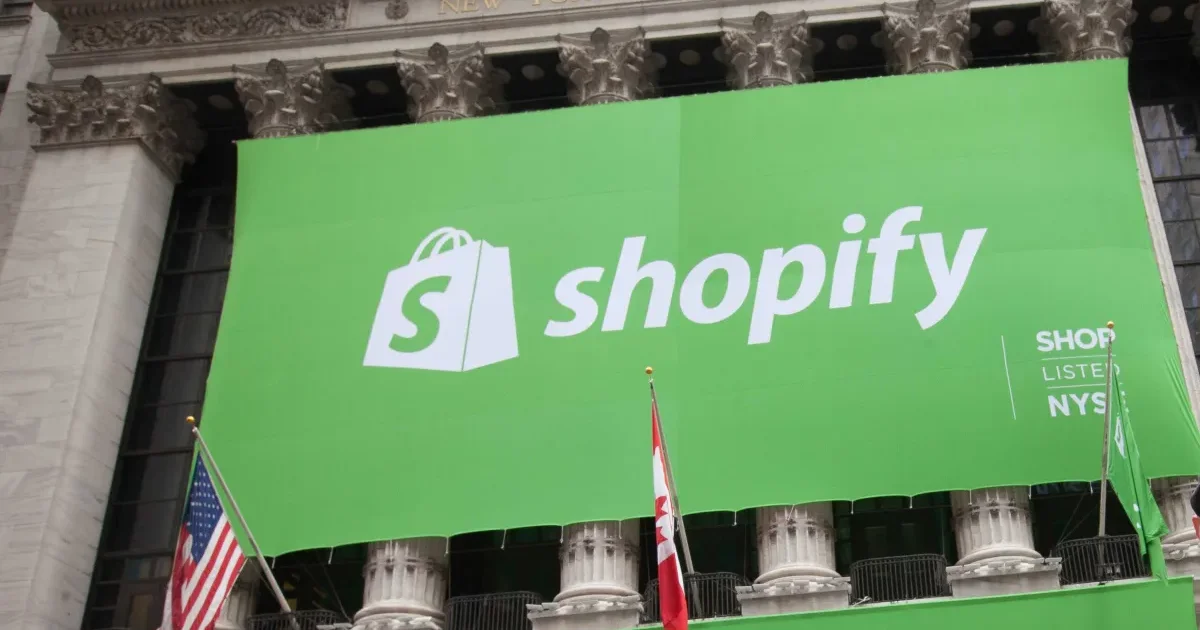
Shopify says AI isn't cannibalizing search traffic the way it has for publishers. Instead, AI-driven traffic and orders to Shopify stores tripled year over year in Q2.
techcrunch.comShopify's Q2 2026 results, announced August 5, showed AI-driven store traffic and orders tripling year over year. Revenue rose 34% to $3.58 billion and GMV grew 32%, both ahead of expectations, and an upbeat Q3 forecast sent the stock sharply higher.
The framing from management deserves attention. Shopify argued that AI search is functioning as an additional traffic channel rather than replacing Google, with traffic from conventional search still growing. The company says the search-traffic erosion that hit publishers is not happening in e-commerce, and points to the high purchase intent of AI-referred visitors.
For merchants, this is strong evidence that AI channels are starting to convert into real revenue. With major U.S. players now disclosing results one after another, preparing product data for AI-driven touchpoints keeps climbing the priority list.
Rakuten Unveils Per-Shop "AI Store Managers" for Rakuten Ichiba

Rakuten Group said it will develop artificial intelligence store managers for its e-commerce platform that will explain products and help shoppers around the clock.
japantoday.comBig news out of Japan as well. At its Rakuten AI Optimism event on August 5, Rakuten Group unveiled plans to give every shop on Rakuten Ichiba its own dedicated AI store manager. Presented by CEO Hiroshi Mikitani himself, the concept has an AI avatar trained on each shop's data handling product explanations, customer service, and purchase completion around the clock. Trial operation with select shops is planned within the year, with the full rollout schedule undisclosed.
Rakuten also outlined a "super agent" concept spanning more than 70 services across its ecosystem, handling everything from reservations to payments through conversation alone.
Placing AI at the individual shop level contrasts with the platform-wide assistants deployed by Amazon and Walmart. As a strategic shift by one of Japan's largest marketplaces, it hands Rakuten merchants an early homework assignment: getting their shop data in order.
Agentic Commerce
Kibo Unifies Agentic Commerce and Order Management with "KIBO AI"
KIBO Commerce unifies agentic commerce and order management into a single, model-agnostic AI experience with five functions, one data model, and any LLM.
www.globenewswire.comCommerce platform Kibo Commerce announced KIBO AI on August 5, merging agentic commerce and its order management system (OMS) into a single AI layer. Five functions (Engage, Configure, Explain, Analyze, and Optimize) run on one data model, letting agents handle everything from pre-purchase assistance to post-purchase order inquiries and changes end to end.
The defining trait is a model-agnostic design with no LLM lock-in, letting businesses choose and swap models to fit their requirements. The product captures how agentic commerce is expanding from the moment of purchase into everything that happens after it.
DoorDash: Agentic Traffic Is Still Low, but AI Gains Are Real
DoorDash CEO Tony Xu said on the company's earnings call that agentic order volume from AI partners remains low, while the company's own AI tools are already producing results.
www.pymnts.comAmid the agentic commerce hype, a sober data point emerged. DoorDash CEO Tony Xu said on the Q2 earnings call that agentic order volume from AI partners remains low. He attributed the gap to most AI platforms prioritizing enterprise use cases and coding tools over transactions involving physical fulfillment.
The company's in-house AI is a different story: an ordering agent that builds a grocery cart in under two minutes and automated catalog building for new merchants are already live. Separating external agent-driven transactions from internal AI adoption is a useful lens for merchants weighing their own investments.
Sumsub and Sumvin Let AI Agents Transact for KYC-Verified Users

Sumsub, an identity verification provider, and Sumvin, an agentic commerce platform, have partnered to let AI agents complete purchases and manage financial accounts on behalf of KYC-verified users.
fintech.globalIdentity verification major Sumsub announced a partnership with agentic commerce platform Sumvin. Sumsub's AI Agent Verification (part of its Know Your Agent framework) and Reusable Identity suite are embedded into Sumvin's agentic credential, creating a way to prove an agent is acting for a verified human.
Once a user completes KYC, the verification travels with their agent as an encrypted, portable credential that merchants and financial institutions can recognize. Developer access is slated for August 2026. With payment networks racing to solve agent identity, a KYC specialist entering the field widens the options.
Europe Positions the EUDI Wallet as the Trust Layer for Agentic Commerce

WE BUILD and FIDO see EUDI Wallets, verifiable credentials and interoperability as the trust foundation for AI agents and agentic commerce.
www.biometricupdate.comIn Europe, the WE BUILD Consortium published a policy paper on trusted identities for AI agents. Working from the assumption that billions of AI agents will operate across borders by 2030, it positions the EU Digital Identity Wallet (EUDI Wallet) and verifiable credentials as the trust layer for delegated identity.
The FIDO Alliance is likewise extending its passkey standardization playbook to agent authentication. The concern mirrors the Sumsub-Sumvin partnership: the race to define the standard for proving whose agent is transacting is now running on both private and public tracks.
AI Commerce Tools
Klaviyo Acquires AI Customer Success Startup Agency; Founder Becomes CPO

The serial entrepreneur joins the e-commerce company as CPO to lead its AI agents.
techcrunch.comE-commerce marketing automation leader Klaviyo agreed to acquire Agency, an AI customer success startup, for an undisclosed sum. Founded in 2023, Agency had raised $32 million from investors including Sequoia and Menlo Ventures. Founder Elias Torres joins Klaviyo as chief product officer, bringing his 25-person team.
Klaviyo is building two AI agents: Composer, which constructs marketing campaigns, and Customer Agent, which handles post-sale support such as returns and order tracking. The acquisition is meant to accelerate both and bring agent features to Klaviyo's 200,000 customers. Together with Kibo's OMS move, it underlines how post-purchase work is becoming the main arena for commerce AI agents.
SHOPLINE Partners with Papermap to Bring AI Data Analysis to 700,000 Merchants
SHOPLINE, a global commerce platform powering more than 700,000 merchants, announced a partnership with Papermap, the AI-native data platform.
www.prnewswire.comGlobal commerce platform SHOPLINE announced a partnership with Papermap, an AI-native data platform. Its more than 700,000 merchants can now query their business data in plain English directly inside the SHOPLINE interface.
The integration automates analysis that used to require a data team, from cross-referencing shipping invoices to flag hidden overcharges, to combining ad spend with live inventory and returns data to identify margin-draining SKUs. It squarely targets the analytics talent gap at mid-market merchants.
Corporate Moves
Etsy Cuts About 220 Jobs, 12% of Staff, to Streamline for Growth

Etsy announced the layoffs along with second-quarter earnings.
www.cnbc.comHandmade marketplace Etsy announced cuts of about 220 employees, roughly 12% of its workforce, alongside Q2 earnings. CEO Kruti Patel Goyal framed the move as simplifying the organization to decide and execute faster, with product and engineering teams bearing most of the reductions.
The company stressed the cuts are neither cost-driven nor AI-driven, but a bid to sharpen focus during a period of momentum. With competition intensifying from Amazon, Walmart, TikTok Shop, and Temu, the restructuring is notable for a company that has named agentic commerce a growth driver.
Reliance Retail Acquires AI Styling Startup Furrl to Bolster Fashion Discovery

Furrl, a Bengaluru-based AI-powered styling, cataloguing and fashion discovery platform, confirmed its technology has been acquired by Reliance Retail.
www.prnewswire.comIndia's retail giant Reliance Retail acquired the technology and app of Furrl, an AI styling engine startup. Founded in Bengaluru in 2022, Furrl built technology that turns catalogs spanning more than 200 brands and 50,000 products into outfit-level recommendations tailored to individual taste.
Reliance is embedding AI across its consumer businesses, and this deal reinforces the discovery and personalization layer. Large retailers buying their way into AI commerce capability is accelerating in India too.
Instacart's Arpalus Deal Puts Real-Time Shelf Intelligence at the Core

Instacart's acquisition of Arpalus brings shelf-intelligence AI to grocery operators as retailer-native AI-influenced ecommerce sales surge in 2026.
www.marketscale.comA new analysis unpacks what Instacart's July acquisition of Arpalus, an Israeli computer vision company, means for grocery AI strategy. Arpalus specializes in reading physical store shelves in real time, and Instacart is wiring that capability directly into its e-commerce infrastructure.
The mismatch between in-store stock and online orders is the root cause of grocery e-commerce's substitution and out-of-stock problems. As agent-driven purchasing grows, accurate inventory data only becomes more valuable, making the deal readable as agent-era groundwork.
MercadoLibre Posts Record Revenue but a Third Straight Profit Decline

MercadoLibre reported a third consecutive quarterly decline in profit, as heavier spending on free shipping and credit-card expansion weighed on margins despite record revenue.
www.reuters.comLatin America's e-commerce leader MercadoLibre reported Q2 net income of $466 million, down 11% year over year and its third consecutive quarterly decline. The figure beat the $433 million analysts expected, but shares still fell in after-hours trading.
Heavier spending on free shipping in Brazil and credit-card expansion drove the margin pressure. Revenue hit a record, and management describes this as an investment phase prioritizing higher-value users.
Coupang Swings to Its Largest Quarterly Loss on Data Breach Fines

In June, the Personal Information Protection Commission imposed a record fine of 624.7 billion won ($437 million) over the data breach and the collection of users' online activity without consent.
www.koreajoongangdaily.comKorean e-commerce giant Coupang posted a net loss of 865 billion won (about $605 million) for Q2. The main driver was June's record 624.7 billion won fine from the Personal Information Protection Commission over a data breach affecting more than 37 million customers in November 2025.
Core product commerce sales rose just 1% to $7.42 billion, while developing offerings including Taiwan and food delivery grew 20%. It is a stark reminder for e-commerce companies deepening their data dependence through AI: mishandling personal data now lands directly on the income statement.
Payments and Fintech
Riskified and Marqeta Partner to Cut False Declines at the Issuer Level
Riskified and Marqeta partner to help card issuers reduce false declines, improve authorization decisions, and approve more legitimate transactions.
finance.yahoo.comE-commerce fraud prevention company Riskified announced a partnership with card issuing platform Marqeta. Riskified's pre-authorization risk intelligence plugs into Marqeta's issuing infrastructure, helping issuers make more accurate approval decisions.
False declines, where legitimate transactions get rejected, are one of e-commerce's least visible revenue leaks. The deal channels merchant-side fraud signals back into issuer decisions, and as agent-initiated transactions grow, authorization accuracy is exactly where payment infrastructure will be tested.
Logistics and Fulfillment
Walmart Expands Sub-Hour Delivery with AI "Intelligence Layers"
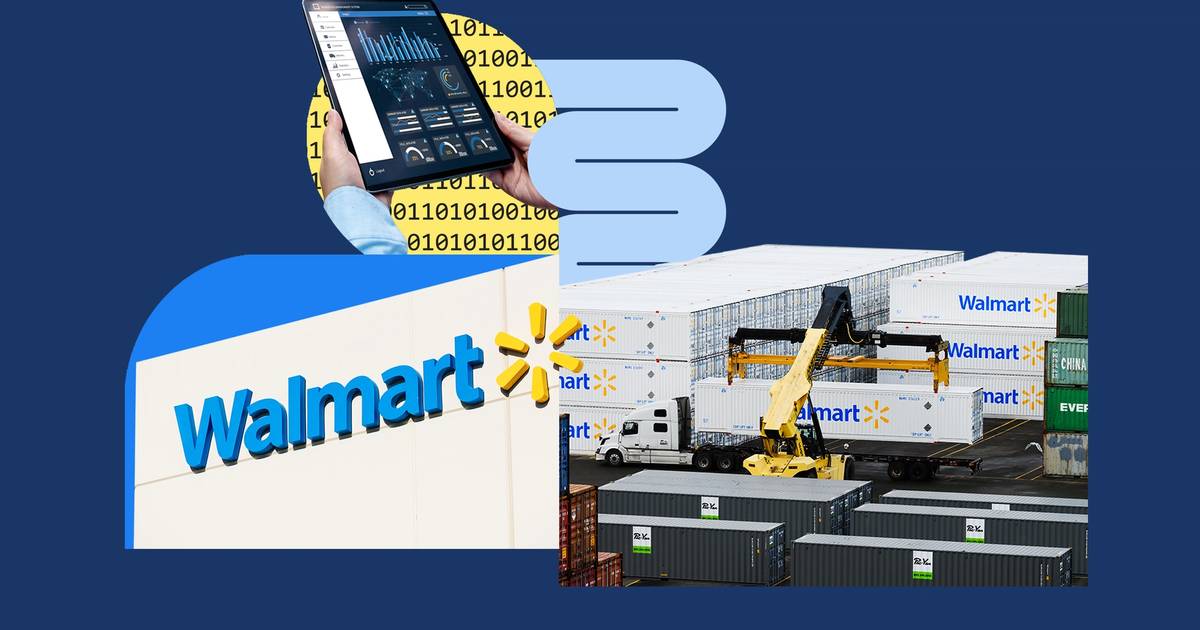
AI is enhancing inventory management and delivery speeds enabling sub hour deliveries at Walmart.
www.retailbrew.comWalmart detailed how "intelligence layers" at the heart of its AI models optimize demand prediction and inventory placement, expanding sub-hour delivery. The system predicts what customers will order and when, positioning products at the right points in the supply chain ahead of time.
Walmart's global e-commerce sales grew 26% in Q1. Delivery speed sits at the core of the buying experience, and since "who can deliver fastest" will be a selection criterion for ordering agents too, logistics AI investment is continuous with the AI commerce race.
Consumer Trends
Bots Now Generate 57% of Web Traffic; Agentic AI Traffic Up 7,851%

Bots now generate more than half of web requests worldwide, with AI-driven browsing pushing automated traffic up 7,851% in 2025.
ecommercenews.com.auAccording to analysis by Decodo, bots generate 57.4% of global web requests, surpassing the 42.6% from humans. By country, the United States accounts for 53.5% of global bot traffic, followed by Germany, the Netherlands, and Singapore.
AI-driven browsing is the engine: agentic AI traffic rose about 7,851% year over year in 2025, with overall AI-driven traffic up roughly 187%. A web where most visitors to your store are not human is becoming reality, and it is time to rethink assumptions in analytics, security, and content design.
Summary
Platform-level AI commerce numbers are now arriving in force. Against Shopify's tripled traffic and orders and Target's 2,000% traffic surge, DoorDash's admission that agentic orders remain low shows adoption varies sharply by channel and category. Rakuten's AI store manager concept signals the wave is reaching Japanese marketplaces in earnest.
On the infrastructure side, Sumsub and the EUDI Wallet camp are racing on agent identity while Kibo and Klaviyo push agents into post-purchase territory. Every segment of the transaction, from discovery to after-sales, is coming under agent coverage. We will keep watching earnings season for more hard numbers on AI-driven transactions.