Rakuten Brings AI Store Managers to Rakuten Ichiba: Per-Merchant AI Avatars for 24/7 Service and Checkout, and What Sellers Should Prepare
Rakuten unveiled AI store managers for Rakuten Ichiba: per-merchant AI avatars that serve shoppers around the clock and complete purchases. How the design differs from Amazon's approach, and what merchants should prepare now.

Key Takeaways
- On August 5, at its AI event "Rakuten AI Optimism," Rakuten Group unveiled a plan to place an "AI store manager" at every merchant on Rakuten Ichiba. AI avatars trained on each shop's data and its manager's personality will handle inquiries around the clock and complete purchases, with a test rollout at select shops planned within the year
- Unlike platform-wide single assistants such as Amazon's Rufus, Rakuten will distribute AI at the individual shop level. The design extends the company's merchant-centric philosophy that "internet shopping is not a vending machine," and answer quality will depend on how well each shop's product pages are written
- The rollout schedule, pricing, and the scope of training data remain undisclosed, but what merchants can prepare now is clear. Articulating product knowledge and shop identity in writing, and raising the quality of inquiry responses and review replies, will directly become the AI store manager's service quality
What Rakuten Announced: The Facts About AI Store Managers
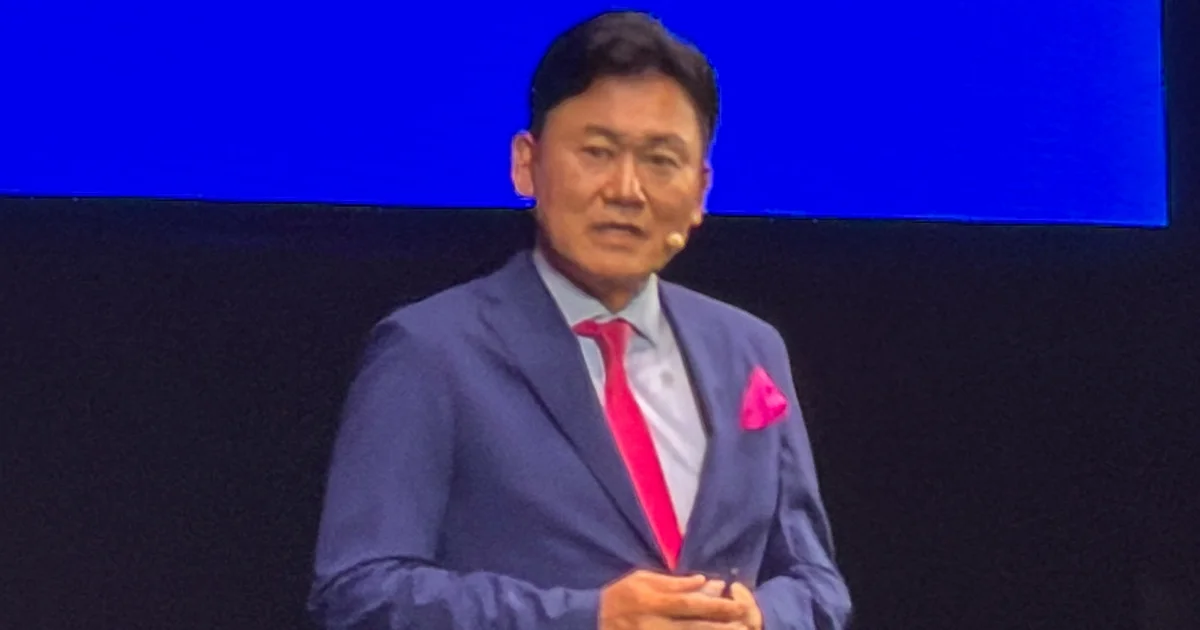
Rakuten Group said it will develop AI store managers for its e-commerce platform that will explain products and help shoppers around the clock, aiming to roll out a prototype by the end of this year.
japantoday.comOn August 5, 2026, at its business event "Rakuten AI Optimism" held at Pacifico Yokohama, Rakuten Group unveiled a new Rakuten Ichiba feature called the AI store manager. According to ITmedia's report, Chairman and CEO Hiroshi Mikitani presented the concept in his keynote: each merchant on the marketplace gets its own dedicated AI store manager, an avatar version of the shop's actual manager that handles inquiries and purchase support 24 hours a day, 365 days a year.
In the demonstration, a shopper described a skin concern, and the AI store manager proposed two lotions, summarized customer reviews, presented the coupon-applied total, and walked through the final order confirmation entirely in conversation. Kyodo's English-language report (Japan Today) describes the system as AI that learns from data held by individual merchants to answer shoppers' questions, with a prototype targeted by the end of this year. Per ITmedia, the launch date is undecided, but Rakuten plans to begin test operations at select shops within the year.
What deserves attention is that Rakuten itself says answer quality will depend on how substantial each product page is. The product lore and passion each shop writes into its pages will become the AI store manager's personality. Asked by merchants what to prepare for the rollout, Mikitani answered that the product lore explaining why a customer should buy the item, along with product descriptions, will become important (Nihon Net Keizai Shimbun). The AI store manager is an agent that serves customers using the material the shop has written, so the quality of the material determines the quality of the service.
"Not a Vending Machine": Rakuten's Shop-Level AI Design Philosophy
The most distinctive part of the announcement is the unit at which AI is deployed. Mikitani said Rakuten is fundamentally different from Amazon and that merchants matter deeply to Rakuten, restating the company's long-held view that internet shopping is not a vending machine. The logic is to use AI to extend Rakuten Ichiba's strength in human service into a 24-hour operation.
Comparing AI shopping assistants across companies makes the design differences clear.
| Provider | Unit of AI service | Characteristics |
|---|---|---|
| Rakuten Ichiba (AI store managers) | Per merchant | Each shop's manager becomes an avatar trained on the shop's data and expertise. Test rollout at select shops planned within the year |
| Amazon (Rufus) | Platform-wide | A single shopping assistant spanning the product catalog and reviews |
| Walmart (Sparky) | Platform-wide | A single in-app assistant supporting discovery through reordering |
| OpenAI (ChatGPT) | External AI channel | Discovery through checkout completed inside the conversation; retailers connect via protocols and apps |
Amazon's Rufus and Walmart's Sparky are designed as one assistant per platform, guiding shoppers across the entire catalog. Rakuten's AI store managers, by contrast, will be distributed across more than 50,000 shops, each with its own personality and knowledge. The demo screen even showed a directory of AI store managers with different names and appearances arranged by category, so the shopping experience becomes choosing which shop's manager to consult.
While this design leverages the merchant expertise that only a marketplace model has, it also carries difficulties. A platform-wide assistant can manage answer quality centrally, but shop-level AI means service quality can vary with each shop's ability to maintain its data. The gap between shops that invest in their product pages and those that do not will surface as a gap in service capability in the AI store manager era.
The Groundwork Is Already Running: Rakuten Ichiba's AI Shift in Numbers
The AI store manager is not a feature appearing out of nowhere. AI is already operating on Rakuten Ichiba on both the consumer and merchant sides, and measured results are starting to come in.
On the consumer side, users of Rakuten Ichiba's AI concierge reportedly reached purchase decisions about 41% faster, with average order value up about 17%, compared with conventional search-driven shopping. On the merchant side, roughly half of all shops already use "Rakuten AI for RMS," which assists with product descriptions and inquiry responses. The data-analysis agent released on April 30 is used by 72.9% of shops that have adopted Rakuten AI for RMS, and gift shop momo-fuku reported cutting monthly inquiry-handling time from 67 hours to 20.
Business impact has numbers behind it too. According to ITmedia, Rakuten generated roughly 25.5 billion yen in profit from AI in fiscal 2025, crediting both revenue gains from better UX and cost reductions from operational efficiency. Mikitani noted that AI agent performance is doubling every seven months and reiterated the "Triple 20" goal of raising marketing efficiency, group operational efficiency, and the operational efficiency of partners such as shops by 20% each.
In other words, the AI store manager sits at the junction of two existing streams: AI that supports shop operations and AI that serves consumers. On ground where half the shops already write product descriptions with AI and conversational shopping is measurably shortening purchase times, an agent wearing each shop's personality now takes the stage.
The Super Agent Vision: What Lies Beyond the AI Store Manager
Announced alongside the AI store manager was the super agent concept, which Mikitani also calls a super secretary. A single AI understands data across the more than 70 services Rakuten Group operates, from shopping to finance, and acts on the user's behalf from proposal through reservation and payment. Three expansion pillars were laid out: cross-service coordination where AI agents work together, end-to-end payment completion from booking through checkout, and integration with external services such as calendar entries and email drafting.
Behind this is the sheer volume of data. Every month, 46 million people are active across Rakuten Group, and more than 3 trillion data points accumulate on a single ID and a single points program. According to Ktai Watch, Rakuten fed 18 years of purchase data into an LLM (large language model) and successfully detected behavioral shifts, such as a customer starting to buy a particular brand as remote work took hold. Mikitani's thesis is that if open models shrink the performance gap between LLMs themselves, data is what will determine the power of AI.
Read in the context of agentic commerce, this is a declaration that Rakuten will build transaction-completing AI inside its own economic ecosystem. As external AI such as ChatGPT increasingly controls the front door of product discovery, Rakuten has chosen to mount its agents on its own ID, payment, and loyalty infrastructure and keep the journey from discovery to checkout closed within its ecosystem.
What Merchants Should Prepare Now, and the Open Questions
The detailed rollout schedule, eligibility conditions for shops, whether additional fees apply, and the exact scope of data the AI store manager will learn from are all undisclosed at this point. Even so, what merchants can do now follows directly from the announcement.
The first lever is putting product knowledge into words. Since Mikitani himself stated that product lore and descriptions will matter, pages that explain why the shop stocked an item and who it suits, with concrete reasons, become the AI store manager's training material. Image-heavy pages with thin text leave the AI with nothing to talk about. The quality of daily inquiry responses and review replies also compounds. Rakuten signaled in July that it will fold the service data held by more than 50,000 shops into conversational service, and boilerplate replies leave behind a very different asset than replies filled with product-specific knowledge.
At the same time, the vision warrants reservations. In categories like cosmetics and health products, where wrong guidance can cause real harm, it is not yet clear how hallucinations (plausible but wrong answers) will be suppressed, or whether Rakuten or the merchant bears responsibility for incorrect answers. If the AI pushes only high-margin products, shoppers may perceive it as a new form of advertising rather than service, eroding trust. Reconciling the ideal of human-feeling AI service with neutrality and accuracy in recommendations will be the question the test rollout has to answer.
Conclusion
Rakuten's AI store manager is a shop-level agentic commerce concept in which per-merchant AI avatars handle everything from product explanation to completed purchases. Where Amazon and Walmart deploy platform-level assistants, Rakuten chose to transcribe each shop's personality and expertise into AI. While timing and conditions remain undisclosed, test operations at select shops are planned within the year.
For merchants, the essential change is structural: product pages and service data become AI training material. Shops that articulate their product lore and raise the quality of their service data before the AI store manager arrives, rather than scrambling afterward, will be the ones chosen in the conversational storefront. The same discipline required to be understood and recommended by external AI is now starting to be tested inside the marketplace as well.