
AI Commerce News Digest (September 15, 2026)
Worldline launches one of Europe's first payment handlers for the Universal Commerce Protocol, Ecommpay warns that agentic checkout could exclude vulnerable consumers, and the EU, Vietnam and Malaysia see moves to rethink tax breaks for low-value cross-border e-commerce. AI commerce news for September 15, curated for e-commerce operators.

Key Takeaways
- Worldline launches one of Europe's first payment handlers for UCP
- Ecommpay research: 41% of vulnerable consumers have failed to complete a payment task because a digital or AI tool did not work
- The EU, Vietnam and Malaysia see moves to rethink tax breaks for low-value cross-border e-commerce
Here is the AI commerce news for September 15. Today's common thread is payment providers building entry points for AI agents. Worldline, which was named as one of the acquirers behind Ant International's AMP in yesterday's edition, has now released a payment handler for the Google-backed Universal Commerce Protocol. In France, BPCE's newly created merchant payments unit also lists agent-initiated transactions among its plans. Ecommpay, meanwhile, warned that agentic checkout could leave vulnerable consumers behind. On the broader e-commerce front, the EU reported the impact of its €3 parcel fee, Vietnam proposed a lower tax exemption threshold, and a Malaysian retail group lobbied for equal treatment, all pointing to a rethink of tax breaks for low-value cross-border e-commerce.
Today's Top Stories
Worldline Launches a UCP Payment Handler So Merchants Can Accept Payments From Any UCP-Connected AI Platform With a Single Setup

Worldline [Euronext: WLN], a European leader in payment services, today becomes one of the first in Europe to launch a payment handler for the Universal Commerce Protocol (UCP), an open standard for agentic commerce co-developed by Google and industry partners.
worldline.comOn September 14, European payments leader Worldline announced the launch of a payment handler for the Universal Commerce Protocol (UCP). UCP is an open standard for AI agent product discovery and purchasing, co-developed by Google and industry partners. Worldline says it is among the first companies in Europe to offer this kind of handler.
The core idea is a single declaration. According to Worldline, merchants declare their payment configuration once and can then accept card payments, mobile wallets and European payment methods across any UCP-connected AI platform. They no longer need to rebuild payment integrations each time a new AI surface appears. The capability is delivered through Worldline's cross-border platform Global Collect under the name Worldline Global Collect Payment Handler. Gertjan Dewaele, VP Product & Technology at Worldline Global Commerce, described it as "a universal adaptor on UCP" that securely bridges agentic commerce platforms and merchant backends.
Worldline was also recently named as an acquirer for Ant International's AMP. After card networks and wallet networks, acquirers are now opening entry points across multiple agent protocols. Pricing and the names of AI platforms already connected were not disclosed. From a merchant's perspective, the practical question is shifting from which protocol to choose to how much of that complexity the payment provider can absorb.
Related article: Worldline Launches a UCP Payment Handler in Europe: How Merchants Accept AI Agent Card and Wallet Payments With One Setup
Ecommpay Warns That Agentic Checkout Could Exclude Vulnerable Consumers

More than half of consumers are vulnerable to some degree, raising fears that AI-led checkout could leave many unable to complete payments.
itbrief.co.ukUK payment provider Ecommpay published an agentic commerce report titled "Before They Check Out," warning that AI shopping assistants and automated checkout could exclude consumers with physical or cognitive limitations.
The gaps are stark. Data from the UK Payments Association's Diversity and Inclusion working group suggests that 59% of consumers are vulnerable to some degree. While 92.7% of all consumers rated themselves good or very good at using the internet, apps or online services, only 69.5% of those with capability limitations said the same. Some 41% of vulnerable respondents had failed to complete a banking or payment task because a digital or AI tool did not work, compared with 12% of all respondents. And 34% of vulnerable users wanted easier access to a real person when technology failed.
Regulatory pressure is also in play. In the EU, the European Accessibility Act covers a range of consumer financial services; in the UK, firms must make reasonable adjustments under the Equality Act and meet the Financial Conduct Authority's Consumer Duty. Ecommpay CMO Miranda McLean said agentic commerce must be designed from the outset to be "clear, controllable and recoverable" or it risks real harm. The claim that payment providers are best placed to supply the trust layer naturally reflects Ecommpay's own position, but the call to make human escalation and ways to undo actions part of checkout design is concrete guidance for merchants exploring agents. Read alongside the Checkout.com and Ecommpay studies covered in June, it gives a fuller picture of what the trust barrier is made of.
Agentic Commerce
Grocery AI Assistant Neomi Explains Why Baskets Should Start From the Person, Not the Product

Neomi co-founders Dmytro Lylyk and Vladyslav Mehera argue AI should start with the person, not the product, building baskets from health goals and context rather than catalog searches.
thenextweb.comThe Next Web interviewed Dmytro Lylyk and Vladyslav Mehera, co-founders of grocery shopping AI assistant Neomi. They argue that grocery retail has been optimized for making products visible, when AI should instead build baskets from a person's context: health goals, dietary restrictions and the occasion.
One example came from a user who selected a "Romantic Dinner for Two" experience and found wine in the basket without having asked for it. Mehera noted, however, that users initially treat the assistant like a search engine, asking for milk and then another single item, so they need to be encouraged to describe a week of meals or a dietary goal. On retail media, Lylyk said promoted products should enter the basket only when they fit the shopper's intent, calling it "the borderline which must not be crossed."
If agents are going to assemble baskets, product data has to explain which needs a product actually serves. The interview also hints at how ad placements may shift from buying visibility to matching intent.
Related article: Neomi Co-Founders on Person-First Grocery Carts: Where AI Should Draw the Line on Promoted Products
AI Commerce Tools
dunnhumby Hosts Its Retail Innovation Forum and Invests in Harmonya and Azoma for Product Intelligence and Agentic Commerce

dunnhumby held its annual Retail Innovation Forum in Bentonville, Arkansas, USA last week, bringing together retailers, brands, technology leaders, scale-ups, startups and investors.
retailtechinnovationhub.comCustomer data science firm dunnhumby held its annual Retail Innovation Forum in Bentonville, Arkansas last week, with agentic commerce as a central theme. Retailers, brands, technology companies, startups and investors attended.
Several initiatives were presented: a new portfolio offering to help CPG brands find white space and grow, a retail media network alliance creating a multi-retailer platform for CPGs, and new investments in product intelligence and agentic commerce with Harmonya and Azoma. dunnhumby also shared new research and benchmarking through a Retail Innovation Index, and Shopperoo.AI won the Start Up of the Year award.
Azoma is the company behind the Agentic Merchant Protocol (AMP), a product information protocol for AI agents, which is a different protocol from Ant International's AMP mentioned above. It is notable that a leader in shopper data analytics is extending its investments into the product data that agents will read. The investment amounts and the specifics of the partnerships were not disclosed in the report.
StyleBuddy Pitches an Agentic Storefront That Layers an AI Stylist Onto Brands' Own Sites

StyleBuddy's vision for fashion retail involves AI styling, virtual try-on, and agentic commerce to enhance the online shopping experience.
fashionunited.ukIn partner content (a sponsored article) published on FashionUnited, StyleBuddy outlined the AI commerce layer it is building specifically for fashion under founder and CEO Siddharth Pandit. The company says it has a community of more than 100,000 users and has engaged with more than 100 fashion brands.
The platform has three pillars, all running on the same AI styling engine and product catalogue layer: Sell With StyleBuddy, which offers styling-led discovery inside StyleBuddy's shopper ecosystem; Agentic Storefront, which places an AI stylist on top of a brand's own e-commerce site; and Virtual Try-On, which lets shoppers see how garments may look and helps brands generate visual content. With Agentic Storefront, shoppers describe what they want in natural language, and the system recommends coordinated outfits from the brand's own catalogue, remembers preferences and keeps the customer inside the brand's checkout journey.
StyleBuddy aims to grow to more than 2 million users and more than 500 participating brands over the next 12 months. Because this is sponsored content, all figures are the company's own. Even so, turning a brand's own storefront into an agent without handing the customer relationship to an outside AI platform is a useful option for apparel retailers to consider.
Related article: StyleBuddy Pitches an Agentic Storefront for Fashion Brands: Three Pillars of AI Styling and Try-On, Checked Against Public Data
Global E-commerce Trends
EU Low-Value Parcel Imports Nearly Halve After the €3 Flat Fee, as Some Sellers Shift to Stock Held Inside the EU
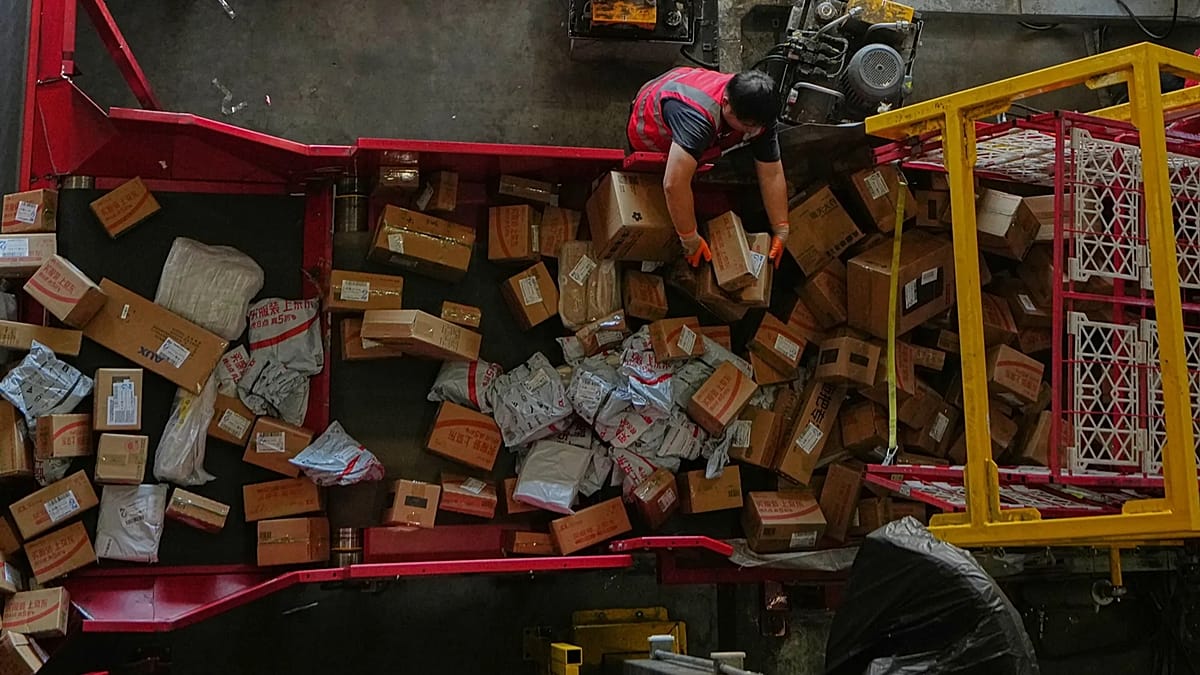
The EU has cut the number of low-value parcels entering the region by half, following the introduction of a €3 flat fee. The measure is part of a broader effort to curb the growing dominance of Chinese e-commerce platforms.
www.euronews.comSince the EU introduced a €3 flat fee on shipments valued below €150 on July 1, the number of small parcels arriving in Europe has fallen by nearly 50%, according to Dutch and Belgian customs data. Belgium recorded a 53% year-on-year decline, and Dutch customs reported a 46% drop in e-commerce parcels, particularly from China. Together, the two countries handle almost half of all low-value parcels arriving from outside the EU.
Dutch customs cautioned that part of the decline may reflect changing business practices. More companies appear to be importing in bulk and storing goods within the EU before selling to consumers, and the authority plans to investigate further. According to the European Commission, 4.6 billion low-value items under €150 entered the EU in 2024, an average of 12 million parcels a day.
The EU is also implementing a customs reform built around a new European Customs Authority and data hub in Lille, expected to be operational by 2028. If direct cross-border shipping gives way to inventory held inside the EU, delivery times and price presentation will change, affecting the competitive landscape for anyone selling into Europe.
Vietnam Proposes Cutting the Import Tax Exemption Threshold to VND 100,000 per Shipment as Cross-Border E-commerce Surges
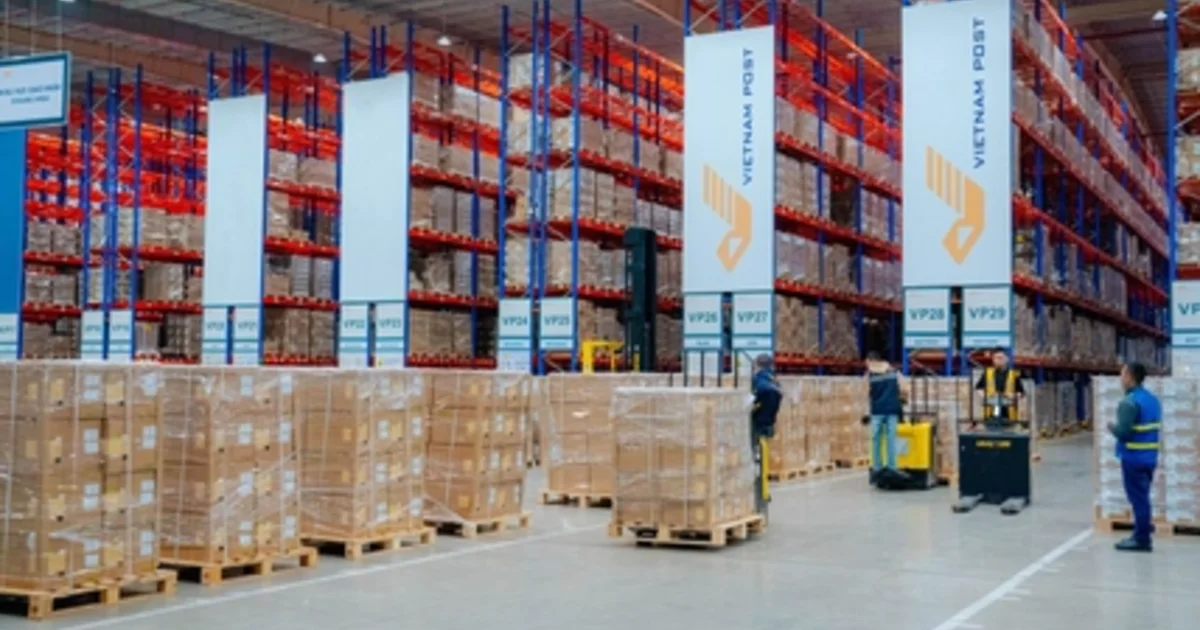
The Ministry of Finance is considering sharply lowering the value threshold for tax-free imported goods in a move to curb potential abuse as cross-border e-commerce expands.
english.luatvietnam.vnVietnam's Ministry of Finance has proposed, in a draft decree detailing the Law on Export and Import Taxes, sharply lowering the tax exemption threshold to VND 100,000 (about US$3.8) in value or VND 10,000 in tax payable per shipment. The rule would apply uniformly across all channels, including postal services and express delivery. Under current rules, goods imported by post or express with a value of up to VND 1 million, or import tax of up to VND 100,000, are exempt.
The driver is the growth of cross-border e-commerce. Ministry statistics put Vietnam's e-commerce retail market at US$31 billion to US$38.5 billion in 2025, with growth of about 19% in the first half of this year. The ministry said relatively high thresholds give imports an unfair advantage over domestic goods and create room for sellers to split shipments or under-declare values to qualify for exemptions.
The ministry also pointed to Indonesia, which exempts only imports worth US$3 or less, and to the EU's €3 duty and its plan to abolish the €150 threshold in July 2028. Vietnam already removed the VAT exemption for low-value express shipments at the start of 2025, and scaling back preferential treatment for low-value cross-border goods is spreading in Southeast Asia as well.
Malaysia's Retail Chain Association Asks Budget 2027 to Put Cross-Border E-commerce on an Equal Tax Footing
KUALA LUMPUR: The Malaysia Retail Chain Association (MRCA) has proposed that the government implement stricter policies and equalise surcharges on cross-border e-commerce transactions, including the stricter enforcement of the sales tax on low-value goods (LVG), to secure national revenue.
www.thestar.com.myIn its Budget 2027 wishlist, the Malaysia Retail Chain Association (MRCA) asked the government to equalise surcharges on cross-border e-commerce transactions and to enforce the sales tax on low-value goods (LVG) more strictly.
MRCA argues that local brick-and-mortar retailers face substantial compliance disparities compared with untaxed or under-taxed foreign platforms offering ultra-low prices. In its view, this structural imbalance not only threatens local businesses but also erodes the national tax base. The association also called for tougher controls on counterfeit and substandard goods sold on e-commerce platforms.
Prime Minister and Finance Minister Anwar Ibrahim will table Budget 2027 on October 9. This is still an industry request, but appearing on the same day as the EU and Vietnam developments, it shows that the push to rethink preferential treatment for low-value cross-border e-commerce is spreading across regions.
Company News and Partnerships
Amazon Bazaar Grows Customers Fivefold in India, Eightfold in Tier-2 and Tier-3 Cities, Through App Integration and Zero Referral Fees, With AI Video in Development

Amazon's main marketplace caters to branded and premium purchases, Amazon Now focuses on instant and replenishment needs, while Bazaar serves shoppers looking for sharply priced products.
www.businesstoday.inSameer Lalwani, head of Amazon Bazaar, told Business Today that since launch the value-commerce platform has grown customers fivefold, sellers and selection threefold, and customers from Tier-2 and Tier-3 cities eightfold. Bazaar now offers more than 30 million products, all priced below ₹500, with around 80% under ₹300.
Two levers stand out. The first is surfacing Bazaar products in the main Amazon app's search results and recommendations, where shoppers once had to enter a separate storefront. The second is on the seller side: sign-ups rose 50% after Amazon introduced zero referral fees on products priced below ₹1,000. AI is being used to help sellers identify products and price points that resonate, and Amazon is developing AI-generated shopping videos for a reels-style browsing experience.
Lalwani said India's e-commerce market is splitting into consumption "speed lanes" measured in minutes, hours or days. The Bazaar model has already expanded to 15 or 16 countries, operating as Amazon Haul in some markets.
Allegro Plans to Open Its Logistics, Financial and Advertising Tools to Sellers' Own Online Stores, Alongside Category-Specific Experiences

Allegro plans to make selected tools and services available to selling partners for use outside its marketplace. These include logistics, financial and advertising solutions. Partners will be able to use them to boost sales in their own online stores.
ecommercenews.euAt Allegro Open, its first conference held in Poznań, Poland's largest e-commerce company announced plans to make selected logistics, financial and advertising tools and services available to selling partners for use in their own online stores outside the marketplace. CEO Marcin Kuśmierz said Allegro is "building Europe's most partner-friendly ecommerce organization."
The other major theme was platform verticalization. Allegro will adapt its interface and purchasing process to the characteristics of categories such as car parts or cosmetics, so that buying feels as intuitive as in a specialist store. The company also announced a seller protection program and the Allegro App Store, which gives sellers access to selected third-party applications.
Allegro Group's GMV grew 13.7% in the first half of the year, with international GMV up 64.8%, and the company entered a partnership with OpenAI this spring. A marketplace that supports sellers' entire sales footprint, not just what happens on its own platform, widens the options for European sellers.
Cross-Border E-commerce Trade Financier Qupital Raises $300 Million in Series C to Expand AI-Driven Underwriting

Hong Kong-based Qupital has raised $300m (£222.5m) in its series C funding round.
alternativecreditinvestor.comHong Kong fintech Qupital, which specializes in trade finance for cross-border e-commerce sellers, has raised $300 million in its Series C round. The primary funding was led by alternative asset manager M Capital, with additional asset-backed securities funding commitments from Mitsubishi UFJ Financial Group and Quester Capital.
Qupital uses real-time sales and operational data from merchants selling on global marketplaces and an automated risk engine for underwriting. Cumulative loans processed have surpassed $9.5 billion. The new capital will expand its financing capabilities across China, the US, Japan and Southeast Asia.
"Agentic commerce and social e-commerce are redefining the speed of global trade," said co-founder and CEO Winston Wong, adding that converting live transactional data into instant trade credit is becoming the baseline for digital commerce. Qupital expects profit margins to exceed 45% within 12 months and is exploring an IPO and strategic acquisitions.
Payments and Fintech
BPCE Creates BPCE Merchant Services With Payplug at Its Core, Targeting One in Four French Merchants by 2030
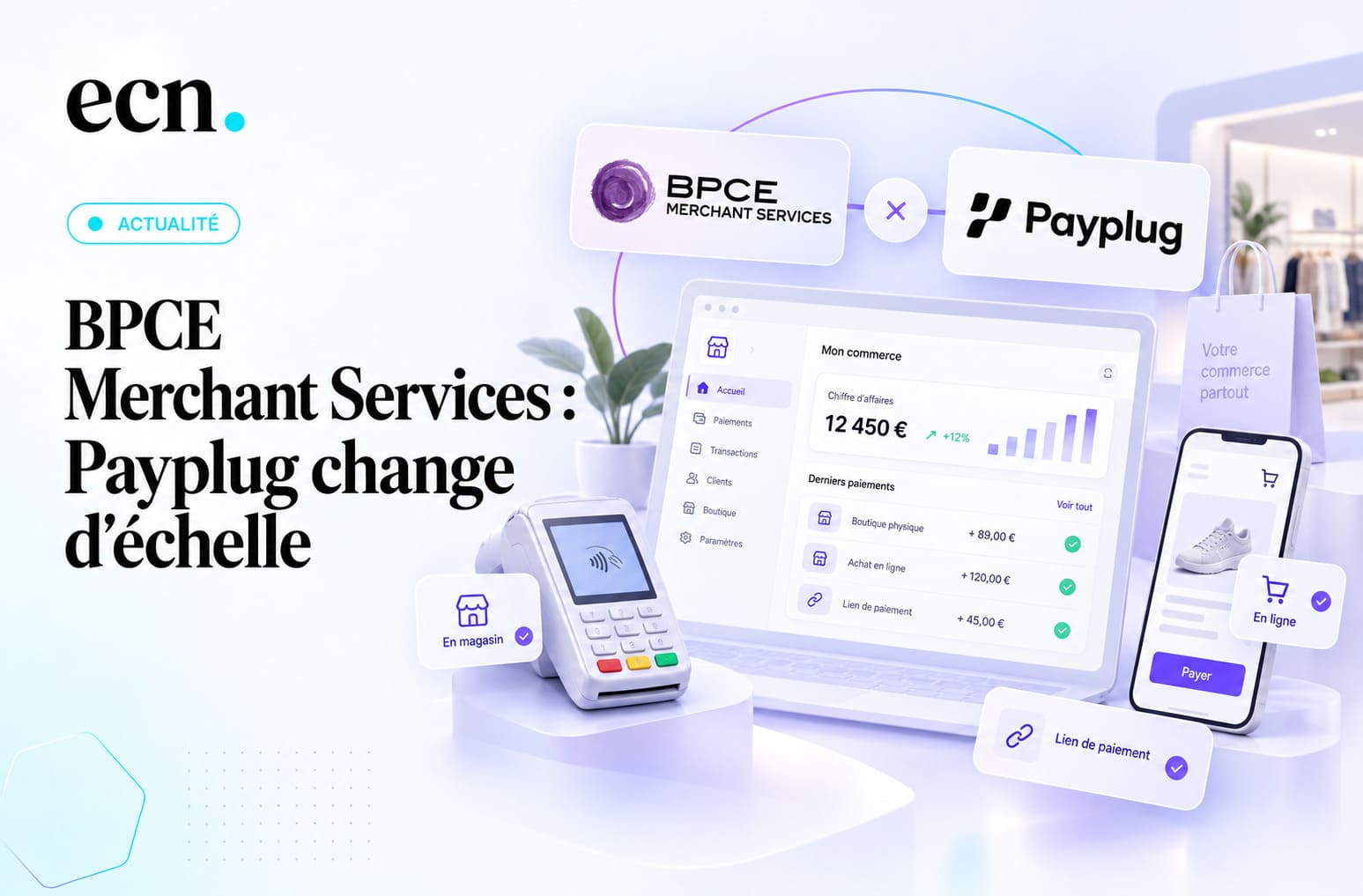
BPCE lance Merchant Services avec Payplug pour réunir paiement en magasin, e-commerce et omnicanal, avec un objectif d'1 commerçant sur 4 d'ici 2030.
www.ecommerce-nation.frFrench banking group BPCE on September 14 created BPCE Merchant Services, a new business unit bringing together its in-store, online and omnichannel payment activities. It combines 500 employees from BPCE Payment Services and Payplug and works with more than 800 partners, including integrators, agencies, orchestrators, point-of-sale software providers and e-commerce platforms.
BPCE currently works with one in five merchants in France and aims to reach one in four by 2030. Payplug, acquired in 2017, keeps its brand and becomes the technology engine and commercial accelerator of the new organization, which is chaired by Frédéric Burtz, head of payments at Groupe BPCE, and run by Payplug co-founder Antoine Grimaud. For e-commerce, the offer highlights subscriptions, tokenization and recovery of failed payments; in stores, it includes Tap to Pay, which turns a compatible smartphone into a payment terminal.
The most notable element is the plan to track payments made on the web, in store, on social media and eventually via AI agents on a single infrastructure. BPCE will also accelerate the rollout of the account-to-account payment method Wero. Existing Payplug merchants keep their contacts, contracts and interfaces, so new capabilities will be added without forcing an immediate technical migration.
Valu and Conversational Commerce Platform Zbooni Partner in Jordan to Bring BNPL Into Chat-Based Selling

The partnership will help merchants and SMEs on Zbooni's platform digitize their sales and customer interactions across communication and conversational channels, without the need to develop additional infrastructure.
techafricanews.comValu Jordan, part of the MENA fintech group Valu, and Zbooni Jordan, a conversational e-commerce platform for small and medium-sized enterprises, have signed a strategic partnership. More than 1,000 merchants on Zbooni's platform will be able to offer Valu's Buy Now, Pay Later option to customers, subject to credit limits approved by Valu.
Zbooni combines selling over messaging and other conversational channels with order management and payment acceptance. The company says it is the first digital commerce platform to offer Valu's solutions as a payment option in Jordan, building on an existing collaboration between the two companies in Egypt.
Valu only began operating in Jordan in May 2026 after receiving final approval from the Central Bank of Jordan. Connecting chat-based selling to installment payments without extra development gives smaller merchants without their own web stores a way into conversational commerce.
Logistics and Fulfillment
Amazon Replaces Plastic With "Extensible Paper" in US E-commerce Packaging, as North American Single-Use Plastic Shipments Fall 28% in a Year

Retailer has developed a new type of 'extensible paper' to replace plastic packaging in its U.S. e-commerce operations.
www.dcvelocity.comAmazon says it has begun using a stronger, stretchier kind of paper, known as extensible paper, in e-commerce packaging at scale in North America. The paper can stretch 5 to 7% before tearing, roughly two to three times the flexibility of conventional kraft paper. It molds around its contents and runs through automated packing machines without issue. Amazon has used it in Europe since 2021.
To test strength, Amazon uses a standard route developed with the International Safe Transit Association: 17 drops and two intervals of shaking over a 90-minute cycle, replicating the carts, conveyor belts, trucks, planes and porches a package encounters between warehouse and doorstep.
According to Amazon, 11% of orders shipped globally in 2025 went out in their original packaging, and automated fulfillment machines in North America avoided 288 million plastic bags that year. Packages shipped with single-use plastics across North America fell 28% in a single year. Packaging choices are also a fulfillment design issue that directly affects delivery quality and cost.
Retailers Take Back Control of the Last Mile, Running Their Own Fleets and Outside Carriers as One Network

Retailers are using logistics technology to manage their own fleets and outside carriers as one network, gaining more options when carriers falter or delivery plans fail.
www.ecommercetimes.comE-Commerce Times reports that online retailers are taking greater control of fulfillment and dispatch, treating the last mile as a competitive advantage and a driver of brand value. Nishith Rastogi, founder of AI-powered logistics platform Locus, said direct control lets retailers reallocate work when a carrier runs short on capacity or misses service levels, instead of automatically accepting a premium, a delay or both.
Five years ago, running a delivery network was impractical for all but the largest retailers, Rastogi said, but transportation technology can now automate much of the daily decision-making. Retailers can keep using 3PLs and carriers while owning the decisions about which shipment goes where. He also cited data showing that 93% of US shoppers say proactive updates can at least partially offset the frustration of a delivery delay.
The article also cites Landmark Global research on cross-border shopping. Some 69% of North American consumers would be more likely to complete a purchase if duties and taxes were prepaid at checkout, and hidden costs deter 43% of shoppers. Delivery certainty and transparent landed costs have become part of the promise made at checkout.
Consumer Trends
McKinsey's North American Grocery Report: 2025 Sales Growth Came From Prices While Volumes Fell 1%, and 46% of Grocers Say E-commerce Is Already Profitable
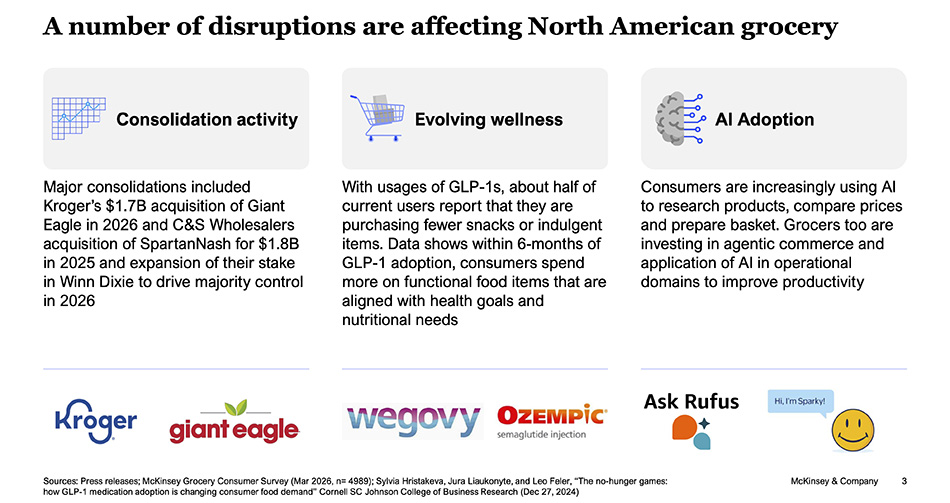
McKinsey's State of Grocery report finds price, not volume, drove 2025 sales, maps 7 forces reshaping the industry, from private label to AI.
theshelbyreport.comThe Shelby Report covered a webinar on McKinsey's The State of Grocery North America 2026. US grocery sales grew 1.2% in 2025, but prices rose 2.2% while volumes declined 1%, a market that grew in dollars as shoppers bought fewer units. Based on a survey of nearly 5,000 shoppers and more than 40 grocery executives, the report organizes the industry around seven forces: value, private brands, fresh, wellness, e-commerce, retail media and AI.
Personalization and e-commerce produce the standout figures. Grocers expect the share of fully personalized promotions to rise from 35% today to 55% within two to three years, and, citing Antavo's 2024 loyalty research, the report notes that loyalty members who redeem personalized offers spend 4.3 times more each year than those who do not. Delivery now accounts for nearly two-thirds of online grocery orders, and 46% of grocers say e-commerce is already profitable, with 72% expecting it to become more profitable than in-store within two to three years.
The report also warns that online grocery demand could outpace current and announced fulfillment capacity by $23 billion to $28 billion by 2030. How grocers prepare fulfillment to absorb online orders is becoming a deciding factor in the growth of grocery e-commerce.
Summary
Today's news centered on the practical layer of how merchants accept agent-initiated payments. Worldline made its UCP entry point available through a single setup, and BPCE included agent transactions in the plans for its new unit. As agent protocols continue to multiply, the role of payment providers in absorbing those differences is coming into focus.
At the same time, Ecommpay's figures on vulnerable consumers force a harder question about who automated checkout is actually convenient for. Whether merchants build in human escalation and ways to recover from mistakes will increasingly determine whether agents earn trust.
On the broader e-commerce front, the EU's parcel fee results, Vietnam's draft decree and a Malaysian industry request all pointed to a rethink of tax breaks for low-value cross-border goods. Next, watch for Malaysia's budget on October 9 and for how the EU's shift to inventory held inside the bloc shows up in delivery terms and pricing.