StyleBuddy Pitches an Agentic Storefront for Fashion Brands: Three Pillars of AI Styling and Try-On, Checked Against Public Data
StyleBuddy is promoting an Agentic Storefront that puts an AI stylist on fashion brands' own sites, plus virtual try-on. We check its sponsored claims against public data and explain what merchants should ask vendors.

Key Takeaways
- StyleBuddy, an AI commerce platform built for fashion, is promoting three pillars: an Agentic Storefront that layers an AI stylist onto a brand's own e-commerce site, Sell With StyleBuddy for discovery inside its own app, and Virtual Try-On. The FashionUnited piece behind the news is not editorial coverage but partner content, in other words an advertorial
- As brands push products onto external AI platforms, the pitch matters because it offers another route: putting an agent in charge of on-site selling and keeping the customer relationship. The company's numbers, however, use different definitions and baselines from page to page, and we found no third-party verification
- Merchants evaluating AI stylists or try-on tools should start by getting vendors to put in writing how metrics are calculated, what the effect on returns is, and how shoppers' photos are handled
What Appeared on FashionUnited Is StyleBuddy's Own Account
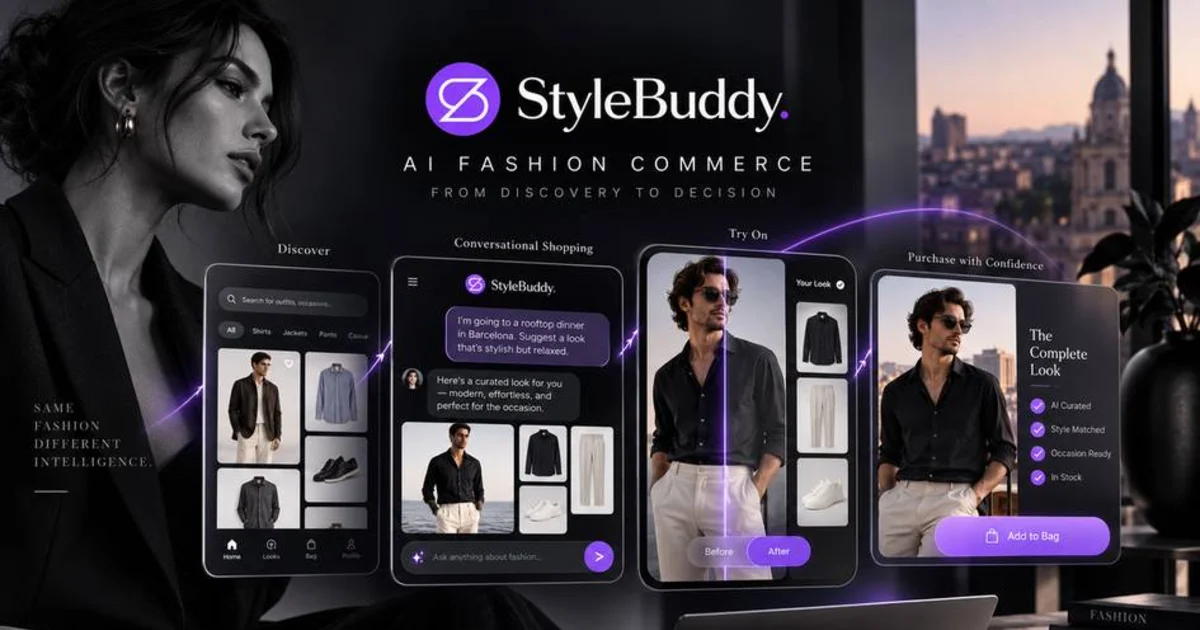
StyleBuddy's vision for fashion retail involves AI styling, virtual try-on, and agentic commerce to enhance the online shopping experience.
fashionunited.ukOn September 14, 2026, the UK edition of fashion trade outlet FashionUnited published a piece laying out the vision of StyleBuddy, an AI fashion commerce platform. The page carries a "PARTNER CONTENT" label and the byline reads "Partner." It is not an editorial story reported by journalists but partner content, an advertorial presenting the company's own account.
This article therefore treats every user count, brand count and target in the piece as a company claim, and checks them against the company's press release, its product pages, a company database and the Shopify App Store.
According to the partner content, Founder and CEO Siddharth Pandit's starting point is that online fashion still asks shoppers to do too much imagining. A product grid can show the assortment, but struggles to say whether a look suits the shopper, fits the occasion or pairs with other pieces. The company says it is building a platform to close that decision gap.
The company says it has more than 100,000 users and has engaged with more than 100 brands, and it aims for more than 2 million users and 500+ participating brands over the next 12 months. It also refers to activity in 40+ markets. None of these figures has been confirmed by a third party.
Inside the Three Pillars: The Most Ambitious Piece Is the AI Stylist on a Brand's Own Site
All three businesses are said to run on the same AI styling engine and product catalogue layer, and brands can adopt one or combine them. Side by side, they differ in where the shopper meets them.
| Pillar | Where the shopper meets it | What the company says | What public information shows |
|---|---|---|---|
| Sell With StyleBuddy (called StyleBuddy Marketplace in the press release) | StyleBuddy's own consumer app | Brand products are discovered inside styling recommendations built around occasions and preferences | List of participating brands and fee structure undisclosed |
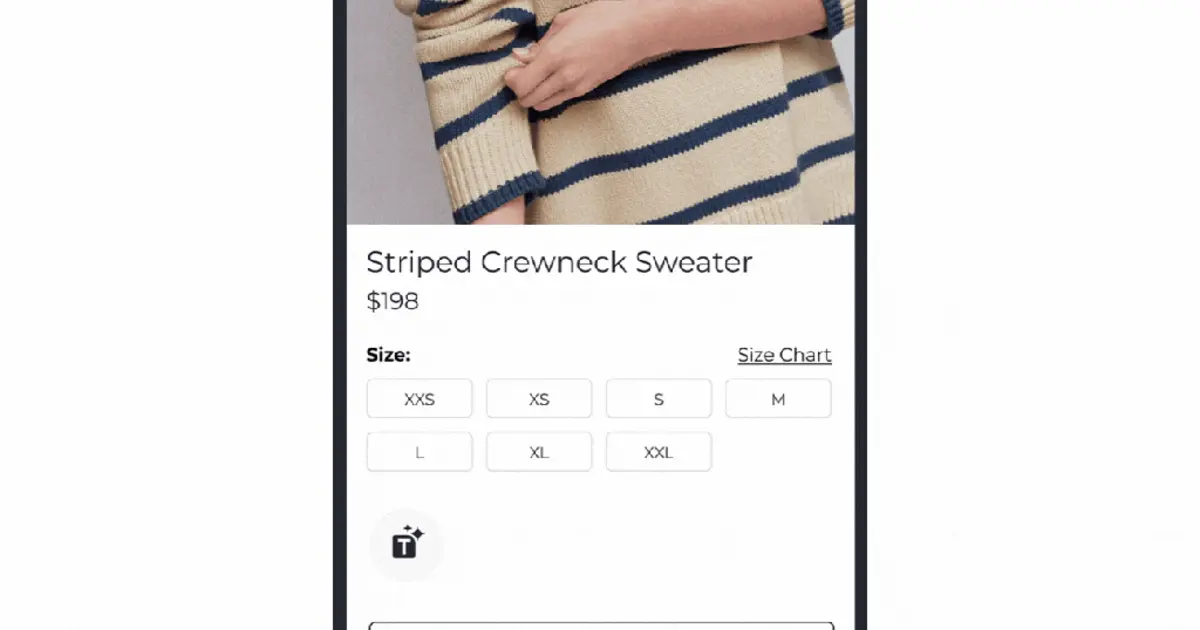
| Agentic Storefront | The brand's own e-commerce site | An AI stylist layered on the existing site recommends from the brand's own catalogue, while payment stays in the brand's checkout | Product page describes a GPT-powered chat. Pricing undisclosed. Buying directly from saved outfits is marked coming soon |
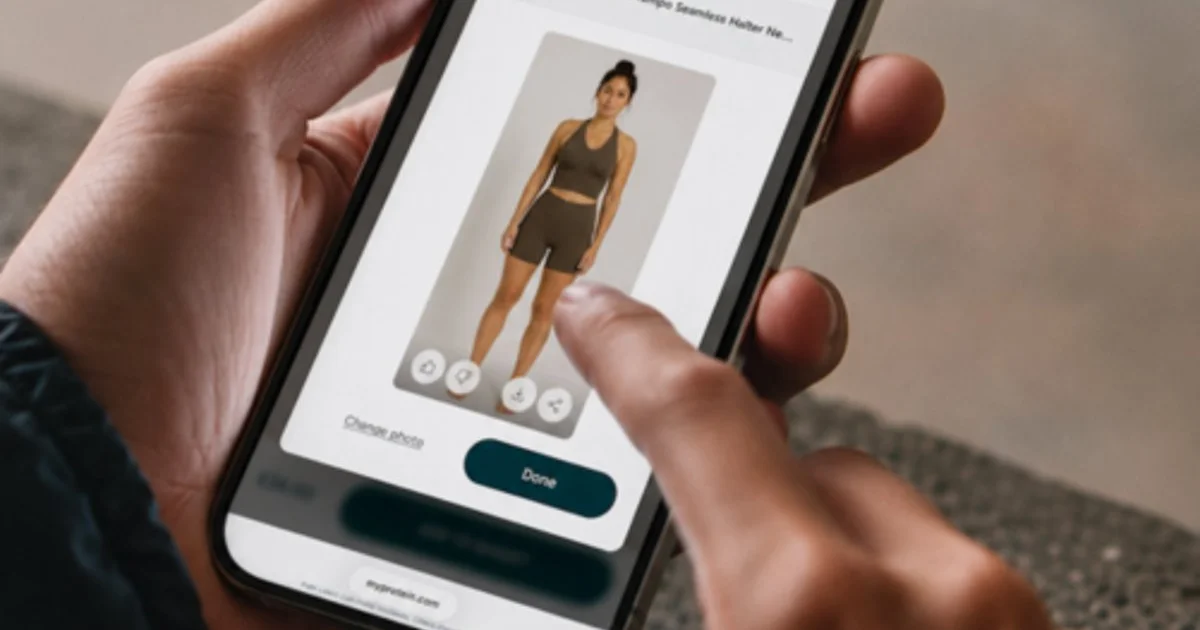
| Virtual Try-On | The brand's product pages (Shopify app available) | Shoppers upload a photo to see how garments may look on them | Shopify app launched December 3, 2025, credit plans from $14.99 to $68.99 per month, 0 reviews (as of September 15, 2026) |
The Agentic Storefront goes furthest. An AI stylist sits on top of a brand's existing storefront and shoppers describe what they want in natural language. It recommends coordinated outfits from the brand's own catalogue, remembers preferences and is designed to keep the customer inside the brand's checkout journey.
The product page is more specific: the chat is a GPT-powered agent, a brand can paste its catalogue URL and go live in 15 minutes, and the existing checkout is left unchanged. It also lists an analytics view with missing-size alerts. Buying directly from saved outfits, however, is marked "coming soon." For now the agent appears to handle recommendations and adding items to the bag, leaving payment to the brand's existing flow.
Of the other two, Sell With StyleBuddy (called StyleBuddy Marketplace in the press release) points the other way, placing brand products inside styling recommendations in StyleBuddy's own app. Virtual Try-On lets shoppers upload a photo to see how a garment may look on them, and a Shopify app is available.
Same "Agentic Storefront" Name, Opposite Direction From Shopify
The naming invites confusion. The Agentic Storefronts Shopify extended to all merchants in March 2026 deliver products to external AI such as ChatGPT, Gemini and Copilot, so the storefront moves outside the merchant's site. What StyleBuddy calls by the same name places an agent inside the brand's own site to change how it sells.
Fashion brands are now deciding how to split effort between those directions. On the outward side, ASOS launched "ASOS Stylist" inside ChatGPT, and Gap began direct purchases on Google Gemini. Brands reach huge conversational traffic but accept the platform's terms for experience design and customer data. In a test by a UK e-commerce executive shortly after launch, covered in our explainer, the app pointed a shopper to a competitor site for a product ASOS does not carry.
According to a January 2026 Modern Retail article, Amazon blocks external AI agents, a move the outlet sees as likely intended to protect its advertising business, while Target and Instacart chose to partner with OpenAI. The piece also cites a Forrester survey in which only about one third of consumers said they would complete payment on an answer engine. Discovery may be moving to external AI, but where the final purchase happens is still unsettled.
The on-site side is being built up too. Daydream, led by Julie Bornstein, raised $50 million in seed funding and launched its shopping agent to the public in June 2025. On July 29, 2026, it announced "Powered by Daydream", bringing its natural-language search to brands' own websites, and said STAUD, Alice + Olivia and others are in the pilot. Willy Chavarria selling its adidas collaboration through Swap's AI storefront points the same way.
Drawing shoppers through its own app while licensing the same engine to brands' sites, StyleBuddy is structurally much like Daydream. The difference is depth of evidence. Daydream has disclosed its funding and named its pilot brands. StyleBuddy has not disclosed funding, and the brand names on its product page have not been confirmed by the brands themselves.
The Size and Try-On Problem Has Independent Data Behind It
The underlying problem is confirmed by data from outside the company. The National Retail Federation and Happy Returns estimated for 2025 that US returns would reach $849.9 billion, with 19.3% of online sales returned. Zalando's technology explainer says return rates in European online fashion can reach around 50%, with size and fit accounting for up to half.
When estimating impact, the two numbers on that same page need careful reading. Zalando's size tools prevented 8% of size-related returns overall in 2025, while its Virtual Fitting Room pilots cut return rates by up to 40%. The metrics and scope differ, so they cannot be compared directly, but the result across the full set of tools was 8% while the pilot's best case was 40%, and Zalando itself describes matching that effect at full scale as work still ahead.
Try-on is also becoming a standard platform feature. Google, which launched its try-on feature in July 2025, updated it in December to work from a single selfie and rolled that update out in the US. THG Ingenuity offers its "AI Stylist" virtual try-on on Google Cloud Marketplace. The room to differentiate on try-on alone is shrinking, and the question is how it connects with on-site selling and size data.
Checking StyleBuddy's Numbers Against Public Information
The company database Tracxn lists StyleBuddy as based in Gurugram, India, founded in 2020, with 29 employees as of the end of August 2026 and revenue in the ₹0 to ₹10 crore band for the fiscal year ended March 2025. It is described as funded, but no amount is shown. The press release was distributed by an Indian entity, Strike A Pose Fashion India Private Limited, and its text names Nirji Ventures as the parent company. FashionUnited's company page, meanwhile, lists Singapore as its location. Tracxn's description and a March 2025 trade media interview show StyleBuddy began as a personal styling service for individuals in India, with the brand-facing AI platform as an extension.
The company's own numbers deserve caution: their definitions and baselines vary from page to page, so they cannot be compared with one another.
- Scale: the partner content and press release cite engagement with more than 100 brands, the product page says "50+ brands live"
- Conversion: the brand home page shows "+34%," the product page shows "3×" (vs standard pages)
- Returns: the home page claims "up to 40%" fewer returns, the product page cites unsourced "industry benchmarks" of 24 to 36%
- Cart abandonment: the product page presents "78%" as the industry problem and, on the same page, "-78%" as the result of adoption
On the Shopify App Store, the try-on app launched on December 3, 2025, with a free trial (100 try-ons for two weeks) and credit-based plans from $14.99 per month (200 try-ons) to $68.99 (1,000 try-ons), and had 0 reviews as of September 15, 2026.
The product page's "Brand Stories" section lists major Indian brands such as Biba, FabIndia and Libas, alongside titled individuals and results figures. However, we found no announcement from any of these brands about adopting StyleBuddy.
What Has Not Been Disclosed
- Agentic Storefront pricing: undisclosed (the only published prices we found are for the Shopify try-on app)
- Funding amount and investors: undisclosed
- Adopting brands verifiable by name: not found
- How performance metrics are calculated (period, comparison group, sample size): undisclosed
- Details of the AI model used, and retention and training use of chat and photo data: undisclosed
- Breakdown of the "40+ markets" and definition of the 100,000+ users: undisclosed
What Merchants Should Take From This
Putting an AI stylist on a brand's own site is a sound option in itself. Listing products on external AI leaves little behind: neither the content of conversations nor demand signals such as which sizes were missing. Putting an agent in charge of on-site selling lets a brand keep that as its own data.
Lining up vendors' numbers, though, does not produce a decision. The first thing to check is how the comparison was designed. Comparing conversion only among shoppers who used a tool tends to select people already more likely to buy, and the same issue came up with THG Ingenuity. Ask for written confirmation of whether results come from a before-and-after comparison or an A/B test that split visitors over the same period.
Conversion alone is not enough either. If try-on drives more orders that are bought and then returned, profit suffers. The effect on returns should be judged by results across the whole catalogue rather than a pilot's best case, and features that take in shoppers' photos need contract terms on retention and use for model training.
Whether a brand strengthens its own site or lists on external AI, no agent can recommend well without solid product data on size, material and length. As AI shopping agents pull fashion search ad budgets, investing in machine-readable product data is something merchants can start before choosing any vendor.
Conclusion
StyleBuddy's three pillars aim to answer online fashion's recurring doubts (does it suit me, what does it go with, will the size be right) through styling, try-on and conversational selling in one package. By showing that on-site selling can become agentic alongside listing on external AI, it gives brands something to weigh.
The source, however, is an advertorial, the numbers lack third-party support and the metrics are not defined on a consistent basis across pages. The next things to watch are whether named brands announce adoption themselves, and whether results are published together with how they were measured.