
AI Commerce News Digest (October 6, 2026)
AI commerce news for October 6, 2026. TikTok unveils Buy Direct checkout from ads and a conversational Shopping Assistant, and Gap Inc. brings shopping agents to Old Navy and Banana Republic. Plus Constructor's Stripe-powered Agentic Checkout and Gladly's single AI for sales and service.

Key Takeaways
- TikTok unveils Buy Direct checkout and an AI Shopping Assistant
- Gap Inc. adds conversational shopping agents at Old Navy and more
- Buying where shoppers discover products is spreading fast
This edition covers news from October 5 to October 6. The common thread is that tools for finishing a purchase right where a product is discovered arrived from three directions at once: social platforms, retailers and e-commerce infrastructure. TikTok announced Buy Direct, which lets shoppers order from a brand straight from an ad in the feed, along with a conversational Shopping Assistant. On the retail side, Gap Inc. is adding conversational agents to storefronts built around search boxes and filters, while Constructor has built Stripe payments into its own shopping agents. The previous digest focused on how brands get chosen once an agent is doing the looking. This time the question has moved on to where the purchase gets completed after that choice is made.
Today's Top Stories
TikTok unveils Buy Direct checkout from ads and a conversational Shopping Assistant

At Advertising Week New York 2026, we're unveiling agentic solutions across every stage of the customer journey and expanding creative potential both on-and-off the platform.
newsroom.tiktok.comOn October 5, at Advertising Week New York 2026, TikTok announced Buy Direct and Shopping Assistant as the first of its agentic commerce experiences. Buy Direct lets users buy a brand's product with one click from an ad in the For You feed, without leaving the app. It is a separate purchase path from the existing TikTok Shop. TikTok says Shopping Assistant, a conversational AI agent, understands context, remembers what a user needs and guides product details, shipping, sizing, availability and purchasing within a single conversation. The Media Leader reports, however, that for now it answers from product page information and does not complete purchases on the user's behalf.
TikTok is building the features with commerce platforms and payment providers including Salesforce, Shopify, Shoplazza and Stripe. Buy Direct runs on an integration with the Universal Commerce Protocol (UCP). Adweek reports that both features are starting to roll out to users and brands in the U.S., while TikTok's advertiser blog describes them as available through eligibility-based testing. Salesforce said Commerce Cloud will support Buy Direct through a native UCP integration, with brands remaining the merchant of record even when the transaction happens on TikTok. That means they keep customer contact details, purchase history and returns handling. The phased rollout of the Commerce Cloud experiences is expected to begin in Q1 2027.
What stands out is that TikTok now offers a route that brings a brand's own e-commerce operation into the ad itself, alongside the model of opening a shop and listing products on TikTok Shop. Meta's Muse, covered in the October 1 digest, also partnered with Shopify and Stripe. Competition among the big platforms to close the loop from discovery to payment inside social apps is now in full swing.
Full article: TikTok Unveils Buy Direct and an AI Shopping Assistant in the US: How Brands Can Sell In-App Without TikTok Shop
Gap Inc. brings conversational shopping agents to Old Navy and Banana Republic

Starting Monday, customers can get recommendations from the Alta Daily and Daydream platforms. Banana Republic and Old Navy are also launching conversational shopping agents.
www.retaildive.comOn October 5, timed to SF Tech Week in San Francisco, Gap Inc. announced AI-powered shopping tools across all of its brands. On the Old Navy and Banana Republic websites and apps, customers can describe what they want in everyday language and get product ideas from a conversational shopping agent. The announcement marks 30 years since Gap launched its first e-commerce site in 1996.
The Gap brand is also working with two outside AI services. Alta Daily suggests outfits based on a user's schedule, budget and the weather forecast, and lets them try Gap products on their Alta avatar. Daydream is a fashion discovery platform where shoppers search in natural language, and it covers all Gap Inc. brands: Gap, Banana Republic, Old Navy and Athleta. Gap Inc. says the aim is to help people get from an idea to the right products without having to translate what they want into keywords, categories and filters.
Consumer caution is part of the backdrop. A SmartCustomer survey cited by Retail Dive found that 45% of purchases shoppers regretted making with AI help were apparel and footwear. CTO Sven Gerjets said the company is focused on relevant recommendations and on keeping customers in control of their journey. After adding checkout on Google's Gemini in March, Gap Inc. is now starting to rebuild its own storefronts around conversation.
Full article: Gap Inc. Launches Conversational Shopping Agents at Old Navy and Banana Republic, Taps Alta and Daydream for AI Discovery
Agentic Commerce
Constructor launches Agentic Checkout, letting shoppers pay with Stripe inside its shopping agents

Constructor, the product discovery platform for the agentic era, today announced Agentic Checkout, which integrates Stripe, to enable shoppers (humans and agents) to both find and buy products within a single agent conversation and interface.
www.prnewswire.comConstructor, which provides search and product discovery for e-commerce, announced Agentic Checkout on October 5. Inside the shopping agents it places on retail sites and apps, shoppers can now discover products, ask questions, narrow their choices and pay without leaving the conversation. Payments run on Stripe, with support for the Link by Stripe wallet and other payment methods. The feature is available globally.
It is live first in Constructor's AI Shopping Agent, which takes natural-language requests, and its AI Product Insights Agent, which answers questions on product detail pages. Constructor plans to extend it to more touchpoints later this year. Existing customers can add it by updating Constructor's UI library and adding their Stripe credentials. According to Constructor, the number of companies deploying its AI agents grew 900% over the past year. Until now, shopping agents typically stopped at discovery and sent shoppers back to a regular checkout flow. This closes that gap.
Full article: Constructor Launches Agentic Checkout Powered by Stripe: Onsite AI Shopping Agents Now Take Shoppers From Discovery to Payment
Gladly launches agentic commerce so one AI both sells and serves

Gladly today launched agentic commerce, joining its existing agentic service to give brands one conversational AI that sells to and serves customers in one conversation, replacing the separate shopping assistants and support bots most retail sites run.
www.prnewswire.comCustomer experience platform Gladly launched agentic commerce on October 5. Combined with its existing support AI, a single AI now answers product questions and post-purchase inquiries in the same conversation. CEO Charlie Besecker said every brand Besecker talks to is running two or more AI agents on its site, one that sells and one that services, and neither knows what the other is doing, which leaves shoppers stuck in loops.
At Balsam Hill, the example Gladly cited, one in five shoppers who viewed a product in chat added it to their cart during the tool's first 30 days. Resolution rates ranged from 80% to 91%, and the tool is live in the U.S., U.K. and Australia. Gladly prices on outcomes rather than seats and guarantees it will beat a brand's current AI on conversion rate, resolution rate and customer satisfaction within 30 days, or the brand pays nothing. The AI that answers a sizing question also handles the exchange, and handling service and sales on the same customer record is the core of the pitch.
Full article: Gladly Launches Agentic Commerce to Merge Sales and Support AI, as 1 in 5 Balsam Hill Chat Shoppers Add to Cart
Mastercard to resell Rezolve Ai's AI commerce software worldwide

Mastercard to lead customer sales engagement under worldwide agreement, expanding Rezolve Ai's distribution and subscription revenue opportunity
www.manilatimes.netNasdaq-listed AI commerce software company Rezolve Ai announced a worldwide reseller agreement with Mastercard, in a release dated October 1. Under the non-exclusive agreement, Mastercard can market and sell subscriptions to Rezolve Ai's software and SaaS services around the world. Mastercard will lead the sales process and contract directly with customers.
The agreement covers conversational commerce, search and product discovery, catalog enrichment, personalization, recommendations, and cart and checkout orchestration, the steps leading up to the purchase. Specific capabilities, regions and terms will be set in separate statements of work for each deployment. The release states that the agreement does not guarantee orders or revenue. Following the agent transaction score covered in the October 1 digest, Mastercard is now extending its sales reach into product discovery, outside its payment network.
AI Commerce Tools
The Very Group partners with Made With Intent to read purchase intent from behavior

The Very Group, which operates digital retailers Very and Littlewoods, has partnered with Made With Intent. This will see Very offer its customers a more personalised experience. By using over 800 behavioural signals, Made With Intent's agentic decision engine predicts customer's intent in real-time
retailtechinnovationhub.comThe Very Group, which runs the online retailers Very and Littlewoods, has partnered with personalization platform Made With Intent. The platform uses more than 800 behavioral signals to predict each visitor's purchase intent in real time and lets AI decide what to show them and when. Very will use it to surface discounts tailored to individual customers and to show prompts at key moments in the shopping journey.
Made With Intent's engine pairs a proprietary model with an optimization AI agent that allocates experiences across hundreds of intent combinations, learning what works for which visitors and contexts. Very Digital Director Sarah Hanna said that in the first month, revenue per customer rose by a fifth in one of its agentic strategies, with an uplift in overall conversion. The details of the strategy and the baseline were not disclosed. Alongside the race to be found by outside AI assistants, how retailers tailor their own sites to visitors is also shifting to agent-driven decisions.
Consumer Trends
Chobani ranks higher in AI referrals than in e-commerce sales, Euromonitor finds

Why does Chobani perform well in AI shopping? Euromonitor says its functional benefits, product information and meal-planning relevance make it easier for AI to recommend.
www.foodnavigator.comMichelle Evans of Euromonitor presented an analysis of AI-referred purchases at Groceryshop 2026, a retail and consumer goods industry event. According to FoodNavigator, yogurt brand Chobani ranks No. 12 in e-commerce sales in its packaged food category but No. 6 in AI referrals. Evans attributes this to AI being able to explain the science behind the product as a food and to suggest recipes that use it.
In Evans's figures, only 2% of soft drinks, 3% of grocery staples and 4% of snacks are bought because of an AI referral, compared with 47% for personal care and 28% for consumer health. AI matters most in categories shoppers approach with questions. Evans splits AI-driven orders into four types, from autopilot reorders such as "reorder my usual yogurt" to fully delegated decisions such as building a meal plan. She advises brands to make product information machine-legible and to measure AI visibility separately from regular search traffic.
Payments and Fintech
Authvia secures its sixth U.S. patent, covering authorization within conversations

Authvia secures its sixth U.S. patent for technology connecting AI-driven actions to authorization and secure financial execution.
finance.yahoo.comAuthvia, which runs payment orchestration across SMS, voice and other messaging channels, announced on October 5 that it has been issued U.S. Patent No. 12,711,476, "Conversational Payment Transactions." The patent was issued on August 18 and is the company's sixth U.S. patent.
The patent covers a system that sends transaction details to a consumer, interprets a specific authorization within the conversation, links it to the right transaction, initiates payment and updates the transaction record. Founder and CEO Chris Brunner said that "intent is not authorization," even when AI can create intent, make recommendations and take action. Agents can already start purchases. The next point of contention is how to record who approved a payment, and under what authority.
UAE-based NEOPAY to acquire a 65% stake in noon payments

Upon completion, the transaction will bring together NEOPAY's scalable acquiring infrastructure, omnichannel acceptance capabilities and merchant services platform with noon payments' embedded payments platform, e-commerce gateway and merchant network across the UAE, Saudi Arabia and Egypt.
techafricanews.comNEOPAY, which runs a payments business in the UAE, has entered into a definitive agreement to acquire a 65% controlling stake in noon payments. Completion is subject to regulatory and antitrust approvals.
NEOPAY brings acquiring infrastructure and omnichannel payment acceptance, while noon payments has an embedded payments platform, an e-commerce gateway and a merchant network across the UAE, Saudi Arabia and Egypt that includes marketplace sellers. After the deal closes, NEOPAY plans to offer online and in-store acceptance, faster settlements, data and analytics, and alternative payment methods including installments as one package. It is an example of a payments provider in the Middle East and North Africa absorbing e-commerce merchant networks to scale across borders.
Logistics and Fulfillment
UK courier Evri enters the U.S. delivery market by acquiring Cross Border Connect
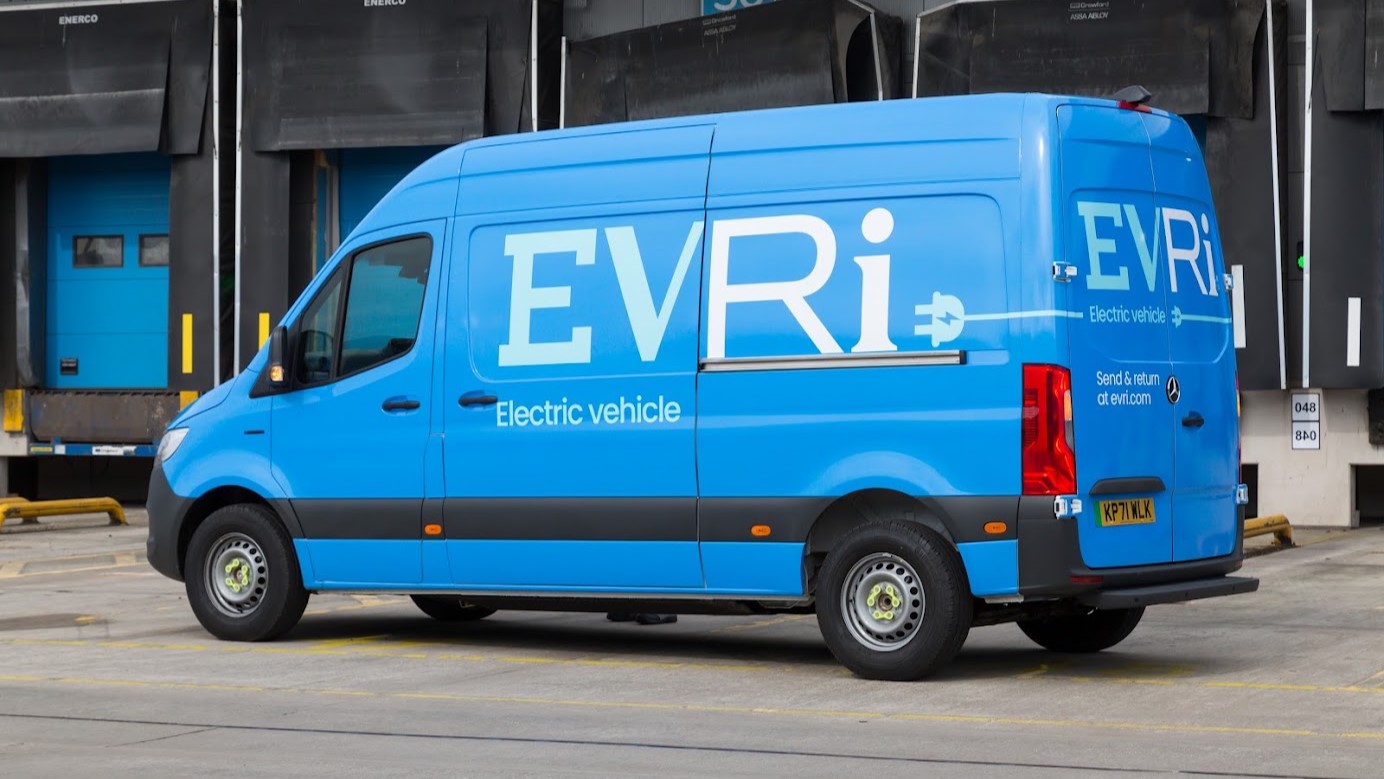
U.K.-based courier Evri on Monday announced the acquisition of Cross Border Connect in Florida, furthering its expansion into cross-border e-commerce.
www.freightwaves.comUK parcel carrier Evri announced on October 5 that it has agreed to acquire Florida-based courier Cross Border Connect (CBC). CBC specializes in e-commerce delivery and returns between the U.K. and the U.S. Its asset-light network uses proprietary technology to manage pickup and customs clearance at six ports of entry and to inject parcels directly at the nearest carrier hub. Co-founder Chris Lentjes will stay on as CEO.
Evri became the U.K.'s largest pure-play parcel delivery company after merging with DHL eCommerce in 2025, and it moves more than one billion parcels a year. That same year it bought Irish customs clearance specialist Coll-8. Chief Commercial Officer David Saenz said CBC's technology helps customers cut cross-border delivery costs by up to 30%. The deal is an example of a parcel carrier expanding abroad to capture U.K.-U.S. cross-border e-commerce on its own network.
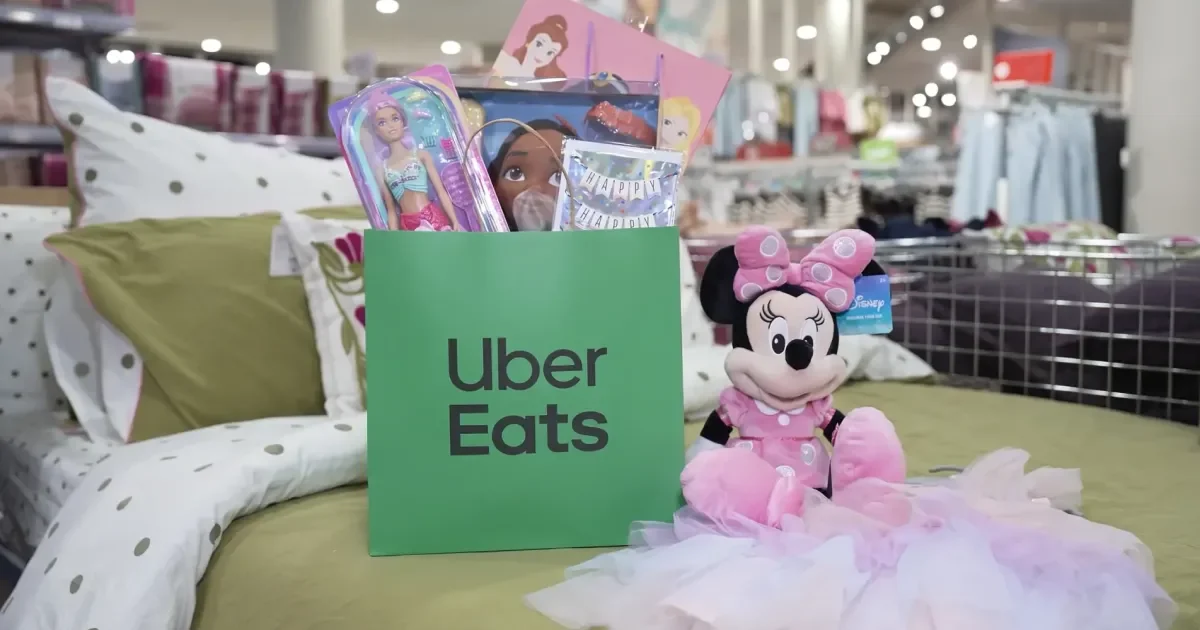
Target Australia offers more than 25,000 products for delivery in under 60 minutes via Uber Eats
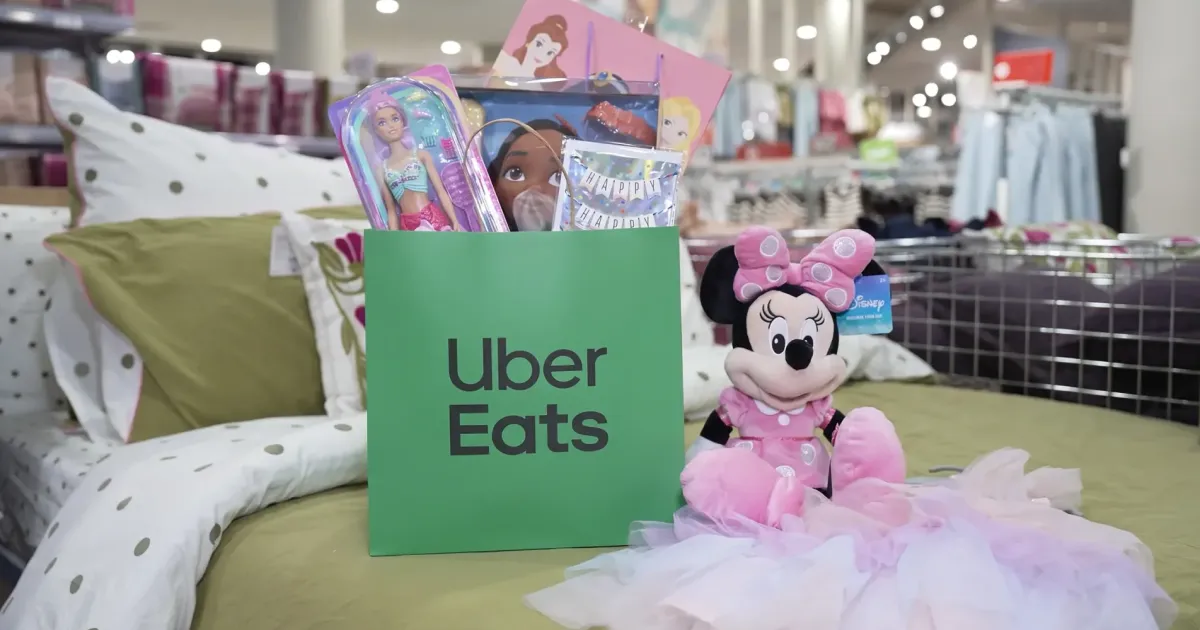
Target has partnered with Uber Eats to offer more than 25,000 products for delivery in under 60 minutes.
retailasia.comAustralian retailer Target has partnered with Uber Eats to deliver more than 25,000 products in under 60 minutes. The range spans fashion, beauty, homewares, toys and baby products, making Target the first fashion retailer in Australia to join Uber Eats. The service starts at selected stores in high-demand areas and will expand to more stores in the new year.
The timing targets the Christmas shopping season, aiming to capture unplanned purchases such as last-minute gifts, children's essentials and event outfits. Bernard Wilson, chief customer officer of Kmart and Target, said the goal is an online offer that works for customers whether they plan ahead or need something quickly. Instant delivery apps that centered on food and everyday essentials are now becoming a sales channel for apparel and general merchandise as well.
Global E-commerce Trends
India's e-commerce market set for its fastest growth in five years, topping $90 billion in 2026

India's online retail market is set to exceed $90b in 2026, growing 22% to 24%, the fastest annual pace in five years.
retailasia.comAccording to Redseer Strategy Consultants, India's online retail market is set to exceed $90 billion in 2026, growing 22% to 24%, the fastest annual pace in five years. First-half sales rose about 25% year on year to roughly $38 billion, led by grocery at 51%, beauty and personal care at 38%, and home and furniture at 33%.
Quick commerce is the main driver. Its share of the market rose to 22% in the first half from 14% a year earlier, reaching about $9 billion with more than 60 million monthly transacting users. For the full year, grocery is projected to overtake mobiles as the second-largest online category. Festive season sales are forecast to grow about 25% to $15 billion to $16 billion, with quick commerce's share rising to 18% from 11%. Amazon Now's expansion to more than 120 cities, covered in the previous digest, is part of this trend.
Snapdeal parent AceVector falls 19% on its India market debut

Shares of AceVector, the parent company of Indian e-commerce platform Snapdeal, made a subdued debut on Monday, falling 19.3%, as investors were concerned over the lack of profits.
www.reuters.comAceVector, the parent of Indian e-commerce platform Snapdeal, listed on the National Stock Exchange of India on October 5. Shares opened at 28.32 rupees, 11.5% below the issue price of 32 rupees, and closed at 25.81 rupees, down 19.3% from the issue price. That values the company at 14.19 billion rupees ($147.36 million).
The SoftBank-backed company also owns e-commerce software provider Unicommerce and Stellaro Brands. For fiscal year 2026, it reported a consolidated loss of 607.8 million rupees on revenue of 5.1 billion rupees. The IPO was subscribed 4.93 times, a muted response given that about 66% of IPOs in the first half of fiscal 2026-27 drew more than 10 times the shares on offer. Even as the market grows, investors are taking a hard line on unprofitable general e-commerce platforms.
The U.K. accounts for 65% of TikTok Shop's European sales, ECDB finds

TikTok Shop generates far more sales in the UK than in other European countries. The GMV is expected to rise to almost 5 billion euros.
ecommercenews.euAccording to German e-commerce data provider ECDB, the U.K. accounted for 65% of European spending on TikTok Shop in 2025, with GMV of 2.63 billion euros. Spain came second at around 570 million euros (14%), followed by France at 360 million euros and Germany at 350 million euros (9% each), and Italy at 150 million euros (4%). U.K. GMV is expected to reach almost 5 billion euros in 2026.
ECDB expects GMV in every market to nearly double this year, regardless of when TikTok Shop launched there. More than 300,000 British SMEs now sell on the platform. TikTok Shop has launched Sell Across Europe, which lets sellers reach twelve European countries, and has been piloting cross-border sales between the EU and the U.K. with selected sellers since September 21, with a broader rollout scheduled for October 19. Together with the newly announced Buy Direct, TikTok is widening its sales channels both through its own shop and through direct purchases from ads.
Business Moves and Partnerships
Denmark's Salling Group to acquire Nordic online retailer Proshop
Denmark's Salling Group plans to acquire Scandinavian online retailer Proshop as it seeks to boost its e-commerce presence.
www.esmmagazine.comDanish retail group Salling Group announced plans to acquire Proshop, an online retailer of electronics, gaming, household goods and other consumer products. It is buying the business from founder and CEO Poul Thyregod and the Norwegian investment fund A. Wilhelmsen. Thyregod will keep a minority stake and remain CEO. The deal is subject to regulatory approvals and is expected to close during the autumn.
Salling Group already runs several e-commerce platforms, and Proshop gives it access to eight European markets and a highly efficient logistics platform. CEO Anders Hagh said customers increasingly buy electronics and other consumer goods online and expect the best prices, the strongest assortment and the fastest delivery. The aim is to apply the logistics and technology of a pure-play e-commerce business that has invested heavily in automation across the wider group.
Wrap-up
October 5 and 6 brought a wave of tools, from very different kinds of companies, for finishing a purchase right where AI helped a shopper find a product. TikTok is bringing checkout into its ads and feed, while Constructor and Gladly are bringing payment and order handling into the agents on retailers' own sites. Gap Inc. is putting its products both into conversational agents on its own sites and into outside AI services, so shoppers can buy from either entry point. The discussion that ran through the previous digest, about how to get found by AI, has moved on to where the purchase happens once a product is found.
The more places there are to buy, the more it matters who acts as the merchant of record and keeps the customer relationship and transaction record. Salesforce's emphasis on keeping brands as the merchant of record for Buy Direct, and Authvia's patent on authorization within conversations, both speak to that question. The next things to watch are when TikTok's Buy Direct moves from testing to general availability, and how Shopify and others respond before Commerce Cloud support begins in early 2027.