Nestlé Turns Lazada's AI Assistant LazzieChat into Campaign Infrastructure: Over 90% New Buyers in Pilot, Now Scaled to Five Southeast Asian Markets
Nestlé and Lazada have scaled the conversational AI LazzieChat into promotional infrastructure linking code hunts, preference quizzes and vouchers across five markets. How the assistant evolved, how to read the reported figures, and the data terms marketplace brands should check.

Key Takeaways
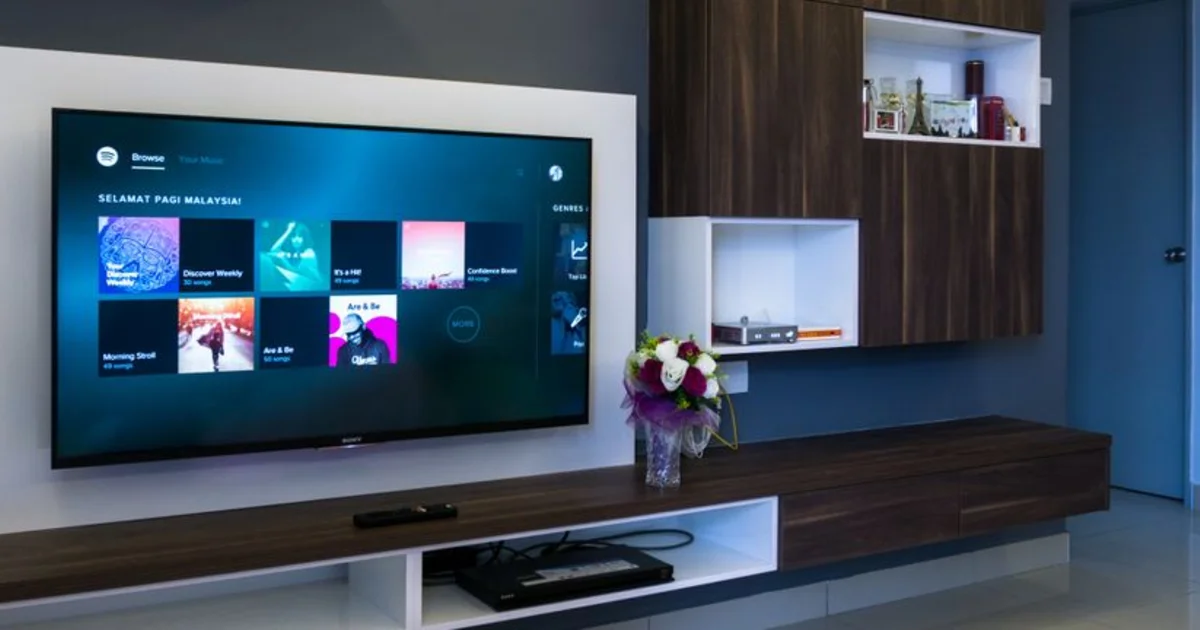
- For the "Nestlé x Lazada Regional Super Brand Day" on October 1 and 2, Nestlé and Lazada extended the experience built on LazzieChat, Lazada's AI shopping assistant,, from an April pilot with Nestlé Nutrition to Nestlé's wider portfolio. Shoppers find a secret code in Nestlé's stores, enter it into LazzieChat, answer a preference quiz and receive vouchers they can use at checkout
- What matters is that an AI assistant is now being used as campaign infrastructure, connecting product discovery, customer understanding and purchase in a single flow. The companies say the April pilot generated more than 60,000 interactions and that over 90% of buyers were new to Nestlé
- The figures are self-reported by the brand and the platform, and no incrementality separated from the voucher effect has been shown. How much of the quiz data Nestlé actually receives is undisclosed, and the AI experience itself belongs to Lazada. Brands selling on marketplaces now need to check the terms on which they rent that AI space
From an April pilot to a campaign spanning Nestlé's portfolio
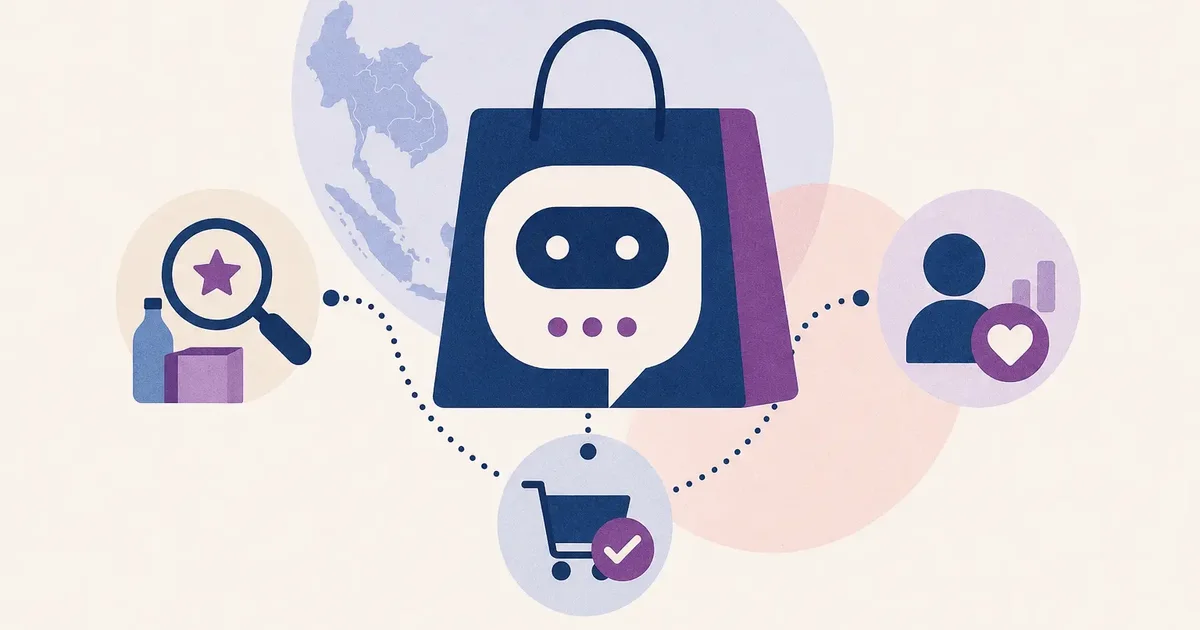
Nestlé and Lazada connect AI discovery, shopper insights and checkout in a five-market ecommerce campaign.
www.contentgrip.comYou open the Lazada app and browse Nestlé's official store, where you spot a campaign secret code. Enter it into LazzieChat, the platform's AI assistant, and a "surprise" unlocks, followed by a quiz about your preferences and shopping habits. When you finish, you receive a voucher you can use right away at Lazada's checkout.
That is the experience at the center of the "Nestlé x Lazada Regional Super Brand Day" held in October. According to the companies' announcement published by Marketing-Interactive, the event ran on October 1 in Malaysia, Singapore and Indonesia, and on October 2 in Vietnam and Thailand. Under the theme "Goodness at the heart of every home," it covered a broad range of Nestlé products, including groceries, rather than nutrition alone.
The starting point was a pilot in April 2026. As part of a Lazada initiative, Nestlé Nutrition ran an experience called "Future, Imagined" on LazzieChat, an interactive concept inviting parents to imagine their children's future. The companies say the response to that pilot is why they scaled up.
One detail is worth noting. The campaign as a whole ran in five markets, but the announcement lists Malaysia, Singapore, Indonesia and Thailand as the markets for the LazzieChat experience, without Vietnam. ContentGrip, the source article, describes a five-market expansion, so the exact scope in each market cannot be confirmed from the announcement.
The pilot numbers: 60,000 interactions and over 90% new buyers
The companies shared two figures from the April pilot.
| Metric | Figure | Notes |
|---|---|---|
| Proactive interactions with LazzieChat | 60,000+ | During the April 2026 'Future, Imagined' campaign |
| Share of buyers via LazzieChat who were new to Nestlé | Over 90% | Number of buyers and conversion rate undisclosed |
The second figure is the one to watch. More than 90% of shoppers who bought through the Lazzie-guided experience were new to Nestlé, according to the companies. The claim is that a conversational experience worked to acquire new buyers rather than to lock in existing fans.
These numbers, however, have no denominator. How many people bought, and how many of the 60,000 interactions led to a purchase, has not been disclosed. Nor does the announcement make clear whether "new to Nestlé" means first-time buyers at Nestlé's stores on Lazada or first-time buyers of Nestlé products altogether.
How LazzieChat got here
LazzieChat was not built for this campaign. Lazada has spent three years weaving it into its promotional machinery.
| Period | Milestone | Figures reported by Lazada |
|---|---|---|
| May 2023 | LazzieChat launches (ChatGPT technology in Azure OpenAI Service, English in three markets) | None |
| 2024 | The 'LazzieChat Hunt' promotion launches, combining code hunts with vouchers | None |
| September 2025 | 'LazzieChat Challenge' for the 9.9 sale | Results of the 6.6 sale cited in the same release: 43% more orders and 168% higher GMV (vs. the previous mega sale) |
| October 2025 | Five AI agents announced, with AI Lazzie as a Qwen-powered shopping agent | 42% more orders in the pilot phase; 2.3 million+ products supported |
| April 2026 | 'SmartStack' inside Lazzie for the birthday sale | About 2.5 million daily users; nearly 100,000 buyers; nearly US$3 million in AI-guided GMV |
| October 2026 | Nestlé x Lazada Regional Super Brand Day combines codes, quiz and vouchers | Not yet published |
It began in May 2023. According to Microsoft's announcement, LazzieChat used ChatGPT technology in Azure OpenAI Service and launched in English in Singapore, the Philippines and Indonesia. At first it was an advisor that answered questions and suggested products.
Its character changed in 2024. Lazada launched a promotion called "LazzieChat Hunt," in which shoppers hunted for secret codes and talked to Lazzie to unlock promo codes and vouchers. Lazada's September 2025 announcement notes that Nestlé had already used this mechanic in its mega campaigns, alongside Dyson, Eucerin, Lego and P&G. The current "find a code and enter it into the AI" flow is an extension of that.
In October 2025, Lazada introduced five AI agents. In the company's announcement, the shopping agent AI Lazzie is powered by Qwen, the large language model of parent company Alibaba Group, and supports more than 2.3 million products. Presenting it alongside refund, logistics, product listing and marketing agents, CTO Howard Wang called it a step toward "a new era of agentic commerce."
The most recent results come from the April 2026 birthday sale. According to Lazada's announcement, about 2.5 million users a day visited "SmartStack," a feature inside Lazzie, nearly 100,000 users bought after interacting with Lazzie, and AI-guided GMV reached nearly US$3 million. Here too, vouchers unlocked through conversation were a key draw.
When an AI assistant becomes campaign infrastructure
The thing to read in this announcement is not the AI's capability but how it is being used.
Brand promotions have typically designed ads, product pages, content and coupons separately, then stitched their results together afterward. In Nestlé's experience, discovery in the store, conversation with the AI, preference capture and purchase via a voucher sit in one flow. ContentGrip describes this not as using AI to produce assets but as using it to orchestrate campaign functions that usually live in separate places.
The quiz carries the most weight. The companies explain that it asks shoppers about their preferences and behaviors, giving Nestlé insight into what they want and what shapes their choices. Information that customers volunteer about themselves is called "zero-party data," and it expresses intent more clearly than data inferred from browsing history.
For brands, marketplaces have been places where sales happen but customers remain hard to see. Most purchase data sits with the platform, and brands receive limited information. By inserting a quiz into the AI conversation, a brand can ask customers directly in the moment and then nudge those who answer toward a purchase with a voucher, a design that asks and sells at the same time.
This model also changes how campaigns are planned. What should the AI recommend, what should it ask, which incentive should appear when, and where should the conversation end? ContentGrip argues that in conversational commerce, campaign planning starts to look like product design. The interaction logic and the path to purchase matter more to results than the polish of the creative.
More mechanics do not automatically make a better experience, though. Finding a code, entering it into the AI and answering a quiz are each points where people can drop off. The design works only when the reward outweighs the effort, and whether the same response would appear without a voucher is a separate question.
Whose AI, whose data
There is a structural issue here that brands can easily overlook.
The announcement states plainly that the LazzieChat experience runs on technology developed and managed by Lazada. The conversation framework, the model, the conversation logs and the purchase data all sit with Lazada. Nestlé is renting AI space that Lazada provides for its campaign.
At what level of detail Nestlé receives the quiz answers has not been disclosed. Are they individual responses or aggregated reports? Can they be used in Nestlé's own membership base or ad targeting outside Lazada? Depending on these terms, the phrase "capturing zero-party data" carries very different weight.
The same mechanism is open to other brands such as P&G and Dyson, and the know-how for succeeding with LazzieChat accumulates inside Lazada. In Southeast Asia, Shopee is also investing in AI, through its connection to ChatGPT and its in-house e-commerce LLM, Compass. Platforms are competing not on whether they have AI but on how much of the purchase journey their own AI can orchestrate. For brands, the question is how to secure their place within that journey.
Fertile ground in Southeast Asia
Southeast Asia is a market where experiments like this land easily. According to e-Conomy SEA 2025, published by Google, Temasek and Bain & Company in November 2025, consumer interest in AI in the region is three times the global average, and three out of four users say AI tools have helped them discover content and make tasks easier. E-commerce GMV was projected to reach US$185 billion in 2025.
Caveats: how to read the reported figures
Evaluating these numbers requires keeping several limits in mind.
First, consider the nature of the source. The Marketing-Interactive piece is sponsored content, marked at the end as brought to you by Nestlé and Lazada, not independent reporting. ContentGrip also writes that the pilot metrics are brand-reported and should be treated as directional evidence rather than independent proof of incrementality.
Second, causality is not separated. Did new buyers exceed 90% because the AI conversation worked, or because the voucher discount did? The announcement does not distinguish between the two. The nearly US$3 million in AI-guided GMV is likewise the amount spent by people who bought after interacting during a sale, not revenue that would not have existed without AI.
Finally, the voucher amounts, eligible products, number of quiz questions and number of participants are all undisclosed. The material needed to compare cost-effectiveness with other promotions is not yet available.
What brands selling on marketplaces should check
Marketplaces opening AI assistants as promotional space is a new option for brands that sell on them. Before renting that space, though, the questions to ask are clear.
One is the scope of the data obtained through conversations and quizzes, and the terms for using it. The other is measurement. Can the brand measure the increment compared with simply handing out vouchers, rather than counting conversations or participants? Whether these two points can be settled with the platform decides whether the AI space ends up as a publicity stunt or becomes a means of understanding customers.
For brands preparing for the moment a marketplace in their own market opens AI space to them, deciding in advance what to ask and what data they want to receive is the starting point for negotiation.
Summary
The Nestlé and Lazada initiative uses an AI assistant not as a standalone feature but as promotional infrastructure that links discovery, customer understanding and purchase. LazzieChat has broadened its role from a 2023 advisory chatbot, through promotions that combine code hunts and vouchers, into a place where brands run their campaigns.
The next thing to watch is which metrics the companies use to report the October campaign's results. If they go beyond conversation counts to describe conversion to purchase and how the quiz insights were put to use, the value of renting AI space will become much clearer.