Gladly Launches Agentic Commerce to Merge Sales and Support AI, as 1 in 5 Balsam Hill Chat Shoppers Add to Cart
Gladly's agentic commerce lets one conversational AI handle product advice and order, return and exchange requests on a single customer record. We explain the two-bot problem, how to read the Balsam Hill case and what outcome-based pricing means for e-commerce brands.

Key Takeaways
- On October 5, 2026, customer service platform Gladly launched "agentic commerce," which handles product questions and recommendations. Combined with its existing "agentic service" for support, one conversational AI now covers both selling and order, return and exchange requests on the same customer record
- Most retail sites run a "shopping assistant" for sales and a separate "chatbot" for support. Gladly calls this the "two-bot era" and frames the real problem as shoppers having to work out which bot to ask
- At launch customer Balsam Hill, nearly one in five shoppers who viewed a product in chat added it to their cart. But the figures come from the vendor's own case study and cover only the first 30 days. E-commerce brands should start by reviewing how many bots their site runs, whether those bots share customer data, and how "outcomes" are defined
Gladly merges the "selling bot" and the "support bot" into one

Gladly today launched agentic commerce, joining its existing agentic service to give brands one conversational AI that sells to and serves customers in one conversation.
www.prnewswire.comYou have probably seen two chat entry points sitting side by side in the corner of a retail site. One says "find recommendations," the other "orders and shipping." The press release that San Francisco-based Gladly issued on October 5 announced a product designed to remove that pairing.
The new product is agentic commerce, which handles product discovery, comparison and recommendations. Gladly already offers agentic service, which checks order status and processes returns and exchanges. Combined, the two let a brand hand both selling and support to a single conversational AI. The aim is to replace the separate shopping assistants and support bots that most retail sites run today.
CEO Charlie Besecker's words capture the product's argument.
Every brand I talk to is running two or more AI agents on its site. One AI tool sells, the other services, and neither knows what the other is doing.Source: Charlie Besecker, CEO of Gladly
Founded in 2014, Gladly counts Crate & Barrel, Ulta Beauty, Nordstrom and HOKA among its customers and has raised more than $200 million. In the release, the company repositions itself as "the Commerce AI platform built to run the entire retail customer relationship."
Why two bots ended up on the same site
Why would one site run two bots? The answer lies in the org chart before it lies in the technology.
Shopping assistants are bought by e-commerce and digital marketing teams, who are measured on revenue. Support bots are bought by customer service teams, who are measured on contact volume and cost per contact. Different budgets and different KPIs lead to different tools. Gladly's release closes by saying the line between selling and serving was never real to the shopper and "only ever existed in the org chart."
That organizational split turns directly into a data split. A shopping assistant sees the current session and the product catalog. A support bot sees order history and shipping status. The release gives a clear illustration.
- A shopping assistant can recommend a product but cannot see order history, so it cannot confirm whether a return qualifies for a free exchange
- A support bot can see the order but was not built to sell, so it closes the case and lets the next sale walk away
The issue is surfacing now because of the rise in shoppers arriving from AI. According to Adobe Analytics, AI traffic to U.S. retail sites rose 393% year over year in January through March 2026. TechCrunch reported that as of March, AI-referred visits converted 42% better than other traffic and generated 37% more revenue per visit.
These shoppers arrive having already narrowed their options in ChatGPT or similar tools. What remains is one or two questions, such as "will this fit me?" or "can I exchange the one I bought before?" If the site cannot answer, the shopper leaves. Answering that "last question," as Gladly frames it, requires both product knowledge and that shopper's purchase history.
That said, the 393% growth rate starts from a small base. Some studies show AI referrals still account for a small share of total retail traffic, so the data needs careful reading.
Centering the customer, not the session
The most important part of Gladly's pitch is not a feature but the underlying design. The company says it built its platform around "the customer instead of the session." The AI that answers a sizing question and the AI that handles the exchange are the same AI on the same customer record.
This is not a new talking point. Since its founding, Gladly has differentiated itself from ticket-based help desks, which treat each inquiry as a separate ticket, by linking every interaction with a customer into one continuous history regardless of channel. When it raised $40 million in a round led by AXA Venture Partners in September 2024, coverage highlighted this customer-centric foundation as the company's defining trait.
A customer record built for support can be reused for selling. Knowing what someone bought, returned and complained about turns recommendations from "popular items" into "items that suit this person." In the other direction, the size and use case a shopper mentions before buying become useful in post-purchase support. The release calls agentic commerce "the first product that needed that entire architecture at once."
Looking back, the launch came in stages. On May 6, at its annual Gladly Connect Live conference, the company previewed agentic commerce capabilities, including capabilities for AI platforms such as ChatGPT, Perplexity and Gemini as well as brand-owned sites. This announcement turns that preview into a product. Gladly also says its AI is trained on more than 450 million retail interactions.
How to read the Balsam Hill numbers
The only concrete case cited is Balsam Hill, which sells artificial Christmas trees and holiday decor. Its parent, Balsam Brands, has been a Gladly customer since 2021, originally for support.
According to Gladly's case study, the gap was product questions. Answers existed on product pages but were hard to find, and seasonal agents had only a few weeks to learn an extensive catalog. The digital commerce team added a separate shopping bot, but shoppers often asked the wrong bot and ended up without the help they needed.
Instead of replacing the shopping bot with another standalone tool, the company extended Gladly, which it already used for support, into the pre-sale journey. Results for the first 30 days were:
- Nearly one in five shoppers who viewed a product in chat added it to their cart
- Chat drove six figures in add-to-cart value
- Resolution rose from 80% before launch to 91%
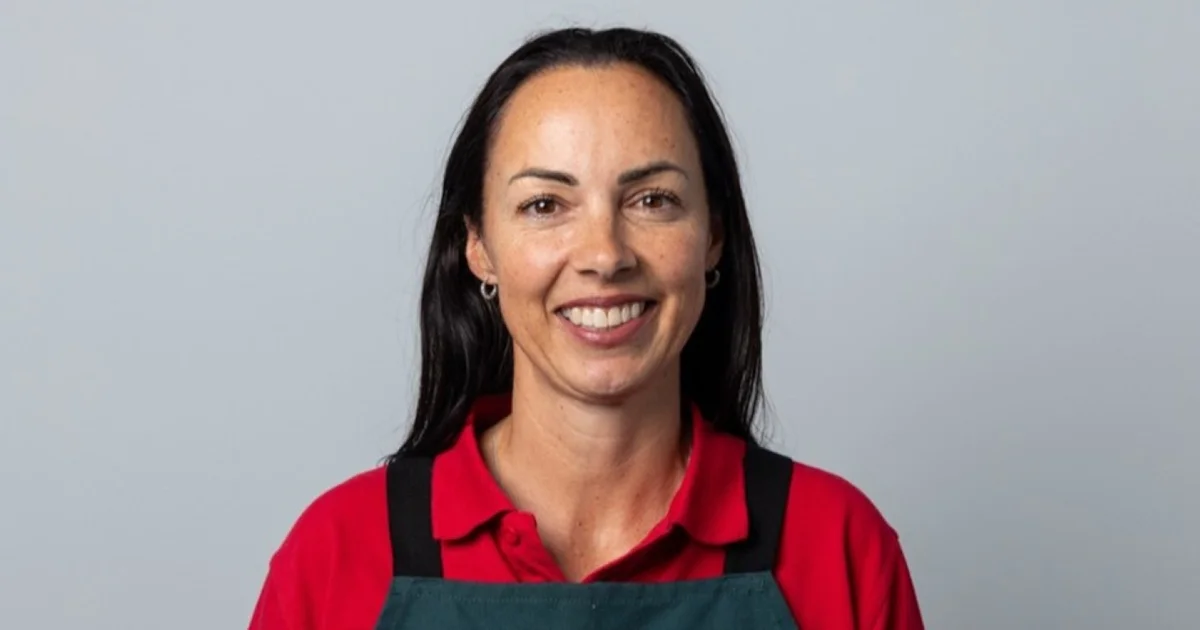
After launching on the U.S. site, the team expanded to its U.K. and Australian sites at the same time. Joe Balczo, senior strategist for AI and CX technology at Balsam Brands, said customers had been the ones "figuring out which box to talk to," and that it is now one conversation.
The numbers stand out, but at least four caveats apply.
First, this is a case study published by Gladly itself. There is no third-party verification and no control group. "One in five" is measured among shoppers who viewed a product in chat, a group that was already highly engaged. It is not a comparison with shoppers who did not use chat.
The metric is also add-to-cart, not purchase. How much of the six-figure add-to-cart value became actual revenue has not been disclosed.
The time window matters too. Thirty days is short for judging an AI's impact, and Balsam Hill is a seasonal business whose sales concentrate around the holidays. Which month the tool launched in changes what the numbers mean.
Finally, there is the definition of resolution. The press release says resolution rates "ranged from 80% to 91%," while the case study says resolution "increased from 80% to 91%," and neither defines what counts as resolved. Notably, Gladly's own 2026 Customer Expectations Report, released in January, found that 88% of respondents said their issue was resolved through AI or a hybrid AI-to-human interaction, yet only 22% said the experience made them prefer the company. Gladly itself has shown that a high resolution rate and a returning customer are two different things.
Paying for outcomes, not seats
Pricing is the other pillar of the announcement. Gladly is sold as subscription software priced on outcomes rather than agent seats. The company also guarantees that within 30 days it will outperform the brand's current AI on conversion rate, resolution rate and customer satisfaction, or the brand pays nothing. There are no implementation fees, and a typical launch takes about a week.
Seat-based pricing means a vendor earns less the more work its AI takes over from human agents. Outcome-based pricing flips that. Gladly is not alone here: Sacra reports that Sierra, valued at $15.8 billion, also charges per resolved conversation for some interactions.
However, specific prices, the definition of an outcome and how the guarantee is judged are undisclosed. When you pay for outcomes, what counts as an outcome becomes the heart of the contract. Is it add-to-cart or completed purchase? Are returned orders subtracted? Because the measurement sits with the vendor, the brand needs to pin down those definitions itself.
| Item | Announced terms |
|---|---|
| Offering | Subscription software; sold with the existing agentic service as one conversational AI |
| Pricing basis | Priced on outcomes rather than agent seats |
| Guarantee | Pay nothing if it does not outperform the brand's current AI on conversion rate, resolution rate and CSAT within 30 days |
| Implementation | No implementation fees; a typical launch takes about a week |
| Specific prices and outcome definitions | Undisclosed |
| How the guarantee is judged | Undisclosed |
Competitors are heading for the same boundary
Others are also connecting sales and support through one AI. Salesforce customer SharkNinja uses Agentforce and its Shopper Agent to handle everything from pre-purchase product selection to post-purchase setup on the same customer data foundation. Sierra, which started in support, has also laid out plans to expand from support into sales.
The difference is the starting point. Salesforce's approach is a large-scale rebuild that replaces the commerce platform, while Gladly adds selling on top of an existing support platform. The Balsam Hill case study's note that the rollout required little technical lift, with most time spent on testing, placement, branding and copy, reads as a deliberate contrast.
What to review in your own chat setup
Many e-commerce sites, in Japan and elsewhere, run a support chatbot alongside a separate engagement tool brought in by the marketing team. Gladly's announcement is about one product, but the questions it raises apply directly to any site's setup.
The first thing to check is how many entry points shoppers actually see. Next, check whether each bot sees the same customer ID and order data. Whether what a shopper said before buying carries over into post-purchase support becomes obvious the moment you test it as a customer.
Human handoff cannot be skipped either. In the Gladly survey cited above, 57% of customers expected a clear path to a human within five exchanges, and 40% said they give up or buy elsewhere when blocked from reaching one. Adding selling makes conversations longer, which makes designing that exit even more important.
And before consolidating bots, agree internally on what counts as an outcome. Sales teams watch add-to-cart and purchases; support teams watch resolution rate and handle time. If one AI is responsible for both, the metrics need to sit in one scorecard too, or the setup will drift back into following the org chart.
Conclusion
Gladly's announcement turns an obvious-once-stated point into a product: the line between "selling AI" and "support AI" does not exist on the shopper's side. What makes it possible is not a new feature but a customer-centric data foundation built over more than a decade.
The Balsam Hill numbers still represent one company and 30 days. What to watch next is purchase-based results across the full holiday season and whether other brands report similar outcomes. If outcome-based pricing spreads, the question e-commerce brands ask vendors will shift from a feature list to "what exactly counts as an outcome."