
AI Commerce News Digest (November 4, 2026)
AI commerce news for November 4. Zalando launched its first AI shopping agent and plans AI-assisted purchases of other retailers' products, while Shopify's Q3 results showed AI-search orders up 3.3x. We also cover IXOPAY's agent payments platform, Google's wallet plans and Chord's acquisition of Zenlytic.


Key Takeaways
- Zalando launched its first AI shopping agent and plans agent purchases of other retailers' products on shoppers' behalf
- Shopify's AI-search orders grew 3.3x in Q3, and delegated purchasing through personal agents has begun
- On the payments side, IXOPAY, Google and Visa are building infrastructure for agent-led purchases
Here is the AI commerce news for November 4. Today's main theme is that large e-commerce players in Europe and North America used their earnings to show, with numbers, where they stand on AI agents. Zalando launched its first AI shopping agent and laid out a plan for its AI agent to buy other retailers' products on shoppers' behalf without leaving its app. Shopify disclosed in its third-quarter results that orders originating from AI searches grew to 3.3 times the prior-year level. In payments, IXOPAY announced a payments platform designed around agent-initiated purchases, while Google and Visa are also widening the systems that support delegated buying.
Today's Top Stories
Zalando launches its first AI shopping agent and plans in-app purchases from other online retailers
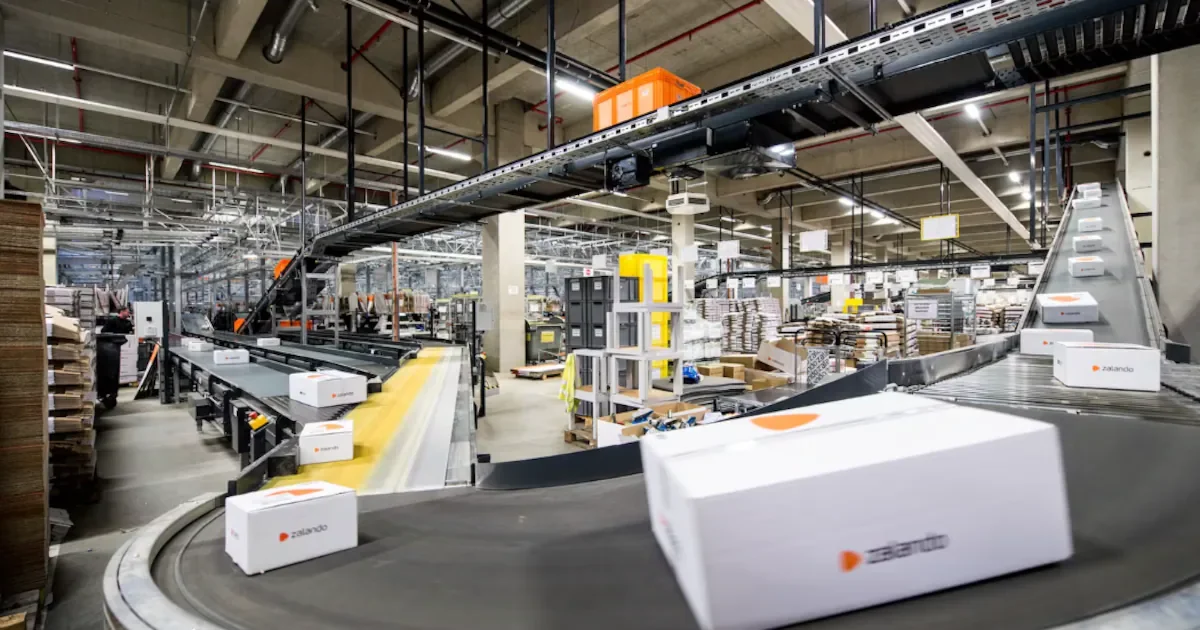
Zalando reported a 0.9 percentage-point drop in its third-quarter gross profit margin to 38.7%, missing market expectations, according to analysts at Jefferies and JPMorgan.
www.businessoffashion.comZalando, one of Europe's largest online fashion retailers, unveiled its first AI shopping agent on November 3. It also announced that in 2027 it will add agent checkout on the customer's behalf to Zalando Extended, the service that lets customers buy products from other online retailers without leaving the Zalando app. A pilot with home furnishings retailer Westwing is already under way.
In its third-quarter results, released the same day, revenue rose 5.1% year over year to EUR 3.17 billion, and gross merchandise volume (GMV) rose 7.5% to EUR 4.54 billion. Gross margin, however, fell 0.9 points to 38.7% because of investments in discounts, especially on sneakers, and missed market expectations. In a note to clients, JPMorgan described the development of agentic commerce as an "ongoing structural risk" for the company.
What stands out is the premise behind the move. As AI takes over price comparison and availability checks, the breadth of an assortment matters more, and Zalando is repositioning itself as an entry point where shoppers can buy even other retailers' products. The aim is to run the agent inside its own app before outside AI tools take over the starting point of shopping.
Read more: Zalando Extended: Zalando's AI Agent Will Check Out on Other Retailers' Sites for Shoppers
Shopify Q3: AI-search orders up 3.3x as delegated purchasing through personal agents begins

Merchants sold $119.1bn through Shopify in Q3, up 29%. Guidance now puts Q4 operating costs at up to 30% of revenue. Can margins hold through Black Friday?
ppc.landShopify reported third-quarter 2026 results on November 3: revenue rose 32% year over year to $3.742 billion and GMV rose 29% to $119.1 billion. Operating income grew 66% to $568 million and net income was $462 million. On the earnings call, the company said orders originating from AI searches had grown to 3.3 times the prior-year level, while noting that the base is small and not disclosing the actual figure.
President Harley Finkelstein said AI channels send shoppers straight to product pages at three times the rate of organic search, and that searches powered by Shopify Catalog, its product data layer, convert at twice the rate of general AI search. About three-quarters of AI-referred sales came from product categories outside the company's top 100. He also described the third quarter as the first time Shopify saw shoppers experimenting with delegated purchasing through personal agents such as Meta's Muse, Claude Duet and Grok Bot.
The stock fell sharply all the same. GMV and subscription revenue missed estimates, and Shopify guided that fourth-quarter operating expenses would rise to as much as 30% of revenue. Agent-driven transactions are clearly growing, but they remain small relative to the whole, and the numbers show a company investing ahead of the demand.
Payments & Fintech
IXOPAY unveils IXO One, a modular payments platform that supports agent-initiated purchases

IXOPAY has unveiled IXO One, a modular, AI-native payments platform combining orchestration, tokenisation and payments intelligence, with agentic payment capabilities and general availability planned for early 2027.
thefintechtimes.comPayments infrastructure provider IXOPAY announced IXO One, a single platform that brings together payment orchestration, card tokenization and payments intelligence. Merchants can pick only the components they need, keep ownership of their payment service provider connections, and switch providers without rebuilding the whole stack.
The agent capabilities come from the Agentic Suite, which IXOPAY announced separately in September and is now folding into the platform. It has three parts: a Payment Agent that connects merchant-owned shopping agents and third-party agents through a single integration rather than one per protocol; Universal Tokens, which keep raw card credentials away from agents while recording the agent's identity, the customer's consent and the purchase intent; and an MCP Server that lets approved AI assistants perform payment operations under controls. What becomes generally available in early 2027 is the unified IXO One experience and a new commercial model; the Agentic Suite itself has been available since September. The company has not named which agent payment protocols it supports, but with methods multiplying, bundling the connections on the merchant side is an option that lowers the implementation burden.
Google's payments chief outlines a wallet that covers the whole shopping journey
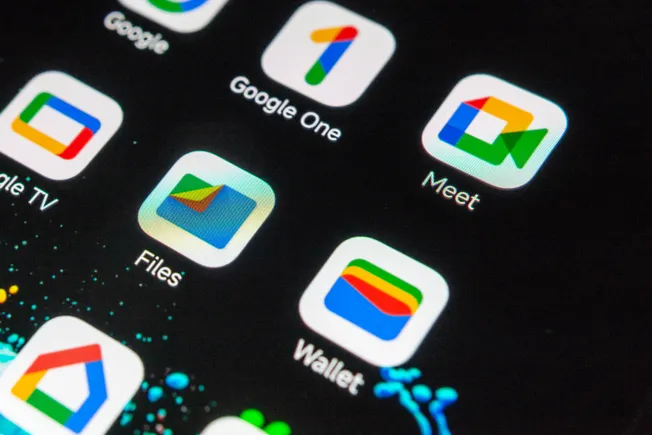
The tech giant envisions its digital wallet assuming a larger role in commerce than merely point-of-sale payments, Google's payments head said.
www.paymentsdive.comStavan Parikh, who leads payments at Google, told Payments Dive that Google wants its wallet to do far more than pay: store receipts, track online orders, handle refunds and deliver merchant discounts.
On agentic commerce, he said Google has already used Gemini and Google Pay to let users give third-party agents a credential that is constrained and does not leak private information they do not want to share. "The opportunity is definitely there, and I think the infrastructure is there," he said, adding that the focus now is getting the right product experience out. Lisa Yokoyama of Google Pay also said at Money20/20 in October that wallets are likely to matter more as the means for agents to pay on behalf of people. A contest over whose wallet becomes the default for agent payments is taking shape.
Visa and HKSTP sign an MOU to pilot AI commerce in Hong Kong using Visa Intelligent Commerce

Hong Kong Science and Technology Parks Corporation and Visa have signed an agreement to develop and test new AI-commerce and digital-payment applications in Hong Kong.
hongkongbusiness.hkVisa and Hong Kong Science and Technology Parks Corporation (HKSTP) signed a memorandum of understanding during Hong Kong FinTech Week to develop and pilot new AI commerce and digital payment applications. They will identify and test uses for Hong Kong built on Visa's technology, including Visa Intelligent Commerce, its payment capabilities for AI agents.
Solutions may later be considered for expansion into the Greater Bay Area and other regional markets. The two also plan to explore digital payments in logistics and fintech and to run knowledge-sharing events for startups. For Visa, it is a way to multiply use cases for agent payments in Asia through a startup hub.
AI Commerce Tools
Chord acquires Zenlytic and its data analyst agent to build an agentic CDP
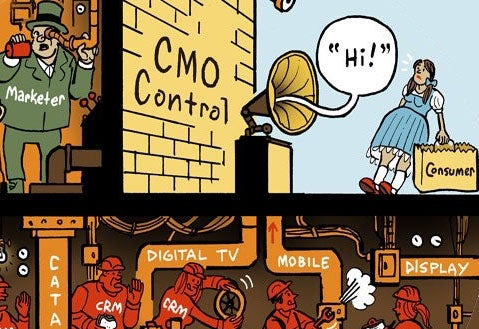
Two data infrastructure startups with agentic commerce ambitions are combining forces. On Tuesday, Chord, a 6-year-old commerce tech startup, acquired Zenlytic, an AI startup with an anthropomorphized data analyst agent named 'Zoë,' for $5 million.
www.adexchanger.comChord, which provides data infrastructure for e-commerce, acquired Zenlytic, maker of the AI data analyst agent "Zoë," for $5 million on November 3. The combined company has about 30 full-time employees and some 60 customers, with an annual run rate nearing $10 million.
Chord started out helping Shopify merchants and others build headless storefronts that separate the front end from back-end fulfillment, then pivoted to AI-based data infrastructure as large language models spread. It now charges on a usage basis, and users prompt its AI agent about once every 20 seconds. Client Sonos uses it to spot moments such as a customer moving house and send product messages at that time.
The plan is to bring Chord's segmentation and activation capabilities to Zenlytic customers such as Black & Decker, Verizon, J.Crew and Stanley. CEO Bryan Mahoney also voiced caution about answers that sound convincing but are wrong, and how agent output is verified will be key to adoption by large brands.
SoundHound AI and LG turn about 20 million US smart TVs into an ordering channel

Partnership opens a new commerce channel, starting with approximately 20 million LG Smart TVs in the U.S.; restaurants to be the first category of focus
finance.yahoo.comVoice and agentic AI company SoundHound AI announced a partnership with LG Electronics on November 3. Businesses will be able to take orders directly from households through roughly 20 million LG Smart TVs in the US. Restaurants are the first category, with plans to extend to retail and other merchant categories over time.
SoundHound's merchant network handles transaction routing and secure checkout. Participating restaurants need no new in-store hardware, and the service integrates directly with the point-of-sale and kitchen systems they already use. SoundHound works with more than 15,000 restaurant locations in the US, including Jersey Mike's, Five Guys and White Castle. The test is whether the biggest, most social screen in the home can become a new storefront where people order by conversation.
Advertising & Retail Media
Amazon joins YouTube Shopping's affiliate program, letting UK creators tag its products
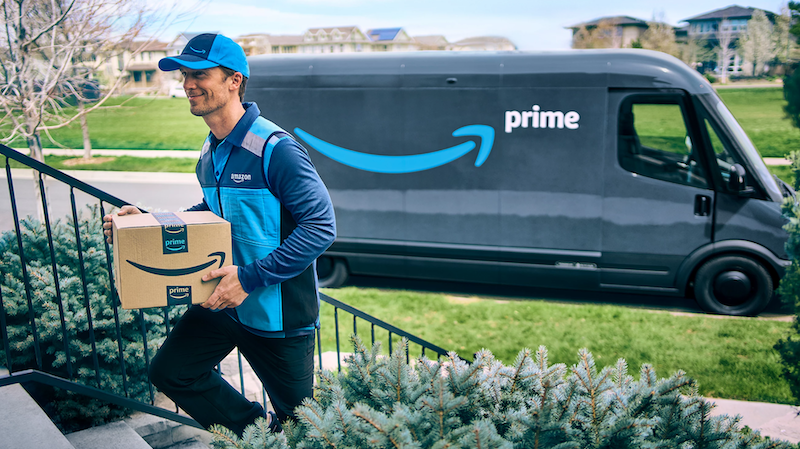
Amazon is joining YouTube's Shopping affiliate programme.
www.retailtechinnovationhub.comAmazon is joining YouTube Shopping's affiliate program. Eligible UK creators will be able to tag its products in Shorts, long-form videos and livestreams. M&S, Currys and Boots are already part of the program in the UK.
According to YouTube, viewers spend an average of more than 110 million hours a day watching shopping videos, and more than one million creators have signed up for YouTube Shopping. Its GMV grew 13 times from the first quarter of 2024 to the first quarter of 2026. With the largest e-commerce player joining a path that links videos directly to product pages, competition in UK social commerce is set to intensify.
AnyMind and Meta partner to send Facebook live commerce viewers straight to brand stores

The ad rollout links social video streams to external merchant checkouts, starting with Facebook Live in Q4 2026.
retailnews.asiaTokyo-based AnyMind Group has teamed up with Meta to route users from video ads into live selling broadcasts across Asia-Pacific. Activations start with Facebook Live video ads in the fourth quarter of 2026, with Instagram following in early 2027.
Purchases are completed outside Meta's apps, on brand websites, proprietary apps and messaging channels. Broadcasts can feature human presenters, AI avatars or a mix of both, and AnyMind has also been integrating Alibaba's Qwen models for automated multilingual broadcasts. Brands keep their customer data and margins, but the move to an external site creates a risk of drop-off before payment.
Agency executives urge a full-funnel view of retail media

Retail media offers agencies opportunities to harness closed-loop measurement that benefits both upper- and lower-funnel marketing efforts
digiday.comAisha Khan, president of commerce for North America at Dentsu, said at a Digiday event that retail media should be considered beyond last-step conversion and include brand building. She pointed out that more than 80% of sales still happen in stores, yet less than 5% of retail media spend goes to in-store media.
At the same event, Instrument CEO Laurel Burton argued that the attention on AI search optimization (AEO and GEO) makes brand websites more valuable, not less. Crocs' CMO added that once people discover a brand through an LLM, the website and social channels they visit next need to feel consistent. Even when AI becomes the entry point for discovery, the importance of a brand's own storefront does not go away.
Corporate Moves & Partnerships
EU conditionally approves JD.com's Ceconomy takeover, with closing targeted by November 12

Chinese e-commerce giant JD.com said it secured conditional EU approval on Tuesday for its $2.5 billion acquisition of German electronics retailer Ceconomy, and aims to close the deal by November 12.
www.reuters.comChinese e-commerce giant JD.com said on November 3 that it had secured conditional approval from the European Commission for its $2.5 billion acquisition of Ceconomy, the German electronics retailer that owns MediaMarkt and Saturn. It aims to close the deal by November 12.
Under the Foreign Subsidies Regulation, the Commission had examined whether preferential financing, tax incentives or grants from the Chinese government helped JD.com offer a higher price. JD.com pledged to conduct intra-group transactions with Ceconomy on market terms, including financing, and to give third-party retailers access to its warehousing and logistics services on the same terms as Ceconomy. A Chinese e-commerce giant gaining a European electronics chain's store network and customer base will reshape competition in European electronics retail.
Logistics & Fulfillment
Landmark Global launches a Shopify app that shows duties and taxes before checkout
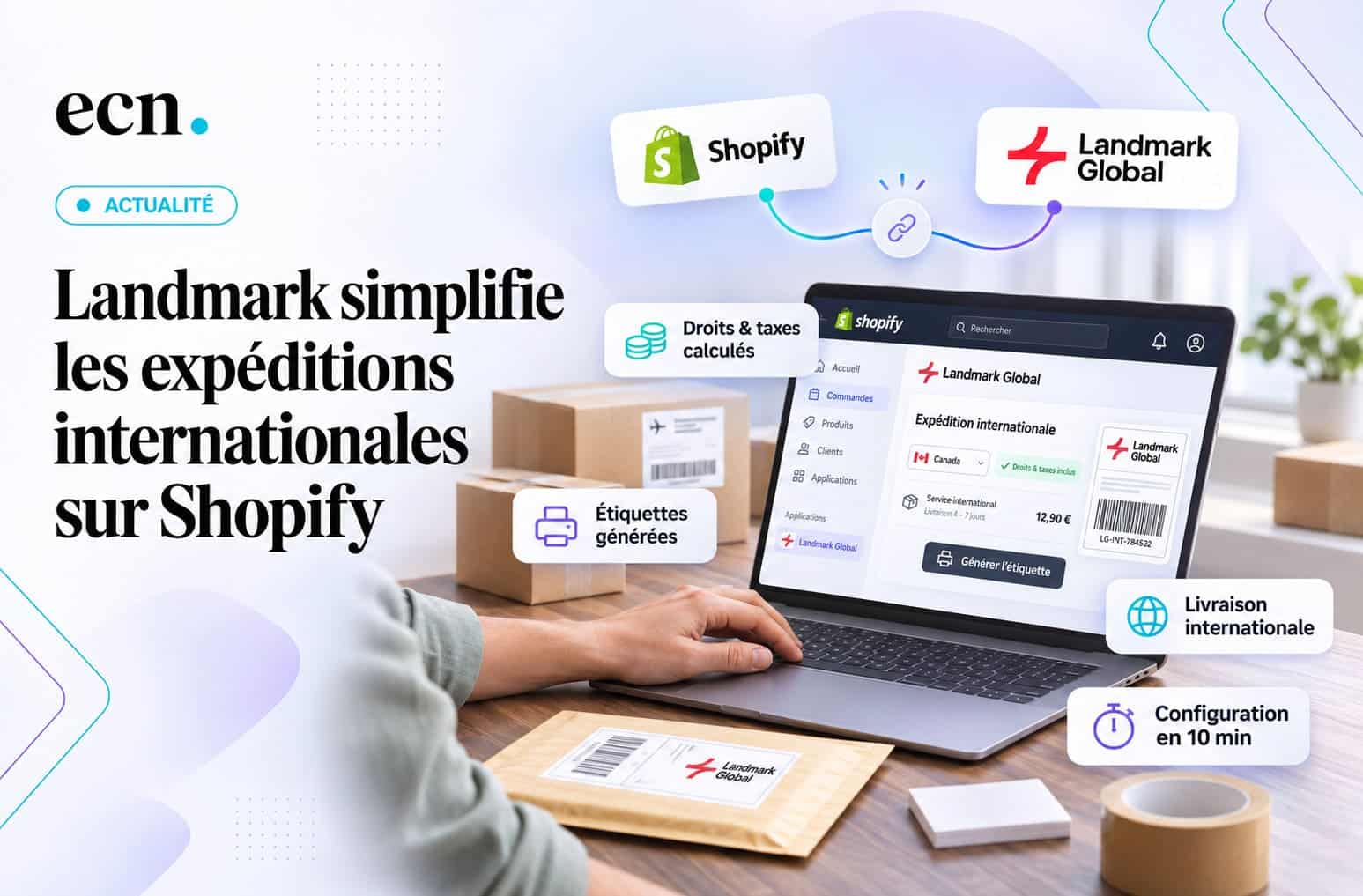
Landmark Global lance une app Shopify pour gérer droits de douane, taxes, options de livraison et étiquettes d'expédition internationale depuis une seule interface.
www.ecommerce-nation.frInternational shipping provider Landmark Global launched the Landmark Shopify App on the Shopify App Store on October 29. It works with Shopify Basic and Shopify Plus, and the company says setup takes about ten minutes.
The app calculates the total delivery cost, including duties and taxes, in real time and shows it to the buyer before the order is confirmed. Merchants can also generate labels and prepare shipments without leaving the Shopify admin. Unexpected duty charges after purchase are a major cause of cart abandonment and returns in cross-border e-commerce. Landmark Global supports shipping, customs clearance and returns to more than 220 destinations.
DHL adds a EUR 2.99 fee for second delivery attempts in Germany, drawing criticism from retailers

German postal and logistics service DHL has announced several price changes. It is introducing a fee for second delivery attempts of parcels.
ecommercenews.euDHL announced price changes for business customers in Germany, including a EUR 2.99 fee per parcel for a second delivery attempt after the first one fails. Until now, second attempts were part of the standard service. From January 1, 2027, the price of a letter will also rise to EUR 1.15.
German e-commerce association bevh criticized the plan, saying retailers cannot verify whether a failed first attempt was really the customer's fault. DHL is also introducing a synthetic pickup scan so that tracking delays on large handovers no longer lead to unjustified penalties for sellers on eBay and Amazon, as well as one-time codes for delivering valuable goods. Ahead of the holiday season, the question of who pays for failed deliveries has come to the surface.
Global E-commerce Trends
China's "Lipstick King" Li Jiaqi sells AI tokens on livestream, about 2 trillion tokens in 30 minutes

Li Jiaqi, the livestreamer known in China as the "Lipstick King," sold AI tokens during a Double 11 livestream on the night of November 2, together with Chen Yusen, vice president of Alibaba Group and CEO of QwenWork. Within 30 minutes the show sold 100,000 monthly personal membership cards for Qwen Office, equivalent to about 2 trillion tokens.
A 0.01-yuan monthly membership became a hot seller, and the hosts demonstrated AI agents handling tasks such as document writing and data processing. Tmall and JD.com have already opened sales entries for tokens, with vendors including Zhipu, MiniMax and Moonshot. AI computing power being sold as livestream "merchandise," just like lipstick, shows how far China's e-commerce shelves are stretching.
South Korea's online shopping hit KRW 24.97 trillion in September as November discount battles begin

E-commerce firms have launched a discount competition to attract customers as November, the biggest shopping season of the year, gets underway.
en.fnnews.comAccording to South Korea's National Data Agency, online shopping transactions in September totaled KRW 24.9719 trillion, up 4.1% year over year. The total for January through September was KRW 220.1872 trillion, up 8.5%.
November is the country's biggest shopping season. Coupang is running its "Wow Members Day" for members, offering up to 70% off on at least 370,000 products. Gmarket, Kurly, Lotte ON and SSG.COM are also holding large sales, and 11st has introduced AI-powered shopping features this year. The November sales that began in 2017 to coincide with US Black Friday continue to shape Korean e-commerce companies' fourth-quarter results.
Temu and SHEIN visitors drop sharply in France as E.Leclerc rises to fourth place
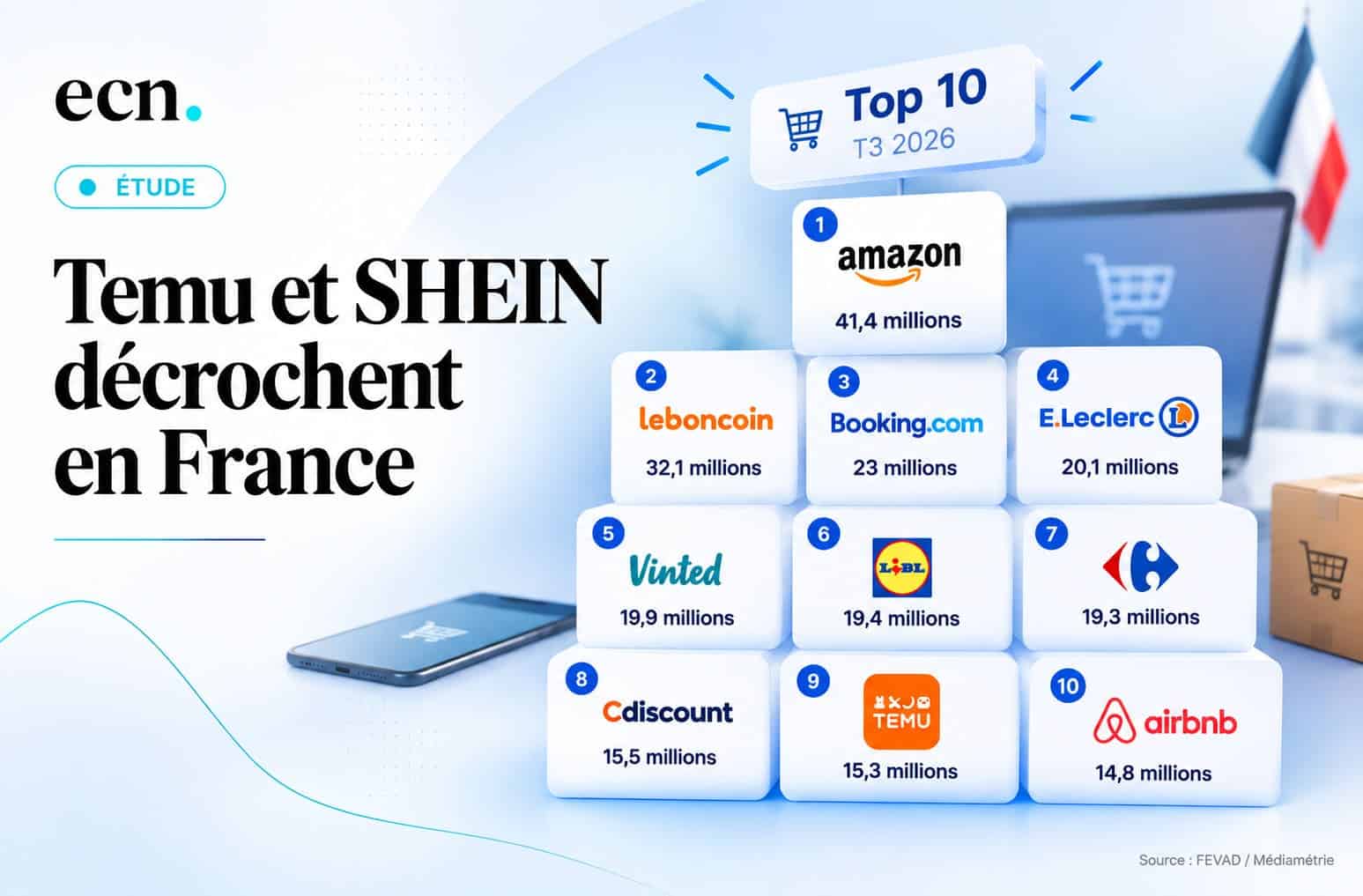
Temu perd 28,3% de visiteurs au T3 2026 et SHEIN 34,6%. E.Leclerc monte au 4e rang du classement Fevad-Médiamétrie.
www.ecommerce-nation.frAccording to French e-commerce federation Fevad and Médiamétrie, monthly unique visitors in the third quarter of 2026 fell 28.3% quarter over quarter to 15.3 million for Temu, 34.6% to 10.1 million for SHEIN, and 11.1% to 13.4 million for AliExpress. Temu fell from fourth to ninth place, and SHEIN from ninth to sixteenth.
Total visitors to the top 20 sites stayed almost flat at 52.9 million a month and rose 4.3% year over year. The retreat of Chinese platforms reflects a shift toward French retailers such as E.Leclerc rather than a decline in online shopping itself. As Europe tightens fees and rules on low-value parcels, the data show traffic beginning to move.
Malaysian retailers ask the finance ministry for a fair competition framework for foreign e-commerce

Malaysian retailers have warned of an 'existential threat' posed by foreign e-commerce in an appeal to the Ministry of Finance (MOF).
theedgemalaysia.comThe Malaysia Retail Chain Association (MRCA) submitted policy recommendations to the Ministry of Finance calling for a fair competition framework for foreign e-commerce platforms. It warned of a four-stage erosion of the domestic market: cheap import infiltration, margin compression, closures of small businesses with mass job losses, and foreign control over market access and national consumer data.
The association said domestic retailers bear rent, wages, social security contributions, sales and service tax and certification costs, while foreign platforms sell aggressively priced overseas goods. In late October, Malaysia also signaled that it would require foreign e-commerce platforms to adopt e-invoicing and set up local offices, and the regulatory push continues.
Summary
Today, two large players in Europe and North America, Zalando and Shopify, talked about their work on AI agents in their earnings. Zalando wants its app to be an entry point where shoppers can buy even other retailers' products, and Shopify showed with numbers that experiments with delegated purchasing have begun. Both acknowledged that agent-driven transactions are still small, yet both are investing ahead.
On payments, IXOPAY presented a platform that bundles connections to many agents, and Google described a wallet that supports shopping from start to finish. The contest over who owns the entry point to shopping, and whose payment method gets used, is taking the form of concrete products ahead of the holiday season. Next, watch how far agent-driven orders show up as real numbers during each company's holiday sales.