Zalando Extended: Zalando's AI Agent Will Check Out on Other Retailers' Sites for Shoppers
Zalando Extended lets Zalando's own AI agent buy products from other online shops inside the Zalando app. We explain the Westwing pilot, the Q3 context, what is undisclosed, and what it means for e-commerce merchants.

Key Takeaways
- With its Q3 results on November 3, 2026, Zalando announced Zalando Extended. It adds products from other online shops that Zalando does not sell itself, and from 2027 Zalando's own AI agent will complete the purchase at those shops on the customer's behalf. Home and living retailer Westwing is the first pilot partner
- Alongside the "inbound" route of being chosen by external AI such as Gemini and ChatGPT, Zalando is moving into an "outbound" route where its own AI shops at other retailers. It reads as a move from being intermediated in agentic commerce to doing the intermediating
- Zalando says partners gain sales without complex technical integration or changes to logistics, but fees, the payment party and returns handling are undisclosed. Merchants should now review how their own checkout accepts orders placed by other companies' AI agents
What Zalando Extended Is
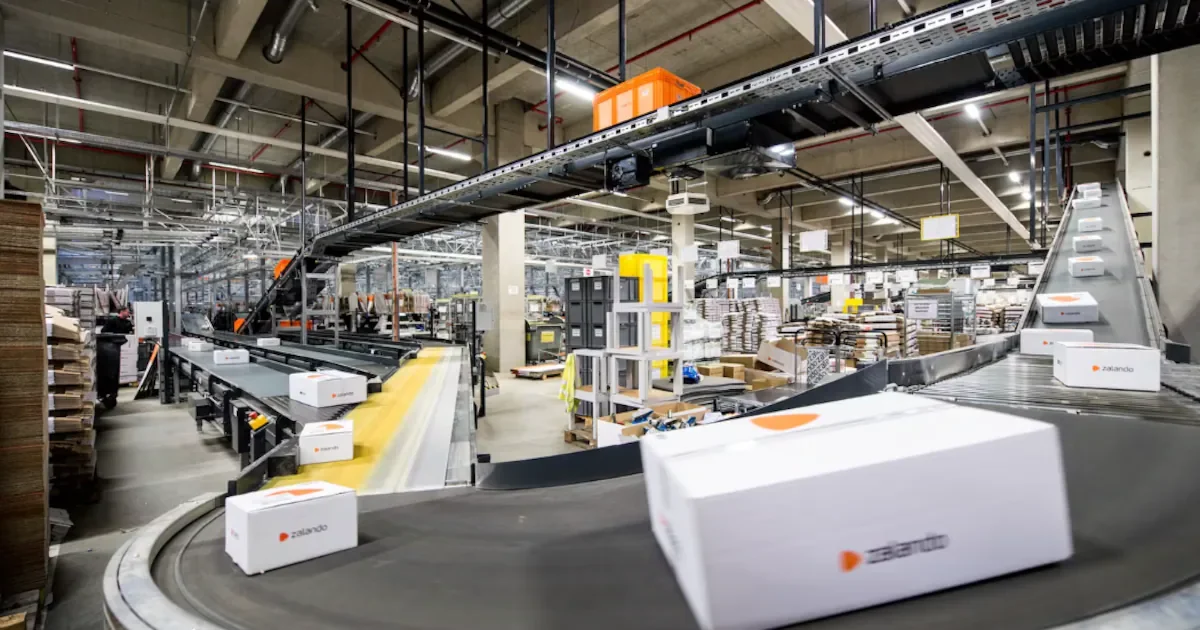
Zalando reported a 0.9 percentage-point drop in its third-quarter gross profit margin to 38.7%, missing market expectations, according to analysts at Jefferies and JPMorgan.
www.businessoffashion.comZalando, one of Europe's largest online fashion retailers, unveiled its first AI shopping agent alongside its third-quarter results on November 3, 2026. According to the Reuters report, customers will be able to buy products from other retailers without leaving the Zalando app.
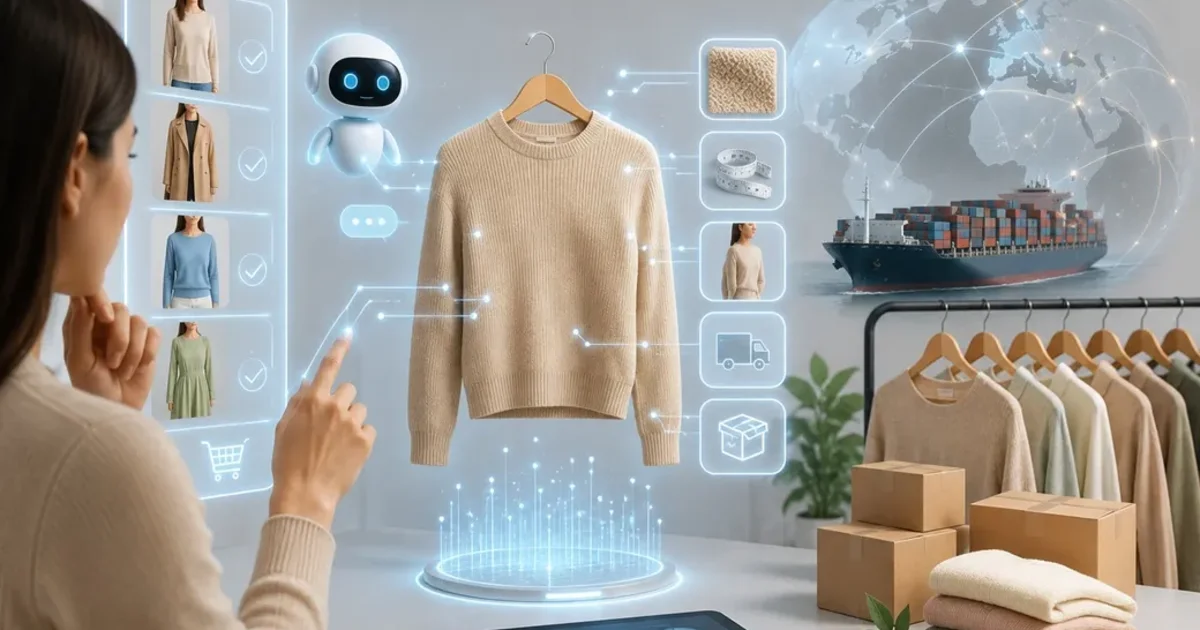
To see what this means in practice, we turn to Zalando's results release. Zalando Extended adds products from other online shops, which Zalando does not sell itself, to the Zalando platform. At checkout, Zalando's own AI agent securely buys these products on the customer's behalf.
The rollout is staged. The partnership work began in 2026, and AI agent checkout on the customer's behalf starts in 2027. The first category is bulky home goods, and Westwing, a European home and living retailer, is the first pilot partner. Over time, Zalando plans to open the service to products from shops across the internet.
Inbound and Outbound: Zalando's Three Routes
The most telling part of the announcement is less any single feature than how Zalando classifies agentic commerce, in which AI agents handle shopping from comparison to payment. Page 4 of the earnings presentation lays its efforts out in three directions.
| Direction | Initiative | Role of AI | Status |
|---|---|---|---|
| In-app | Zalando Assistant | Helps customers find products through conversation inside the app | More than 22 million users in 2026 |
| Inbound | Google UCP pilot, ChatGPT ads pilot | Brings shoppers from external AI to Zalando's products | UCP participation announced in January 2026 |
| Outbound | Zalando Extended | Zalando's agent buys from other shops on the customer's behalf | Westwing pilot underway, agent checkout from 2027 |
"In-app" is the conversational Zalando Assistant, which works entirely inside Zalando's app. It began in 2023, when Zalando announced a beta built on OpenAI technology for four markets including the UK and Germany. The results release says more than 22 million unique users have visited it this year. At Shoptalk Europe in June, Zalando said users rose from six million across all of 2025 to ten million in the first quarter of 2026 alone.
"Inbound" brings shoppers from external AI to Zalando. In January 2026, Zalando announced its participation in Google's Universal Commerce Protocol (UCP), a shared standard that connects AI agents with retailer systems so that Zalando products can be bought in Google's AI Mode and the Gemini app. The presentation also lists a ChatGPT ads pilot.
So far, this is the path many retailers follow. The difference is the third route, "outbound," where Zalando's agent goes out and shops at other retailers. When describing UCP, Zalando cited retailers remaining the seller and keeping their direct customer relationships as a pillar of trust. With Extended, Zalando takes the role of the party that owns the AI agent and sells other companies' products inside its own app.
The arrangement shows that Zalando does not intend to simply hand the entry point over to external AI as AI becomes the front door to shopping. It keeps working to be chosen inbound, while also growing its own app into an agent that can buy other companies' products. It is a two-front strategy.
Why Start With Furniture: The Westwing Pilot
On why bulky goods come first, Zalando says only that it is starting with complex categories. Zalando describes its logistics network as purpose-built for fashion and lifestyle. Since Extended expands the assortment without holding inventory or handling delivery, bulky furniture is a sensible category to test first.
Zalando lists three benefits for partner shops:
- Because the AI agent does the purchasing work, they reach Zalando's customers without complex technical integration
- They do not need to change their logistics
- They can advertise their products through Zalando's retail media, the advertising a retailer sells on its own site
The third point is also about Zalando's revenue. Retail media revenue grew nearly 18% year on year, reaching 2% of B2C GMV. The release states plainly that Extended creates an additional revenue stream through retail media. The design earns from advertising, not only from sales.
The claim that no complex technical integration is needed suggests the agent passes through the partner's existing checkout. However, neither the release nor the presentation says whether the agent connects via API, operates a browser, or uses a shared standard such as UCP.
The Earnings Context: Margin Pressure and JPMorgan's Caution
The timing matters too. Third-quarter revenue rose 5.1% year on year to 3.17 billion euros, above the 3.15 billion euros expected by analysts polled by LSEG. Gross merchandise volume (GMV) rose 7.5% to 4.54 billion euros, and adjusted EBIT rose 10.6% to 107 million euros.
At the same time, gross profit margin fell 0.9 percentage points to 38.7%, missing market expectations according to analysts at Jefferies and JPMorgan. CFO Anna Dimitrova attributed the decline mainly to targeted investments in attractive offers, especially in sneakers, called the pressure temporary, and forecast a broadly flat gross margin for 2026. The net result was a loss of 18 million euros.
The market's view is cautious. In a note to clients, JPMorgan said the stock could drift lower given the lack of incremental positives and the ongoing structural risk from agentic commerce development. If external AI takes over everything from price comparison to payment, multi-brand intermediaries like Zalando could see their reason to exist questioned.
The concern is not new. According to a BoF feature in September, a Bernstein analyst wrote in a March 2026 note that Zalando was merely a department store with limited differentiation. Zalando itself said at its full-year results in March that agentic commerce is expected to account for 15% of online retail by 2030 and that it aims to be a pioneer in Europe. Extended is Zalando's answer to the risk of becoming the intermediated party.
What Has Not Been Disclosed
The concept is clear, but many terms merchants need for decisions are undisclosed:
- Fees paid by partners and the pricing of advertising
- Who processes payment (whether Zalando or the partner receives the customer's payment) and who the seller is
- Who handles returns, exchanges and customer inquiries
- Which countries the service covers, and partners beyond Westwing
- The technical method by which the agent connects to partners
Returns in particular decide profitability in fashion e-commerce. Where, and on what terms, can a customer return another shop's product bought in the Zalando app? If Zalando promises a consistent customer experience, this part of the design will decide whether the pilot succeeds.
What It Means for E-commerce Merchants
For merchants outside Europe, Zalando Extended may look like a distant story. Even so, the pattern it shows applies broadly.
First, checkout now needs to be redesigned on the assumption that non-humans will pass through it. Not only AI from Google and OpenAI, but also agents from large retailers like Zalando, are trying to buy at other shops on customers' behalf. Whether inventory, pricing and delivery terms are published accurately in machine-readable form, and whether the terms for accepting agent orders are defined, will shape how wide a merchant's sales channels can be.
Second, there is a lesson for marketplaces and multi-brand retailers. Efforts to be chosen by external AI (inbound) alone do not change the structure in which someone else controls the entry point. Merchants with their own customer base and app have the option of extending their assortment outward with an agent. Zalando's pairing of this with advertising revenue is worth studying.
Third, there is the view of the merchant being invited to partner. A new sales channel without technical integration is attractive, but joining without visibility into fees, return terms and the handling of customer data is a risky call. Until the terms are disclosed, the sound approach is to evaluate the offer around who owns the relationship with your customer.
Conclusion
Zalando Extended is the first serious attempt by a major e-commerce player to move from being the party chosen in agentic commerce to being the party that buys on the customer's behalf. The first point to watch is how much detail on fees, payment and returns emerges before agent checkout launches in 2027. Next year's results will also show whether the Westwing pilot expands beyond furniture, and whether the market reassesses the structural risk JPMorgan flagged.