eComID Raises $17M with H&M Backing, Betting the Shopper Context Layer Belongs on Brands' Own Sites
Stockholm's eComID raised $17M for a Shopping Passport that carries size and taste across brands. How it works, how to read the self-reported 30% return reduction, and what e-commerce operators should structure first.

Key Takeaways
- Stockholm's eComID closed a $17 million seed round. H&M Group stays on as a strategic investor since 2023, and Stadium, one of its earliest customers, has now joined as an investor
- What the company sells is not AI itself but a context layer that carries a shopper's size, fit preference and taste across brands, and it deliberately places that layer on brands' own sites
- With discovery moving to AI agents while transactions and customer relationships stay with brands, whether your own site can understand a first-time visitor becomes the difference
H&M and Stadium sit side by side in a $17 million seed
Stockholm-based eComID raises €14.58 million to build the shopping passport for AI-powered personalised commerce
www.eu-startups.comOn 25 August 2026, Stockholm-based eComID announced a €14.58 million ($17 million) seed round. Systemiq Capital of London led, with participation from Regeneration.VC, Course Corrected, Stadium (Sweden's largest sports and sports-fashion retailer) and returning investor CapitalT.
Two things stand out in the cap table. First, H&M Group, which first backed the company in 2023, remains a strategic investor. eComID closed an oversubscribed €2.75 million pre-seed in March 2024, so a major fast-fashion group has been positioned here from an early stage. Second, Stadium, one of the earliest customers, has crossed over from buyer to backer.
The angel list includes Alan Mamedi, co-founder of Truecaller; Sebastian Knutsson, co-founder of King; Henrik Nordvall, former CEO of Matalan and former Managing Director of H&M UK & Ireland; Maria Raga, former CEO of Depop; and August Erséus, founder of Legora. Valuation and post-round ownership have not been disclosed.
What the Shopping Passport actually carries
Co-founder and CEO Oscar Rundqvist frames the product in a single line.
AI without context still starts from zero. The best shopping experience should feel like walking into a store that already knows how to help.
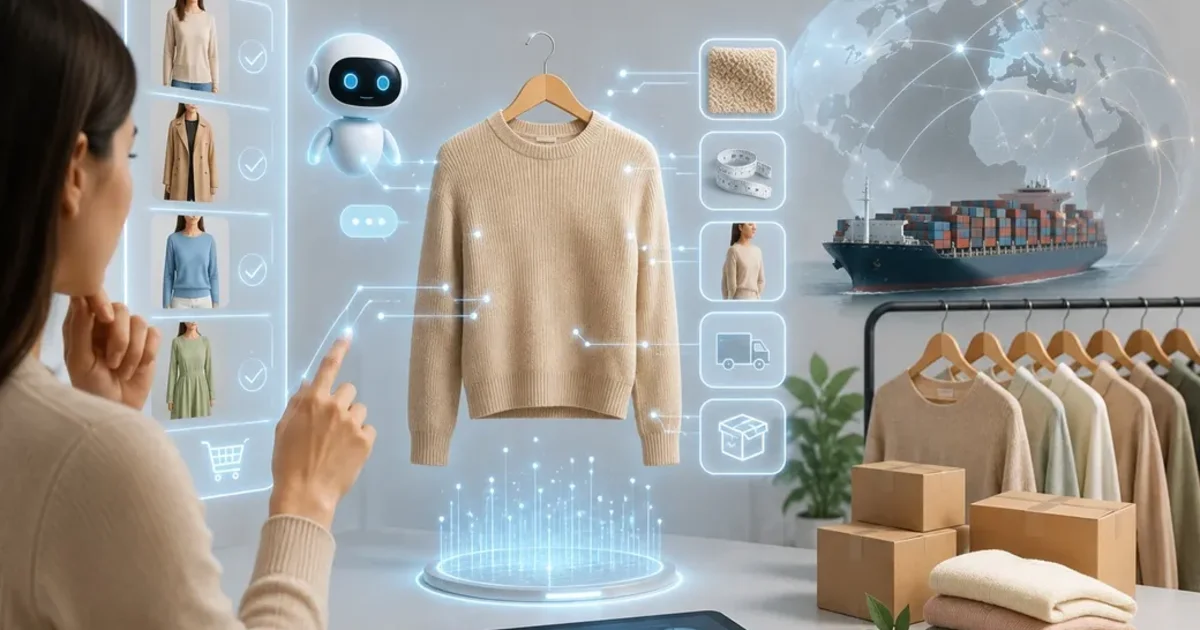
The argument runs like this. AI is reshaping how people discover and buy, yet even the most advanced shopping experiences begin with almost no context. A store knows what is in the basket but not the person behind it: their size, fit preference or taste.
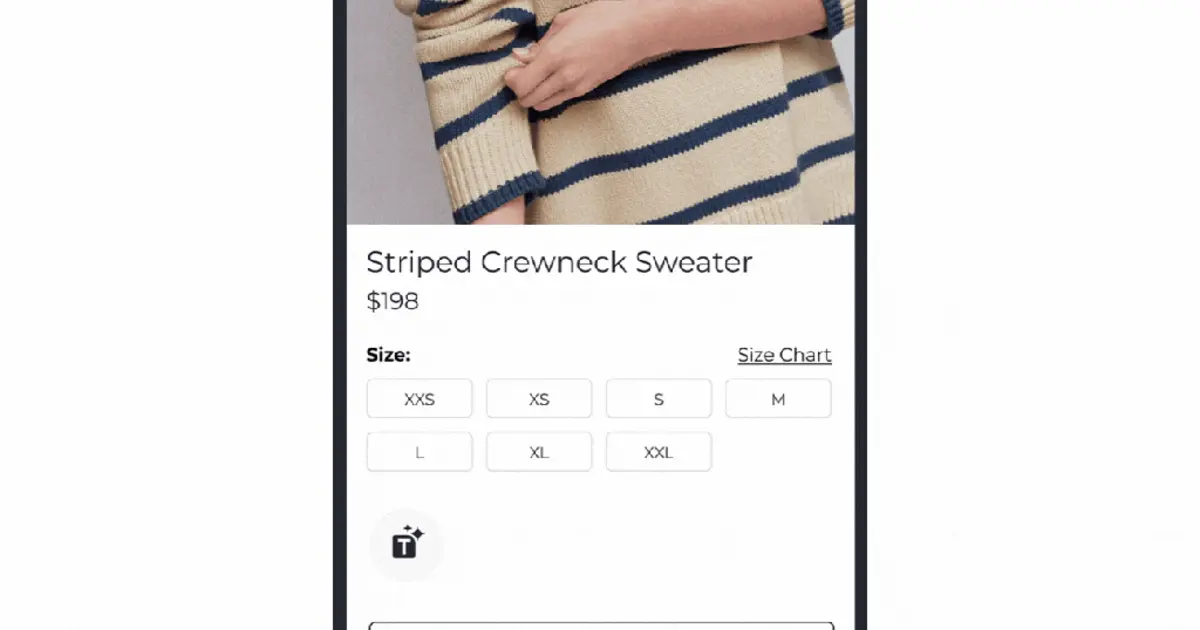
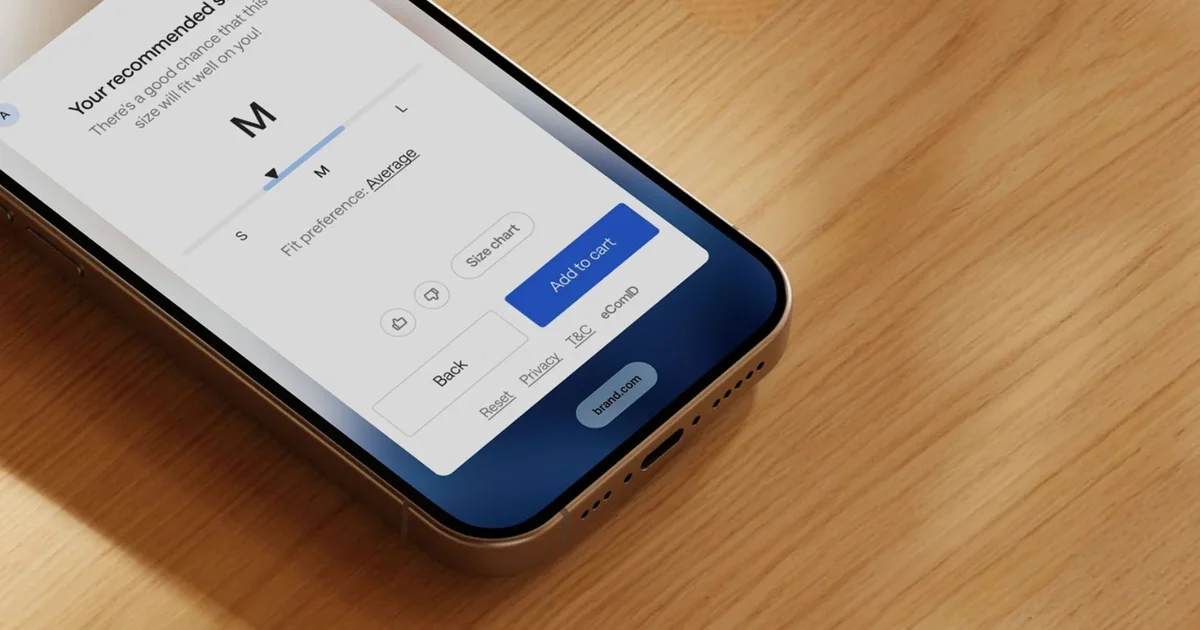
That gap is where the Shopping Passport sits. Shoppers carry their sizing and preferences across connected brands, so every store can understand them from the first visit. Vera, the company's AI shopping agent, uses that context to drive size recommendations on the product page, conversational search and personalised product discovery.
The detail worth noticing is where Vera runs, which is inside the brand's own site. The interaction happens on the brand's own domain, what eComID calls the digital flagship, rather than on a ChatGPT or Perplexity answer screen. Because data moves between brands, trust has to be underwritten, and the company leads with ISO/IEC 27001:2022 certification, SOC 2 Type 2 and GDPR compliance.
On traction, eComID says it has been deployed at more than 60 brands since launching in 2024 and reaches 20 million shoppers a month, adding that it got there without a dedicated sales or marketing team. Named partners include COS, J.Lindeberg, Axel Arigato, NN07, Peak Performance, Haglöfs, Asket and Stadium.
Discovery to the agent, the transaction to the brand
Reading this as just another sizing-tool funding round misses the point. Set it against the structural shift in agentic commerce over the past year and the choice of placement starts to make sense.
In September 2025, OpenAI released the Agentic Commerce Protocol (ACP) with Stripe and launched Instant Checkout, a flow announced by OpenAI that completed purchases inside ChatGPT. By March 2026 the company had adjusted course. Saying the first version of Instant Checkout did not offer the flexibility merchants wanted to provide, OpenAI let merchants use their own checkout experiences and refocused its effort on product discovery, as reported at the time. Target, Sephora, Nordstrom, Lowe's, Best Buy, Home Depot and Wayfair have integrated ACP for discovery, while Walmart placed an in-ChatGPT app experience covering account linking, loyalty and its own payments.
The settlement emerging from this is clear enough. Discovery goes to the AI agent; the transaction and the customer relationship stay with the brand.
Once that division holds, the brand's own site remains the endpoint of traffic. What changes is the nature of the shopper arriving there. Traffic routed through an agent skews heavily toward first visits, with no browsing history and no cookie. Conventional on-site personalisation was built to warm up only after enough on-site behaviour accumulated, and that assumption breaks.
The hole is exactly what eComID is betting on: manufacture context for a first visit using a cross-brand passport. It is also a design stance about ownership, placing the context with the shopper rather than inside an AI platform account.
| Question | Context held on the AI platform | Context held on the brand's own site |
|---|---|---|
| Owner | Tied to the AI platform account | Held by the shopper, carried across connected brands |
| First visits | Filled in from platform-side history | Size, fit preference and taste handed over on arrival |
| What stays with the brand | Order data and limited attributes | On-site behaviour and preference history |
| Room to differentiate | Winning placement, price, stock and delivery terms | The shopping experience itself |
| Main risk | A spec change can rewire traffic overnight | Thin context until enough brands connect |
The design has its own weakness. A passport is worth what the network is worth, so in thin markets a first visit stays nearly as blank as before. Sixty brands means something in Nordic fashion, but international expansion involves a long stretch where each new brand keeps meeting shoppers who hold no passport yet. That the stated use of funds pairs international expansion with accelerating the passport rollout reads as an attempt to buy past that chicken-and-egg problem with capital.
How to read a 30% return reduction and a 10% conversion lift
eComID states that shoppers using its product have a 30% lower return rate, while brands on the platform see a 10% higher conversion rate. The underlying problem is real. Research from NRF and Happy Returns projects that 15.8% of retail sales, roughly $849.9 billion, will be returned in 2025, and apparel runs well above that average. Size and fit are the single largest reason.
Transplanting those published figures into your own forecast is risky. Both numbers are self-reported and no third-party verification has been published. The comparison baseline, measurement window and brand mix behind them are undisclosed.
The deeper caveat is self-selection. Shoppers who go out of their way to use a sizing tool tend to have stronger purchase intent and make more considered choices to begin with. A raw comparison between users and non-users cannot separate the effect of the tool from the character of the shopper.
Beyond that, the claim that size recommendations reduce returns is not new. True Fit and Fit Analytics have published comparable figures for a decade, with reported reductions ranging from the low teens to the mid-thirties. True Fit explains that brands with a year or more of purchase history see the strongest results while newly joined brands see far less. In practice, results depend heavily on accumulated data and product characteristics.
So what operators should examine is not the vendor's headline but their own test design. Compare return rates across all visitors rather than tool users, separate size-driven returns from the rest, and measure against a same-period holdout group rather than a before-and-after cut. Only then can you judge whether the number travels to your catalogue.
What e-commerce operators should structure first
The rise in agent-routed first visits will reach every market eventually. What matters then is whether your own site can receive context handed in from outside.
Start with structuring size and fit: garment measurements, fit tendencies, the size and height of the model in each shot. While that information lives inside image text or free-form copy, it cannot connect to any context layer. Next, keep your on-site conversational logs as first-party data. Hand the interaction entirely to the agent side and all that remains with the brand is order records.
Third is the policy decision on whether to join cross-brand context sharing at all. Consent design becomes a precondition wherever data protection law requires opt-in for third-party transfers, and that is the case under Japan's Act on the Protection of Personal Information. Because a network like eComID's derives its value from the number of connected brands, starting from your own first-party data is the more realistic path in markets where the network is still thin.
Conclusion
What this round signals is that the competitive axis in AI commerce is moving from which model you run to where the shopper's context lives. For brands that have conceded discovery to agents, how well their own site understands a first-time visitor is one of the few remaining places to differentiate.
The 30% figure still awaits verification. The question behind it, how to bring context into a first visit, is one that on-site design will have to answer over the coming year.