Albertsons Reports 10% to 26% AOV Lift From Conversational AI: What the Numbers Do and Do Not Measure
Albertsons says conversational search lifts average order value 10% and its recipe and dietary assistants 26%. Where the figures come from, what its Q1 earnings reveal about the cost side, and how to verify the effect on your own store.

Key Takeaways
- Albertsons Companies, a major US grocery retailer, says shoppers who use its conversational AI experiences spend more per order. Standard conversational search lifts average order value by about 10%, while comprehensive assistants that handle recipes and dietary needs lift it by about 26%
- The gap did not come from making single item search faster. It came from taking over the whole shopping mission at the level of a meal. The company says shoppers stop hunting one item at a time and start buying across categories
- In the same quarter, identical sales fell 0.8% and gross margin slipped from 27.1% to 26.6%, partly because of delivery costs tied to digital growth. A higher AOV does not automatically translate into higher profit
A 10% Lift From Search, 26% From the Assistant
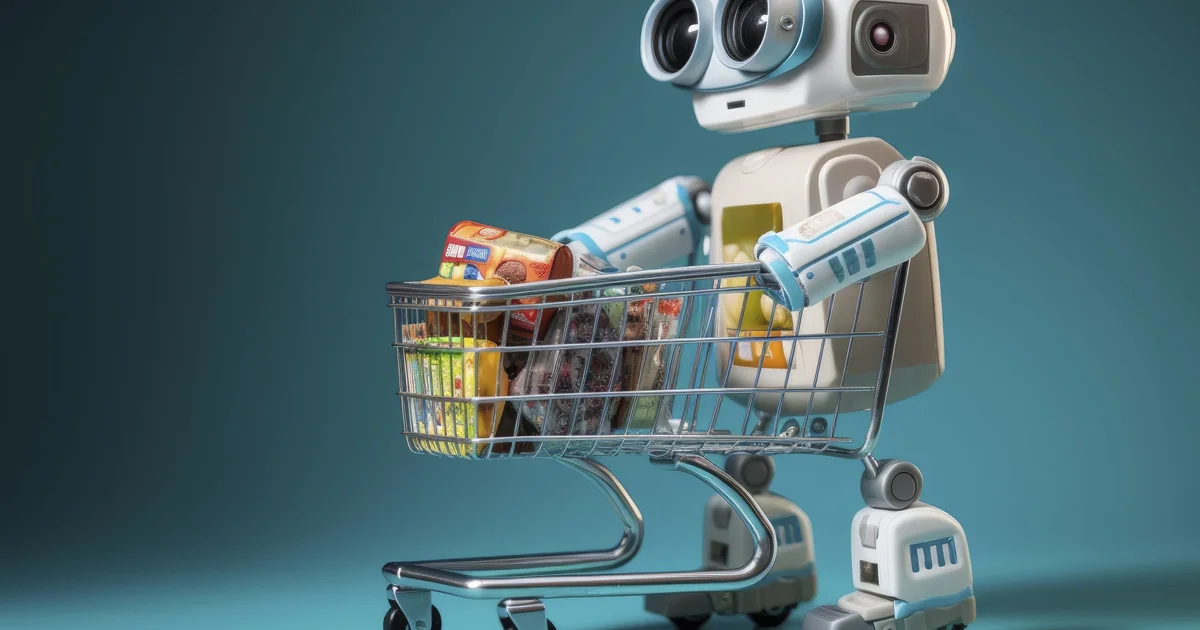
Albertsons has revealed that its conversational AI tools are helping generate higher average order values as cost and value take centre stage in shopper's minds.
www.marketingtechnews.netThe figures first appeared on 17 August 2026, in an interview published by The Wall Street Journal's CIO Journal. Jill Pavlovich, senior vice president of digital shopping experiences at Albertsons Companies, said that customers who start using the company's AI powered online shopping experience make larger purchases almost immediately. PYMNTS summarised the report as a 10% AOV increase for conversational search and 26% for the comprehensive assistants that match recipes and ingredients to dietary preferences. Supermarket News covered the same story that day.
Over the past 18 months, Albertsons rolled out several separate AI experiences under the names Ask AI, Plan AI and Buy AI. It is now consolidating them into a single conversational assistant that can locate products, surface related items and build shopping lists for events. The direction is to replace a scattering of individual features with one conversational entry point.
What stands out in Pavlovich's account is that she anchors the result in changed behaviour rather than in the size of the number.
All of a sudden they are shopping across categories, across items, not spearfishing for that single item that they need one by one.
Why the Gap Between 10% and 26% Is 16 Points
| Type of AI experience | How shoppers use it | Effect on AOV |
|---|---|---|
| Standard conversational search | Finding a wanted product in natural language | About 10% higher |
| Comprehensive assistant (recipes and dietary needs) | Deciding a meal, then gathering every matching ingredient | About 26% higher |
That 16 point spread shows how much the design of a conversational experience changes the outcome. Standard conversational search replaces keyword entry and facet filtering. The shopper already knows what to buy, and the AI simply shortens the path to it. One exchange typically moves one SKU.
The comprehensive assistant starts somewhere else entirely. What the shopper brings is not a product name but an unsolved problem, such as planning a weeknight dinner for four or putting together a gluten free breakfast. The moment the meal is settled, the required ingredients arrive as a list of ten or more items. The AI is not accelerating search. It is absorbing the shopping mission itself.
Dietary constraints deserve particular attention. Requirements like gluten free, low sodium or dairy free are often impossible to express through conventional facet filters, leaving shoppers to check ingredient panels product by product. When a conversation dissolves that friction, purchases that would have been abandoned go through instead. Pavlovich's remark that shoppers add more because they are not forgetting items points to exactly this recovery of dropped intent.
What the Earnings Reveal Behind the AOV Lift
Read on its own, the conversational AI story reads like a success. Placed next to the financials from the same quarter, the picture shifts. Albertsons reported first quarter fiscal 2026 results on 23 July 2026 for the period ended 20 June: identical sales down 0.8%, digital sales up 13%, net income of $85 million and adjusted EBITDA of $1,013 million. CEO Susan Morris said digital and pharmacy kept growing strongly while core grocery faced pressure from softer industry unit trends and a more cautious consumer. Full year guidance was cut from up to 1% identical sales growth to a decline of as much as 1.5%.
Gross margin is the number to watch. It fell from 27.1% a year earlier to 26.6%, and the company cites higher delivery and handling costs tied to continued digital sales growth as one of the main drivers. As digital penetration climbs toward 10.5% of total sales, revenue grows and so does the cost that comes with it.
That reframes what the AOV figure means. If each order is 26% larger, the revenue carried by each delivery rises and the delivery cost per order thins out. An AOV improvement can work as a counterweight to the structural cost of the digital shift. For now, though, gross margin is still falling, so the counterweight has not caught up.
Alongside the quarter, Albertsons announced ACI Edge, a restructuring that consolidates eleven divisions into four regions. At maturity it is expected to generate roughly $200 million in incremental benefits, against about $50 million in transition costs over two years. Four enterprise AI priorities sit at its centre: digital customer experience, merchandising intelligence, labour optimisation and supply chain optimisation. Conversational AI is not a standalone initiative here. It moves together with a rebuild of the cost structure.
Placing a Storefront Inside ChatGPT
While improving its own app, Albertsons also opened a storefront inside someone else's AI. On 5 August 2026 it announced the Safeway plugin in ChatGPT. Shoppers can ask in plain language to reorder a weekly list or plan a quick pasta dinner for four, and add matching Safeway products to a cart. Shopping from a recipe, a photo or a digital list is supported too.
The boundary is drawn deliberately. Discovery and cart building happen inside ChatGPT, but checkout redirects to the Safeway platform. Suggested products can be reviewed, compared, modified or removed before any purchase, so the final decision stays with the shopper. This is not handing everything to an agent. It opens up the discovery layer alone.
On the earnings call, Morris described expanding partnerships with Google, OpenAI and Microsoft so the company can meet customers wherever they choose to engage. Two fronts are being built at once: a conversational experience inside the retailer's own app, and a presence inside external AI platforms.
How Far to Trust These Numbers
Since the figures come from the company deploying the technology, some caveats belong here. Selection bias comes first. Shoppers who adopt AI tools are likely to skew toward digitally comfortable, high frequency, high basket customers, and the reporting does not disclose whether the 10% and 26% compare the same customers before and after adoption or compare users against non users. These are not the results of a randomised controlled test.
Adoption rate is also undisclosed. Without knowing what share of digital customers actually use these experiences, no outsider can calculate the contribution to company wide sales. Supermarket News further reported Pavlovich's acknowledgement that Albertsons did not realise an immediate return on investment from the rollout, even though baskets grew as soon as the tools shipped.
The wider market temperature matters as well. In a US survey YouGov ran in July 2025, awareness of AI shopping assistants stood at 43% and actual usage at just 14%. Some 56% said they had never used one and had no interest in doing so. Working well for the people who use it and spreading across the market are two different problems.
Three Things to Verify in Your Own Data
Rather than transplanting Albertsons' numbers, it is more useful to rebuild the same question against your own data. Three practical points stand out.
On measurement, do not look at AOV alone. Gross profit per order, delivery and picking costs, and return rates all have to be in the frame before an investment decision is possible. Albertsons' own earnings make exactly that case. On comparison design, avoid lining users up against non users. Track the same customers before and after adoption, and keep a control group so seasonal effects can be separated out.
On experience design, aim at the shopping mission rather than at faster single item search. That is where the 16 point gap appeared. The precondition, though, is structured product data covering specifications, ingredients, allergens, nutrition and substitutes. Without it, no conversational system can convert a meal into a basket of ingredients. The quality of conversational commerce is decided by the granularity of the product data behind it, not by the chat interface.
Conclusion
What the Albertsons case demonstrates is not simply that conversational AI works. It is that the level at which you take over the customer's problem can more than double the result. At the same time, the same quarter's numbers show honestly that the AOV lift has yet to offset the decline in gross margin.
Conversational commerce is moving from the experimentation phase into a phase where commercial outcomes are demanded. The next things worth watching are how far adoption climbs, and whether AI mediated orders are merely displacing existing orders or creating new demand. That answer is probably several quarters away.