Flipkart Rebuilds Shopsy as an AI-Native Commerce App ── The Emerging-Market Playbook That Puts Habit Before Purchase
Flipkart is rebuilding Shopsy into an AI-native, engagement-led commerce app built on feeds, games and SuperCoins. We break down its 'habit before purchase' strategy for Gen Z and Bharat's next 100 million shoppers, and what EC operators can learn.

Key Takeaways
- Flipkart has rebuilt Shopsy into an AI-native, engagement-led commerce platform built on feeds, games and rewards, and launched a new app
- The target is Gen Z and the next 100 million emerging shoppers, with a design that prioritizes habit formation over immediate purchases
- For EC operators, the signal is a "trust before purchase" mindset that builds confidence and engagement before the transaction
Flipkart's blueprint for commerce that doesn't push the sale

Shopsy is being rebuilt around feeds, rewards and entertainment as Flipkart prioritizes digital habit formation over immediate purchases in India's hyper-value e-commerce market.
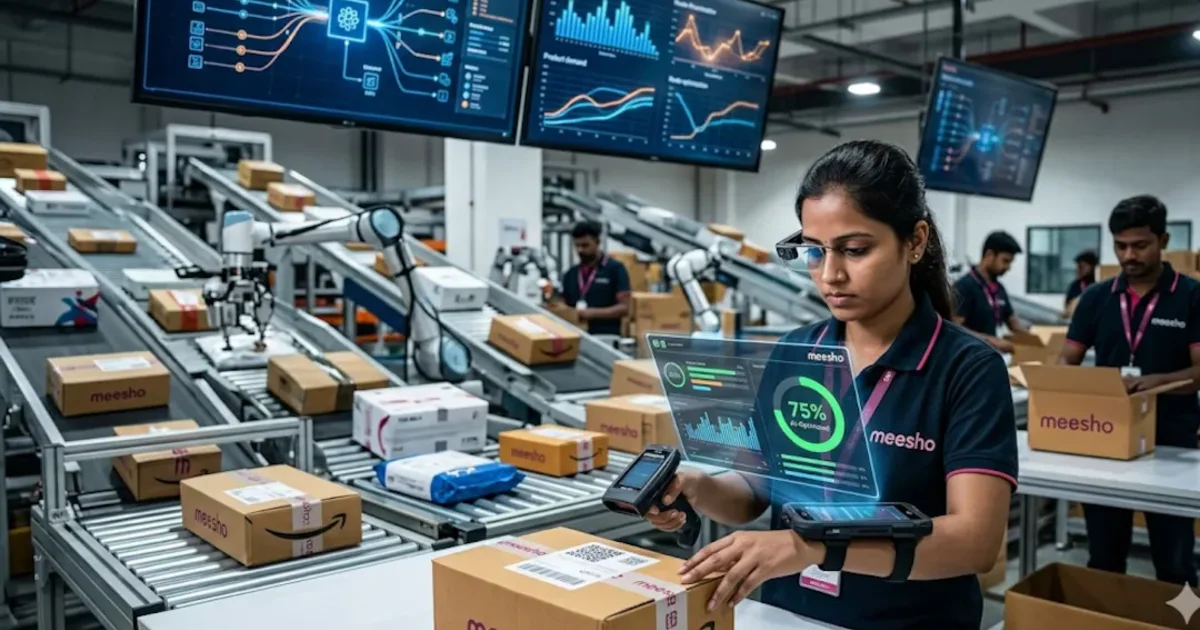
www.livemint.comOn May 25, 2026, Walmart-owned Flipkart launched a new AI-native app for Shopsy, its hyper-value (ultra-low-cost) commerce platform. Once an offers-led shopping destination, Shopsy is being rebuilt into an engagement-led commerce experience composed of feeds, games, rewards and AI recommendations.
What stands out is the underlying philosophy. Flipkart executives internally describe India's e-commerce challenge as a "penetration problem," Mint reports. The view is that much of Bharat (India's broad market, including smaller towns and emerging users) is not yet digitally native enough to shop online habitually.
Sakait Chaudhary, who leads Shopsy, told Mint that "pushing users to shop cannot be the strategy." The core of the rebrand is a clear sequence: first let people enjoy the experience of being connected to a technological world, then let them choose commerce on their own once they are comfortable.
Three structural shifts facing the "next 100 million"
Why design for not pushing the sale now? The backdrop is a tectonic shift underway in India's e-commerce market. Shopsy treats the numbers from Bain & Company's How India Shops Online 2026 as its design premise.
First, Tier 2+ cities now account for around 65% of new shopper growth. Second, Gen Z makes up nearly half of online shoppers, and their discovery habits differ fundamentally from prior generations. Third, a trust gap toward digital platforms still persists.
These may look like separate problems, but they share a root. The newer the cohort, the less accustomed they are to typing a product name into a search box and buying. Shopsy builds a response to each of these shifts into the very structure of the app.
| Structural shift | How Shopsy is designed to respond | What it signals for EC operators |
|---|---|---|
| Tier 2+ cities now drive ~65% of new shopper growth | AI discovery that reads regional intent and vernacular search patterns | Standardized product data is no longer enough; region-aware merchandising becomes a precondition for being chosen |
| Gen Z makes up 40-45% of online shoppers and discovers through video | Product pages built around autoplay video and real customer photos | The shift from static catalogs to video-led experiences increasingly governs the entry point for discovery |
| A trust gap on digital platforms still persists | A trust-first design that builds confidence before the transaction | Earning trust ahead of the first purchase is what decides new-shopper conversion |
AI that builds trust before the transaction
Every element of the reengineered app starts from how Bharat's shoppers want to discover and be shown products. Product pages are built around immersive visuals, real customer photos and autoplay video that convert interest into engagement.
AI-powered search and personalization understand regional intent and vernacular discovery patterns, surfacing the right product to the right shopper at the right moment. The goal is an experience that feels native rather than generic.
Flipkart's Chief Technology and Product Officer, Balaji Thiagarajan, noted in mediabrief's coverage that Gen Z now accounts for 40-45% of India's e-retail market. They discover through video, engage through immersive experiences, and gravitate toward interactive shopping. That is why the design principle is to let technology adapt to the customer, not the other way around. The telling point is that here AI is used not "for efficiency" but "to build trust before the transaction."
Games as the new language of commerce
Shopsy's gamification is woven into the core experience, not a standalone tab. The games are designed around what users already love, from cultural formats that resonate with Millennials to pop culture, memes and the competitive mechanics that excite Gen Z.
Every touchpoint, from logins and streaks to culturally rooted games, generates SuperCoins, Flipkart's unified loyalty currency. These can be applied directly as discounts at purchase, creating a loop that ties engagement to tangible value.
The onboarding is especially clever. Through a quiz-style experience, the app surfaces personalized offers from the very first session. This tackles the cold-start problem head-on, the long-standing constraint on converting new shoppers. Even a first-time visitor with no history is met with an experience that feels tailored to them. As Chaudhary puts it, "earning while engaging creates a powerful new value proposition" for Gen Z, pointing toward an economy where play itself produces value.
The same AI stage, opened up to sellers
This overhaul is not only about buyers. Shopsy is also a growth platform for sellers. Video-enabled catalogues, intelligent listing combinations and a discovery engine that surfaces the right product to the right shopper help sellers lift visibility and conversions.
AI tools once available only to large brands are now open to India's small businesses, MSMEs, artisans and regional manufacturers on the same intelligent stage. Shopsy's zero-commission model and its structure of sourcing directly from manufacturers further reinforce this democratization. Extending AI's benefits to the supply side in an emerging market is a deliberate move to deepen the platform's overall ecosystem.
This all unfolds against intensifying competition in India's hyper-value market, where Meesho, Amazon's Bazaar and Reliance's JioMart are crowding in. It can be read as an attempt to shift the axis of competition away from a war of attrition over discounts and speed, toward engagement and habit formation.
Conclusion
The question Shopsy's rebrand poses to EC operators is clear: is your commerce still designed with "making the sale" as its starting point?
In mature markets, the imperative tends to be how quickly you can move a visitor to purchase. Shopsy instead uses AI and games to build habit, trust and engagement upstream of the purchase, and places the transaction beyond that. Tackling the cold-start problem, video-led discovery, and personalization that reads regional context are issues that extend well beyond emerging markets, into the next generation of commerce where AI agents begin to intermediate.
For EC operators in Japan, too, this is not a distant market's story. As the linear funnel from search to purchase wobbles and the entry points for discovery diversify into feeds, conversations and agents, how you design trust and engagement ahead of the transaction will shape your next competitive edge. Shopsy's experiment offers one answer to that blueprint.