Mastercard Q1 2026 Earnings: Agentic Commerce Reframed as a Structural Growth Engine Despite Travel Headwinds
Mastercard's Q1 2026 results position Agent Pay, Verifiable Intent and virtual cards as the architecture for AI-driven commerce, with net revenue up 12% even as cross-border travel softens under geopolitical pressure.

Key Takeaways
- On its April 30, 2026 Q1 call, Mastercard reframed Agent Pay, Verifiable Intent and virtual cards as the infrastructure layer for AI-driven commerce
- Cross-border travel softened under geopolitical pressure, but the underlying business held up with net revenue up 12% and cross-border volume up 13%
- The BVNK acquisition for stablecoin connectivity and partnerships with OpenAI, Google and Microsoft were placed at the center of the long-term growth story for agent-initiated payments
A Quarterly Report That Reads Like a Blueprint

Mastercard's latest quarter shows a network adapting to AI-driven commerce, with Agent Pay and virtual cards becoming infrastructure.
www.pymnts.comMastercard's first quarter 2026 disclosures, released on April 30, read less like a routine earnings update and more like a blueprint for how commerce will be conducted when software begins to transact on behalf of people. CEO Michael Miebach used the analyst call to place artificial intelligence, agent-initiated transactions and virtualized credentials at the center of the company's strategy, arguing that the network's future is to enable machines to securely originate and complete payments.
The most telling moment of the call came in this remark from Miebach.
Our payment solutions are ready, and we are engaged in shaping what comes next with key players, including Google, Microsoft, OpenAI, and other partners across the ecosystem. Nearly all Mastercards around the world are now enabled for Mastercard Agent Pay.
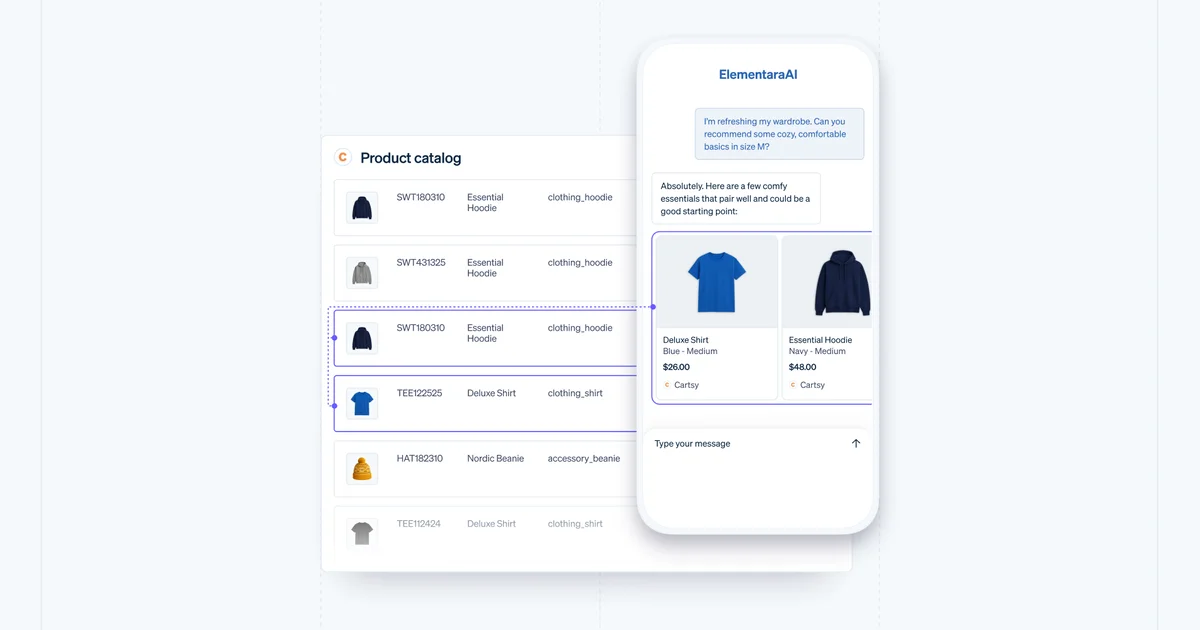
The "nearly all Mastercards" phrasing matters. With 3.7 billion cards in circulation, the message is that the existing card base, rather than a new payment instrument, is being upgraded into agent-initiated rails. Mastercard layers a record of user-granted authority onto existing tokens through what it calls Verifiable Intent, a tamper-resistant log of what a consumer authorized when an AI agent acts on their behalf. Those permissions are bound to tokenized credentials so that agent-initiated transactions inherit the same protections as traditional card transactions.
Travel Headwinds and an Underlying Floor
The macro backdrop showed a split. Miebach described "healthy underlying consumer and business spending" while acknowledging that geopolitical tensions were weighing on travel flows. Cross-border volumes rose at a double-digit pace overall, but non-travel activity has proven more resilient than travel.
CFO Sachin Mehra reported net revenue up 12%, reflecting continued growth in both the payment network and value-added services. In the United States, gross dollar volume rose 4%, with credit up 8% and debit up 1%. On the Middle East situation, Mehra signaled that the impact would be most pronounced in Q2 before progressively easing. The market priced in the travel weakness, sending shares down 3% in early trading.
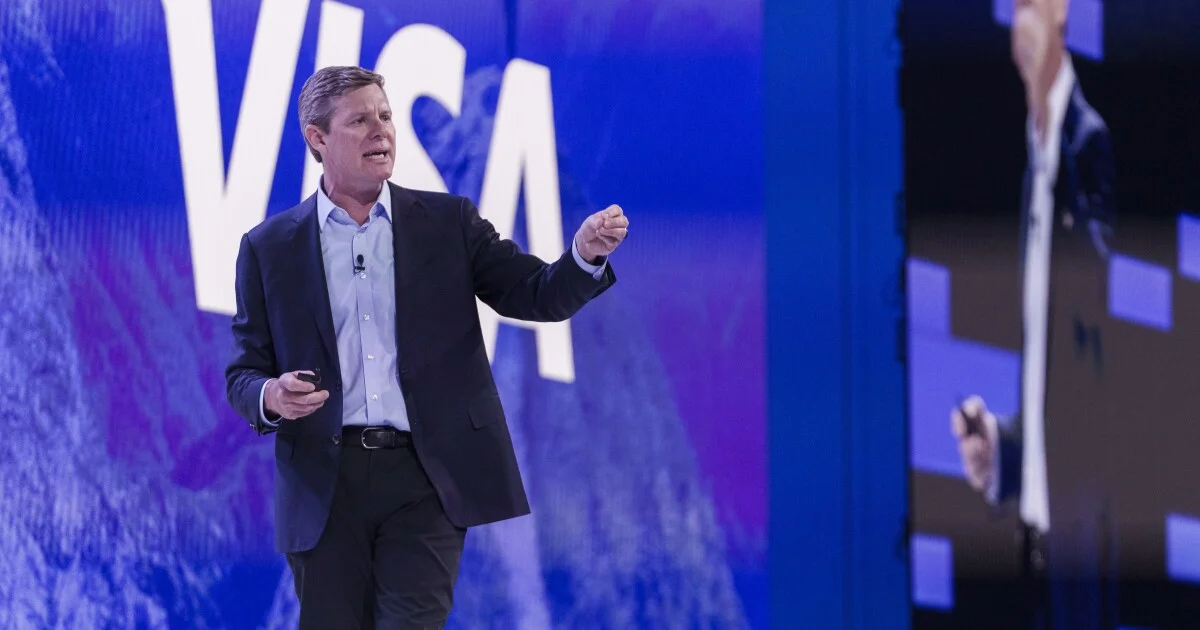
What stands out is the inverse relationship between near-term uncertainty and long-term conviction. The more volatile the operating environment becomes, the more deliberately Miebach foregrounds the agent-driven thesis. Visa took a similar posture in its Q1 FY26 earnings the day before, with CEO Ryan McInerney calling Intelligent Commerce a long-term growth engine. Mastercard followed by anchoring agentic commerce as a structural axis of growth in its own narrative.
Agent Pay and Verifiable Intent as a Trust Layer
To understand Mastercard's strategy, it helps to view agent transactions as a new trust layer that sits in front of the actual settlement. Verifiable Intent cryptographically binds a consumer's instructions, spending caps, allowed merchant categories and time windows into tokenized credentials that flow through the network.
Mechanically, the heart of the framework is the agentic token. Each agent receives a unique identity and can be constrained to specific Merchant Category Codes (MCCs). A grocery agent might be limited to MCC 5411 (grocery stores) and 5412 (convenience stores), removing any technical ability to spend on electronics or travel. The framework is built on top of widely adopted specifications from the FIDO Alliance, EMVCo, the IETF and the W3C, so it is not a closed Mastercard-only construct.
That design choice rhymes with the Google AP2 and FIDO Alliance work to standardize agent payments. By sharing the same standards base, Verifiable Intent leaves room for interoperability with Visa's Trusted Agent Protocol and other industry specifications, which is a sensible posture for a network operator that must serve both sides of every transaction.
Miebach also drew a contrast between Europe and China during the call. Europe is shaping trusted adoption, while China is demonstrating speed and scale. Establishing the trust layer of agent commerce as a global standard requires covering both ends of that spectrum: the regulation- and interoperability-focused European market on one hand, and the implementation-velocity-led Chinese market on the other.
Virtual Cards and B2B Flows: Off-the-Shelf Infrastructure
Public discussion of agentic commerce tends to focus on B2C use cases, but Mastercard used this quarter to spotlight virtual card numbers (VCNs). Travel and B2B flows are showing particular momentum, and the company highlighted new partnerships with online travel agencies and corporate platforms. Issuing and distribution partners such as Highnote, Travelsoft and Juniper were mentioned as adopting Mastercard virtual cards.
Virtual cards already let issuers create single-use tokens scoped to a merchant or sub-category. That maps cleanly onto the use case of granting an agent narrow authority for "this trip booking only" or "within this approved purchase order." Combined with Verifiable Intent, virtual cards make it feasible for agents to drive corporate procurement and travel workflows on top of existing card infrastructure rather than waiting for new rails.
This is where Mastercard's framing diverges from Stripe's announcement on the same day. The Stripe Agentic Commerce Suite and Google integration leans into building a fresh stack from new primitives, while Mastercard's pitch is that the rails already in production are about to become the center of agent commerce. The advantage of network effects on both issuance and acceptance is being exploited as a moat, with the trust layer added on top.
BVNK and the Stablecoin Extension
The earnings narrative also pulled the March 17 acquisition of BVNK back into focus. The deal, valued at up to $1.8 billion, is the largest stablecoin-related acquisition to date. BVNK, founded in 2021 and headquartered in London, has built infrastructure that bridges fiat and stablecoins across more than 130 countries and major blockchain networks.
Miebach said tokenized money would occupy a meaningful part of money movement in the future, citing cross-border B2B payments, remittances and wallet funding as immediate use cases. The company is not positioning stablecoins as a replacement for cards, but as an additional layer routed through existing infrastructure. Interoperability and compliance are where BVNK's licensing footprint becomes a strategic asset.
Pulling stablecoins onto card rails fits well with the micropayment and instant cross-border settlement needs of agent transactions. As agents start exchanging value with each other in real time, having a network-managed stablecoin path is more than a side bet.
Ecosystem Partnerships and the Trust Gap
Miebach repeatedly emphasized partnerships with OpenAI, Google and Microsoft. He described deepening collaboration with OpenAI to enable agent-to-agent payments and to embed Mastercard services into their solutions.
The trust problem was not glossed over. A Riskified survey published in 2026 found that 55% of consumers are reluctant to delegate purchases to an agent in some form. The number captures the gap between technical readiness for agent-initiated payments and consumer willingness to actually let an agent hold the wallet. Verifiable Intent is precisely an attempt to close that gap, by letting the network carry a record of human consent into machine-driven decisions, which in turn allows the existing dispute and protection framework to extend into the agent era.
That is also why credit-information players such as TransUnion are starting to discuss the trust layer of agent commerce. Standardizing the "evidence of consent" across the industry is a precondition for scale.
In Summary
Mastercard's Q1 2026 earnings reframed Agent Pay, Verifiable Intent, virtual cards and stablecoin connectivity as the infrastructure layer of the agentic commerce era, even as travel demand wobbles in the short term. With net revenue up 12%, cross-border volume up 13% and U.S. GDV up 4%, the company underwrote a long-term strategy of owning the standards for a world in which machines initiate payments.
Three questions deserve a place on the executive agenda over the next twelve months. First, how to integrate the trust layer that the card networks are exposing (Verifiable Intent and agentic tokens) into your own agent implementation. Second, how to map the scoping properties of virtual cards onto B2B procurement, travel and subscription workflows where agents will operate. Third, when to evaluate stablecoin-enabled cross-border options as part of the broader payments roadmap. Looking at Visa, Mastercard and Stripe's announcements within the same week, the common theme is unmistakable: every existing payment primitive is being redesigned around the assumption that agents, not just humans, will start the transaction. The choice each operator faces is which layer of that redesign to address first.