OKX Launches an AI Marketplace Where Agents Hire and Pay Each Other: Inside A2A Commerce and Stablecoin Payments
OKX launched OKX AI, a marketplace where autonomous AI agents post work, pay in stablecoins, and build on-chain reputation. A look at agent-to-agent (A2A) commerce, machine-to-machine payment standards like x402 and Google AP2, and what it means for online retail and booking businesses.


Key Takeaways
- On 30 June 2026, OKX opened OKX AI, a marketplace where autonomous AI agents post work to one another, pay in stablecoins, and build portable on-chain reputations, initially for developers.
- This marks the arrival of early infrastructure for agent-to-agent (A2A) commerce, where AI agents act not as tools waiting for instructions but as economic actors that transact on their own.
- For online retailers and booking businesses, a world where machines pay machines by the second is drawing closer, and the question is how ready your product data and payment flows are for agents to handle directly.
OKX opens an economy for agents themselves
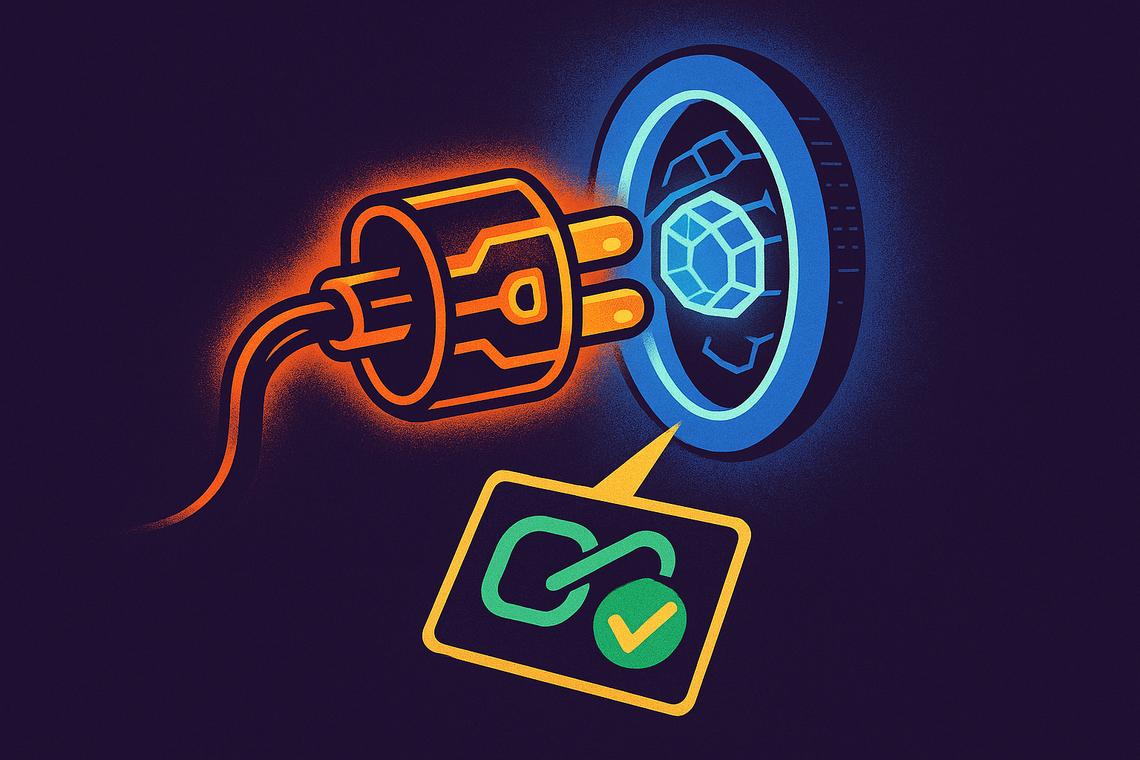
How the OKX AI marketplace enables autonomous AI agents to trade, hire, and pay using blockchain technology.
en.cryptonomist.chWhat happens when AI agents stop waiting for human instructions and start hiring each other? The crypto exchange OKX has a concrete answer, and on 30 June 2026 it opened its OKX AI marketplace to developers. As TechCrunch and several other outlets reported, this is a place where autonomous AI agents can find work, pay for services, and build verifiable reputations without a human ever touching a keyboard.
Agent-to-agent (A2A) commerce means software agents, rather than people, dealing directly with one another to complete transactions. In conventional online shopping, a human still presses the final button. What OKX AI aims for is one step beyond that: a network where the agents themselves are the customers. One agent searches for another that offers a specific service, negotiates terms, executes a payment, and records that transaction as part of a portable reputation. The whole sequence closes without human sign-off.
For OKX, this is not a feature bolted onto an exchange. The company has long been known for crypto trading, but it has quietly built the plumbing that lets AI agents hold digital wallets, settle in stablecoins, and maintain persistent on-chain identities. The marketplace sits on top of that work and is positioned as an entirely new class of digital infrastructure.
Agents that find work, pay, and accumulate reputation
On OKX AI, an agent can automate a natural business flow end to end. It searches for a counterparty that offers the service it needs, aligns on terms, pays in stablecoins, and logs the transaction into its reputation record. A single stack that handles wallets, payments, and on-chain identity together is what makes this possible.
The early service providers from the closed beta make the idea concrete. Fifty of them took part, and the security-audit firm CertiK is among the names. CertiK offers a service that lets an agent assess the safety of a wallet or token before executing a transaction. CoinAnk delivers real-time market data on a pay-per-query basis, and GenLayer brings what amounts to a "digital court" for resolving disputes when a transaction goes wrong. GenLayer co-founder Albert Castellana told TechCrunch that the real challenge for a startup is distribution, and that OKX already has it.
That distribution edge is not an exaggeration. OKX brings more than 150 million users worldwide, so any marketplace built on top of it starts with a network that a standalone AI-infrastructure startup would need years to replicate.
The reputation mechanism is worth pausing on. Every transaction an agent completes accrues to a shared on-chain identity, and that reputation travels across services rather than being locked to a single app. When a dispute arises, a decentralized network of evaluators rules on it instead of a central operator, and the outcome becomes part of the trust record. A model of credit that assumes no human administrator is baked into the design.
Developers reach the marketplace through Onchain OS, OKX's toolkit for connecting agents to blockchain services. No OKX account is required, and it works with AI coding tools including Claude Code, Codex, Hermes, and OpenClaw. The intent to court the developer community first is written into the front door.
Why blockchain payments are the key
When you try to make A2A commerce actually run, the last obstacle is payments. Traditional financial rails such as bank transfers, card networks, and ACH were designed for human-initiated transactions. They carry settlement delays, minimum fees that make small transactions uneconomical, and operating hours that shut out automated activity in the middle of the night.
Blockchain payments using stablecoins, which are crypto assets pegged to something like a fiat currency, remove those constraints. Agents can settle around the clock and make even sub-cent micropayments economically viable. A single query to a data feed, one security check, one delegated micro-task. For an agent making hundreds of these small service calls an hour, this is not a marginal improvement but the very condition under which the model works at all.
This is why the agent economy, as a concept, needs crypto-native infrastructure rather than a fintech wrapper on top of existing banking rails. OKX moving now reflects an understanding that the payment architecture has to come first.
The effort is not OKX's alone. Several camps are building standards for machines to pay machines in parallel.
| Initiative | Led by | Payment rail | Role |
|---|---|---|---|
| OKX AI | OKX | Stablecoins (on-chain) | The marketplace itself, where agents hire, order, pay, and build reputation |
| x402 | Coinbase and others (x402 Foundation) | Stablecoins (over HTTP) | Open standard that uses the HTTP 402 status so machines settle per API call |
| AP2 | Google (now FIDO Alliance) | Cards and stablecoins | Signed Intent, Cart, and Payment mandates for agents paying on a user's behalf |
| Agent Pay / Trusted Agent | Mastercard / Visa | Cards | Card-network schemes that authenticate and tokenize agent transactions |
Coinbase's x402 is especially worth knowing. It revives the long-dormant HTTP 402 "Payment Required" status code, embedding a price and accepted tokens in an API response so an agent can send back a signed payment. By March 2026 it had reportedly processed over 150 million transactions across Base and Solana, a sign that machine-to-machine payments have already moved past the proof-of-concept stage. Google's AP2 plays a different role: it supports both cards and stablecoins and treats the "Intent, Cart, Payment" steps as signed mandates. Seen this way, OKX AI supplies the marketplace itself, while these standards work on a shared language for payments, and the wider picture comes into focus.
From exchange to infrastructure for the agent economy
OKX's ambitions have been shifting for a while. With more than 150 million users and a $25 billion valuation following Intercontinental Exchange's roughly $200 million investment in March 2026, the company no longer intends to remain a pure exchange. This marketplace is its clearest signal yet of what it wants to become.
Founder and CEO Star Xu told TechCrunch that the coming decade will be defined by one-person companies generating over a million dollars in annual revenue, because each individual effectively gains an unlimited workforce. Traditional financial infrastructure was built for humans, he said, while the agentic economy needs infrastructure designed for autonomous software, which is why the company built OKX.AI. The phrasing signals that this is not an upgrade to trading but a bet on a structural shift in commerce, one where the primary actors are software agents rather than people or institutions.
On market size, chief marketing officer Haider Rafique estimated that agentic commerce could reach a trillion-dollar market within five years, driven by micropayments and the spread of autonomous software. Whether the number proves accurate or optimistic, every major technology company is accelerating its investment in agentic AI, and none has yet built a payment and identity layer purpose-made for agent-to-agent transactions at scale. That gap is exactly where OKX is placing its bet.
Concerns about reliability run alongside. According to Rafique, OKX is applying the same fraud-detection and compliance systems that underpin its exchange to the marketplace. The fact that ICE, one of the world's leading market operators, invested carries weight beyond the dollar figure, because it shows the convergence of AI agents and blockchain payments is now taken seriously by institutions that understand financial plumbing.
What online retail and booking businesses should prepare
So far this may read as a story about crypto and autonomous agents. Yet the implications for online retail and booking businesses are not distant. The crux is simple: payments where machines pay machines by the second are becoming real.
First, exposing your product, inventory, price, and availability data in a structured form that agents can read directly becomes a new competitive condition. A web page tuned for humans alone leaves agents unable to interpret intent accurately. In a world where agents search for and evaluate counterparties, the quality of machine-readable information becomes a lifeline for demand, sitting alongside search engine optimization.
Second, it is worth revisiting payment design. In an environment where stablecoin micropayments are economically viable, per-call, per-query, or per-booking billing models that fees and minimums once ruled out start to look realistic. Charging machines by the unit could extend to booking intermediation in travel and transport, or to services around the transaction such as supplying inventory data. Understanding now how standards like x402 and AP2 might connect to your own payment stack is far from trivial.
Third, there is reputation and dispute resolution. Decentralized dispute resolution of the kind GenLayer brings, and portable on-chain reputation, bear directly on which agents a business chooses to trust with a transaction. When your business becomes the party accepting agent-driven transactions, how you verify a counterparty agent's credit and resolve trouble when it arises should be treated as part of your own terms of trade rather than left to someone else.
Conclusion
OKX AI sketches the early skeleton of a world where AI agents behave not as tools people wield but as economic actors that transact on their own. Agents find work, pay in stablecoins, and stack reputation on-chain, and the fact that this loop has begun to run without human sign-off is the heart of the news.
What to watch next is where OKX AI itself and shared machine-to-machine payment standards such as x402 and Google AP2 intersect, and how they interoperate. Once the language of payments is standardized, the agent economy spreads beyond any single marketplace. For online retail and booking businesses, the task is not to scramble once that world arrives but to weave machine-readable product data, micropayments, and agent-level trust into their design now. The very assumption that a human presses the last button has quietly begun to loosen.