Shopify Publishes Official Guide: Concrete Steps to Prepare for Agentic Commerce
Shopify releases a comprehensive agentic commerce guide covering structured data optimization, Agentic Storefronts setup, and practical steps for merchants to prepare for AI-agent-driven shopping.


Key Takeaways
- Shopify publishes an official agentic commerce guide with four concrete implementation steps for merchants
- Structured data optimization and AI-facing brand information are prerequisites for being 'chosen' by AI agents
- Agentic Storefronts enable unified listing across ChatGPT, Copilot, and Google AI Mode
Shopify Publishes Agentic Commerce Implementation Guide

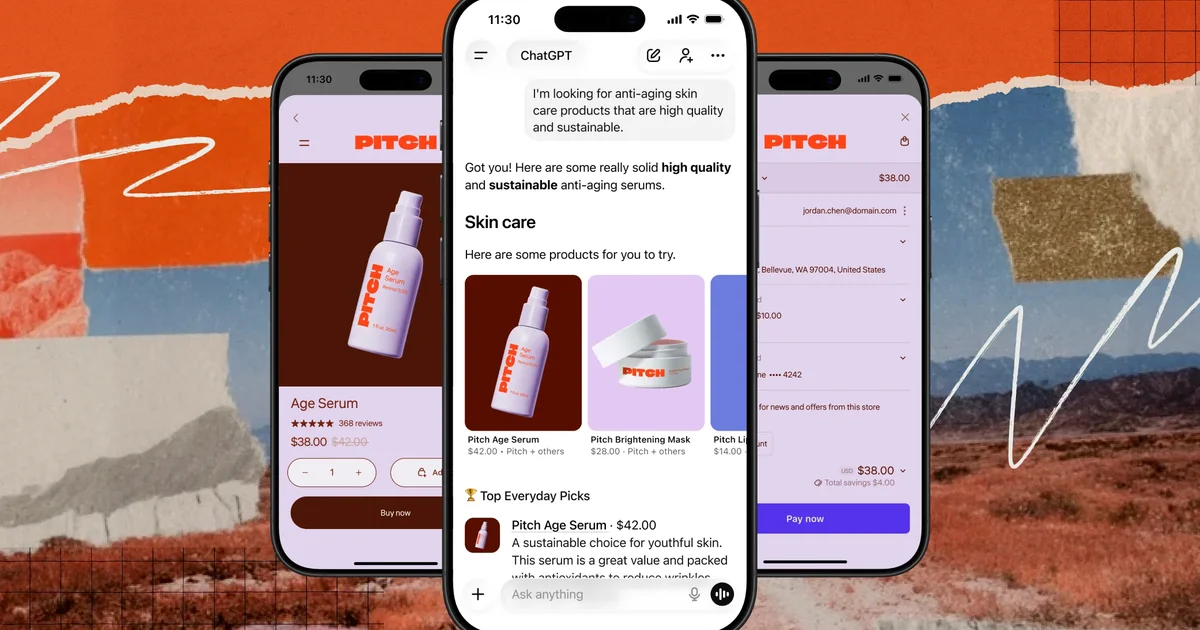
Shopify official guide to agentic commerce
www.shopify.comOn April 2, 2026, Shopify published a comprehensive introductory guide to agentic commerce on its official blog. Agentic commerce is a new e-commerce model where AI agents research, compare, and purchase products on behalf of consumers. McKinsey estimates that this market could reach $3 trillion to $5 trillion by 2030.
What distinguishes this guide is that Shopify, as a platform provider, goes beyond conceptual introductions to present concrete implementation steps that merchants can begin immediately.
Background and Industry Trends
The agentic commerce landscape has been accelerating rapidly since the beginning of 2026. In January 2026, Shopify announced the "Universal Commerce Protocol (UCP)," co-developed with Google. UCP is an open standard for AI agents to connect and transact with merchants, endorsed by over 20 companies including Walmart, Target, Etsy, American Express, Visa, and Mastercard.
On March 24, 2026, Shopify rolled out "Agentic Storefronts" to 5.6 million stores, enabling centralized management of sales across ChatGPT, Microsoft Copilot, Google AI Mode, and the Gemini app. According to Shopify's 2025 Holiday Report, 64% of shoppers indicated they intended to use AI for purchases, rising to 84% among those aged 18 to 24.
While traditional chatbots served as "conversational commerce" tools answering customer questions, agentic commerce involves AI agents autonomously comparing products across multiple stores and presenting optimal options. Understanding this distinction is the first step toward preparation.
Shopify's Four Implementation Steps
The guide presents a four-stage approach for merchants to prepare for agentic commerce.
Step 1: Audit and Enrich Structured Product DataAI agents do not browse sites the way humans do. Product information such as name, price, material, and size must be organized in machine-readable structured fields. Specifically, this means fully completing product fields on your e-commerce platform, registering your product catalog with Google Merchant Center, and adding schema markup to product pages.
The guide explains that rather than subjective marketing language like "game-changing design," merchants should use specific descriptions such as "40L waterproof hiking backpack with laptop compartment."
Step 2: Build Out AI-Facing Brand PresenceAI agents reference not only product data but also FAQs, return policies, and shipping information. For example, if a consumer instructs an AI agent to "only buy from brands with free returns," products will be excluded if the return policy is not clearly stated. Shopify's "Knowledge Base" feature allows merchants to customize the store information that AI platforms reference.
Step 3: Enable Agentic StorefrontsShopify merchants can manage listings across ChatGPT, Microsoft Copilot, and Google AI Mode through Agentic Storefronts from their admin dashboard. If you sell to US shoppers and your products are in Shopify Catalog, they are automatically discoverable in ChatGPT. For Copilot and Google, checkout can be toggled on or off under "Settings > Sales Channels."
Notably, brands not using Shopify can also register products in Shopify Catalog through the "Agentic Plan" and sell through the same AI channels. A platform-agnostic pathway into agentic commerce is now in place.
Step 4: Monitor and Optimize AI VisibilityAfter listing, it is recommended to continuously monitor visibility across AI channels and improve product data accordingly. Orders appear in the Shopify admin with channel attribution, allowing merchants to track which AI platforms are generating sales.
Impact on E-Commerce Businesses
Agentic commerce represents a new sales channel for e-commerce businesses, but it fundamentally differs from traditional marketplace listings. AI agents filter products based on "structured data" and "clear policy descriptions," requiring a different approach from SEO or paid search advertising.
According to research by the Baymard Institute, the average online shopping cart abandonment rate is approximately 70%. In agentic commerce, AI agents can complete purchases within conversations using stored payment credentials, which is expected to significantly reduce this friction. Microsoft reports that when purchase intent is present, shoppers using Copilot are 194% more likely to complete their purchase compared to those who do not.
The first step is to audit your product data. Check whether all products have specific, descriptive titles and whether materials, sizes, and use cases are clearly stated. Next, publish FAQs, return policies, and shipping information in an AI-readable format, then proceed to configure Agentic Storefronts. This is the most practical roadmap.
Summary
Shopify's guide publication signals that agentic commerce has transitioned from "concept" to "implementation phase." With the UCP industry standard, Agentic Storefronts deployed to 5.6 million stores, and the platform-agnostic Agentic Plan, Shopify is rapidly building out the entire ecosystem.
Looking ahead, key developments to watch include the expansion of AI platforms adopting UCP, the rollout of full checkout capabilities in Google AI Mode and the Gemini app, and the launch of UCP-powered shopping experiences on Meta. Optimizing product data to be "chosen" by AI agents is no longer optional; it has become an essential initiative.