Truecaller Launches 'Call-to-Cart' Globally: How AI Turns Phone Calls Into a Commerce Surface
A breakdown of Truecaller Ads' Call-to-Cart AI commerce solution: how the communication layer becomes a shopping surface, the adVantage recommendation engine, the strategy behind its 500M-user base, and what it means for advertisers and e-commerce.


Key Takeaways
- Truecaller Ads has globally launched Call-to-Cart, an AI commerce solution that turns the high-attention moments around a phone call into a shopping surface.
- At its core is adVantage, an in-house recommendation engine that compresses the path from discovery to purchase from multiple screens down to just two steps.
- For a Truecaller facing falling ad revenue and layoffs, this is a strategic move to shift its center of gravity from advertising to commerce.
The phone call itself becomes a new storefront
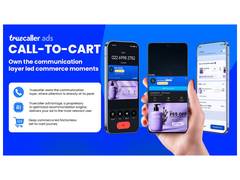
Bangalore (Karnataka) [India], June 17: Today, Truecaller Ads announced the global launch of Call-to-Cart, an AI-backed intelligent commerce solution that transforms everyday communication moments into commerce.
www.aninews.inA phone rings. A name appears. The conversation ends. This sequence repeats countless times every day across the world. The Call-to-Cart solution that Truecaller Ads announced on June 17, 2026 is an attempt to turn this familiar moment into an entry point for shopping.
It targets two windows where the user is most focused on the screen: the moment a call comes in, and the moment immediately after a call ends. Into these moments, Truecaller inserts AI-selected product offers and a checkout path. According to the announcement, this can compress the journey from discovery to purchase into just two steps.
Why the phone call? The answer lives in the phrase "communication layer." Unlike the search and social channels e-commerce has long fought over, a call is an exceptionally pure pool of attention that resolves without switching between apps. Truecaller wants to convert that attention into purchases on a surface it controls.
Why a single extra click becomes fatal
The biggest enemy of mobile commerce is screen transitions. Truecaller Ads notes that every additional click between ad exposure and checkout raises the probability of consumer drop-off. Searching for a product, switching apps, navigating multiple screens, this accumulating friction steadily erodes whatever purchase intent was generated.
Call-to-Cart's design philosophy is to bring that friction close to zero. By embedding discovery, recommendation and checkout inside the single context of a call, it aims to avoid "moving" the user to a marketplace or search engine. The idea is to pull the starting point of shopping forward, from a shopping app to everyday communication behavior itself.
Millions of purchase decisions begin outside shopping environments. Communication moments represent an effective commerce surface, and through Call-to-Cart we enable that opportunity.
What matters here is that Truecaller is redefining itself not as "ad inventory" but as a "commerce surface." Advertising only generates awareness, whereas a surface completes the transaction on the spot. The shift from selling impressions to selling conversions themselves sits at the heart of this product.
The core technology: adVantage powers the recommendations
What makes Call-to-Cart work is adVantage, the in-house advertising intelligence platform Truecaller built itself. It is positioned not merely as an ad-serving system, but as a recommendation engine that decides who, when and which offer to show.
adVantage combines three elements: an advanced recommendation engine, AI-driven personalization, and first-party data signals. Truecaller holds proprietary communication data such as calls, contacts and spam detection, and this becomes the source of precision for "showing the right offer at the right time."
Behind every Call-to-Cart experience is adVantage. By combining a recommendation engine, AI personalization and first-party signals, it turns communication moments into measurable commerce opportunities.
The pattern where the recommendation engine determines commerce outcomes is one Amazon and various marketplaces have proven for years. Truecaller's bet is whether it can carry that same logic outside the shopping app. The biggest implementation challenge is whether AI can guarantee enough relevance to spark purchase intent on a context-thin call screen.
What 150 countries and 500 million users mean
Call-to-Cart is the first advertising solution Truecaller Ads has rolled out globally and simultaneously. It covers a user base across more than 150 countries, with over 500 million monthly active users worldwide. The company serves more than 5 billion impressions per day and is trusted by over 10,000 brands.
This scale signals that Call-to-Cart is not a one-off feature but a new monetization layer aimed at a massive audience. The categories named as targets are FMCG, D2C beauty, pharma, fintech and mobility, all high-impulse categories where timing and relevance drive purchases.
The rollout, however, is cautious. In the first phase, only "always-on" direct advertisers in key markets are invited via a whitelist. Selected partners receive dedicated onboarding support, bespoke integrations and direct access to the adVantage program. Rather than opening it broadly, the entry strategy is to focus on advertisers who can deliver results and build a track record.
The backstory: breaking free from ad dependency
This news becomes more three-dimensional when read against the tough business environment Truecaller faces. Advertising has long been the company's revenue backbone, but that ad business is now wobbling.
In Q4 2025, ad revenue fell roughly 22% year over year, and the company reportedly lost about one-third of its ad traffic as of August 2025 due to an algorithmic issue with Google, a key demand partner. Then in May 2026, plans emerged to cut roughly 15% of its workforce in response to the revenue decline.
With a surge in Premium subscriptions and growth in business services, subscription revenue now accounts for nearly one-third of total sales, signaling a shift away from advertising dependency.
Placed in this context, the aim of Call-to-Cart is clear. It is an attempt to rebuild the revenue structure away from easily-abandoned legacy display ads toward commerce that ties directly to outcomes. A model that earns from transactions rather than impression rates is a strong hedge against falling ad prices. For a company where India accounts for roughly 70% of all users, it is also a design that can capture the consumption demand of a vast Indian market directly.
Implications for e-commerce and advertisers
What e-commerce operators should read here is the shift that "purchase touchpoints no longer live only inside shopping apps." Search, social, and now the phone call. Anywhere AI can read context and insert an offer, a purchase can begin. The question for future distribution design is how your products ride on recommendations in these non-shopping environments.
The other point is that the structure where platforms drive purchases through recommendation engines is intensifying. The more an AI foundation like adVantage controls "who gets shown what," the more important it becomes for brands to make engines correctly understand their own data and product information. Building out agent-readable product data, long discussed in agentic commerce, pays off on these new surfaces just the same.
That said, Call-to-Cart is currently invitation-only, and concrete conversion results and the details of supported payments have not yet been disclosed. Whether purchases truly close on the context-thin venue of a call screen is something that will be validated by real data going forward.
Conclusion
The idea of turning a phone call into a commerce surface symbolizes the dissolving boundary between communication and commerce. If Truecaller's bet succeeds, the starting point of shopping may quietly migrate from "marketplaces and search" to "everyday communication behavior." What to watch is how many performance numbers emerge from the invitation-only first phase, and how far adVantage's recommendation precision holds up in context-thin settings. It is worth tracking as a new move in the race where AI is redefining where purchases begin.