DoorDash Launches 'Ask DoorDash' Conversational Shopping Assistant That Builds Carts From Recipe Photos
DoorDash unveils Ask DoorDash, a conversational assistant that turns recipe links, cookbook photos, and shopping list images into a shoppable cart. A deep dive into agentic commerce in grocery and delivery, and what it means for e-commerce operators.

Key Takeaways
- DoorDash launched Ask DoorDash, a conversational shopping assistant that automatically builds a shoppable cart from a recipe link, a cookbook photo, or an image of a shopping list
- By unifying natural-language search across both groceries and restaurants, it aims to replace the old e-commerce ritual of assembling a cart one item at a time
- The move signals that grocery agentic commerce competition with Amazon, Instacart, and Walmart is heating up, and puts e-commerce operators on notice that inventory and product-data accuracy now translate directly into competitiveness
How Ask DoorDash Changes the Entry Point to Shopping
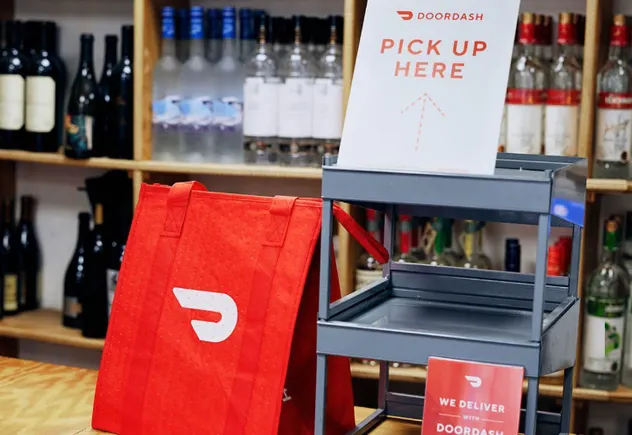
The tool allows grocery shoppers to input a recipe link, photo from a cookbook or image of a shopping list and receive a shoppable cart of food items.
www.grocerydive.comPicture flipping through your grandmother's old cookbook and finding a favorite recipe. Until now, you would have had to recall each ingredient, search for it in the app, and add it to your cart one by one. Ask DoorDash, announced on June 11, 2026, takes over that entire chore. Upload a photo of the cookbook page, and a cart is assembled in seconds from your usual grocer, with the right ingredients and quantities already filled in.
This is more than a search upgrade. Type something like "healthy dinner for four under $40, no salad or chicken," and personalized recommendations come back. You keep the conversation going to refine the results, and you arrive at a ready-to-buy cart. The very act of hunting for products one at a time is replaced by a dialogue in natural language.
DoorDash co-founder Andy Fang framed the intent this way.
We've spent over a decade building an app that puts everything in your city at your fingertips, but more options shouldn't mean more work. Now you can search DoorDash in your own words to find exactly what you want.Source: Andy Fang
Three Inputs: Recipes, Photos, and Lists
The heart of Ask DoorDash is the way it diversifies the starting point of a shopping trip. Beyond text instructions, it offers three input paths: images, links, and lists.
Feed it a cookbook photo, and Ask DoorDash does more than translate ingredients into a cart. It prompts you to check whether you already have staples like butter or salt. That nudge to avoid buying what you already own shows the goal is not to mechanically decompose a recipe into parts, but to make suggestions that account for what is already in your pantry.
Pasting a recipe link or snapping a photo of a shopping list produces a cart the same way. Shoppers can also ask DoorDash to reorder their last cart, stock up on their usuals, and suggest new items based on past purchases. Rather than a one-off act of shopping on someone's behalf, it is designed to learn continuously, using purchase history as context.
The same philosophy carries over to restaurant ordering. Type "filling dinner for a family of four," and nearby restaurants surface with reasons attached; layer on "kid-friendly and vegetarian, nothing too spicy," and the results refine in real time.
What 'Conversational Commerce' Is Trying to Solve
Why is DoorDash shipping this now? Behind it lies the structural friction that online grocery shopping has carried for years.
According to DoorDash, the average U.S. user has an estimated 800,000 menu items and grocery products available in the app. Abundance of choice is a strength in principle, but as long as humans scroll to find things, it also breeds cart abandonment halfway through. When the company describes the new feature as reducing the hassle of cart building, it is aiming to stop that abandonment with a conversational interface.
What matters here is that Ask DoorDash grounds its responses in merchant inventory data, the in-stocks. Menus, prices, hours, delivery distances, and inventory change rapidly. By anchoring responses to this fast-moving data, DoorDash tries to avoid the biggest pitfall of conversational commerce: recommending items that cannot actually be ordered. How to connect a generative model's language ability with real-time commerce data is exactly where the implementation of agentic commerce is tested.
On the technical foundation, the tool reportedly combines AI models built by OpenAI, Anthropic, and Google with open-source options. Internal work on a conversational ordering tool dates back to around 2023, but DoorDash held off shipping until the underlying models had matured.
Grocery Agentic Commerce Competition Comes Into Focus
Ask DoorDash is not an isolated event. It is part of a broader wave in which retailers and e-commerce providers are turning, almost in unison, to agentic AI to solve the pain points of online grocery. Agentic AI refers to AI that understands a user's goal and autonomously handles the chain of purchasing tasks, from search and comparison to cart building and ordering.
Laying out the major players brings the shape of the competition into view.
| Company | Approach | What stands out |
|---|---|---|
| DoorDash | In-app Ask DoorDash plus a grocery app inside ChatGPT | Spans grocery and restaurants, grounding responses in inventory data |
| Amazon | Rufus (conversational assistant) and Buy For Me | Most advanced in benchmarks; shops other retailers' sites from its own app |
| Instacart | Grocery app in ChatGPT and a third-party connection hub | Many grocers connect to shopping agents via Instacart |
| Walmart | Generative AI assistant 'Sparky' and OpenAI integration | Doubling down on conversational, personalized assistance |
What stands out is how many grocers connect to shopping agents such as ChatGPT through a third party like Instacart. In a benchmark report from AstraWorks, Amazon has the most advanced capabilities so far, while many mainstream grocers rely on Instacart rather than building their own. The figure that of the 18 grocers shoppable through ChatGPT, 16 are connected via Instacart's integration captures this dependence plainly.
DoorDash itself shipped a grocery app inside ChatGPT in December 2025, built on OpenAI's agentic commerce protocol. Where Ask DoorDash is a conversational experience inside DoorDash's own app, the ChatGPT version is a purchase touchpoint on someone else's platform. By running both in parallel, DoorDash is positioning to capture demand from its own channel and from external agents alike.
Three Questions E-commerce Operators Should Face Now
This cannot be dismissed as a story about delivery giants alone. In a world where conversational, agent-driven buying becomes the norm, every e-commerce operator faces a change in its baseline conditions.
First, the accuracy of product data and inventory becomes competitiveness itself. Just as Ask DoorDash grounds responses in inventory data, agents trust only structured, real-time, accurate data. If product names, specs, stock status, and prices are not in machine-readable form, a product drops out of an agent's candidate set. A product page that looks attractive to human eyes might as well not exist if the agent cannot read it.
Second, as the starting point of shopping shifts from the search box to dialogue, the place where brands meet customers changes. When a user says "a healthy dinner under $40" instead of naming a store or product, the agent decides which products make the shortlist. Products that scrolling would never have surfaced gain a chance at exposure, but a new axis of competition arises: optimizing to be chosen, sometimes called answer engine optimization.
Third comes the choice of whether to build a conversational experience in-house or connect to external agents. As the reliance on Instacart shows, going through a third party is quick to implement but cedes the customer touchpoint and data to another company. DoorDash running both its own app and a ChatGPT version reads as a strategy to take both rather than pick one.
Conclusion
Ask DoorDash draws attention as a flashy feature that turns a single recipe photo into a cart, but its essence is moving the entry point of shopping from search to dialogue. And what makes that dialogue work is the unglamorous foundation of real-time inventory and product data.
Grocery agentic commerce competition is still in its early stages. The focus from here shifts to whether each company leans toward its own channel or external agents, and how far it can push the cleanup of its product data. Whoever masters the data running beneath the conversation looks set to master the next shopping experience.