AI Commerce News Digest (April 29, 2026)
Ant International unveils its open-sourced Agentic Mobile Protocol (AMP) as Asia's answer to UCP and ACP; Google donates Agent Payments Protocol to FIDO Alliance to formalize agent identity standards; Visa names agentic commerce its next growth ecosystem on Q1 FY26 earnings; Pine Labs becomes OpenAI's first India payments partner; Talabat opens MENA's largest AI quick-commerce hub in Egypt — today's EC and AI commerce news for April 29, 2026.


Key Takeaways
- Ant International launches the open-sourced Agentic Mobile Protocol (AMP), positioning itself as Asia's third pole alongside Google's UCP and OpenAI's ACP, optimized for the mobile-first commerce environment of Asia and emerging markets
- Google donates the Agent Payments Protocol (AP2) to the FIDO Alliance, formalizing industry standardization. American Express, Mastercard, PayPal, Visa, Stripe, Adyen, and Microsoft join the new Agentic Commerce technical working group
- Visa officially names agentic commerce its next growth ecosystem in Q1 FY26 earnings; Pine Labs becomes OpenAI's first India payments partner; Talabat opens MENA's largest AI quick-commerce hub in Egypt — regional implementation races are kicking off
Today's Top Stories
Ant International Launches Open-Sourced Agentic Mobile Protocol — Asia's Third Pole Joins UCP and ACP

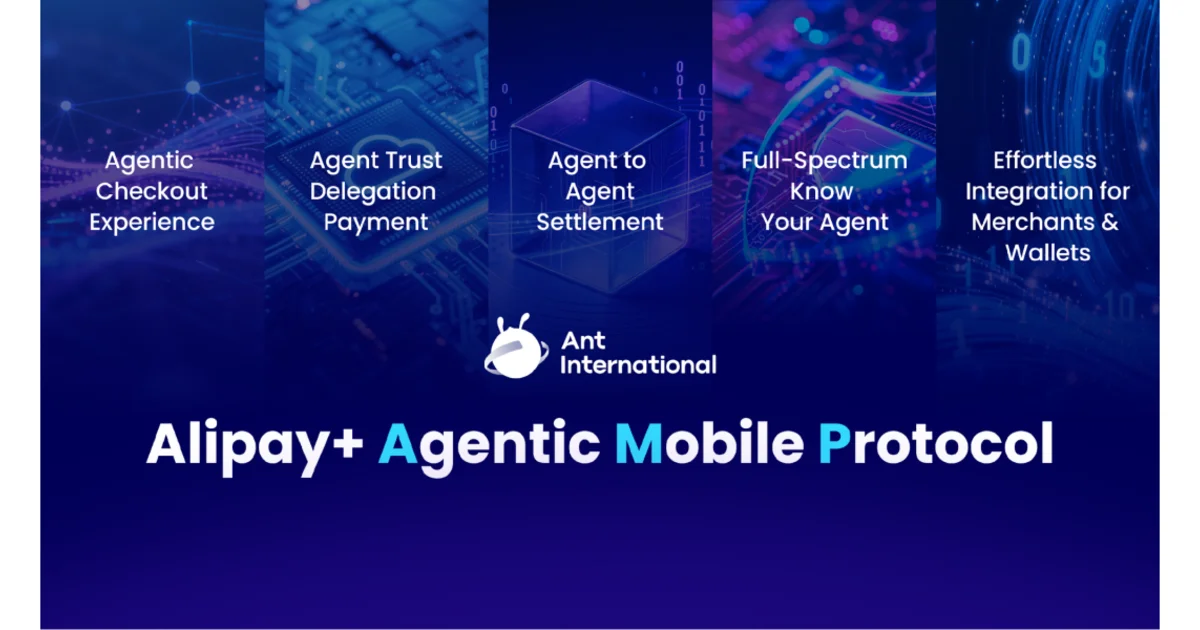
Ant International is introducing the Agentic Mobile Protocol (AMP) to enable secure, AIOps-native agentic payment connection to mobile services.
www.businesswire.comAnt International, operator of Alipay+, has open-sourced a new protocol — the Agentic Mobile Protocol (AMP) — that connects AI agents to mobile commerce services. AMP is engineered for secure agent-driven authentication, payment, and post-purchase fulfillment across mobile apps, with native support for multi-account scenarios, personalization, and AIOps-grade operations.
The strategic significance is its mobile-first design. While Google's Universal Commerce Protocol (UCP) and OpenAI's Agentic Commerce Protocol (ACP) target desktop and chat-based web commerce, AMP optimizes for the mobile-app commerce that dominates Asia and emerging markets. It plugs directly into Alipay+'s 90+ wallet network across Southeast Asia, the Middle East, and Europe, supporting cross-wallet transactions, loyalty points, and BNPL — all of which are largely absent from UCP and ACP designs.
Agent payment protocols have effectively bifurcated into US-led (UCP/ACP) and Asia-led (AMP) camps. Merchants must shift from single-protocol bets toward selecting middleware and PSPs that maintain adapter layers across UCP, ACP, and AMP. If Taobao, Lazada, and Tokopedia adopt AMP, agentic commerce penetration across Asian cross-border ecommerce could accelerate dramatically.
Google Donates Agent Payments Protocol (AP2) to FIDO Alliance — Industry Standardization Enters Decisive Phase
The FIDO Alliance today announced initiatives to develop interoperable standards for agentic interactions and commerce.
www.businesswire.comGoogle has formally donated its Agent Payments Protocol (AP2) — its open security and payments specification for agentic commerce — to the FIDO Alliance. FIDO, the standards body behind passkeys and WebAuthn, has formed a new Agentic Commerce Technical Working Group (TWG) to develop interoperable standards for agent authentication, delegation, and payments.
The TWG includes American Express, Mastercard, PayPal, Visa, Stripe, Adyen, Cloudflare, Google, Okta, and Microsoft. Combined with yesterday's expansion of Google's UCP technical council (Amazon, Meta, Microsoft, Salesforce, Stripe), this marks a decisive industry consolidation week. AP2's transition from a vendor-specific spec to an industry-wide authentication standard means that responsibility, auditability, and remediation procedures for agent-driven payments can now be codified at parity with passkeys.
This is the industry's response to Riskified's Q1 Pulse, which showed 55% consumer rejection of agent-led purchases. Merchants should expect FIDO-compliant agent authentication to become a core requirement of payments roadmaps over the next 12–18 months.
Agentic Commerce
Visa Names Agentic Commerce Its Next Growth Ecosystem on Q1 FY26 Earnings

Visa is counting on the FIFA World Cup this summer for windfalls. Long-term, agentic commerce is creating a whole new ecosystem to which Visa can attach itself, Visa CEO Ryan McInerney said on a call with analysts.
www.americanbanker.comOn Visa's Q1 FY26 (Jan–Mar 2026) earnings call, CEO Ryan McInerney explicitly described agentic commerce as "a whole new ecosystem to which Visa can attach itself." Near-term tailwinds include the FIFA World Cup; the long-term growth thesis centers on Visa Intelligent Commerce. Q1 revenue reached $10.2bn (+10.8% YoY) with $5.4bn net income — financial firepower to fund AI investment.
Visa Intelligent Commerce bundles card tokenization, KYC, and fraud detection for agent-led transactions. It is already integrated with OpenAI (ACP), Mistral, and Perplexity's AI shopping flows. McInerney framed this as a "replay of the structure that made Visa the chosen rail in the early internet era."
In the protocol war (Mastercard Agent Pay, Stripe Agent Toolkit, Coinbase x402, Circle USDC Agent Payments), Visa's positioning leans on its card-rail incumbency plus 430M+ merchant network. Merchants need to revisit their fee structure, chargeback handling, and tokenization strategy for agent-accepted payments.
Pine Labs Becomes OpenAI's First India Payments Partner — ACP's Opening Move

OpenAI moves beyond ChatGPT in India with a Pine Labs deal targeting enterprise payments and AI-driven commerce.
techcrunch.comIndia's leading payments firm Pine Labs has positioned itself as OpenAI's first India payments partner. Pine Labs embeds OpenAI's API models into its core payments infrastructure, enabling agent-driven payments inside ChatGPT for India. The integration covers cross-border settlement, supplier negotiations, and recurring billing, executed by AI agents within user-defined guardrails.
A key dimension: Pine Labs is opening its agent payments stack to third-party developers, mirroring Swiggy's "Builders Club" (deep-dived on April 24). Across India, payments incumbents are racing to open infrastructure to developers and capture the AI app ecosystem.
For OpenAI's Agentic Commerce Protocol (ACP) — which had been confined to Shopify, Etsy, and Stripe — Pine Labs adds direct connectivity to India's UPI network (14B monthly transactions). India's ECommerce sellers and D2C brands now have the shortest path to embedding ChatGPT-driven purchase flows.
Full article: Pine Labs becomes OpenAI's first India payments partner — ACP's opening move and the bridge to UPI's agent payments lane
Tata Communications Survey: 43% of Retailers Are Piloting AI Shopping Agents

PYMNTS Intelligence finds wider rollout of AI commerce will hinge on whether merchants can solve for fraud, liability and consumer trust.
www.pymnts.comA new PYMNTS Intelligence study with Tata Communications finds that 43% of retailers are piloting AI shopping agents. Set against Riskified's recent finding that 55% of consumers reject agent-led purchases, retailers are clearly running ahead of consumer comfort.
The biggest barriers to scale-up are not technical, but fraud detection, liability assignment, and consumer trust. Pilots are working through chargeback flows, refund liability for misorders, and the operational responsibility split between AI platforms and merchants. The FIDO Alliance's standardization work directly addresses these issues.
For merchants, the headline is competitive: 43% of peers are already in pilot. The question is no longer "when to start" but "which KPIs to instrument in the pilot."
AdMarketplace Pilots Performance Ads Inside AI Chat

As AI chat starts to double as a shopping channel, the race is on to build an ad model that doesn't undermine user trust.
www.adexchanger.comSearch ad network AdMarketplace has begun piloting performance-ad formats inside AI chat. When users seek shopping advice in chat, sponsored product slots are inserted with click-and-conversion-based pricing. The model resembles Topsort's "Sponsored Prompts" (April 22), but AdMarketplace participates as a non-retailer ad network — a meaningful structural difference.
As AI chat becomes a shopping channel, the cross-platform challenge is "ad formats that do not break user trust." Expect contextual fit, dialog history, and inferred intent to replace CPC keyword auctions as the core ranking logic. The boundaries between retail media, search ads, and AI chat ads are dissolving.
Amazon Adds "Join the Chat" — Interactive AI Q&A on Product Pages

Amazon's new 'Join the chat' lets shoppers ask questions during audio product summaries and get real-time spoken answers inside the Amazon Shopping app.
rollingout.comAmazon has added a new voice-interaction feature, "Join the chat," to Rufus. While listening to an audio product summary, users can interject questions and Rufus answers in real time on reviews, specs, and shipping. It is essentially smart-speaker-style voice shopping inside the Amazon app.
This shows agentic commerce on the consumer side moving from text to voice — and Amazon doubling down on proprietary agent experiences backed by its catalog and review data moats. While UCP and ACP target inter-agent protocol standardization, Amazon is preserving a closed, vertically integrated agent economy.
Logistics & Fulfillment
Talabat Egypt Opens MENA's Largest AI Quick-Commerce Hub — Cairo as the Regional Logistics Pivot
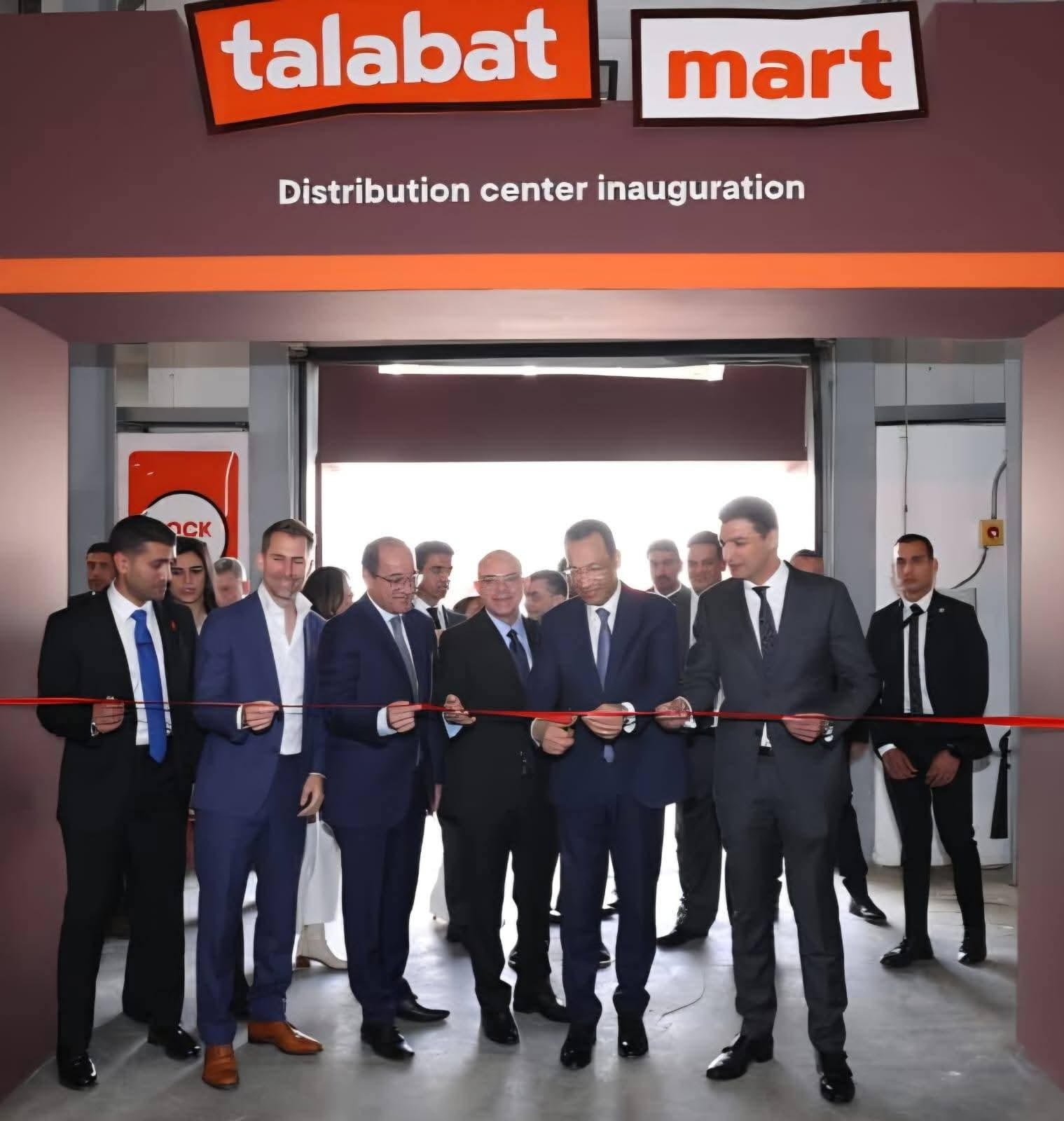
Egypt has taken a significant step in advancing its digital economy and logistics capabilities with the inauguration of the Middle East and North Africa's largest quick-commerce fulfilment centre, developed by Talabat Egypt.
www.dailynewsegypt.comDubai-based food-delivery giant Talabat has commissioned the largest AI-powered quick-commerce fulfilment center in MENA in Egypt. The opening ceremony was attended by Egypt's Communications Minister (representing the Prime Minister), Finance Minister, and Industry Minister — framing the hub as a national symbol of digital and logistics modernization.
The facility runs AI-driven demand forecasting, replenishment, picking flow, and last-mile routing, targeting Cairo as the launchpad for North Africa-wide rapid delivery. MENA's e-commerce market is projected to exceed $80bn by 2026, and Egypt now joins Saudi Arabia and the UAE as a major logistics hub. After India's Amazon Now and JioMart, the quick-commerce arms race in emerging markets has now reached the African continent.
Full article: Talabat Egypt opens MENA's largest AI quick-commerce hub — Cairo becomes the new pivot for the $80bn MENA logistics reshuffle
Huboo Acquires Sorted — UK Fulfillment Industry Consolidation Accelerates

Huboo announced it has acquired Sorted Group Limited, creating an integrated platform that spans fulfillment, shipping, returns, and delivery analytics.
pulse2.comUK fulfillment leader Huboo has acquired delivery-and-returns orchestration platform Sorted Group. The combined offering merges Huboo's warehouse and inventory operations with Sorted's multi-carrier shipping, returns, and delivery analytics, creating an end-to-end logistics platform spanning order to return.
UK's 3PL space has long been fragmented (IronMountain, ParcelHero, Selazar). As agentic commerce advances, demand for API-first platforms that automate fulfillment, shipping, and returns end-to-end is growing rapidly. Like Adyen × Talon.One (April 28), this acquisition reflects the broader consolidation push toward "single-API stacks for the agent era."
Payments & Fintech
PayU Partners with Flipkart and Axis Bank on Biometric Auth — Strengthening India's Agent-Payment Authentication

According to a recent LinkedIn post from PayU, the company is collaborating with Flipkart and Axis Bank on a new biometric card-payment experience called FlashPay.
www.tipranks.comIndia's payment PSP PayU, with Flipkart and Axis Bank, has rolled out fingerprint and facial-recognition checkout for Indian e-commerce. The trio aims to standardize biometric authentication in a market where OTP/SMS-based flows still suffer high abandonment rates.
This is a direct India-local manifestation of the FIDO Alliance trend covered above, harmonizing the identity step in agent-led delegated payments to a passkey-equivalent UX. Combined with Pine Labs × OpenAI, PayU × Flipkart, and Cashfree's recent moves, India is increasingly the global testbed for agentic commerce authentication and payments.
Drip Capital Surpasses $9 Billion in Trade Transactions — Cross-Border ECommerce Finance Scales
Drip Capital, a global financial technology company building infrastructure for trade finance and B2B commerce, has crossed $9 billion in trade transactions since its founding in 2016.
www.prnewswire.comSilicon Valley-based trade fintech Drip Capital has crossed $9bn in cumulative transaction volume. Drip provides credit, supply-chain finance, and accounts-receivable purchase to SMB exporters and importers across India, the US, and Mexico — addressing working-capital bottlenecks for global e-commerce sellers.
As cross-border e-commerce scales, demand for embedded finance covering credit, FX, customs, and compliance is rising. If agentic commerce accelerates cross-border transactions, the demand for embedded finance for global B2B commerce — Drip's domain — will only grow.
Global E-commerce Trends
Vinted Connects Germany and Austria Marketplaces — Valuation Reaches €8bn

Users of Vinted in Germany and Austria can now trade directly with each other. The platform is now valued at 8 billion euros.
ecommercenews.euLithuania-born resale marketplace Vinted has merged its Germany and Austria marketplaces, allowing users in both countries to list and buy across borders. The platform is now valued at €8bn (~$8.6bn), making it Europe's largest resale platform.
The EU has been simplifying VAT and shipping labels for cross-border P2P e-commerce since late 2025, and Vinted is leading the first wave of cross-border platform integration. Cdiscount, Allegro, and Zalando are expected to follow with their own moves toward a "single EU market for e-commerce."
Maryland Becomes First US State to Ban Dynamic Pricing

Maryland legislators have passed a bill to become the first state to ban dynamic pricing, which uses AI and other data to increase prices at stores.
blavity.comThe US state of Maryland has passed a bill banning dynamic pricing driven by AI and consumer data. Governor Wes Moore tweeted on April 14 that he "can't wait to sign it." This is the first state-level statutory ban in the US, applying to food retailers and third-party delivery providers, and prohibiting the use of personal consumer data to set prices.
As agentic commerce expands, AIs may increasingly tailor prices to individual purchase history, ability to pay, and interest signals. Maryland's law is the first legal ceiling on "AI-driven personalized pricing." Federal follow-up, alignment with GDPR/EU AI Act, and price-transparency implementation guidance for agent platforms will all shape merchants' pricing strategies broadly.
TransUnion Launches Digital Business Profile for SMBs

TransUnion (NYSE: TRU) launches Digital Business Profile, an affordable solution to help small businesses ensure their information is represented accurately across 80+ directories, maps, apps and social platforms.
newsroom.transunion.comCredit bureau TransUnion has launched the Digital Business Profile, a digitized identity-and-credit profile for SMBs. Once a profile is created, an SMB can submit it with one click to onboard at marketplaces, payments providers, and banks.
As agentic commerce moves toward "AI agents acting as business proxies in negotiation, contracting, and payment," standardizing identity for the merchant side becomes equally important. Alongside FIDO Alliance work on consumer-and-agent identity, the merchant-side identity layer is now scaling up.
AI Commerce Tools
Ahold Delhaize USA Expands Click2Cart with SmartCommerce — Direct Ad-to-Cart Pipelines
Ahold Delhaize USA partners with SmartCommerce to add Click2Cart across 5 grocery brands (Food Lion, GIANT, Giant Food, Hannaford, Stop & Shop), linking digital ads to online carts.
www.globenewswire.comUS grocer Ahold Delhaize USA (Stop & Shop, Giant, Hannaford, etc.) has expanded SmartCommerce's Click2Cart rollout. CTAs in digital ads, social posts, and recipe sites add products directly to the user's cart — following Instacart, Walmart, and Target's "ad-to-cart" playbooks.
In agent-era purchase flows, users will increasingly "ask the agent to buy" rather than "click an ad" — but during the transition, merchants must run parallel rails for human-clicked ads and agent-parseable ads. Ahold Delhaize USA's move is a textbook example of transition-era playbooks.
Closing Thoughts
April 29 was the day where protocol standardization and regional implementation moved together for agentic commerce. Ant International's AMP emerged as Asia's third pole, while Google's AP2 entered industry standardization at the FIDO Alliance. Combined with yesterday's UCP council expansion (Amazon, Meta, Microsoft, Salesforce, Stripe), the last week of April 2026 will likely be remembered as the protocol-tectonic week.
On the implementation side, Visa's official statement (Q1 FY26), Pine Labs × OpenAI, Talabat's Egypt opening, and Tata Communications' "43% piloting" figure all moved at once. Set against Riskified's "55% rejection of agent-led purchases," the three layers — technology, merchants, consumers — show merchants in the most advanced position.
Watchpoints for the days ahead: (1) early AMP implementations (especially Asia platforms like Lazada and Tokopedia), (2) the first draft spec from FIDO's Agentic Commerce TWG, and (3) federal and state-level reactions to Maryland's dynamic-pricing ban.