AI Commerce News Digest (June 3, 2026)
June 2 was the day Europe took the lead in agentic commerce, with PayPal, Worldline and Crossmint all launching live infrastructure on the same day. A daily digest of agentic and AI commerce news for e-commerce operators.

Key Takeaways
- June 2 was the day Europe's agentic payment infrastructure went live all at once. Hey Savi and PayPal launched the UK's first agentic commerce platform with in-app checkout, with Debenhams as the first retail adopter. The same day, Worldline and ING, together with Mastercard, executed Europe's first end-to-end agentic payment in a live production environment
- The layer that gives AI agents a card of their own is also taking shape. Crossmint launched an agentic card payments API built on Visa Intelligent Commerce and Basis Theory. Meanwhile, in the US, OpenAI shut down ChatGPT's Instant Checkout and pivoted to product-feed support in the ChatGPT Ads Manager
- The race to deploy AI shopping agents is spreading across Asia too. Naver upgraded its AI shopping agent with stronger personalization, Google expanded virtual try-on to APAC, and Amazon's Prime Day will let Alexa AI help power the cart—each platform competing to strengthen the shopping experience within its own AI ecosystem
Today's Top Stories
Hey Savi & PayPal Launch the UK's First Agentic Commerce Platform—Debenhams Is First Adopter
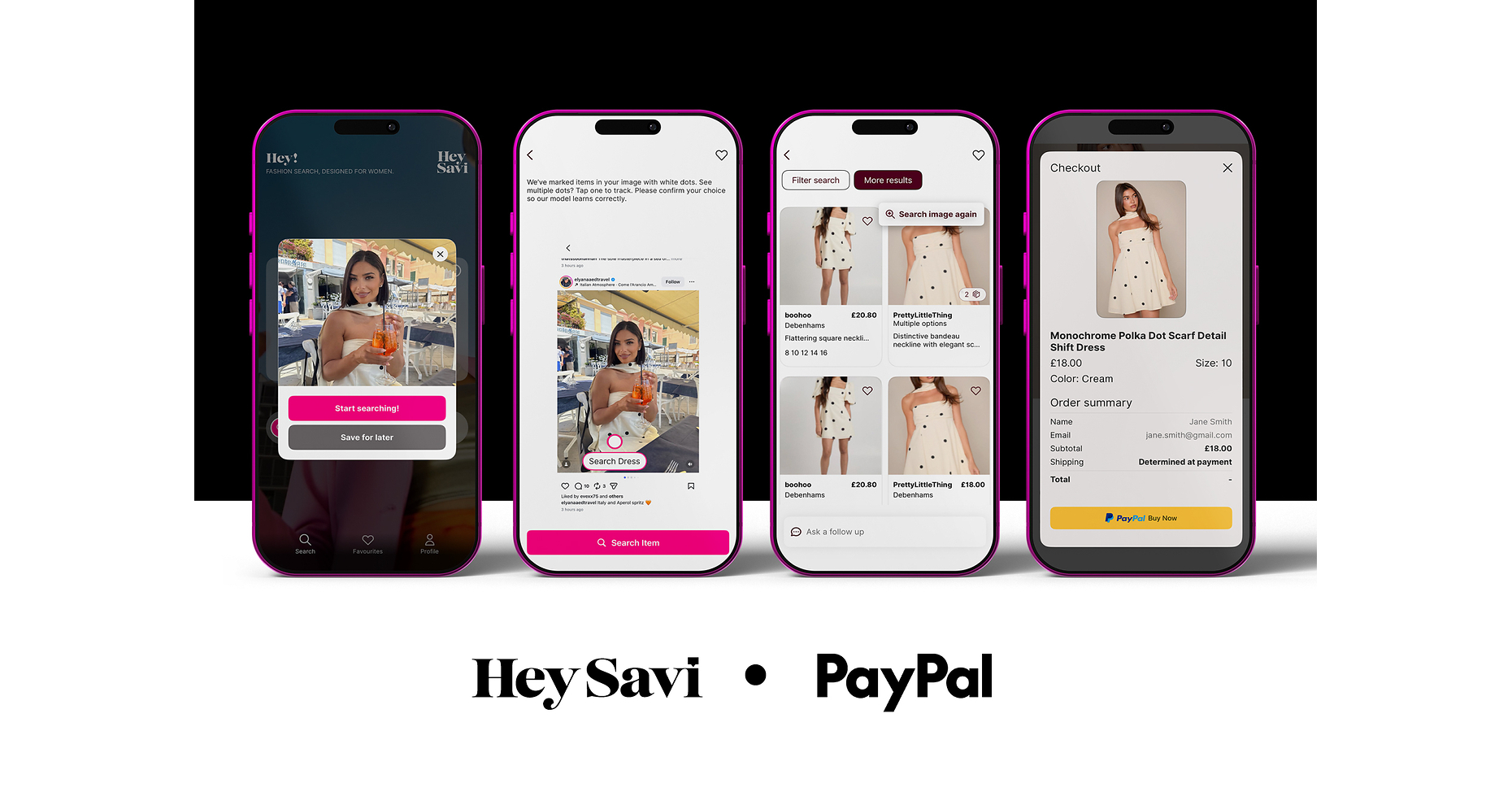
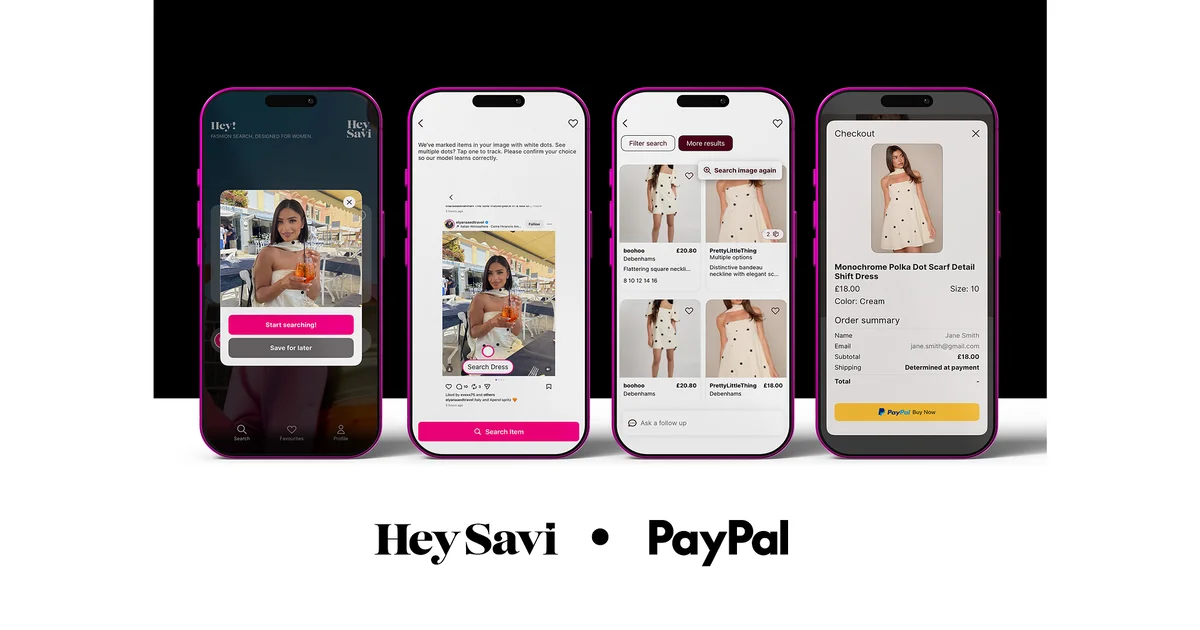
Hey Savi launched UK's first agentic commerce experience with native checkout powered by PayPal.
newsroom.paypal-corp.comUK AI shopping platform Hey Savi has launched what it calls the UK's first agentic commerce platform, with PayPal powering payments. Users can consult an AI about products inside the app and complete the purchase through native in-app checkout. Where AI shopping has mostly stopped at "suggest a product and send the shopper to an external site," folding checkout into the same flow is what's new here.
Britain's heritage department-store group Debenhams Group joined as the first retail adopter. An experience where the AI surfaces products in conversation and the shopper can pay the moment intent crystallizes—without leaving the app—has the potential to structurally reduce cart abandonment. For PayPal, this turns the agentic commerce vision it announced in October 2025 into a working checkout experience.
Full article: Hey Savi and PayPal launch the UK's first agentic commerce platform—what in-app checkout and the Debenhams debut mean
Worldline & ING Execute Europe's First End-to-End Agentic Payment in Production

ING, Worldline and Mastercard have carried out what they claim is Europe's first end-to-end agentic payment transaction.
www.finextra.comPayments giant Worldline and bank ING, working with Mastercard, announced that they have executed Europe's first end-to-end agentic payment in a live production environment. An AI agent initiated a transaction on the consumer's behalf and settled it using tokenized credentials—and crucially, this ran on operating infrastructure rather than in a test sandbox.
In agentic commerce, the key is guaranteeing "who delegated payment to this AI" and "whether the transaction reflects the user's intent." This transaction embedded Mastercard's agent tokenization and consent management, with Worldline handling merchant-side acceptance and ING handling the issuing and account side. Putting it into production while remaining aligned with European payment rules (PSD2 / Strong Customer Authentication) makes it a reference point for other European institutions.
Agentic Commerce
ChatGPT Ads Manager Now Supports Product Feeds—OpenAI's Pivot After Killing Instant Checkout
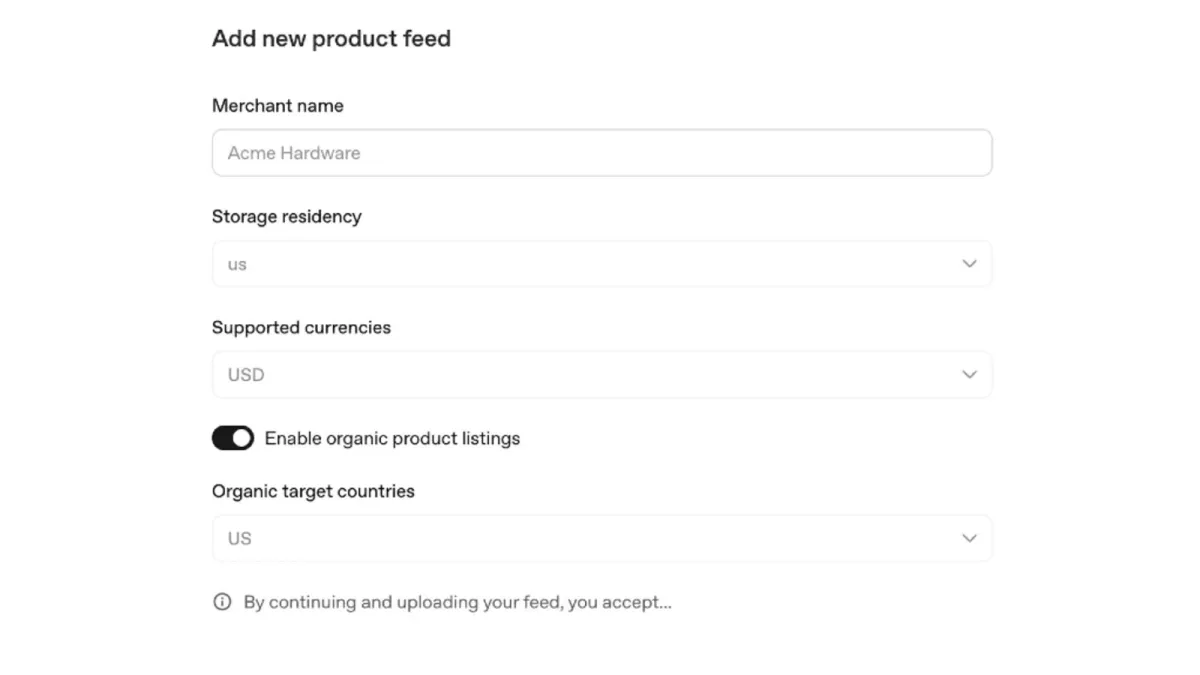
OpenAI migrated product feed management to the ChatGPT Ads Manager after instant checkout shut down in March, letting retailers auto-generate ads from catalogs.
ppc.landOpenAI has migrated product-feed management inside ChatGPT into the new ChatGPT Ads Manager. By uploading a product catalog, retailers can auto-generate ads shown within ChatGPT. What stands out is that this comes after OpenAI shut down Instant Checkout (in-ChatGPT checkout) in March.
It signals that OpenAI has shifted its center of gravity from a checkout-led path ("complete the purchase inside the conversation") to a discovery path ("get found inside the conversation, with exposure driven by ads and product feeds"). For e-commerce operators, building a structured product feed becomes a new optimization target for capturing discovery via ChatGPT.
Full article: ChatGPT Ads Manager supports product feeds—decoding OpenAI's commerce strategy after killing Instant Checkout
Crossmint Launches an Agentic Card Payments API Built on Visa Intelligent Commerce
Crossmint announced the public launch of its agentic card payments API using Visa Intelligent Commerce and Basis Theory.
www.prnewswire.comCrossmint, a stablecoin and wallet infrastructure provider, has publicly launched an "Agentic Cards API" for AI agents. Combining Visa Intelligent Commerce tokenized credentials with Basis Theory's agent credential layer, it lets developers issue and delegate Visa cards to AI agents.
The challenge in letting an agent handle payments is enabling it to transact safely—controlling spend limits and merchants—without handing over the raw card number. This API inserts PCI-compliant tokenization so the agent can execute transactions without directly holding card data. Agentic payments inside the Visa ecosystem have arrived as concrete building blocks developers can integrate.
Full article: Crossmint launches an agentic card payments API—how Visa Intelligent Commerce and Basis Theory enable AI payments
Naver Upgrades Its AI Shopping Agent with Stronger Personalization

Naver is enhancing its AI shopping agent to provide more personalized product recommendations to users.
koreabizwire.comKorea's largest platform, Naver, has revamped its AI shopping agent to strengthen personalized recommendations based on each user's purchase history and preferences. With search, commerce and payments all inside its own ecosystem, the AI agent becomes a core feature that bridges Naver's vast behavioral data to purchases.
In Korea, competition among platforms over agentic commerce is accelerating—from Kurly's acquisition of 1G Labs to moves by Coupang. Naver's upgrade is notable as a play by the holder of search traffic to seize the initiative in AI shopping.
Mastercard Argues Europe Is Building the Foundations for Trusted Agentic Commerce

Mastercard outlines how Europe is building trust, identity and standards to support agentic commerce.
www.mastercard.comMastercard published its perspective on building the foundations for "trusted agentic commerce" in Europe, arguing that an era in which AI agents handle transactions requires identity verification, consent and standardized authentication. Combined with Mastercard's technology being used in the same-day Worldline×ING production payment, the company's intent to own the trust layer for European agentic payments is clear.
AI Commerce Tools
Google Expands Virtual Try-On to Key APAC Markets

Google is expanding its AI-powered virtual try-on shopping experience to key Asia-Pacific markets.
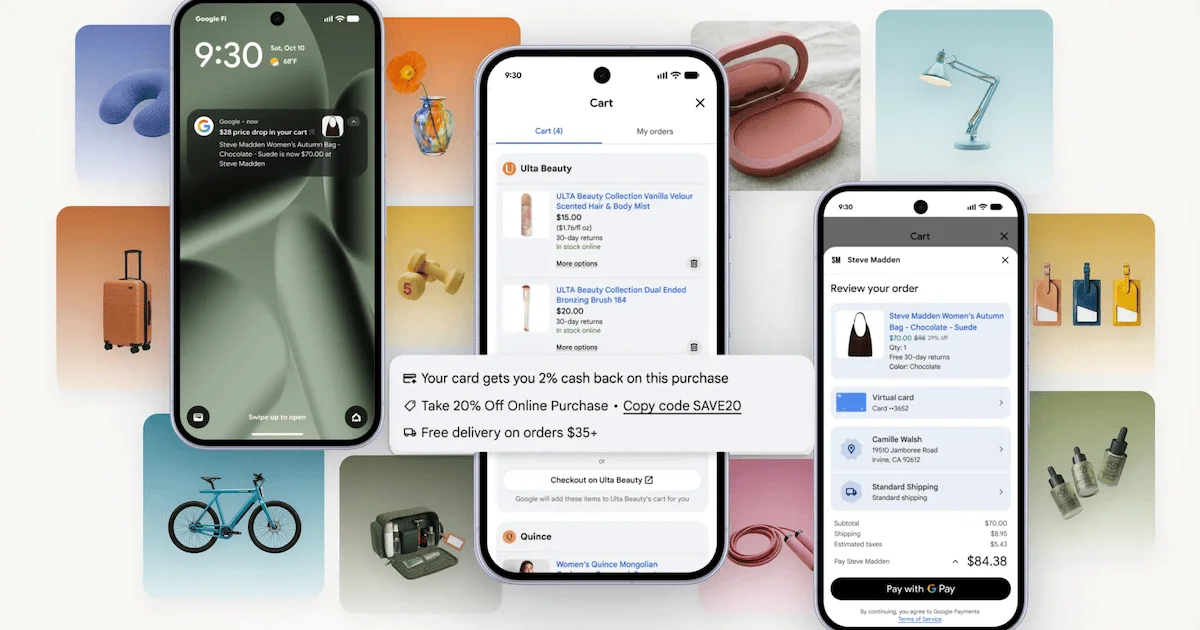
www.campaignasia.comGoogle has expanded its AI-powered virtual try-on feature to key Asia-Pacific markets. By uploading a photo of themselves, users can see a generated image of how an item of clothing looks on them—lowering the "I can't tell the size or look" barrier in fashion e-commerce.
Google is extending AI experiences across search, shopping and ads, and visual features like try-on are a way to keep product discovery inside the Google ecosystem. The APAC rollout affects Asian fashion e-commerce operators on both exposure and conversion.
Consumer Trends
Amazon Moves Prime Day to June—Alexa AI Powers Deal Guides and the Cart

Amazon Prime Day will run from June 23-26 with new Alexa AI features to help shoppers create personalized deal guides and get alerts on price reductions.
www.forbes.comAmazon announced that its 2026 Prime Day will move up from the usual July to June 23–26, running for four days. The headline this time is that a revamped Alexa AI will create personalized deal guides and price-drop alerts to support purchase decisions.
For Amazon, beyond the sale window itself, it increasingly matters that the AI assistant owns the entry point of "what to buy." An experience where Alexa bridges deal suggestions to the cart signals the arrival of an era in which AI agents shape conversion during major sales events.
Conclusion
June 2 symbolized agentic commerce moving from "vision and announcement" to "live operation." In Europe, PayPal, Worldline×ING and Crossmint all advanced the implementation layer on the same day, making payment infrastructure and trust mechanisms concrete. In the US, OpenAI shifted from checkout to advertising, and in Asia, Naver, Google and Amazon each strengthened shopping experiences within their own AI ecosystems.
For e-commerce operators, the questions are converging on two points: preparing product data so AI agents can "find" you, and deciding which infrastructure to run AI-driven payments on. We'll be watching the expansion of Europe's production cases and the implementation race across platforms.