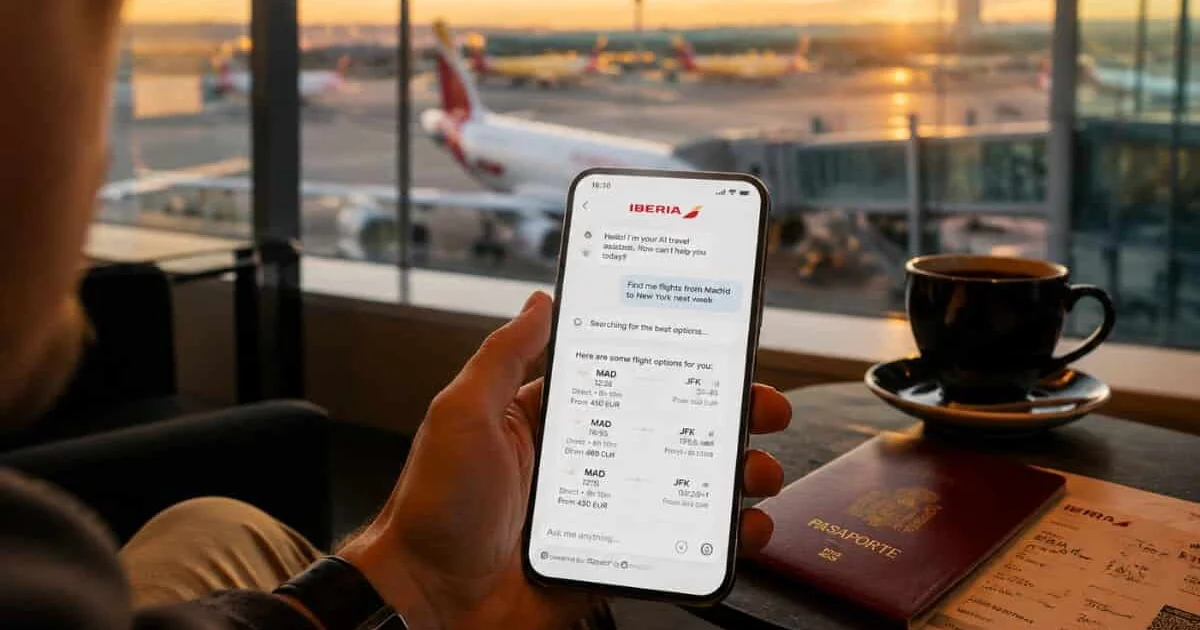
AI Commerce News Digest (June 19, 2026)
Alchemy connected its AI agent payments to Visa, China's 618 festival closed with AI rising over discount wars, and Target, Moneris and Meta moved to optimize for agent-driven transactions. A digest of the key agentic commerce news from June 18, 2026, with practical takeaways for online retailers.

Key Takeaways
- Alchemy's AI agent card connected to Visa Intelligent Commerce, taking shape as a payment layer that hands an AI agent both an identity and a wallet through a single API.
- China's mid-year 618 festival closed amid weak demand, making clear a structural shift in which redesigning the buying experience with AI matters more than discount wars.
- Target and Moneris built on-ramps for AI agent connectivity, Meta strengthened AI-led product discovery, and Fime proposed its FACT framework for verifying whether an AI agent buys what the user really asked for.
The agentic commerce news on June 18 was a day when the foundations for letting AI agents handle transactions stacked up at once across payments and retail. Alchemy and Visa bundled identity verification and execution for payments, and in China's 618 festival, AI emerged as a point of differentiation in place of price cuts. Target and Meta prepared to have their products correctly found by AI agents. In today's digest, we cover the two headline items in detail, then organize the key news across agentic commerce and corporate moves.
Today's Top News
Alchemy connects its AI agent payment stack to the Visa network

Blockchain infrastructure platform Alchemy integrated its artificial intelligence-powered agent card with Visa Intelligent Commerce.
www.pymnts.comAlchemy, which builds blockchain infrastructure, announced it has integrated its agent card for AI agents into Visa Intelligent Commerce. As a result, an AI agent can receive both an identity, such as an email address or phone number, and a wallet, such as a Visa token or crypto wallet, through a single API at the same time.
What stands out is a design that handles identity verification and payment method together when an AI agent executes a payment. Using Visa's tokenization, payments can be made without exposing the actual card number, and spend controls such as usage limits can be built in. Automatic fallback is provided for the proliferating payment standards such as x402 and Trusted Agent Protocol.
Following Visa's move at its Payments Forum on June 15, the competition over who controls the "rails" for agent payments has become even more concrete. The payment reliability that is a prerequisite for letting AI shop on your behalf is rapidly falling into place.
Full article: Alchemy's AgentCard connects to Visa Intelligent Commerce, providing an AI agent's identity and wallet through one API
China's 618 festival closes with AI in the lead amid weak demand

China's second-biggest shopping festival is drawing to a subdued close, underscoring weak consumer confidence and government pressure on e-commerce platforms to disengage from excessive discounting.
www.reuters.comChina's second-largest shopping festival, 618, came to a quiet close, reflecting weak consumer demand. According to Reuters, in addition to soft consumer sentiment, government pressure on major e-commerce players to step back from excessive discount competition contributed to this year's subdued result.
It was AI that grew its presence against that headwind. Alibaba used AI to redesign the buying experience and product recommendations, trying to stimulate demand without cutting prices. The traditional protagonist of discount wars has receded, and experience design powered by AI is moving to the front as a new axis of differentiation.
That the axis of competition is starting to shift from "cheapness" to "AI experience" in one of the world's largest e-commerce markets overlaps with the global trend toward agentic commerce.
Full article: China's 618 festival, with AI taking the lead amid weak consumption — a turning point from price competition to "AI commerce"
Agentic Commerce
Target opens its catalog to third-party AI agents

Read all about Target Details Third-Party AI Commerce Initiatives in this article from HomePage News.
www.homepagenews.comTarget, a major U.S. retailer, detailed a "third-party AI commerce" initiative that opens its product catalog to external AI agents and AI platforms. The aim is to let shoppers discover and buy Target products via leading AI surfaces such as Google, Microsoft Copilot and ChatGPT.
Behind this is the reality that traffic via AI agents has surged from a year earlier. Target is also a participant in the open Universal Commerce Protocol (UCP), and it is advancing standardized work to make AI correctly understand its product data. Following Walmart and Amazon, the move shows that retailers are now seriously incorporating AI as a new sales channel.
Moneris launches an MCP server for agentic commerce

Moneris Solutions Corporation, a leader in Canadian commerce solutions, announced the launch of the Moneris Model Context Protocol server.
www.newswire.caMoneris, a major Canadian payment processor, launched an MCP (Model Context Protocol) server as a foundation for secure agentic commerce. MCP is a common standard for AI agents to safely interact with external tools and services.
Through this server, AI agents can connect to Moneris's payment capabilities in a standardized way. It is a case of a payment processor itself building the on-ramp for agent connectivity, and like the efforts of Alchemy and Visa, it shows that the "plumbing" for letting AI handle payments is being laid in many places.
Such infrastructure work in the Canadian market is expected to lower the barrier for regional mid-sized players to enter agentic commerce.
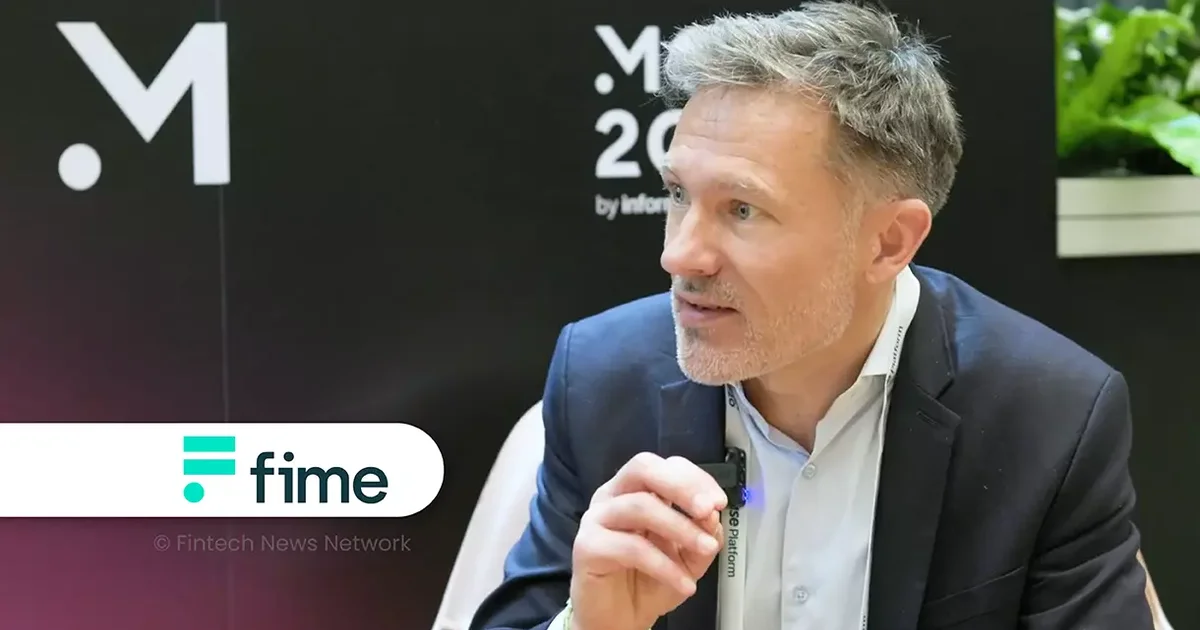
Fime's "FACT" framework checks whether AI buys what you really asked for

Fime CEO Lionel Grosclaude explains why trust, not just payment execution, could decide how far agentic commerce can scale.
fintechnews.sgFime, which provides testing and certification, proposed a framework called "FACT" to verify the trustworthiness of agentic commerce. CEO Lionel Grosclaude argues that rather than the ability to execute payments itself, the question of trust — whether an AI agent buys as the user intended — will decide the ceiling for adoption.
In a world where AI autonomously selects products and completes payment, the risk of "buying something different from what was requested" becomes real. FACT is an attempt to organize the perspective of verifying whether an agent's judgment matches the actual purchase result. Alongside building payment rails, a mechanism to guarantee the "correctness" of agents has emerged as a point of debate.
Corporate Moves and Partnerships
Meta unveils AI-led commerce and discovery tools at Cannes 2026

Meta has announced a new suite of commerce and advertising innovations designed to transform how consumers discover and purchase products.
www.medianews4u.comMeta announced a new suite of commerce and discovery tools to accelerate AI-led shopping experiences, timed to the Cannes Lions 2026 advertising festival. Through live video ads, affiliate features and AI-powered ad tools, it redesigns the path from discovery to purchase.
With social platforms holding vast user touchpoints, the aim is to strengthen the starting point of product discovery with AI. It is a move that shows feeds and videos on social media, not just search and chat, are becoming entry points for AI commerce.
WPP Enterprise Solutions partners with AWS on agentic AI

The multiyear strategic agreement will put AWS' agentic AI tools in the hands of WPP's business transformation experts.
www.adweek.comThe Enterprise Solutions division of advertising giant WPP signed a multiyear strategic partnership with AWS. It builds a structure in which WPP's business transformation experts implement AWS's agentic AI tools for major brands.
The move to embed AI agents into brands' marketing and operational processes is taking off in earnest as collaboration between agencies and cloud providers. Foundational work to support the companies that "use" agentic commerce is advancing.
Shopify on AI traffic tracking and a "built-in AI agency" vision (follow-up)

The ecommerce giant is also bringing ads to ChatGPT and Microsoft.
www.adweek.comThis is a follow-up to Shopify's "Spring '26 Edition," which we covered in depth the previous day. Shopify reportedly aims to become a built-in AI agency for merchants and will also offer features to place ads on ChatGPT and Microsoft.
Alongside this, it introduced tools that let merchants track sales and traffic via AI platforms. As inflows via AI grow to a scale that cannot be ignored, building the measurement foundation to visualize that effect is becoming a new competitive arena on the platform side.
Mercari launches a new standalone app in the U.S.

Mercari, Inc. of Japan today announced the launch of Mercari Japan, a new standalone app available in the United States.
www.prnewswire.comMercari, the Japan-born marketplace app, launched a new standalone app called "Mercari Japan" for the U.S. market. As a separate app from its existing U.S. marketplace, the aim is to expand an ecosystem that delivers Japanese goods to American consumers.
In the context of cross-border e-commerce, it is a case of a Japanese marketplace taking its overseas expansion a step further. Advances in AI translation and product discovery are also expected to work in the direction of lowering the friction of such cross-border trade.
Conclusion
What emerges across today's news is a picture in which the "foundations" for entrusting transactions to AI agents are rapidly being built in payments and retail. Alchemy and Visa advanced payment reliability, while Target and Moneris advanced the on-ramp for connectivity.
At the same time, the trust question Fime raised — "did the AI really buy what was asked for" — is a key point that will determine the pace of adoption. The more the rails are laid, the more the "correctness" of the agents running on them is called into question. From tomorrow onward, attention is likely to focus on both the standardization of payment protocols and the mechanisms for verifying agents' judgments.