AI Commerce News Digest (June 22, 2026)
A digest of agentic commerce news for June 22, 2026: Amazon's Prime Day AI shift, Adobe's move into commerce media, Adyen as a payment translation layer, and Korea's quick commerce market and food delivery war.

Key Takeaways
- The June 22 headlines show AI agents seeping into every layer of commerce at once, from retail promotion and advertising through to payment and delivery infrastructure.
- Amazon's Prime Day pull-forward and Adobe's move into commerce media both read as big-player preparation for an era in which AI discovers and recommends products.
- From Adyen's "translation layer" concept in payments to the growth potential of Korea's quick commerce market, agentic commerce is clearly extending into the payment and logistics infrastructure layers.
Good morning. Here is your digest of agentic and AI commerce news for June 22, 2026. Today, three currents surfaced at the same time: large retailers redesigning their promotion and advertising models, payment infrastructure turning into a translation layer, and Asia's quick commerce market expanding. The three highest-interest stories also have their own deep-dive articles.
Redesigning the Promotion and Advertising Models of Large Retailers
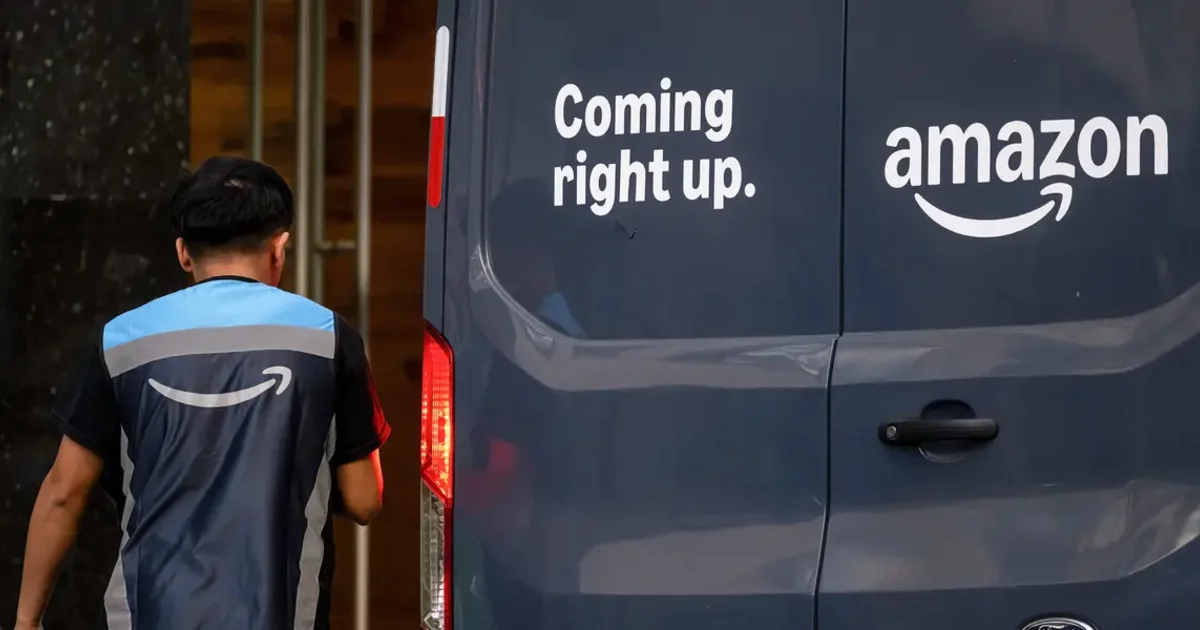
Amazon pulls Prime Day forward by a month — the twin pressures of AI shift and membership saturation
Amazon Prime Day has maxed out the addressable market for its membership, so it's changing its Prime Day strategy.
www.businessinsider.comAmazon moved Prime Day from its usual July slot to June 23–26, and Bloomberg framed the change within the context of an AI shift. Business Insider points to a structural problem: Prime membership is nearly saturated in the US addressable market, so Prime Day is reaching its limit as a tool for acquiring new members. The role of the sale is becoming layered — from "grow membership" to "raise purchase frequency among existing members," and further into an experimentation ground for AI-led discovery and buying via Rufus, now Alexa for Shopping. For sellers, other marketplaces, and D2C brands, the challenges are product-data quality and the shift from search optimization to AI optimization (AEO).
Full article: Amazon Pulls Prime Day Forward to June — How the AI Shift and Membership Saturation Are Changing What a Sale Means
Adobe opens its AI tools for free and moves into commerce media
Adobe is shifting to a freemium AI model across its creative tools and launching Brand Visibility and GenStudio for Commerce Media Networks.
finance.yahoo.comAdobe is moving generative AI tools such as Firefly to a freemium model while launching two new services aimed at agentic commerce. Brand Visibility measures how a brand appears in ChatGPT and AI search in an era when AI recommends products, and GenStudio for Commerce Media Networks generates retail-media ad creative with AI. The free release also serves as a defense against the rise of image and video generation from the likes of OpenAI. For brands and retail-media operators, it raises a new question: managing visibility in the AI era.
Full article: Adobe Moves into Commerce Media — Brand Visibility and GenStudio for the AI-Search Era
eBay updates Seller Initiated Offers

eBay shared recent updates it made to its Seller Initiated Offers feature during a webinar about Summer Marketing Tactics.
www.ecommercebytes.comDuring a webinar on summer marketing tactics, eBay shared improvements to its Seller Initiated Offers feature, which lets sellers propose discounts to buyers. Behind the flashy AI news from the large platforms, steady improvements to selling tools like this also shape seller efficiency. As negotiation automation and offer personalization advance, how far such existing features become AI-enabled is worth watching.
Payment Infrastructure and Asia's Quick Commerce Market
Adyen aims to be the "universal translator" of agentic commerce

The evolution of digital commerce has arrived at a critical structural pivot.
www.finextra.comOn Finextra, Sam Boboev published an analysis positioning Adyen as the "universal translator" of agentic commerce. When AI agents transact across diverse purchase surfaces, payment methods, and regional regulations, a translation and intermediation layer is needed to absorb those differences. The argument is that Adyen's single platform — spanning acquiring, processing, and settlement end to end — is structurally well suited to this translation role. For merchants and payment teams, it offers a new lens for preparing for agent-led payments and selecting a processor.
Full article: Why Adyen Is Becoming the "Translation Layer" of Agentic Commerce — A New Role for Payment Processors
Korea's quick commerce market has room to grow to 15 trillion won

BCG Korea partner Lee Seok-hyung says Korea's quick commerce market holds potential to grow threefold to around 15 trillion won.
en.sedaily.comLee Seok-hyung, a partner at BCG Korea, noted that Korea's quick commerce market — currently worth 4.4 to 5 trillion won — has the potential to grow roughly threefold to around 15 trillion won. Quick commerce pairs well with AI-driven demand forecasting, inventory placement, and delivery optimization, making it a physical foundation for the spread of agentic commerce. Intensifying quick-commerce competition in Asia shows that the infrastructure for AI to decide "when, what, and where" to deliver is steadily being built out.
Coupang steps up its offensive in Korea's food delivery war
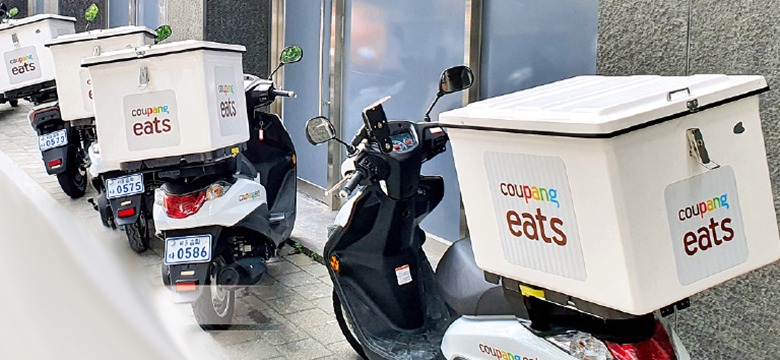
Coupang Inc. has stepped up its offensive against a food delivery rival backed by Germany's Delivery Hero SE.
www.kedglobal.comNYSE-listed Coupang is intensifying its push in Korea's food delivery market against a rival backed by Germany's Delivery Hero. The Korean market, where e-commerce, quick commerce, and food delivery converge, is an advanced arena where AI-driven delivery-network optimization and personalization are fiercely contested. Together with the quick commerce growth potential above, it reveals how Asia's on-demand economy is accelerating the implementation of agentic commerce.
Conclusion
Running through today's news is a single current: AI agents are seeping vertically from the "discovery and recommendation" layer of commerce into the "promotion and advertising" and "payment and delivery" layers. Amazon redesigning promotion in the face of membership saturation, Adobe productizing visibility, and Adyen targeting the translation layer of payments — each can be read as a move to redefine one's own role on the premise that AI will handle transactions. We will be back tomorrow with the latest in agentic commerce.