Why Viator Holds Shelf Space in Both ChatGPT and Claude: A Kyoto Trip-Planning Test as an AI Commerce Case Study
A Tom's Guide test had ChatGPT and Claude plan a seven-day Kyoto trip through their Viator integrations. We read it as an AI commerce case study: how one structured catalog earns placement across AI channels, why checkout stays with the merchant, and what retailers should prepare.

Key Takeaways
- In June 2026, a Tom's Guide writer had ChatGPT and Claude each plan a seven-day, 3,500-dollar Kyoto trip through their Viator integrations and compared the quality of the proposals
- The same Viator catalog runs in ChatGPT as an "app" and in Claude as an MCP-based "Connector," making this a working proof that a merchant that opens structured product data can hold shelf space across multiple AI channels at once
- Discovery and recommendation are moving into the conversation while booking and payment are handed back to the merchant, so machine-readable catalogs and a checkout experience ready for AI-referred traffic are the shared preparation for retail and e-commerce
A Storefront Appears Inside the Chat

Mapping out my future week-long stay in Kyoto
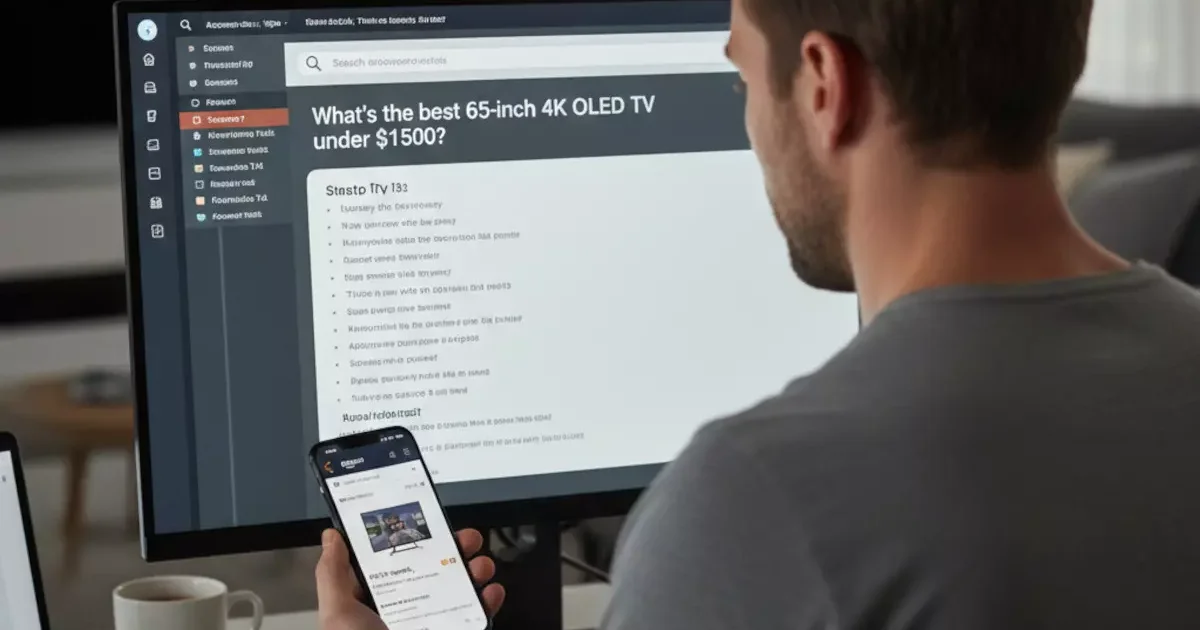
www.tomsguide.comOn June 21, 2026, Tom's Guide writer Elton Jones published a head-to-head experiment: connect Viator to both ChatGPT and Claude, and have each plan a seven-day solo trip to Kyoto. Viator, part of Tripadvisor, is a booking platform for tours and activities worldwide. Both AIs received the identical prompt — act as an elite travel advisor and rank the most memorable Viator experiences by value against the stated budget and interests. The brief was specific: 3,500 dollars, with interests spanning video games, food, wrestling, vinyl shopping, anime, and photography.
This article reads the test not as a chatbot ranking but as a working case study in AI commerce. AI commerce means selling in which generative AI and conversational agents handle the journey from product discovery to purchase; the stage where the AI carries out comparison and transactions on the user's behalf is called agentic commerce. What the experiment surfaces is the current state of play: how a merchant's catalog behaves as a storefront inside an AI chat, and how much of the transaction actually completes within the conversation.
A travel experience is a product much like a physical SKU, carrying attributes such as price, inventory, ratings, and duration. The Viator case lets us observe, at the level of lived usage, what happens to a merchant that structures its product data and opens it to the outside.
How One Catalog Reached Two AI Channels
Viator did not appear in both AIs by accident. At its October 2025 developer conference, OpenAI announced the Apps SDK and opened up "apps" that run inside ChatGPT conversations. In travel, Expedia and Booking.com were among the first partners, and Viator operates as a ChatGPT app on the same rails.
Anthropic, for its part, added 15 everyday-life services to Claude's Connectors on April 23, 2026, a list that includes Tripadvisor and Viator. Connectors are built on MCP, the Model Context Protocol — a common specification for linking AI to external data and tools, which lets a compliant service plug in without a bespoke integration per AI. The Viator connector runs on this foundation, returning tour ratings, prices, and availability in response to natural-language queries.
What deserves attention is what Viator actually brought to the table: star ratings, review counts, durations, per-person prices, availability. By opening a catalog with these attributes in machine-readable form, the same product data went on display in two separate storefronts, ChatGPT and Claude, at the same time. Rather than building out each channel by hand, the structured catalog itself is the ticket of admission to multiple AI channels. That structure maps directly onto any retail or e-commerce business that holds product and inventory data.
The Results: Even on Candidates, Split by the Agent's Curation
So how did the test go? ChatGPT's Viator app pulled candidates straight from the live database, presenting them with star ratings, review counts, durations, and prices. Four picks rose to the top: a private Kyoto tour, a Nishiki Market brunch walk, a Gion geisha-district walking tour, and a Gion night foodie tour. Claude's connector returned an equally broad slate — cooking classes, theater, culinary tours — likewise with ratings and prices attached. At the candidate-listing stage, the writer judged the two roughly even.
The gap opened after that. Claude did not merely list options; it edited them into a Kyoto "playbook," an itinerary that folded in picks such as a roughly 89-dollar ramen experience rated 4.97 across more than 2,400 reviews. It then stepped beyond Viator's catalog, adding a day trip to Osaka for the Super Potato retro-gaming store, a tour of Kyoto record shops, the Kyoto International Manga Museum, and a combat-sports event. The writer credited both AIs with strong picks but chose Claude's experience for designing the itinerary and leaning into his hobbies.
For merchants, the important point is that this gap was not a gap in Viator's data. Hand two agents the same catalog, and which products get chosen, how they are ordered, and what they are combined with is left to the AI's editorial judgment. The presentation of products — the merchandising initiative that merchants controlled in traditional e-commerce — shifts to the agent in AI channels.
Being connected and being chosen are also separate problems. In a follow-up test published by Skift on July 6, 2026, ChatGPT repeatedly refused at first to use Booking.com, Expedia, and Viator apps even after they were connected, while Claude reportedly used its connectors with little friction. Even after your products are on the AI shelf, whether they are actually referenced depends on platform behavior. That uncertainty is the opening chapter of a new discipline: visibility in AI channels.
Why Booking and Payment Stay Outside the Conversation
The other key observation is that the writer never booked a tour. The piece closes with his intent to keep Claude's advice in mind when the time comes to travel. The AI handled the narrowing and the itinerary design, and the purchase stayed on the merchant's side of the line. That is not a coincidence; it reflects how AI commerce is structured today.
In March 2026, OpenAI pulled back its in-chat "Instant Checkout" and pivoted to routing users to merchants' own apps and sites. Skift covered the reversal as news that had investors in Expedia and Booking Holdings breathing a sigh of relief. The numbers back it up. According to CNBC, Walmart confirmed that conversion rates for products sold directly in the chat ran three times lower than when users were rerouted to the retailer's own site, and a cited survey found only 22 percent of U.S. consumers had ever bought a product inside an AI tool.
Anthropic's design points the same way. The connector announcement states that Claude is designed to check with the user before it books or purchases anything on their behalf. For the Tripadvisor and Viator integrations, PhocusWire reports that completing a booking is handed off to the two companies' own sites.
The nature of travel as a product reinforces the boundary. Inventory entangled with dates, party sizes, and cancellation rules is harder to finalize than a single physical item, and the cost of a wrong automatic confirmation is high. Discovery and recommendation in the conversation; confirmation and payment on the merchant's infrastructure. This division between discovery and checkout is settling in as the practical answer until payment delegation and identity verification mature.
What Retail and E-commerce Operators Should Take Home
The first lesson is that structured product data is the condition for shelf placement. Every candidate the two AIs surfaced in the test carried decision-ready attributes: ratings, review counts, durations, prices. Products described only in images and prose, thin on machine-readable attributes, struggle to make the agent's comparison table. Getting product data agent-ready is not a play for any single platform; it is a shared investment that works across AI channels simultaneously.
Second, operations need to assume the presentation initiative has moved to the AI. The same catalog produced different experiences in ChatGPT and Claude, and a connected app can still go unused. Monitoring how your products are presented and selected in each AI channel is becoming routine work — the equivalent of tracking search rankings, but for shelf space in the AI era.
Third, checkout remaining with the merchant is better read as an opportunity than a burden. Visitors arriving from an AI have already compared and narrowed their options before they reach your checkout. The purchase experience, membership sign-up, and post-purchase relationship remain in the merchant's hands. The more discovery is delegated to AI, the more the quality of that receiving funnel — and the ability to measure AI-referred traffic — becomes the variable that separates outcomes.
Conclusion
This experiment, handing a Kyoto trip to ChatGPT and Claude, showed that a merchant that opens a structured catalog can hold shelf space across multiple AI channels at once, and that with identical data, the quality of the experience is decided by the agent's curation. Booking and payment, meanwhile, remain on the merchant's infrastructure — a boundary underscored by the retreat of Instant Checkout and by measured conversion data. Shape product data so machines can read it, watch how it appears across AI channels, and polish your own checkout as the receiving end. This shift played out early in travel, and it is coming to every retail and e-commerce business that holds products, inventory, and customer data in the same order.