AI Commerce News Digest (June 29, 2026)
A roundup of the latest AI commerce news: Woolworths going fully agentic with judge agents, WhatsApp commerce spreading in Oman, KISA's C2C dispute response, and AI forcing affiliates to innovate.


Key Takeaways
- Australian retail giant Woolworths is making its loyalty-app AI fully agentic, with eight automated "judge" agents vetting every response before it reaches customers
- In Oman, WhatsApp-based conversational commerce is spreading among small businesses on the back of AI, while South Korea's KISA pushes to unify dispute-resolution standards for C2C transactions
- The spread of AI search is costing affiliate operators both traffic and attribution at once, forcing an "innovate or die" overhaul of their business model
Today's Top Story
Woolworths Makes Its Loyalty-App AI Fully Agentic, Backed by Eight "Judge" Agents
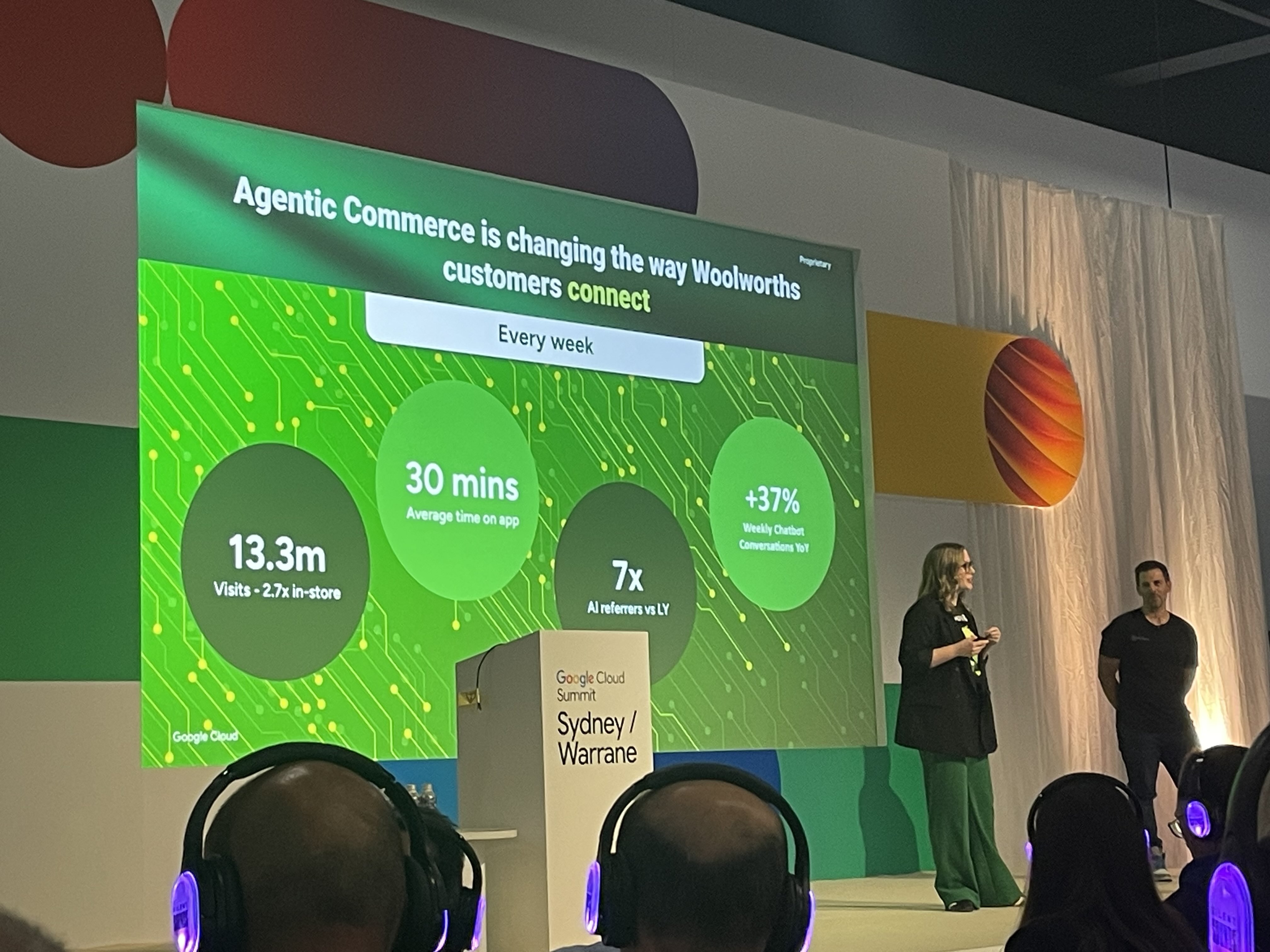
Woolworths has disclosed plans to upgrade Mandy - the AI assistant embedded in its Everyday loyalty, mobile, and insurance products - to a fully agentic system.
letsdatascience.comWoolworths, Australia's largest retailer, has revealed plans to rebuild Mandy, the AI assistant inside its Everyday loyalty app, into a fully agentic system that completes tasks autonomously. Its sibling assistant Olive, already live for customer service, now handles more than 70 percent of contact-centre interactions and moves from staff preview to consumer availability in July.
What stands out is the operational design for quality assurance. Woolworths built eight dedicated agents it calls "agentic judges" that automatically check every Olive response before it reaches a customer. A "number cruncher" recalculates any math, a "product detective" verifies legal and food-safety compliance, and a "goal judge" confirms the agent actually completed its task. This layered review suppresses hallucinations. Both assistants run on Google Cloud's Gemini Enterprise for Customer Experience (GECX).
The hardest part of putting AI agents into production is not accuracy but governance. Woolworths offers a concrete architecture in which one AI vets the output of another, providing a template for retailers weighing agent deployment.
Full article: Woolworths Goes Fully Agentic: How Eight 'Agentic Judges' Vet Every AI Response in Production
Agentic Commerce
WhatsApp Becomes Oman's New Shopfront as AI Turns Messaging Apps into Full Stores

A growing number of Omani businesses are turning the messaging apps already on customers' phones into fully fledged online stores.
www.omanobserver.omIn Oman, a growing number of businesses skip dedicated ecommerce sites and apps, using the WhatsApp already on customers' phones as their shopfront. This conversational commerce, where product questions, orders, and payment guidance all happen inside a chat, is spreading especially among small businesses.
AI is accelerating the trend. By letting generative AI handle automated replies, stock checks, and order collation, even small operators without dedicated staff can offer round-the-clock service and lose fewer sales. Not requiring customers to install a new app also speeds adoption.
In the Middle East and emerging markets, layering AI service onto a messaging app that already functions as everyday infrastructure often beats building a standalone store. It shows that the starting assumptions for platform choice differ by region.
Global E-Commerce Trends
South Korea's KISA Tackles a Surge in Peer-to-Peer Disputes, Filling a 30,000-Case-a-Year Protection Gap

As peer-to-peer secondhand transactions emerge as a blind spot in consumer protection, the Korea Internet & Security Agency accelerates its response framework.
www.asiae.co.krThe Korea Internet & Security Agency (KISA) is stepping up its response to a surge in disputes over peer-to-peer (C2C) secondhand transactions on resale platforms. According to officials, each dispute may involve only a small sum, but they total 20,000 to 30,000 a year, and protection mechanisms have not kept pace with the market's explosive growth.
Peer-to-peer trade has long been a "blind spot" in existing consumer protection. Because buyer and seller hold equal status, consumer protection rules rarely apply, and oversight is split across different ministries and legal principles. KISA is unifying dispute-resolution standards that were previously scattered across organisations and pairing them with an autonomous resolution system in which platforms mediate first.
As AI agents move toward transacting on people's behalf, the institutional design of who bears responsibility and how disputes are resolved is a shared global challenge. Efforts in C2C, the least-protected segment, are instructive for thinking about the trust foundations of agentic transactions.
AI Commerce Tools
AI Forces Affiliates to "Innovate or Die" in the Zero-Click Era

AI is forcing commerce publishers to innovate, which in turn is providing better affiliate partners for ecommerce merchants.
www.practicalecommerce.comAffiliate operators, the commerce publishers who guide readers to purchases through reviews and comparison articles, are being forced to overhaul their model by AI. The long-winning recipe of ranking on Google and funnelling intent-driven searchers to merchants for a commission is breaking down as AI search and AI shopping tools spread.
The biggest blow is a double loss of traffic and attribution. When AI answers shopping questions directly in results and compares and recommends products without sending shoppers to an article, no referral or measurement happens even if AI drew on that article. In response, some publishers are using AI agents to unify fragmented reporting tools, making visible which pages actually generate revenue and informing decisions to update, promote, or consolidate.
AI is both a threat and a productivity weapon, through product-data ingestion and content scaling. For merchants, a selection-and-upgrade dynamic emerges: publishers who survive become higher-quality affiliate partners.
Conclusion
Today's news shows AI agents moving from the stage of "transacting on our behalf" to the stage of implementation and institutional design: how they are operated and who bears responsibility. Woolworths' judge-agent governance and KISA's C2C dispute work are both new rule-making around transactional trust. Meanwhile, the spread of WhatsApp commerce in Oman and the model overhaul facing affiliate operators reflect how AI is rewiring sales channels and the pathways of discovery themselves. From here, the question to watch is how concretely each operator can translate this operational governance and channel redesign into working systems.