
AI Commerce News Digest (September 3, 2026)
Measuring AI-driven revenue moved on three fronts in a single day. NIQ and Similarweb partner on measurement, Spreedly treats good bots as a revenue channel, and AfterShip hands post-purchase work to agents, plus the rest of the September 3 retail and AI commerce news.


Key Takeaways
- NIQ and Similarweb are partnering to build measurement that links AI-driven product discovery to verified retail sales
- Spreedly argues good bots should be treated as a revenue channel rather than blocked, citing high conversion from LLM-referred sessions
- Mastercard research finds only 10% of consumers accept fully autonomous purchases, making trust the main bottleneck
Here is the AI commerce news for September 3, 2026. Today the same question, how to measure and how to receive AI-driven revenue, moved on three separate layers at once: measurement, payments, and post-purchase. Yesterday we covered EMVCo's agentic payments framework on the standards side, and today the operational problems merchants face before those standards land are the more visible story. Consumer research adds a counterweight, showing that the gap between letting AI research a purchase and letting AI pay for it remains wide.
Top Stories
NIQ and Similarweb partner on measuring AI-driven purchases

NIQ and Similarweb help brands measure AI-driven discovery, traffic, conversion and sales in the agentic commerce era.
nielseniq.comNIQ, which holds retail point-of-sale data, and Similarweb, which holds digital behavioral data, announced on September 2 that they will jointly develop an agentic commerce measurement solution. An initial version is planned for the fourth quarter of 2026.
NIQ launched Commerce Lab, a unit dedicated to AI commerce measurement, in April 2026, and this partnership extends that work. The two companies named five measurement areas: what consumers are asking AI assistants, how a brand's products appear among the options an AI presents, whether product content is structured well enough for AI to understand it, AI-driven traffic, and how AI-influenced touchpoints translate into actual purchases. Pairing panel estimates with POS data is meant to fill the paths that clicks alone cannot trace.
Given that only a small share of merchants can currently identify AI-driven revenue, the partnership targets a genuine blank spot. Pricing, the categories and markets covered by the initial version, and availability in Japan are all undisclosed.
Full article: NIQ and Similarweb Partner on AI Purchase Measurement, Agentic Commerce Measurement Due Q4 2026
Spreedly argues good bots belong in the revenue column

Spreedly's Adam Hiatt shares why, in agentic commerce, some bots may arrive carrying exactly what merchants have always wanted.
www.pymnts.comAdam Hiatt, executive vice president of product strategy at payment orchestration company Spreedly, told PYMNTS that not every bot is bad any more. It is a direct challenge to an assumption digital commerce has held since its beginning, that automated traffic is something to defend against.
At one of Spreedly's ticketing customers, sessions that began inside an LLM chat interface are reported to convert at roughly two to three times the rate of sessions from traditional search. The explanation is that agents arrive with purchase intent already formed. The problem is that the existing three-layer defense of WAF, bot management, and fraud scoring mechanically rejects those legitimate agent orders along with the rest.
The question has shifted from whether a visitor is a bot to whether that bot represents a real customer. Agent identification schemes such as Web Bot Auth and Visa Trusted Agent Protocol are starting to bear directly on merchant revenue.
Full article: Spreedly Says Good Bots Convert 2 to 3 Times Better, and Bot Blocking Now Costs Merchants Revenue
Agentic Commerce
AfterShip puts AI agents to work on post-purchase operations
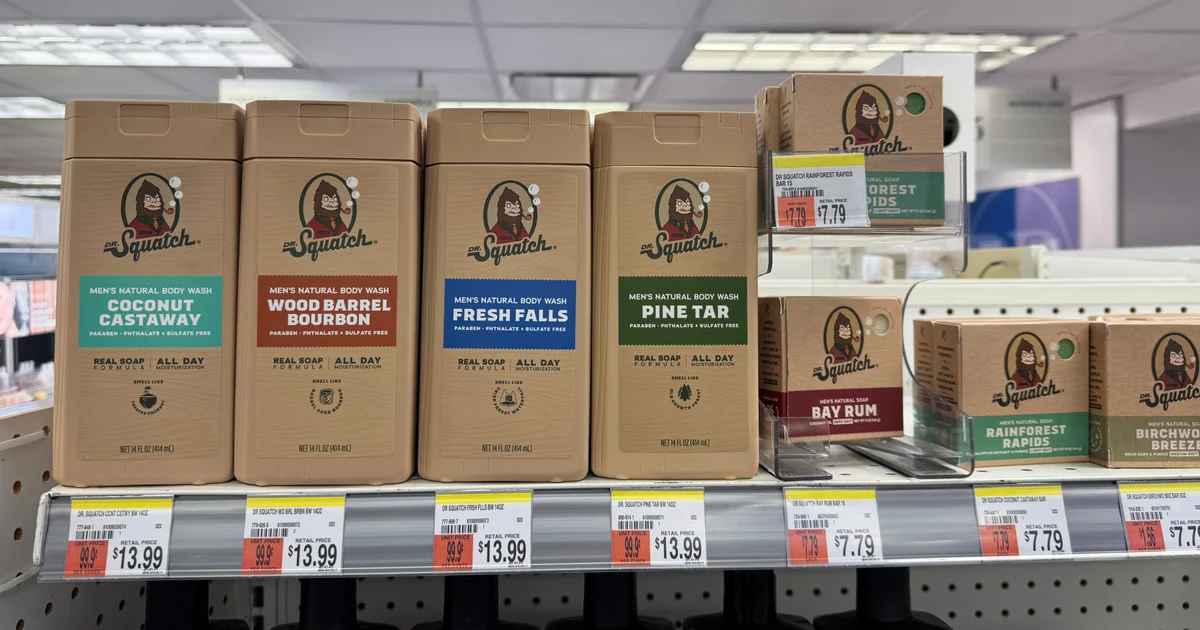
AfterShip, the post-purchase platform powering branded customer experiences for 20,000+ brands globally, launched AfterShip Intelligence, bringing agentic automation and predictive intelligence to post-purchase tracking, returns, and shipping.
www.martechcube.comPost-purchase platform AfterShip launched AfterShip Intelligence, a set of proprietary models built for delivery prediction, exception forecasting, and return intelligence. The company positions them as domain-specific models grounded in fourteen years of shipping data rather than general-purpose AI adapted for retail.
How it is delivered is the part worth noting. Through agent-facing APIs, MCP servers, and one-click connectors, merchants can call their own post-purchase data from AI tools they already use, including Shopify Sidekick, Claude, and ChatGPT. Launch partner Dr. Squatch reports a 25% drop in order-status inquiries and a more than 58% improvement in exception resolution time, while Naked Wardrobe reports that 15 to 20% of RMA reviews now resolve automatically.
All of these figures are self-reported by two launch partners, and the comparison periods are not disclosed. Pricing and Japanese-language support are also undisclosed.
Full article: AfterShip Brings AI Agents to Post-Purchase: How to Read the 25% WISMO Drop and 15-20% Auto-Approved Returns
Mastercard research sets out what makes a brand agent-friendly

The world of commerce is no stranger to new trends and technologies, but the agentic era is transforming the decision-making process for consumers more than ever before.
www.marketingtechnews.netMastercard published a research report titled Encoding Trust, forecasting that agent-assisted consumer spending will reach three to five trillion dollars by 2030, with B2B spending potentially three times that figure.
The consumer numbers show a sharp drop-off. While 85% are open to AI agents finding the best products and 74% would hand over specific commerce tasks, only 10% currently accept an agent completing a purchase autonomously. Mastercard argues that closing that gap requires a trust layer built on agentic tokens carrying explicit permissions such as spending limits, a line of thinking consistent with Mastercard Agent Pay.
The marketing findings are just as practical. Countdown timers, scarcity messaging, and price anchoring produce inconsistent or negligible results with algorithmic buyers. What does work is competitive pricing, accurate machine-readable product information, and authentic ratings.
Only 23% of merchants can identify AI-driven purchases

Artificial intelligence agents are poised to influence discovery, payment choice and transactions. But only 23% of merchants can clearly identify both AI-driven traffic and purchases today.
www.pymnts.comPYMNTS Intelligence research commissioned by Visa Acceptance Solutions found that just 23% of merchants can clearly identify both AI-driven traffic and AI-driven purchases. Another 21% can see the traffic but cannot connect it to completed orders.
Scale barely helps. Large merchants sit at 27% and smaller merchants at 19%. Merchant expectations, meanwhile, run well ahead: 61% agree AI-generated results will influence purchases more than traditional search, 58% expect agents to choose payment methods based on fees and rewards, and 56% expect agents to complete transactions themselves.
That gap between expectation and measurement capability reflects a structural blind spot in attributing AI-driven traffic that has been flagged before, and it is where the near-term advantage sits. The opportunity is building the measurement system before the channel reaches scale.
Amazon's shopping AI now flags scam messages

Amazon is adding a scam-detection feature to Alexa for Shopping that can verify whether suspicious emails, texts, and other messages actually came from the retailer.
techcrunch.comAmazon added scam detection to Alexa for Shopping, letting customers ask whether an email or text claiming to be from Amazon is genuine.
The check draws on the billions of messages Amazon has sent globally, comparing sender information, content, timing, and message metadata. The company says roughly 360,000 customers contact support each year asking whether a message is real. Fake order confirmations, Prime renewal notices, and account suspension warnings are among the patterns covered.
This reads as part of a broader consolidation of post-purchase touchpoints into the AI assistant. Coming right after the Update Me When proactive alert feature covered yesterday, it continues to reposition Alexa for Shopping as a place customers return to after buying, not only before.
AI Commerce Tools
Bazaarvoice packages reviews so AI crawlers can read them
The new solution provides the technical foundation, expert implementation, and independent measurement needed for brands to secure their spot on the AI shelf; clients currently enabled are already seeing a 40% increase in AI-driven referral traffic.
www.martechcube.comUser-generated content platform Bazaarvoice launched an AI Visibility package aimed at making reviews, photos, and ratings legible to AI search.
The problem it targets is rendering. Most review platforms serve content through JavaScript widgets, and most AI crawlers skim past that format entirely. Once shopping starts with an AI-generated answer, content the AI cannot see effectively does not exist. Across clients on the underlying infrastructure, the company reports a median 40% increase in AI-driven referral traffic.
This is the most basic layer of the question of whether your products appear on the AI shelf. For any merchant, it is an easy thing to verify. Reviews earned at considerable cost will not surface as AI recommendation candidates if they are not served as machine-readable data.
Payments and Fintech
Alipay+ and S&P Global report fragmentation and AI trust gaps

A new report by Alipay+, the unified wallet gateway of Ant International, in partnership with S&P Global, reveals a growing commerce digitalisation gap.
finance.yahoo.comAlipay+, the unified wallet gateway of Ant International, published survey results with S&P Global covering 6,000 consumers across nine markets in Asia, Europe, and the United States.
The finding is a gap between expectation and experience. More than half, 53%, cite uncertainty over whether a merchant will accept their payment method, showing that cross-border payment fragmentation persists. On AI, adoption is spreading through discovery and planning, but 43% expressed privacy concerns.
The report names interoperability and trust as preconditions for AI commerce to scale. As long as basic uncertainty about payment acceptance persists, delegating transactions to an agent remains out of reach.
SHOPLINE selects Splitit for card-linked installments

Strategic partnership embeds Splitit's installment technology into the SHOPLINE commerce platform, enabling merchants to drive higher conversion and increase average order value.
www.prnewswire.comCommerce SaaS platform SHOPLINE has selected card-linked installment provider Splitit as its installment partner, embedding the technology directly into the platform.
SHOPLINE serves more than 700,000 merchants across Asia-Pacific, Europe, North America, and the Middle East. Merchants can activate installments through a plug-in without disrupting their existing checkout experience or customer relationships, and consumers pay over time using credit already available on their cards.
Unlike BNPL, there is no new credit check; everything happens within the existing card limit. Adoption without a checkout rebuild lowers the barrier considerably for merchants expanding cross-border.
Consumer Trends
UK shoppers cap autonomous AI purchases at about £150
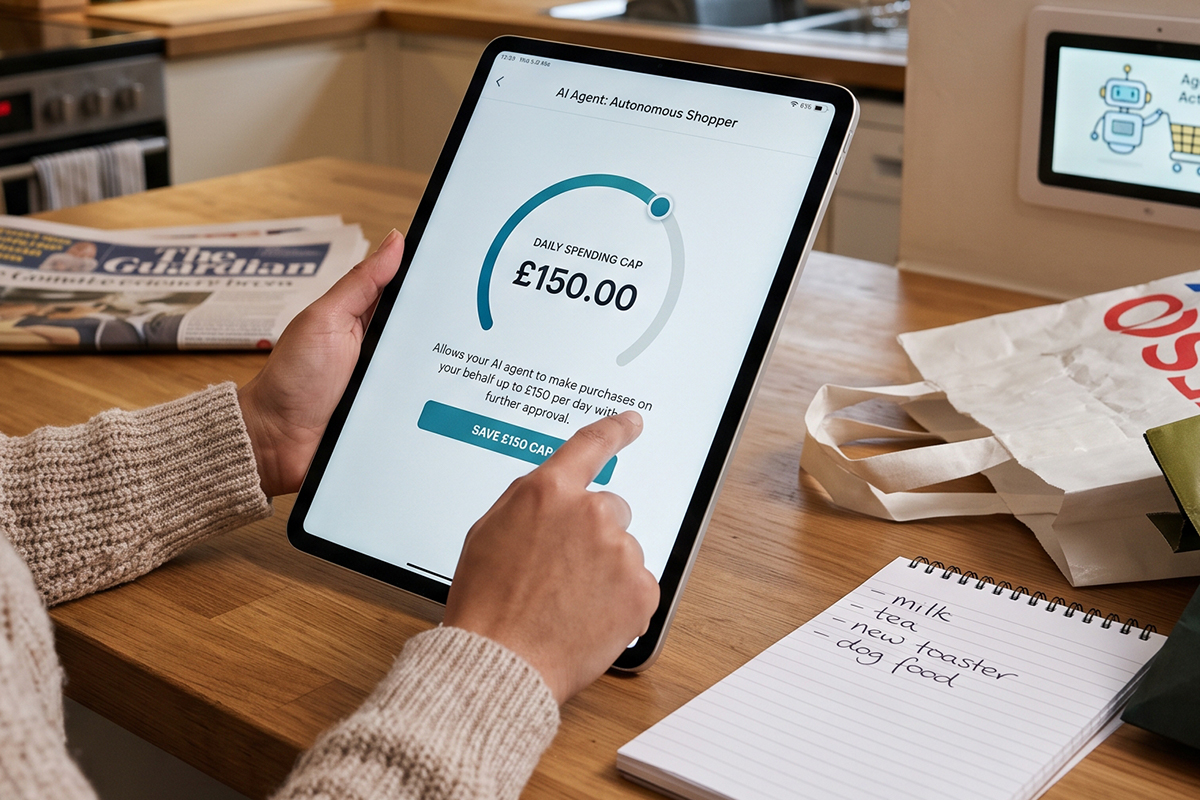
Despite fast-growing adoption of agentic AI and zero-click commerce, UK shoppers are putting a £150 price cap on autonomous AI spending.
channelx.worldA MACH Alliance survey of more than 1,000 UK consumers found the average transaction shoppers would let an AI agent make on their behalf is £149.12.
AI use in the discovery phase is already mainstream: 67% use AI during search and discovery, rising to 92% of Millennials and 89% of Gen Z. Even so, just 9% said they would be comfortable with AI completing a payment autonomously, falling to 4% for complex or high-consideration purchases.
The generational split is stark. Millennials accept up to £235 on average, while Baby Boomers draw the line at £67. A wide distance still separates AI influencing a purchase from AI making one.
Corporate Moves and Partnerships
Sephora pilots selling through TikTok Shop

The beauty retailer will debut exclusive monthly drops through the social media's e-commerce feature with content-led videos and a TikTok Live.
www.retaildive.comSephora begins a TikTok Shop pilot in the United States on September 19 under the name Sephora Drop Shop, offering exclusive monthly product drops.
The mechanics are creator-led. Featured brands build anticipation through creator content and teasers, and products become purchasable during a TikTok Live unveiling. Shoppers can preview items on Sephora's own site during the exclusive window, and select products later expand to other channels and retail partners.
Global Chief Digital Officer Anca Marola framed TikTok Shop as an extension of the company's global digital strategy, describing a test-and-learn approach to scaling retailtainment in the US.
Flipkart moves into micro-dramas

For Flipkart, the opportunity could extend beyond engagement. Content can eventually become an advertising surface, allowing brands to integrate products into storylines or pay for product placements.
www.moneycontrol.comWalmart-owned Flipkart is entering micro-dramas, the short serialized video format, to accelerate its content-to-commerce push.
Micro-drama viewing has spread quickly in India, giving retailers a way to lift dwell time and repeat visits. What Flipkart is looking at goes further: treating the content itself as an advertising surface, where brands weave products into storylines or buy product placement.
The structure amounts to converting in-app viewing time into retail media inventory. It runs in the opposite direction from Sephora's TikTok Shop pilot, and the two together mark the fork between going out to an external content platform and pulling content into your own app.
Z.ai opens its first Tmall store

Z.ai, the overseas brand of Chinese AI model developer Zhipu, has opened the company's first official store on Tmall, bringing paid AI services to a mainstream e-commerce platform.
technode.comZ.ai, the overseas brand of Chinese AI model developer Zhipu, opened its first official store on Tmall. Searching Taobao for the Zhipu Flagship Store lets users buy Coding Plan subscriptions through the platform's standard checkout.
Lite, Pro, and Max plans are currently offered to individual users, and the company said plans may be discounted during major shopping events.
Selling AI services through a marketplace is a bet on a familiar way to buy. It is also a marker of how marketplace assortment is widening, with the right to use AI now sitting on the shelf as an e-commerce product.
Global E-Commerce Trends
India's e-commerce market heads for $345 billion by 2030

India's e-commerce market will nearly triple to USD 345 billion by 2030, with quick commerce the fastest-growing segment and Gen Z becoming the largest digital spending group.
m.economictimes.comA new forecast puts India's e-commerce market at nearly triple its current size, reaching $345 billion by 2030. Quick commerce is the fastest-growing segment, and the number of dark stores is expected to triple.
Gen Z and smaller cities are named as the drivers, with Gen Z becoming the largest digital spending cohort and tier-two and tier-three cities supplying most new demand. AI is framed as affecting both retail productivity and the shopping experience.
These are research-firm projections and the assumptions deserve scrutiny. Still, a market whose main axis is quick commerce and dark store expansion reflects a different set of priorities from developed markets where AI-driven discovery dominates the conversation.
South African online retail reaches R159 billion

Online sales are forecast to add R29 billion to turnover in 2026, as convenience, payments and stronger digital engagement drive consumer spending.
www.itweb.co.zaSouth African online retail is forecast to reach R159 billion in 2026, adding R29 billion year on year and bringing online to 10% of total retail.
Convenience, better payment options, and stronger digital engagement are cited as the drivers. Crossing into double-digit share suggests the market has moved past experimentation into being a primary channel.
When an emerging market's e-commerce share reaches double digits, it becomes worth evaluating as a cross-border target. The note about payment infrastructure maturing echoes the fragmentation findings in the Alipay+ report above.
More Australian sellers list on Temu

Small Australian businesses are adding marketplaces to their sales mix as online spending climbs and Temu seeks a bigger local foothold.
ecommercenews.com.auA Temu report says small Australian businesses are increasingly adding marketplaces to their sales mix as the company works to build a larger local foothold.
Rising online spending sits behind the shift. For small sellers whose own sites reach a limited audience, marketplaces serve as a way to get inventory in front of buyers.
Because this is a self-published report, the figures warrant discounting. The direction is still notable: cross-border marketplaces are shifting weight toward recruiting local sellers, which mirrors their behavior in European markets facing tighter regulation.
Logistics and Fulfillment
Cainiao extends its Mexico network nationwide

Cainiao has expanded its local express network in Mexico from 20 states to full nationwide coverage, and has also launched local pickup services in Mexico City and the State of Mexico.
www.parcelandpostaltechnologyinternational.comAlibaba's logistics arm Cainiao expanded its local express network in Mexico from 20 states to nationwide coverage, and launched pickup services in Mexico City and the State of Mexico.
Latin America is a growth market for cross-border e-commerce, where delivery reach directly constrains sellable territory. Moving to full national coverage marks a step beyond city-centric operations.
Launching pickup services points toward recruiting local sellers. Rather than only carrying goods into the country, Cainiao is positioning to handle domestic merchants' logistics as well.
Wrap-Up
Movement on three different layers on the same day, measurement, payments, and post-purchase, suggests agentic commerce is entering its implementation phase. NIQ and Similarweb addressed how to measure it, Spreedly how to receive it, and AfterShip how much of the work to hand over.
Consumer figures remain cautious by contrast. The MACH Alliance's £149 ceiling and Mastercard's 10% autonomous-purchase acceptance both point to how far the research stage still sits from the paying stage. Which closes first, visibility or trust design, will shape how quickly adoption follows.
Attention next turns to how the standards work lands in merchant implementations. Agent identification and permission design only function when payment networks and merchants move on them at the same time.