AI Commerce News Digest (September 4, 2026)
The builders of commerce agents moved on the same day. Anthropic's commerce agent blueprint, Mastercard Start Path's first cohort of 22 agentic commerce startups, and Digital Commerce 360 data showing AI referral sources spreading beyond ChatGPT, plus the rest of the September 4 retail and AI commerce news.


Key Takeaways
- Anthropic released working implementations of a shopping agent and a merchant agent, with Visa, Mastercard and Shopify signing on
- Mastercard Start Path named its first agentic commerce cohort of 22 startups, covering payments, identity and catalog optimization
- AI referral sources are spreading beyond ChatGPT: retailers with Gemini as their top source doubled, and Claude went from one retailer to 15
Here is the AI commerce news for September 4, 2026. Today the builders of agents moved together. Anthropic published a blueprint for retail agents, Mastercard picked 22 startups to supply the parts those agents need, and Digital Commerce 360 data shows the map of AI referral sources shifting. Yesterday's NIQ and Similarweb partnership was about how to measure AI-driven sales. Today's stories are about the supply side: whose agents will run, and on which payment and identity rails. Around them, China's instant retail, the EU customs reform, and the row over France's ultra-fast fashion law keep reshaping the ground under cross-border e-commerce.
Top Stories
Anthropic publishes a commerce agent blueprint for retailers

We're launching a blueprint to help build commerce agents on Claude. It contains the harnesses, patterns, and guardrails an engineering team needs to get a commerce agent running in days.
claude.comOn September 2, Anthropic released a "blueprint" for building commerce agents on Claude. It contains working reference implementations of a consumer-facing shopping agent and an operator-facing merchant agent for retail, travel, telecom and ticketing. A Claude Code plugin ships with it, and the code deploys through the Claude API, Amazon Bedrock, Microsoft Foundry or Google Cloud Vertex AI.
The most notable design choice is that payment stays with the retailer. The shopping agent lives inside the retailer's site or app, searches the catalog, assembles multi-item carts, shows comparisons, and answers questions about orders and return policies. It then hands the finished cart to the existing checkout or to an agentic payments provider. Guardrails constrain prices and products to actual catalog data and avoid manipulative upsell patterns. The merchant agent monitors inventory and recommends pricing and promotions, but a person must approve any change before it goes live.
Accenture, Mastercard and Visa are named as partners, and Shopify and Priceline are among the companies building on it. Anthropic says retailers running shopping agents on Claude have seen carts up to 35% larger and shoppers 60% more likely to complete a purchase. Those are the vendor's own figures with no third-party verification. Still, as OpenAI and Google shift from in-chat checkout toward retailer-owned apps, a design that hands control of the agent back to the merchant is a practical option for retailers planning for the holiday season.
Mastercard Start Path names its first agentic commerce cohort of 22 startups

Mastercard's Start Path has selected 22 companies for its first Agentic Commerce & Services cohort, spanning payments and AI infrastructure.
thepaypers.comMastercard's startup engagement program Start Path announced 22 companies as the inaugural cohort of its Agentic Commerce & Services track, which was created in January 2026. Since 2014, Start Path has worked with more than 500 companies from over 60 countries, and this cohort covers most of the layers an agent needs to take part in a transaction.
Read by layer, Firmly, Wizard, SolvaPay and Nevermined handle selling to and getting paid by agents; ReFiBuy optimizes product catalogs for AI shopping agents; Skyfire and t54 handle agent identity verification and risk assessment, Crossmint provides stablecoin wallet infrastructure; and Tunic Pay, PayOS and Simetrik cover fraud detection and audit for agent-driven transactions. According to The Paypers, participants gain access to Mastercard's network of partners and customers and opportunities to co-develop products for agentic environments.
Mastercard has already rolled out Agent Pay, joined Google's Universal Commerce Protocol, and worked with Microsoft on Copilot Checkout. Forkast reads the move as a strategy of building an ecosystem rather than a protocol, so that Mastercard becomes the default network agent commerce flows through. For retailers, the announcement signals that both the catalog-readiness layer and the agent-payment acceptance layer are now available as products rather than concepts.
Agentic Commerce
AI referral sources spread beyond ChatGPT as Digital Commerce 360 reports a shift in top sources

AI referral traffic keeps growing for top online retailers; rankings reveal which LLMs are sending the most visitors to those ecommerce sites.
www.digitalcommerce360.comOn September 3, Digital Commerce 360 published new findings from its AI Commerce Rankings, built with ReFiBuy on the Top 1000 database of North American retailers by annual web sales. In the first quarter of 2026, 844 retailers had ChatGPT as their top AI referral source. In the second quarter, that number fell to 722.
Other platforms absorbed the difference. Retailers with Google Gemini as their top source doubled from 16 to 32, and Perplexity gained 12 retailers. ReFiBuy founder and CEO Scot Wingo called Claude's rise from one retailer to 15 "a really big move," attributing it to Anthropic's rollout of shoppable product cards.
Adobe Analytics data for July shows AI-associated referral traffic to e-commerce sites up 62% year over year, with AI-referred shoppers generating 53% more revenue per visit than other shoppers. The numbers support a shift away from optimizing for a single AI platform toward measuring traffic from several and structuring product data so each of them can read it.
Full article: Top AI Referral Sources Are Fragmenting: ChatGPT Leads at 722 Retailers, Down From 844, While Claude Jumps From 1 to 15
Statista Strategy frames the "integration dilemma" and three options for retailers

Agentic commerce represents a transition from channel-driven e-commerce to agent-driven purchasing processes where autonomous artificial intelligence systems orchestrate the buying journey.
futureiot.techStatista Strategy's "State of Agentic Commerce" evaluated general-purpose models such as ChatGPT and Gemini alongside dedicated shopping agents from Amazon, Walmart and Zalando across the full customer journey. Its conclusion is that AI agents already handle the early stages of shopping, awareness, discovery and evaluation, with high proficiency.
The core of the analysis is the integration dilemma facing retailers and marketplaces. Integrating into AI ecosystems brings traffic positioned close to the purchase decision, but at the risk and cost of giving up the direct customer interface. Refusing to integrate risks exclusion from AI-driven buying environments altogether.
Statista Strategy lays out three paths: full integration, selective integration, and deliberately staying outside the agentic ecosystem. It urges retailers to decide their degree of integration quickly, starting from their market position. Its point that product data, APIs and consumer trust now matter more than pure marketing reach echoes today's moves by Anthropic and Mastercard.
Can food brands survive agentic commerce? Bramble Intelligence's view

Agentic commerce is reshaping food retail. Brands that master nutrition, trust and data stand to gain most from AI-driven shopping
www.foodnavigator.comFoodNavigator interviewed Chris Mitchell, managing partner at food industry consultancy Bramble Intelligence, whose "Tomorrow's Appetites" report names agentic commerce as one of three forces reshaping food and beverage.
Mitchell expects two kinds of agents. Retailers will run their own "food concierge" agents to keep customers inside their environment, asking about household size, tastes and allergies. Model providers such as OpenAI, Anthropic and Google will run cross-retailer agents that aggregate a split shop across stores and advocate for the consumer on both price and nutrition.
His view of brands cuts both ways. AI does not care about the cartoon character on the pack and looks only at the facts, so making product information machine-readable becomes unavoidable. At the same time, brands that match a consumer's values and earn deep trust grow stronger in what he calls the second coming of the brand, and the moments when the AI and the consumer disagree are where that strength gets tested.
Consumer Trends
Euromonitor projects AI will influence $780 billion in retail e-commerce sales by 2029

Loyalty programmes are connecting AI-led discovery and purchase, enabling brands to recognise and reward customers, according to a Euromonitor report.
retailasia.comA Euromonitor report covered by Retail Asia projects that AI will influence $780 billion in global retail e-commerce sales by 2029. It notes that 51% of connected consumers use ChatGPT and that shoppers already use AI to review products, find deals, navigate program rules and compare benefits.
The report positions loyalty programs as the link between AI-led discovery and purchase. In Australia, Adore Beauty reported in August 2026 that active loyalty membership reached 538,000, up 22% year on year, following the launch of its "Ask Aura" chatbot.
The conditions are explicit. To influence an AI-mediated transaction, member identity, eligibility and benefits must be machine-readable, available in real time and connected to the wider commerce ecosystem. Interoperability, APIs, authentication and secure access become strategic capabilities, which pushes closed loyalty designs toward a rethink.
72% of UAE shoppers used AI for their latest purchase, and 82% would allow unsupervised buying with a spending cap
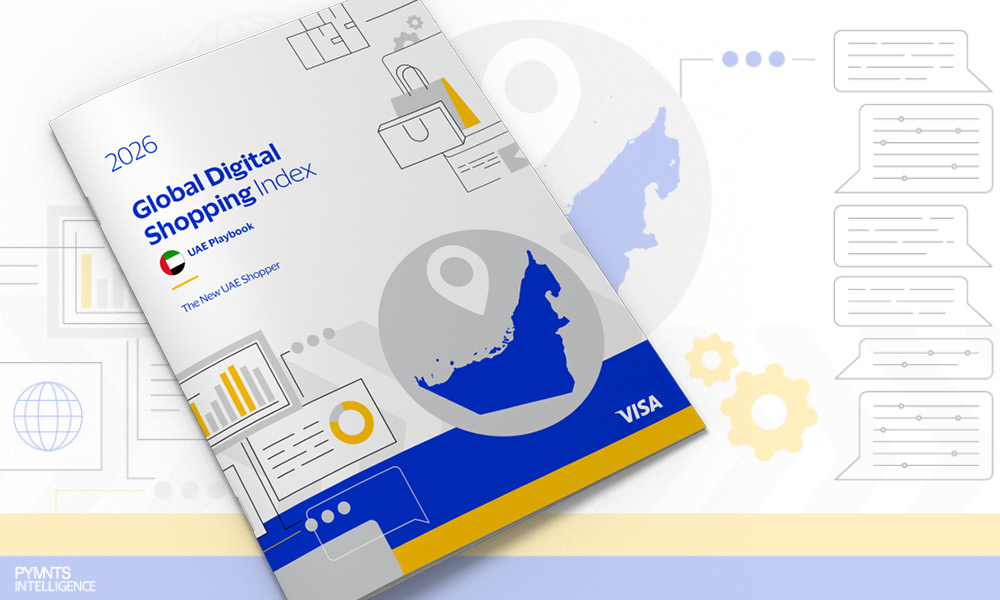
The UAE shopper has little patience for yesterday's checkout. A phone can serve as a storefront, research assistant and wallet before a merchant's website
www.pymnts.com"The 2026 Global Digital Shopping Index: UAE Playbook" from PYMNTS Intelligence and Visa Acceptance Solutions finds that 72% of UAE shoppers used AI for their most recent purchase. The March 2026 study covered 1,270 UAE consumers as part of a broader survey of 5,241 consumers and 1,185 merchants across the UAE, Brazil and the United States, and the UAE leads the three markets in digital shopping activity.
Everyday behavior is shifting too. UAE consumers average 2.3 digital shopping activities a day, up 5% from 2024. Online ordering for in-store pickup rose 15% and mobile use inside stores increased 11%. Feature gaps remain: 74% of shoppers want digital coupons, but only 60% of merchants offer them.
On delegating purchases to AI, 82% would allow an agent to make an unsupervised purchase if they could set a spending limit, and more than half would cap it at $100. As with the GBP150 trust threshold among UK shoppers in yesterday's digest, consumers are asking for limits and control more than for delegation itself.
Corporate Moves and Partnerships
eComID acquires Nilum to fold AI-native secondhand shopping into its Shopping Passport

eComID has announced the acquisition of Nilum, a Stockholm-based specialist in AI native secondhand shopping. Financial terms of the deal were not disclosed.
retailtechinnovationhub.comeComID, which is building a "Shopping Passport" that lets shoppers carry their size, fit, taste and preferences across connected shopping destinations, has acquired Stockholm-based Nilum. Nilum was built to make secondhand shopping radically easier with AI. Financial terms were not disclosed.
Nilum founder Jonas Fagerlund joins eComID as Head of Recommerce. eComID co-founder and CEO Oscar Rundqvist described the goal as helping shoppers find the right products rather than more products.
Using the context accumulated in first-hand shopping to drive discovery in secondhand shopping points to what recommerce looks like when AI agents carry a shopper's preferences from store to store. For fashion e-commerce, it is an early example of treating new and pre-owned inventory with the same preference data.
SoftBank likely sells a 1.7% Meesho stake in a block deal

A 1.7% stake in Meesho worth Rs 1,650.4 crore changed hands through a block deal on Thursday, with SoftBank the likely seller.
app.dealroom.coAccording to Dealroom, a 1.7% stake in Indian social commerce company Meesho changed hands in a block deal, with SoftBank's SVF II Meerkat DE the likely seller. Around 8 crore shares sold at Rs 206.3 each, a 2.5% discount to the previous close. The vehicle held an 8.60% stake as of the June 2026 quarter.
The sale follows improving results. In Q1 FY27, Meesho's revenue from operations rose 48% year on year to Rs 3,712.8 crore, and its net loss narrowed to Rs 132.8 crore from Rs 289.4 crore.
Meesho is one of India's major e-commerce players to list in the past year, and investors trimming positions suggests the Indian e-commerce market is entering a phase where growth capital starts to be recovered.
Advertising and Retail Media
AI adoption among US small businesses reaches 87%, Constant Contact finds

AI is helping small businesses save time, analyze data, and sharpen marketing decisions as social media becomes a key channel for customer discovery.
www.ecommercetimes.comConstant Contact's Q2 2026 research, reported by the E-Commerce Times, finds AI adoption among US small businesses has climbed from 26% in 2023 to 87% this year. The study surveyed 3,340 small and medium businesses and 2,255 consumers in the United States, United Kingdom, Canada, and Australia and New Zealand.
Discovery channels are moving as well. Forty-nine percent of consumers use social media to find new small businesses, compared with 40% who use search engines. Nearly half of SMB owners (47%) manage all of their social media themselves, and AI and automation are spreading as a response to that workload.
Dave Charest of Constant Contact says small businesses are moving beyond content creation to use AI for data analysis and marketing decisions. Even small e-commerce operations without a dedicated analytics team can now raise the quality of their decisions.
Global E-Commerce Trends
Chinese e-commerce moves to instant retail as the delivery subsidy war leaves 60-minute expectations behind

China's meal-delivery subsidy war may have ebbed but its biggest legacy could be a shift in consumer expectations, as electronics, flowers and even medicine can now be delivered within an hour of ordering.
www.reuters.comReuters reports that after a year in which Meituan, Alibaba and JD.com spent billions of dollars on coupons, free delivery and merchant incentives, instant retail has become the new battleground in Chinese online shopping. Ministry of Commerce research puts the instant-retail market at 1.2 trillion yuan ($178 billion) by year-end, growing at an average of 12.6% a year through 2030.
Analysts say the real bet was on converting the frequent app visits driven by drink and meal delivery into purchases of higher-margin non-food items. Meituan CFO Shaohui Chen told investors that quick commerce has fundamentally reshaped expectations around convenience and reliability and called it an irreversible lifestyle shift.
The cost has been steep. The market regulator summoned the platforms multiple times last year and imposed 3.6 billion yuan in penalties in April for meal delivery safety violations. Analysys data shows Alibaba led Meituan in instant retail in the second quarter, and the companies are building warehouses and supermarkets in a chase for profitability.
China's 15th Five-Year Plan calls for supporting cross-border e-commerce

The outline of China's 15th Five-Year Plan (2026-30) supports the development cross-border e-commerce activity. China's Ministry of Commerce has further released guidelines to develop digital markets and models for trade via e-commerce platforms.
dig.watchAccording to the Digital Watch Observatory, the outline of China's 15th Five-Year Plan (2026 to 2030) includes support for cross-border e-commerce and other digital business modes and models. The Ministry of Commerce, together with five other government departments, issued guidelines to develop cross-border e-commerce, integrate China-Europe freight trains with e-commerce activity, and encourage operators to register trademarks and apply for patents.
Behind the plan is the growing weight of cross-border e-commerce in China's trade. With the sector written into a national plan, policy support for logistics and payment infrastructure is likely to continue.
Read alongside today's row over France's ultra-fast fashion law and the EU's final approval of its customs reform, the picture is one of Chinese policy pushing cross-border e-commerce outward while destination markets tighten the rules.
Online retail drives South Korea's 6.4% July sales growth

South Korea's total sales at 26 major retailers, 15 brick-and-mortar and 11 online retailers, rose 6.4% year on year in July.
retailasia.comSouth Korea's Ministry of Trade reports that sales at 26 major retailers rose 6.4% year on year in July. Offline sales grew 3.2% while online sales grew 8.5%, and online retailers accounted for 60.8% of sales by channel.
Offline, department stores rose 17.9% with growth across all categories, led by premium brands, vacation-related goods and cooling appliances. Hypermarkets fell for the fifth consecutive month and SSMs for the eighth.
Online, the services and other category grew 17.5%, supported by delivery services. Korea is an advanced market where online already exceeds 60% of sales, and the split between department stores and hypermarkets previews what physical retail looks like after e-commerce penetration is high.
(Follow-up) China demands France halt its ultra-fast fashion law and hints at countermeasures

China on Thursday called on France to abandon a new law on ultra-fast fashion that would impose fees of up to almost EUR20 per garment, calling it 'clearly discriminatory'.
www.france24.comFrance's ultra-fast fashion law, covered in the September 1 digest, took effect on September 1. On September 3, China's Ministry of Commerce urged France to immediately halt its implementation. Spokeswoman Huang Ling called the law, which targets Asian e-commerce platforms including Shein and Temu, "clearly discriminatory" and referred to possible countermeasures.
The law imposes fees on certain items that will eventually reach almost EUR20 per garment, as part of an effort to curb the industry's environmental and local economic impact. Within two days of taking effect, it has become a diplomatic dispute.
Destination-side rules on cross-border e-commerce also tightened today with the EU customs reform. While Chinese policy supports cross-border e-commerce, Europe is applying pressure through both levies and importer liability.
EU Council gives final approval to customs reform that makes non-EU platforms the importer
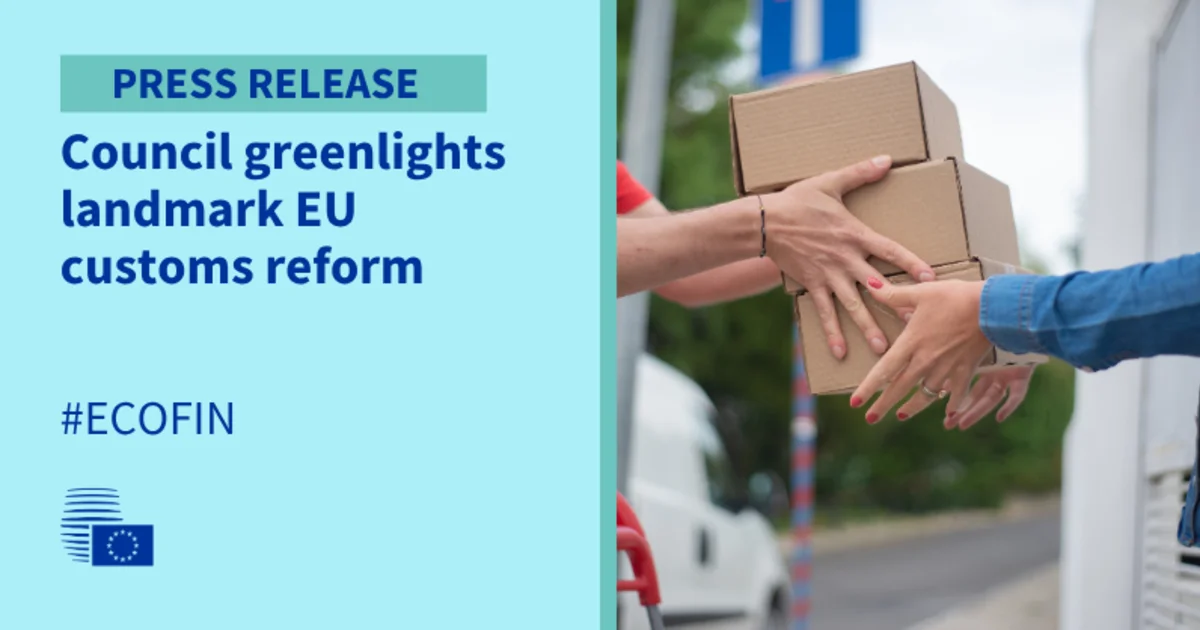
The new EU customs framework gives authorities a more modern toolbox to deal with emerging challenges and trends, such as the boom in e-commerce.
www.consilium.europa.euOn September 3, the Council of the EU gave final approval to what it calls the most comprehensive overhaul of the EU customs framework in decades. The updated Union Customs Code clarifies that non-EU e-commerce platforms will be considered the goods' importer when selling into the EU, making them responsible for customs formalities and duty payments rather than the final consumer.
A new penalty system for e-commerce operators is also introduced. The most serious cases of non-compliance can incur fines of up to 6% of the company's annual import value in the preceding year, removal of certain customs privileges, and even access restrictions to online platforms. An EU-wide handling fee will help cover the rising cost of monitoring small parcels.
Following the EUR3 duty on low-value parcels covered in August, the EU has now fixed liability for cross-border e-commerce on the platforms. For sellers into the EU, a move to DDP shipping and a proper customs compliance setup are no longer optional.
Payments and Fintech
HashKey's on-chain settlement protocol HSP partners with ONERWAY

HashKey On-Chain's settlement protocol, HSP, and cross-border payment service provider ONERWAY have announced a strategic partnership.
www.prnewswire.comHashKey On-Chain's settlement protocol HSP and cross-border payment provider ONERWAY announced a strategic partnership on September 3. ONERWAY holds multiple licenses, including a UK EMI, a European PI, a Hong Kong MSO, a US MSB and a Singapore MPI, and serves more than 2,000 merchants globally.
For HSP, it is the first connection with a traditional Web2 payment institution. For ONERWAY, HSP is the first on-chain settlement protocol it has introduced. Merchants gain digital currency settlement as a new option while keeping ONERWAY's existing fiat settlement and off-ramp capabilities.
Bringing stablecoins into cross-border e-commerce payments is a recurring theme across payment networks and fintechs. A licensed payment institution adding on-chain settlement as one option among several shows a practical way to combine regulatory compliance with new rails.
Logistics and Fulfillment
Korea's TechTaka pushes its ARGO fulfillment platform toward AI and robotics

TechTaka CTO Lee Kyung-wook describes the company as a fulfillment tech company that optimizes its logistics network with data and software, rather than a logistics company that delivers goods.
www.mk.co.krKorea's TechTaka runs ARGO, a logistics platform that integrates goods, orders, warehouses, transportation and supply chain management. In an interview with Maeil Business Newspaper, CTO Lee Kyung-wook described the company as a fulfillment tech company that optimizes its network with data and software rather than a logistics company that delivers goods.
ARGO lets sellers manage orders from global marketplaces such as Amazon, TikTok Shop and Qoo10, as well as domestic platforms such as Naver, without building separate systems. TechTaka reports an average daily shipment success rate of 99.95% or more, and says that during Qoo10's Mega Sale in Japan, when one customer's shipment volume surged more than 16 times, cross-border orders from Korea to Japan ran without a single error.
TechTaka says it will speed up work on a next-generation logistics system combining AI and robotics, and the next step is an autonomous supply chain management system that analyzes seasonality, marketing events and consumption patterns to decide inventory movements and supply plans on its own. The direction is to layer AI-driven demand forecasting on top of a base that already handles cross-border shipments across multiple marketplaces.
Global e-commerce sellers redesign packaging to comply with PPWR, says FlavorCloud CEO

Packaging compliance will evolve from a largely documentation-led obligation into a measurable design and data discipline, says Rathna Sharad.
www.packaginginsights.comPackaging Insights interviewed Rathna Sharad, CEO of cross-border e-commerce logistics company FlavorCloud. She says compliance with the EU's Packaging and Packaging Waste Regulation (PPWR), which started applying in August, is becoming a major challenge for global e-commerce sellers.
Brands first need to understand their regulatory roles and maintain technical documentation. Packaging design, she expects, will move from appearance-driven sustainability to evidence-based optimization.
She also argues that e-commerce packaging will become integrated across the supply chain, requiring brands to connect design, procurement, fulfillment and compliance processes. Together with today's customs reform, sellers into the EU now need to treat regulatory compliance as a data infrastructure problem.
Wrap-Up
Today the supply side of agentic commerce moved at once. Anthropic released shopping and merchant agents as working code and made explicit that payment stays with the merchant. Mastercard showed, through 22 named startups, the parts those agents will use across payments, identity and fraud prevention. Digital Commerce 360's data confirmed that the AI platforms sending customers to those agents are spreading beyond ChatGPT alone.
Around them, Statista Strategy pressed retailers to decide how far to integrate, and the Euromonitor and PYMNTS studies both showed consumers asking for limits and control over what they delegate to AI. In broader e-commerce, China's instant retail, the EU customs reform and the dispute over France's ultra-fast fashion law kept moving the institutional ground under cross-border trade.
From tomorrow, we will watch for the first retailers deploying Anthropic's blueprint and for how the Start Path companies connect to Mastercard's Agent Pay. Heading into the holiday season, the question is whether merchants start measuring agent-driven sales and readying their payment and inventory APIs in earnest.