AI Commerce News Digest (October 7, 2026)
AI commerce news for October 7, 2026. Meta prepares a personal agent standard with Walmart, Stripe and Sierra, a Rezolve Ai study finds 97 of the 100 largest US retailers have no checkout path for AI agents, and SAP and TextYess push agents into orders and CRM.


Key Takeaways
- Meta prepares an agent standard with Walmart, Stripe and Sierra
- 97 of the 100 largest US retailers lack an agent checkout path
- Sellers' readiness to receive AI agents is the new focus
Here is the AI commerce news for October 7. Today's theme was whether sellers are ready when AI agents come to shop. Meta was reported to be working with Walmart, Stripe and Sierra on common rules for personal AI agents that shop on business websites. At the same time, a Rezolve Ai study found that 97 of America's 100 largest retailers offer no checkout path for AI agents. In yesterday's digest, TikTok and Constructor pushed the idea of buying where discovery happens; retailers on the receiving end have not yet caught up. Several stories also dealt with what that readiness involves: product data, transaction trust and connections to core business data.
Today's Top Stories
Meta prepares an industry standard for personal AI agents with Walmart, Stripe and Sierra

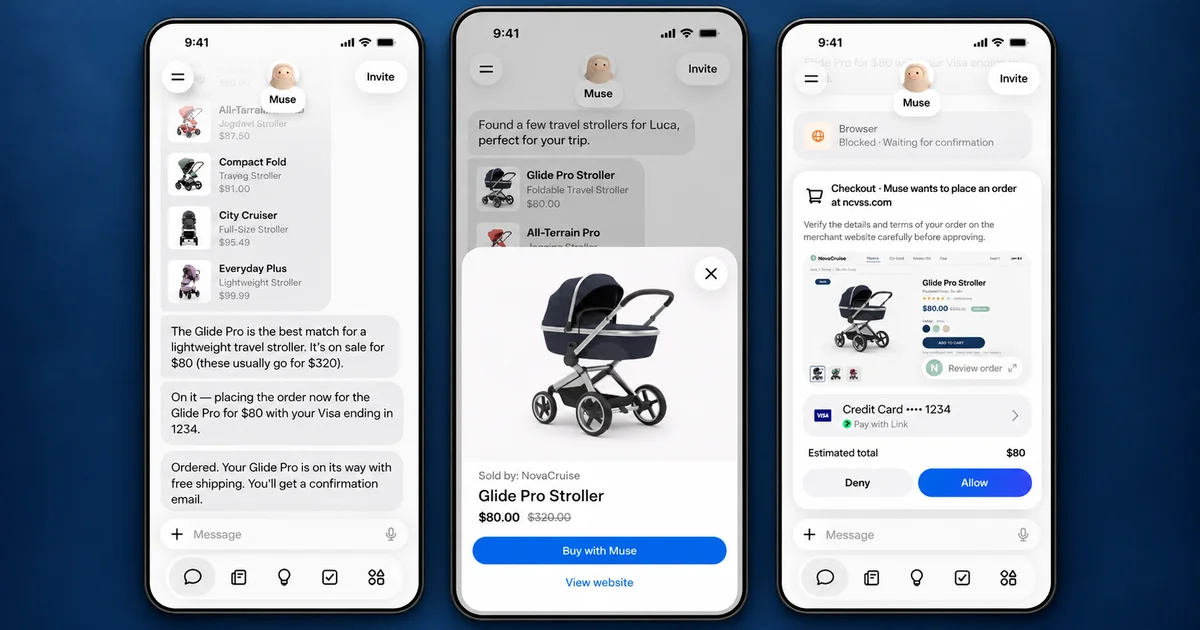
Meta's Muse agent has been implicated in several privacy and security issues since it launched less than a month ago.
gizmodo.comGizmodo, citing CNBC, reported that Meta is working with Walmart, Stripe and enterprise AI company Sierra on standards for how AI agents interact with businesses online. Called a "personal agent protocol," the effort aims to help companies distinguish purchases made by agents the user has authorized from everything else.
David Singleton of Meta Superintelligence Labs told CNBC that the goal is to define rails personal agents and business agents can both run on, comparing it to email as a standard anyone can use. Sierra co-founder Bret Taylor, who leads the effort, said it will be chaos until such a standard exists, because businesses cannot see what personal agents do on their sites.
The backdrop is Muse, the personal agent Meta launched on September 8. Amazon locked Muse out because the agents did not identify themselves, and security and privacy concerns followed. Six major banks also published a paper in September calling for industry-wide standards. How an agent proves who it is is becoming a precondition for whether sellers let it in.
Rezolve Ai says 97 of the 100 largest US retailers have no checkout path for AI agents (follow-up)

Rezolve Ai presents its strategy, growth drivers and full agentic commerce stack to investors at Nasdaq MarketSite, with live product demonstrations.
finance.yahoo.comRezolve Ai held its Investor Day at Nasdaq MarketSite in New York on October 6 and published its "US AI Visibility Study 2026." The study examined how OpenAI, Claude, Perplexity and Gemini answer unbranded consumer questions about the markets of 2,047 US companies, including every S&P 500 member and the NRF Top 100 retailers, with fieldwork from September 23 to October 5.
One in four companies was never named by any of the assistants, including nearly one in five S&P 500 members. 97 of the 100 largest retailers publish no way for an AI agent to check out, and 13 of them turn automated visitors away. A company's own website accounted for just 1.5% of the sources the AI assistants cited.
Yesterday's digest covered Rezolve's reseller agreement with Mastercard. This study doubles as a product pitch, but its numbers show that being named by AI and being purchasable through AI are separate problems.
Agentic Commerce
AI agents complete 80% of shopping tasks across 50 Indian e-commerce sites

FTA Global’s Agent Readiness Study 2026 assessed 50 Indian ecommerce websites across 450 AI-led shopping tasks, with agents completing 358 tasks.
www.socialsamosa.comMarketing operating system company FTA Global released its "FTA Agent Readiness Study 2026," testing how far AI agents can get when shopping on 50 Indian e-commerce sites. Agents completed 358 of 450 tasks, or 80%. Return-window questions had the highest completion rate at 91%, followed by delivery charges at 74% and product and price discovery at 73%.
boAt scored highest at 95 out of 100, followed by Flipkart, Mamaearth and Moglix at 92 each. Of the 92 failed tasks, 26 failed because the answer was not clearly stated on the site and 13 because content required JavaScript; only 11 were due to blocking or site errors.
Structured data gaps stood out. Only three of 24 product pages included return policy information in their schema, and two included delivery details. Whether information is stated in a readable form mattered more than whether sites blocked bots.
Forrester says agentic commerce requires product data about applications
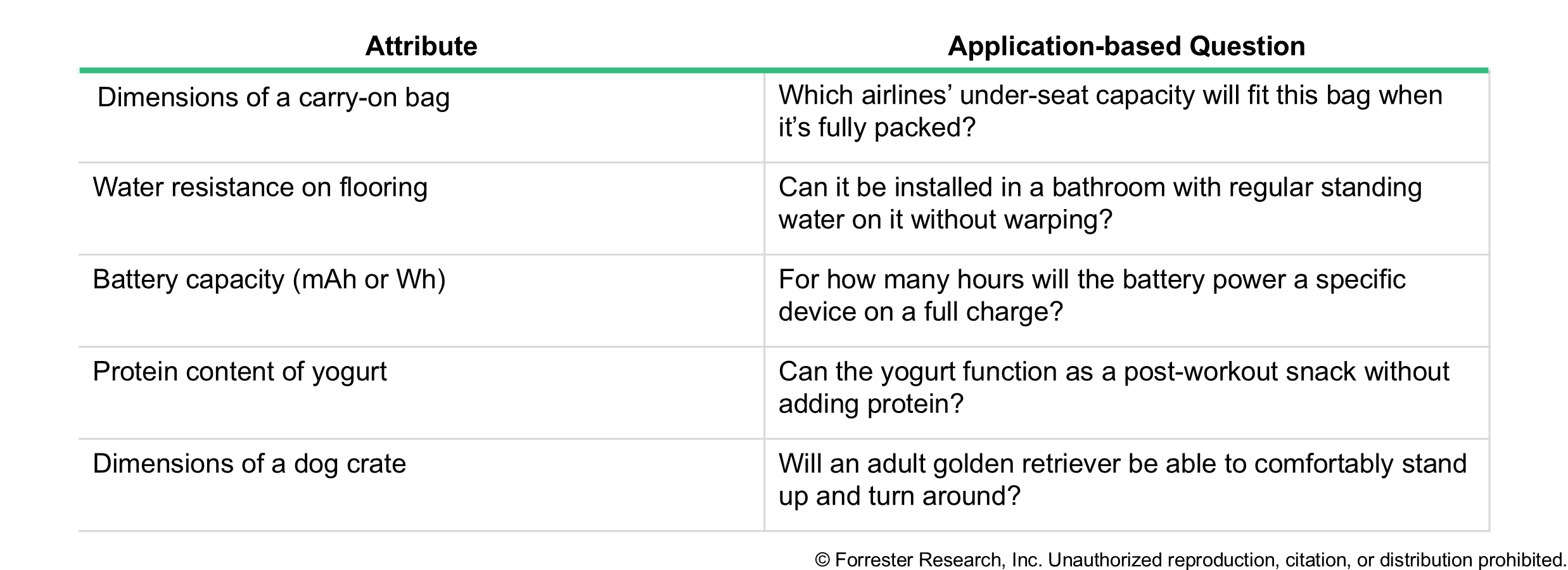
Product data is currently built for filters, not for questions. Understand the steps you must take to prepare your product data for agentic commerce.
www.forrester.comIn a blog post, Forrester urged retailers to rethink how they build product data. Today's data is built for filtering by attributes such as size and color, and it struggles with conversational questions about what a product can do or whether it fits a shopper's situation. Using a backpack as an example, the post explains that photos and attributes cannot answer a shopper's question if depth is missing.
Forrester makes four recommendations: collect "Will it" and "Can it" questions from site search, customer service, reviews and returns; define the relevant product applications for each category; test against answers by asking owned assistants and external answer engines the same questions; and build a feedback loop that tracks bounces and abandoned carts from answer engine referrals.
The post also notes that merchants still cannot see which answer engine conversations led to a site visit. Until that becomes visible the way search terms are, merchants have to work backward from the data they have.
AI Commerce Tools
SAP launches Autonomous CX, AI assistants that connect marketing through order fulfillment
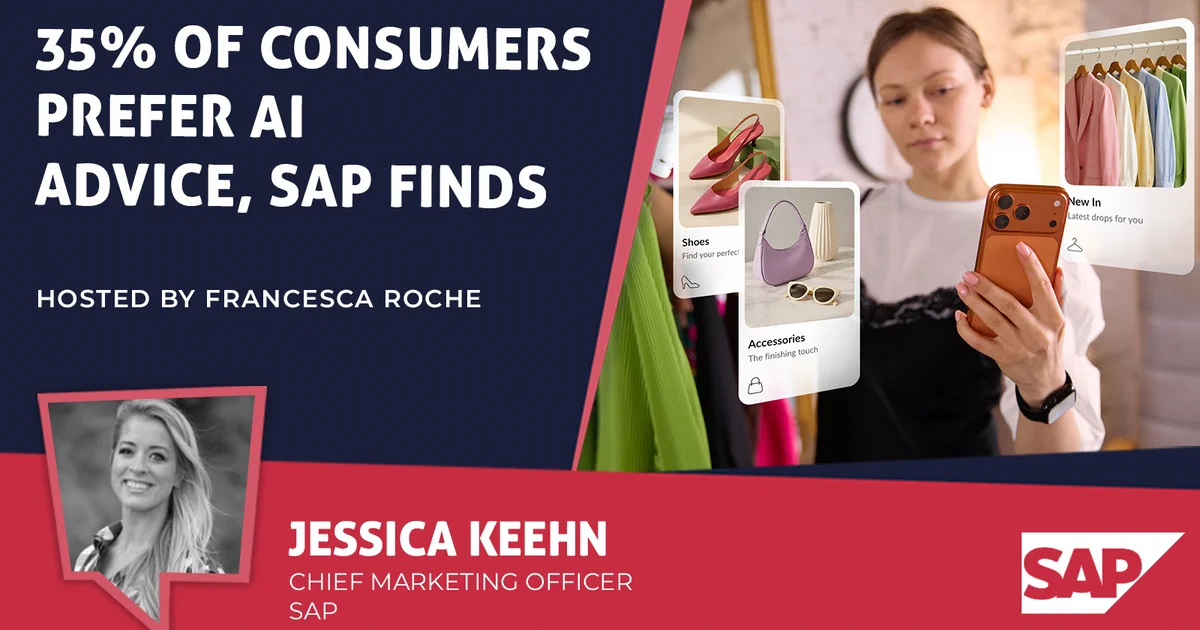
SAP’s new Autonomous CX suite coordinates marketing, commerce, sales and service as consumers increasingly trust AI recommendations.
cxtoday.comAt SAP Connect in Las Vegas, SAP announced Autonomous CX, a suite of Joule-based AI assistants. The six assistants cover campaigns, content, shopping, quoting, incentive compensation and service planning, with general availability planned for Q1 2027. The Shopping Assistant validates customer and product information so orders can be prepared for fulfillment faster and with fewer errors.
SAP is also extending its Order Management Services to non-SAP ERP environments to coordinate demand, inventory and fulfillment. SAP Reltio, which unifies customer, supplier and product records, is now generally available as the data foundation that gives AI agents shared context. The idea is to prevent cross-department mismatches, such as promoting products that are out of stock, by connecting agents to core business data.
Full article: SAP Launches Autonomous CX at Connect 2026: How Its Joule Assistants Connect AI Agents to Order and Inventory Data
TextYess raises €4 million to move from WhatsApp AI agents to a fully automated CRM

The start-up is developing an automated customer relationship management system for e-commerce platforms based on AI agents
www.startupbusiness.itMilan-based TextYess, founded in 2023, raised €4 million in a round led by Italian Founders Fund. The company builds an AI-powered CRM for e-commerce brands and is used by more than 350 companies, including Ducati, Veralab and PittaRosso. In 2024 it launched AI agents on WhatsApp that answer customers, recommend products and recover sales.
Next, it will run AI agents on a CRM that combines each customer's orders, conversations and purchasing behavior into a single profile. The agents will identify opportunities, define target audiences and build campaigns and automated workflows across email, WhatsApp and the website. The funding will go to product development and international expansion, starting with the UK. The company is moving from selling through conversations to handing the operation of campaigns to agents.
Full article: TextYess Raises €4M to Turn Its WhatsApp AI Agents Into an Autonomous CRM for E-commerce
Payments and Fintech
American Express publishes a free agentic commerce playbook for merchants
Today, American Express released the Amex Business Playbook for Agentic Commerce, a guide with research-backed insights and practical steps to help businesses...
www.businesswire.comOn October 6, American Express released the Amex Business Playbook for Agentic Commerce, a free guide for merchants. Its first five chapters cover the basics, being found and recommended by AI, making AI-driven transactions work for the business, supporting trustworthy AI-assisted transactions, and standing out when AI narrows the choices. Amex is also piloting a Merchant AI Advisory Council to bring merchant perspectives into its approach.
New Amex Trendex research found that 83% of 502 US businesses see agentic commerce as an opportunity, but only 41% are actively experimenting with or implementing it. Among 2,005 consumers, 52% are comfortable letting an AI agent buy everyday, low-cost items such as household essentials and groceries, compared with just 15% for high-value items like electronics and appliances. That gap suggests a category-by-category order of priorities for merchants.
Forter named launch partner for Salesforce's AI-first Storefront Next

Forter, the Trust Intelligence Platform for the future of commerce, announced it is giving Salesforce merchants more ways to protect revenue...
www.prnewswire.comFraud prevention company Forter announced on October 6 that it is a launch partner for Storefront Next, Salesforce Commerce Cloud's new storefront offering. Brands adopting Storefront Next get Forter's fraud prevention, abuse protection and payment optimization from day one, across every path to purchase.
Forter is also extending its collaboration to Salesforce Loyalty Management to protect loyalty programs. Co-founder Liron Damri said that as Storefront Next brings agentic commerce to more shared customers, brands need trust decisions that keep pace with how shoppers and AI agents shop. Even when the buyer is an agent, deciding whether a transaction is legitimate remains the seller's job.
Santander's Getnet offers payments in over 30 European countries through one integration

Getnet will enable e-commerce businesses to accept, manage and move payments across Europe through a single integration.
www.santander.comGetnet, Banco Santander's merchant payments platform, announced on October 6 that multinational merchants, marketplaces and e-commerce companies can now access payment services in more than 30 European countries through a single integration. The infrastructure, Getnet Single Entry Point (SEP), also supports local methods such as Bizum in Spain and MB WAY in Portugal.
Beyond acceptance, merchants can collect funds, reconcile balances, convert currencies and make payouts on the same infrastructure, initially supporting 20 currencies and payouts to 140 countries. Getnet also noted it recently completed Latin America's first agentic transaction using Mastercard Agent Pay. The announcement targets cross-border friction, but it also lays groundwork for agent-initiated payments.
Company News and Partnerships
Canada's Reactiv acquires US rival Kin, adding Steve Madden and Chubbies

The acquisition brings in brands like Steve Madden and Chubbies following the startup’s unannounced seed extension round.
betakit.comToronto-based Reactiv, which builds AI-powered mobile apps for e-commerce brands, has acquired New York-based competitor Kin Commerce. According to BetaKit, the cash-up-front deal closed in early September; the price was not disclosed. Because Kin's leaders are pivoting to a new AI marketing startup, the deal covers only Kin's technology, intellectual property and customers, plus one engineer.
Reactiv was founded in 2023 by former Shopify employees and is known for Clips, which opens part of a retailer's app from an ad. Kin is strong in social features such as "For You" pages, which Reactiv plans to bring over in the long term. Kin will run as a separate product through Black Friday before the two platforms are merged. Reactiv also closed a previously undisclosed $6 million seed extension this year, bringing total funding to about $12 million.
Italian e-grocery marketplace Everli moves closer to a Nasdaq listing via SPAC merger
Everli Global Inc. (“Everli”), a leading e-grocery marketplace and delivery platform in Italy, together with Melar Acquisition Corp. I (Nasdaq: MACI) (“Melar...
www.businesswire.comEverli, an Italian e-grocery marketplace, announced on October 6 that the SEC declared effective, as of October 2, the registration statement for its business combination with special purpose acquisition company Melar Acquisition Corp. I. Melar will hold an extraordinary general meeting on October 22, and if approved, the combined company is expected to trade on Nasdaq under the ticker "EVRL."
Founded in 2014, Everli connects consumers with the grocery retailers they already use, while a network of more than one thousand weekly active independent shoppers picks and delivers each order. Retailers can open an online channel on their existing store footprint with minimal staff or infrastructure, and the platform has handled more than seven hundred thousand orders.
Consumer Trends
Shopify's September data shows early Halloween and holiday shopping

People splurged on Halloween costumes for kids, Christmas tree skirts, as well as space heaters and snow blowers.
www.retailbrew.comMonthly sales data Shopify shared first with Retail Brew shows Halloween, holiday gifting and winter preparation all picking up in September. Orders for baby Halloween costume onesies and jumpsuits rose 209%, and Halloween-themed costumes rose 198%.
For the holidays, Advent calendars were up 143%, Christmas tree skirts 97% and ornaments 41%. For winter, firewood rose 129%, radiators 120%, space heaters 118% and snow blowers 96%. Seasonal demand is moving earlier than usual, which suggests assortment and inventory planning for the holidays may need to move earlier too.
Summary
Today's common question was who handles the purchase after an AI makes its pick. Meta moved with Walmart and Stripe toward a standard for agent identity. Meanwhile, Rezolve Ai's study found that most large US retailers lack a checkout path for agents, and the Indian study showed that how information is written shapes completion rates.
On the seller side, Forrester's application-focused product data, the transaction trust decisions handled by Amex and Forter, and SAP's design for connecting agents to core business data all approach the same problem from different directions. Going forward, watch whether the Meta-led standard is published as a concrete specification, and how far tools that let merchants see the conversations happening on AI surfaces will spread.