
AI Commerce News Digest (November 3, 2026)
AI commerce news for November 3. Walmart added recipe-to-cart and in-store shelf guidance to its AI agent Sparky, and Mastercard disclosed a partnership with OpenAI while backing full tokenization for agent payments. We also cover the data walls exposed by China's first AI Double 11 and BCG's JPY 12.5 trillion estimate for Japan's agentic commerce market.


Key Takeaways
- Walmart's Sparky now builds carts from recipes and guides shoppers in store
- Mastercard partners with OpenAI and backs full tokenization over virtual card numbers
- China's "AI Double 11" exposes the data walls between platforms
Here is the AI commerce news for November 3. The main thread today is large retailers and card networks extending their agent infrastructure ahead of the holiday season. Walmart added new capabilities to its AI agent Sparky, including recipe-to-cart and in-store aisle guidance, and it will expand to Canada, Mexico and Sam's Club. Mastercard disclosed a partnership with OpenAI on its earnings call, and news of its work with Tencent and Sunrate arrived the same day. Meanwhile, China's "AI Double 11" and a US analyst's warning about Amazon show how unsure platforms still are about how far to open their data to outside agents.
Today's Top Stories
Walmart adds six new features to Sparky, from recipe-to-cart to in-store shelf guidance

Retailer rolls out new AI capabilities ahead of holidays
progressivegrocer.comWalmart announced on October 30 that it has added six new capabilities to Sparky, its AI shopping agent. Sparky can now turn meal ideas into step-by-step recipes and add all the necessary ingredients to the cart. It can also swap healthier ingredients into recipes and suggest better-for-you versions of items already in the cart.
The ways into a shopping trip have widened too. Shoppers can upload photos or screenshots, and Sparky identifies the products and connects them to delivery in as little as 30 minutes. A photo of a handwritten list becomes a cart, and lists exported from the Notes app can be imported as well. In stores, Sparky shows which aisle an item is in, and tapping "Flash price tag" makes the shelf label light up. It brings Walmart's "Shop to Light" feature, launched earlier this fall, into the agent conversation.
What stands out is that Sparky is moving beyond online orders into the in-store trip. To expand to Canada, Mexico and Sam's Club members in the US for the holidays, Walmart has added French and Spanish, and it plans to add voice chain-wide by the end of the year. Rather than relying on outside AI, Walmart is designing its own app to handle everything from "what should I cook" to "where is it on the shelf." It is a clear example of a large retailer trying to keep the starting point of shopping inside its own channels.
Mastercard signs a strategic partnership with OpenAI as its CEO calls agentic commerce "early days"

"Agentic transactions are ramping up at impressive weekly growth rates."
aimmediahouse.comMastercard CEO Michael Miebach said on the company's Q3 2026 earnings call on October 29 that Mastercard has signed a broad strategic partnership with OpenAI. The agreement includes the use of Agent Pay, Mastercard's payment product for AI agents, and extends to payments, joint growth in services and AI transformation.
Miebach called agentic commerce "the next evolution of digital commerce," while admitting that "it is still early days, and the numbers are not yet significant in the grand scheme." Agentic transactions are growing quickly week over week, and he expects holiday shopping to accelerate adoption. He listed four requirements: trust in the payment, trust in the agent, trust in the ecosystem, and reach across merchants. Mastercard maps a product to each: Agent Pay, Verifiable Intent to capture what the buyer intended, Agentic Trust Intelligence to help banks and merchants evaluate agent-initiated transactions, and Agent Connect to make merchants discoverable to agents. He cited Shopify's Shop Pay, which uses Agent Pay and network tokens, as one of the first large deployments.
The clearest policy signal is that Mastercard does not support one-time virtual card numbers as a solution. Miebach described them as a processor's bridge and said Mastercard is backing full tokenization through Agent Pay or an equivalent. With many agent payment approaches in play, where a card network lands directly shapes what merchants and payment providers build first. Q3 net revenue was $9.8 billion, up 14% on a currency-neutral basis.
Agentic Commerce
IndiaMART's CIO says B2B buying is moving from search to decision

IndiaMART InterMESH's CIO discusses how agentic AI is changing the way B2B buyers and suppliers are matched.
www.cio.comNikhil Prabhakar, CIO of Indian B2B marketplace IndiaMART, told CIO in an interview that agentic AI is moving B2B buying from a search journey to a decision journey. IndiaMART has 129 million live product listings and handles more than 29 million unique business enquiries a year.
The platform already uses AI to weigh buyer intent, category, order size and supplier capacity to connect buyers with a few qualified sellers, and its voice AI agent VANI has handled more than 100,000 buyer calls. Suggested replies and one-tap templates have tripled buyer responsiveness. Next, IndiaMART is working on an agent that replies on a seller's behalf, learning from past conversations how that seller quotes and follows up.
Prabhakar stressed that more autonomy should mean more verification, not less. The company checks businesses against GST and corporate registry records and aims to separate verified facts from supplier claims and model inferences. Even in B2B, the value of agents depends on verified data.
China's first "AI Double 11": the race for entry points heats up, but cross-platform price comparison stays out of reach
The 18th Double 11 shopping festival is being billed internally by platforms as "the first AI Double 11," with Alibaba, Douyin and JD.com all wiring…
finance.biggo.comThe 18th Double 11 shopping festival in China is being called "the first AI Double 11" by industry insiders. Alibaba embedded an AI shopping assistant in the Taobao app and positioned its Qwen app as an entry point for shopping decisions. Douyin created a dedicated Doubao zone in its merchant back end, and JD.com upgraded its AI operations center for merchants.
Numbers are starting to appear. Doubao's average daily e-commerce GMV topped 10 million yuan in the first half, and it has begun charging commissions on Douyin orders as an independent sales channel. After Qwen was connected to Taobao Flash Sale, nearly 70% of users who bought through AI in instant retail made repeat purchases.
Still, platform AI efforts cluster around product discovery and information lookup. A reporter testing Qwen, Doubao, Gemini, GPT and others found that models could read prices only from affiliated platforms, making whole-web price comparison nearly impossible. In October, more than 150 apps, including Taobao, Alipay, Meituan, Pinduoduo and WeChat, refused in writing to grant Doubao's phone assistant screen-automation access. Industry figures expect a split between leaders that keep their data closed and smaller players that open price APIs to outside AI in exchange for orders.
BCG estimates Japan's agentic commerce market at JPY 12.5 trillion in 2026

AI is beginning to play a meaningful role in how consumers shop. By looking beyond purchases executed through AI to include those in which AI meaningfully shapes purchase decisions, BCG estimates that Japan's agentic commerce market has already reached JPY 12.5 trillion in 2026.
www.bcg.comBoston Consulting Group (BCG) published a report on agentic commerce in Japan on November 2. It counts not only purchases that AI executes but also those in which AI recommendations meaningfully shape what consumers buy, and it estimates the market at JPY 12.5 trillion in 2026. That is 18% of consumer spending across the 14 categories studied, and the market is projected to reach JPY 15.6 trillion by 2030.
Based on a survey of 3,606 consumers in Japan, BCG classifies AI involvement into five levels from L0 to L4 and defines L2 and above as agentic commerce. Penetration is highest in Baby & Kids at 31%, with Cosmetics, Books, Furniture, Alcoholic Beverages and Fashion also relatively high. Consumers aged 18 to 29 make up just 17% of respondents but generate 41% of agentic commerce spending.
BCG argues that AI can intensify price competition or amplify brand value, depending on the shopper's mission. In cosmetics purchases involving AI under the Need Now mission, about 70% are completed in physical stores, so connecting AI and stores becomes a practical lever for retailers.
Nestlé Purina and Haleon executives debate the weight of being recommended by AI

Is the modern consumer truly driving purchases, or are algorithms silently steering the cart?
consumergoods.comAt the Consumer Goods Sales and Marketing Tech Summit in mid-October, Padma Hari, chief digital officer of Nestlé Purina North America, and Joseph Sta-Romana, chief customer officer, U.S., at Haleon, discussed consumer behavior as AI increasingly guides purchases. In a live audience vote, 63% said it is a fact that being recommended by AI will matter more than being remembered by the consumer.
Hari said brands now need to define brand equity "for a machine to read," not only from the consumer's perspective. Repeat purchase may be a symptom of convenience rather than loyalty, she suggested, and true loyalty will show when a consumer sticks with a brand even after being shown comparable products. Sta-Romana noted that in categories with a high cost of failure, such as OTC health products, consumers will treat AI recommendations as one more piece of information rather than trusting them blindly.
71% of the audience also agreed that availability does more to build loyalty than personalization. For consumer goods companies, feeding AI accurate product information and keeping stock on the shelf are now parts of the same challenge.
Analyst says AI shopping bots force Amazon to rethink its business model

Deepwater Asset Management co-founder Gene Munster said that AI-powered shopping bots pose a growing threat to Jeff Bezos’ Amazon.com, Inc. (NASDAQ:AMZN), and that the e-commerce giant must rethink this business
www.benzinga.comGene Munster, co-founder of Deepwater Asset Management, argued on X on November 1 that AI shopping bots threaten Amazon's core advantage. He suggested Amazon could move to an advertising model that directs buyers to retailers and brands, including those that do not sell on Amazon. Acknowledging that this could "kill the golden goose," he said Amazon's transition into an AI infrastructure company could support such a strategy.
The concern is that the starting point of product search shifts to outside AI. In September, Amazon blocked Meta's Muse shopping assistant, saying access by an unauthorized AI agent violated its conditions of use. Meanwhile, The Information reported that Amazon has expanded its Shop Direct initiative, which features products from brands selling elsewhere, to 250 million items.
Amazon also has Buy for Me, which completes purchases on external merchant sites for customers, as part of its effort to remain the starting point. However, a May eMarketer survey found that only 25% of shoppers considered Amazon's top search results the best match for their queries, pointing to a trust challenge.
AI Commerce Tools
Contentsquare launches a platform that measures AI agent visits alongside human sessions
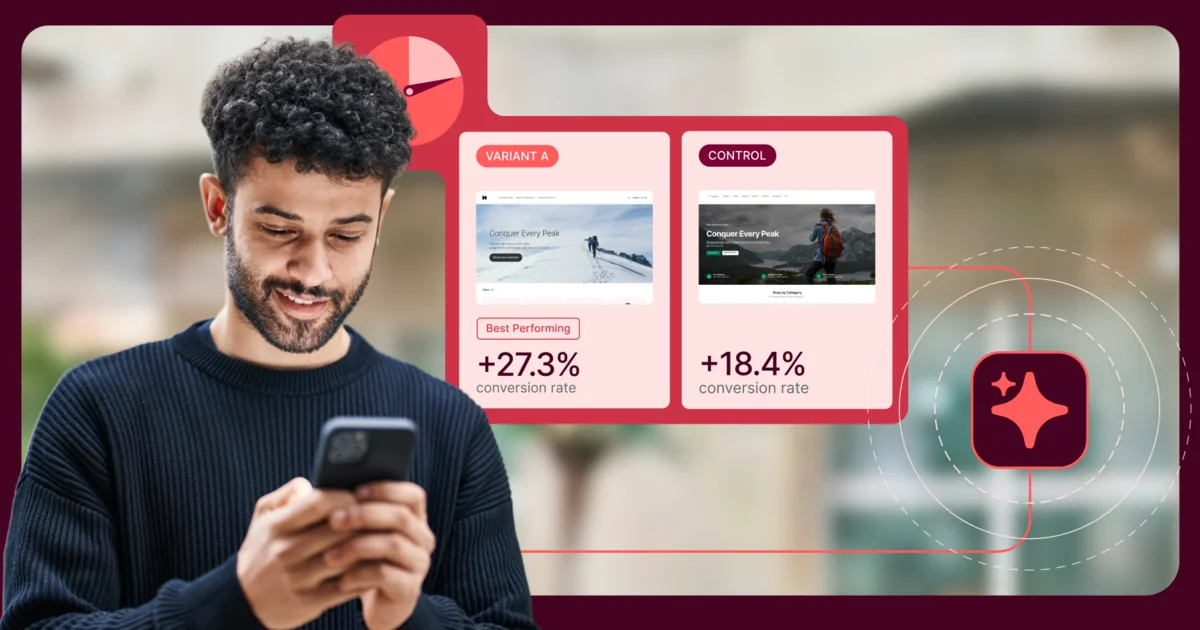
Contentsquare's AI-first Experience Platform tracks human, LLM and AI agent journeys, adding Sense agentic AI and testing integrations.
www.demandgenreport.comCustomer experience analytics company Contentsquare has released its reimagined Experience Platform in beta. Alongside human browsing, it separates and analyzes LLM referrals and autonomous AI agent activity, so they can be compared directly with human sessions.
New capabilities include automated WebMCP monitoring to capture agent activity, conversation intelligence that brings voice and chat into the journey, and multi-touch attribution that credits LLM and AI-referred traffic. Through MCP, the data can be used from tools such as Claude, Microsoft Copilot and ChatGPT. Its agentic AI layer, Sense, now runs experiments end to end, from hypothesis to launch to revenue validation, leaving teams only to approve. Contentsquare also deepened integrations with Dynamic Yield, Optimizely and Kameleoon.
As agent traffic grows, traditional web analytics struggle to show who did what. A single foundation that compares humans and agents is a prerequisite for testing, with numbers, whether a store is being chosen by agents.
Syndigo signs a multi-year strategic partnership with Microsoft to co-sell AI commerce solutions

Syndigo today announced a multi-year strategic partnership agreement with Microsoft to develop AI-powered commerce solutions.
markets.businessinsider.comUS product data company Syndigo announced on November 2 a multi-year strategic partnership with Microsoft. The two will develop commerce solutions that integrate Microsoft Foundry, Agent 365 and other services, and bring them to market through Microsoft's global sales organization.
Syndigo moves product data between more than 15,000 brands and 3,500 retailers. Its Product Experience Cloud (PX Cloud), covering master data management, product information management and syndication, runs on Azure, and its AI services help teams create and enhance product content with people reviewing the output before it goes live. Dressing and sauce maker Ken's Foods is using product data managed in Syndigo to prepare for agentic shopping.
In AI shopping experiences, the accuracy of product data directly affects whether a product gets chosen. Because Syndigo is available on Microsoft Marketplace and eligible purchases count toward Azure consumption commitments, adoption gets simpler for large brands and retailers.
South Korea's NOTAG KOREA automates cross-border sales for Korean brands with its agentic AI NABI

South Korean fashion and beauty brands are attracting international consumers, but bringing their products to overseas markets remains a complex undertaking. Managing multiple sales platforms, local regulations, customs clearance, logistics, and payments requires substantial resources.
koreatechdesk.comSeoul-based NOTAG KOREA runs cross-border sales for Korean brands through NABI, its agentic AI commerce operating system. It currently manages 204 Korean fashion and beauty brands and about 47,000 SKUs across 105 sales channels in Taiwan and Southeast Asia.
NABI uses eight AI agents to handle product registration, order management, outbound shipments, export VAT refunds and inventory synchronization. It also feeds sales data back into pricing, inventory and advertising decisions, and the company says it replaces more than 2,580 hours of manual work a year. Sales channels include Shopee, Lazada, Tokopedia, Taiwan's MOMO and Shopify, and the company has entities in South Korea, Taiwan and Indonesia.
NOTAG KOREA reported KRW 6 billion in revenue and a 5% net profit margin in 2025. The model lets brands sell in multiple countries without setting up overseas subsidiaries, and it is a concrete case of AI agents taking over sales operations.
Payments & Fintech
Tencent and Mastercard sign an MoU to explore cross-border and agentic payments
TenPay Global and Mastercard plan to work on QR acceptance for visitors to the Chinese mainland, Weixin remittances, and AI-enabled commerce.
thepaypers.comTenPay Global, the cross-border payment platform of Tencent, and Mastercard have signed a memorandum of understanding to explore cross-border payment interoperability and agentic payments. It covers three areas: QR code acceptance for international visitors in the Chinese mainland, remittances into the Weixin/WeChat ecosystem, and AI-enabled commerce.
For QR payments, the goal is to let international visitors pay at QR-enabled merchants in the Chinese mainland with the wallets and issuer apps they already use. For remittances, the partners will use Mastercard Move to let more overseas senders transfer money into Weixin. On agentic payments, they plan to carry over the interoperability, trust and security principles from cross-border payments and explore Mastercard Agent Pay, Agent Connect and Virtual C-Suite.
The MoU sets out areas to explore rather than defined product launches. Still, coming right after the OpenAI partnership covered in our top stories, it shows Mastercard pursuing the same product set with a major Chinese payment player, a sign of its strategy to connect Agent Pay to leading wallets in each region.
Sunrate launches a virtual commercial card that AI agents can use to pay

Sunrate, the global payment and treasury management platform, today announced the launch of Sunrate Agentic Card during Hong Kong FinTech Week 2026, a programmable, multi-currency virtual commercial card designed for AI agents to execute payments on behalf of businesses within predefined rules and a
ca.finance.yahoo.comBusiness payment and treasury platform Sunrate launched Sunrate Agentic Card on November 2 at Hong Kong FinTech Week 2026. It is a commercial card that lets authorized AI agents create virtual cards, initiate payments and retrieve outcomes within rules set by the business. The card has also completed Mastercard Agent Pay certification.
For procurement, marketing spend and supplier payments, businesses can issue a card per transaction or workflow and set spending limits and validity periods. Controls cover merchant category, amount, currency, geography and validity, and cards can expire automatically once a task is complete. Every action is recorded and auditable.
Sunrate already runs Sunrate.AI, which includes five agents for payments, FX, compliance and more. The product shows that moving AI from recommending payments to executing them depends on permission and audit mechanisms.
India's The Souled Store adopts Unlimit's payment infrastructure to handle launch-day surges

The Souled Store, India’s biggest pop culture merchandise brand, has rolled out payment technology from Unlimit, a worldwide financial infrastructure provider, to keep checkout running smoothly when shopper demand surges during product launches, exclusive releases and seasonal sales events.
fintech.globalThe Souled Store, India's largest pop culture merchandise brand, has rolled out payment technology from Unlimit across its website and app. The aim is to keep checkout stable when transactions spike during limited-edition releases. Customers can pay via UPI, net banking, and credit and debit cards.
The company holds more than 200 licenses and produces official merchandise drawn from films, anime, sport and more, with over 80 physical stores in India. During its recent Spider-Man collection launch, Unlimit handled payment acceptance as traffic peaked.
Unlimit describes itself as financial infrastructure for the agentic economy, with a payment network reaching more than 180 countries. For businesses whose orders concentrate at the moment of launch, payment stability directly determines how much demand turns into sales.
Advertising & Retail Media
Shopfully, Flipp and MEDIA CENTRAL combine under ShopX, a retail media group across 27 markets

The combined business employs more than 1,000 people and connects brands with 400 million shoppers worldwide.
retailnews.asiaShopfully, Flipp and MEDIA CENTRAL, which operate digital catalog and circular businesses, have combined under a new parent, ShopX. The group reaches 400 million shoppers in 27 markets and employs more than 1,000 people. Each business keeps its own brand, while the parent pools engineering, measurement tools and cross-border audience data.
The target is advertising tied to in-store purchases. About 80% of retail transactions worldwide happen in stores, yet the USD 200 billion retail media market is concentrated on e-commerce marketplaces. ShopX aggregates inventory across retailers so advertisers do not have to negotiate separate data agreements with each one.
The challenge is proof of results. Closed-loop attribution for in-store checkouts requires point-of-sale integration, which supermarket chains guard closely. ShopX plans to invest in attribution software and pursue further acquisitions.
US stores ring up most retail sales but earn about 5% of retail media revenue

E-commerce was 17.1% of US retail sales in Q2 2026, yet stores get about 5% of retail media revenue. Why screens need stock, POS and playback data.
www.marketscale.comAccording to the US Census Bureau, e-commerce accounted for 17.1% of US retail sales in Q2 2026, leaving most sales to physical stores. Yet Omdia estimates that brick-and-mortar stores earn only about 5% of retail media revenue. MarketScale laid out the gap.
In a survey by IAB and Grocery TV, 43% of US retail media buyers with active in-store budgets said their organization underuses them, naming activation complexity and measurement as the top barriers. Signage integrator Fingoweb argues that in-store screens can sell ads only when shelf stock, till data and playback logs sit behind them.
A field study of 237 campaigns and 30 million shoppers found an 8.1% rise in purchase likelihood for featured products. The demand is there, so the contest comes down to data connections and measurement.
TikTok Shop's holiday season: e.l.f. and Gap lean on livestreams and creators
TikTok Shop expects livestreams to drive its 2026 holiday season.
www.retailbrew.comMore brands are planning to drive holiday sales on TikTok Shop with livestreams and new product drops. According to TikTok Shop, live shopping sales more than doubled in the first half of 2026 compared with 2025, and the platform has added tools such as Live Auctions and shoppable links.
Beauty brand e.l.f. is launching new products, while Gap, Banana Republic and Old Navy will lean into creator-led discounts. Gaming and entertainment brand Nex will test live gaming inside the native live shopping experience for the first time. Executives from all three brands said selling on TikTok Shop creates a "halo effect" that lifts sales on other channels.
Completing discovery and purchase in one app also shifts the customer relationship toward the platform. Whether brands can use it to build awareness, not just to sell, will shape their results.
Global E-commerce Trends
Nojima says unauthorized access to its e-commerce sites leaked about 7 million member records

Japanese electronics retailer Nojima said on the 2nd that unauthorized third-party access to the membership management systems of its "Nojima Online"…
finance.biggo.comJapanese electronics retailer Nojima said on November 2 that unauthorized third-party access to the membership management systems of its Nojima Online e-commerce site and its used smartphone buyback site leaked roughly 7 million member records. The access was detected on November 1.
The leaked data includes names, dates of birth, addresses, phone numbers, email addresses, login IDs and encrypted passwords. Nojima says it does not hold credit card information in the first place. Both sites have been suspended while safety is verified, and the company will announce a restart date once that is confirmed.
Nojima is investigating whether any secondary harm has occurred and has posted a warning on its official website. With a string of unauthorized access disclosures at major Japanese retailers and service companies, e-commerce operators with large member bases face pressure to review authentication and monitoring.
Germany's Breuninger expands its online shop to 11 more European countries, reaching 24 markets

The fashion, beauty, and lifestyle retailer is strengthening its international expansion strategy by entering Bulgaria, Croatia, Slovakia, Slovenia, Estonia, Finland, Greece, Ireland, Latvia, Lithuania, and Portugal.
uk.fashionnetwork.comBreuninger, the long-established German fashion, beauty and lifestyle retailer, has expanded its online shop to 11 more European countries, including Portugal, Finland, Greece and Ireland. Having started 2026 with 10 markets and then added Denmark, Romania and Sweden, it now serves 24 markets, more than double the number at the start of the year.
Orders from the new markets are processed at the Sachsenheim distribution center in Germany, with DHL Paket International handling international delivery. The centralized model captures economies of scale without replicating operations in each country. CEO Holger Blecker said the expansion reinforces the online business as a key driver of growth.
Breuninger's marketplace, launched in Germany in 2020, operates in Germany, Austria, the Netherlands and Poland, but Portugal was not included in this expansion of that business. Competing with Farfetch and Zalando in premium e-commerce, delivery and return conditions will be key.
Corporate Moves & Partnerships
Estée Lauder partners with Microsoft on cloud, data and company-wide AI

The Estée Lauder Companies has announced a new partnership with Microsoft involving its cloud and data foundation and supporting the adoption of AI enabled capabilities across the business.
www.retailtechinnovationhub.comThe Estée Lauder Companies has announced a partnership with Microsoft covering its cloud and data foundation and the adoption of AI capabilities across the business. The partnership is a major part of the company's One Operating Ecosystem, which brings together shared platforms, connected data and partners.
A key initiative is using the Microsoft platform to advance a unified data platform. It connects data across brands, regions, channels and functions, reducing duplication, enabling reusable data products and giving more consistent access to insights. Chief Technology and Transformation Officer Brian Franz said it will help deliver more relevant experiences while improving productivity and margins.
For companies with many brands, fragmented data limits what AI can deliver. Estée Lauder has chosen to build the foundation first.
Logistics & Fulfillment
Carrefour Spain's rapid delivery network passes 700 stores
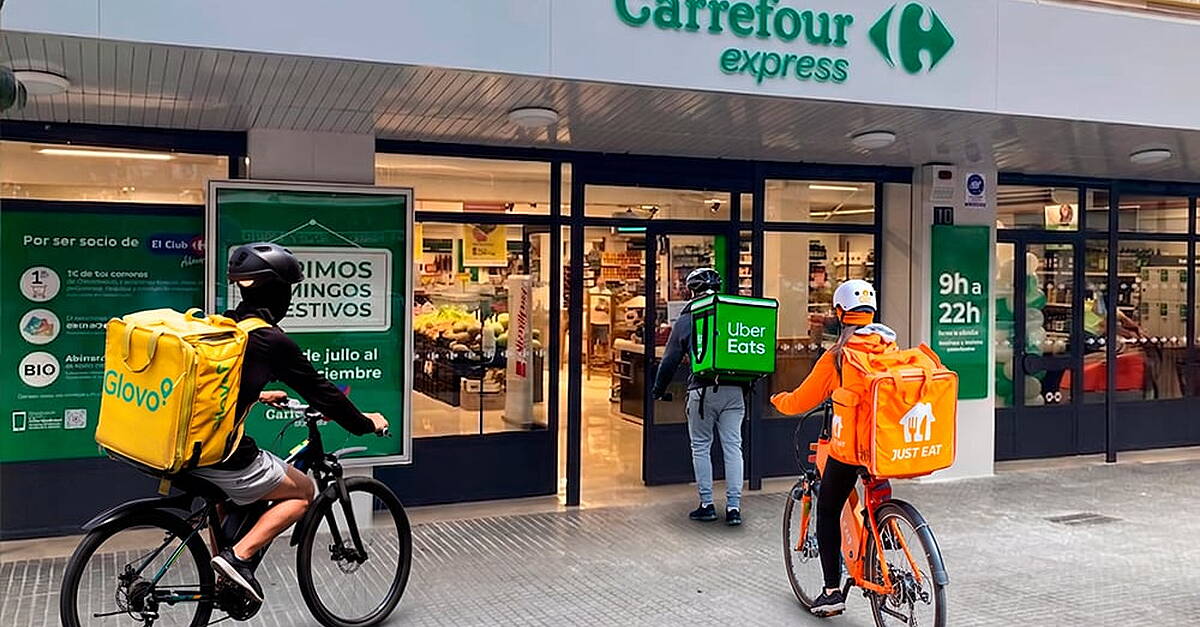
Carrefour Spain has scaled its rapid delivery operations past the 700-store milestone after increasing operational capacity by 40% this year.
www.esmmagazine.comCarrefour Spain said its rapid delivery operations, which reach customers in under 60 minutes, now cover more than 700 stores. It has added 200 locations this year, increasing operational capacity by 40%. Orders come through delivery apps such as Glovo, Uber Eats and Just Eat, with fresh products picked from the store at the time of the order.
Carrefour is also deepening its ties with delivery apps. The 11 million members of El Club Carrefour can earn 3% back in ChequeAhorro vouchers when they link their loyalty card number at checkout on Glovo or Uber Eats. The retailer is also piloting late-night delivery in Madrid and Barcelona.
Rather than insisting on its own app, Carrefour uses third-party delivery apps as the entry point and keeps customers through loyalty benefits. It shows how quick commerce competition is becoming a contest of store networks and member bases.
US holiday parcel volume to rise 4% to 2.4 billion packages, ShipMatrix forecasts
Parcel carriers are expected to have their best peak season this year since 2022, according to forecasting from ShipMatrix.
www.freightwaves.comShipMatrix estimates that parcel carriers will deliver about 2.4 billion packages during this year's peak shipping season, up 4% from the same period last year. An extra shopping day helps, and the volume would be the highest since 2022, when the Covid-driven e-commerce spike peaked.
Shipping costs, however, are up 16% from last year, driven mainly by fuel surcharges and other fees. FedEx and UPS implemented 5.9% general rate increases this year and plan to repeat them in 2027, and some retailers have raised the minimum spend for free shipping. UPS will hire 100,000 seasonal workers, while Amazon plans to hire 300,000, up 20% from last year.
In the first half, US domestic parcel volume rose 9.7% for Amazon and 4.6% for FedEx, while UPS and USPS declined. The difference, about 145 million packages, shifted to large retailers' own networks such as Walmart's and to alternative carriers. Rising rates and a more fragmented delivery network directly affect how merchants set holiday shipping terms.
Consumer Trends
Southeast Asian online retail revenue rose 21% in Q4 2025, with shoppers researching for 22 days

Shoppers across the region spent an average of 22 days researching products before buying during Singles’ Day.
retailnews.asiaAccording to Criteo, online retail revenue across Southeast Asia rose 21% year on year in Q4 2025. Website traffic was largely flat, and growth came from higher conversion rates. In Singapore, retail website visits fell 15%, but conversion rates jumped 39% and merchant sales grew 18%.
Around Singles' Day, shoppers spent an average of 22 days between first viewing a product and placing an order. They evaluated an average of 3.8 brands within a single platform, nearly double the level in the US and Europe. Gains concentrated in marketplace and department store platforms, which grew online revenue 41%. Purchases also spiked on the eve of major sale dates.
In a region with a sale almost every month, shoppers know a good price will come around again. That habit of extended comparison could also make the region a large market for AI shopping assistants that do the comparing for them.
Summary
Today's news shows that the spread of agents is turning into a fight over where people buy. Walmart extended Sparky to in-store shelf guidance, Amazon is pulling outside products into its own store, and in China more than 150 apps refused screen automation by outside agents. The larger the platform, the harder it works to keep the starting point of shopping inside its own walls.
On the payments side, Mastercard expanded partnerships with OpenAI, Tencent and Sunrate around the same product set, built on full tokenization. Miebach acknowledged it is still early, but expects the holiday season to accelerate adoption. BCG's JPY 12.5 trillion estimate for Japan also shows the market growing first at the stage where AI shapes decisions, before it executes purchases.
In the days ahead, watch how far Chinese platforms can show results for their AI as Double 11 peaks, and how Walmart and Mastercard report agent-driven transactions during the holidays. Tools like Contentsquare's and Syndigo's, which measure agent visits and supply accurate product data, are the near-term groundwork for e-commerce operators.