Meta Muse Launches in Singapore With Shopee and Lazada Connectors, Taking the Opposite Path From Amazon
Meta's AI agent Muse launches in Singapore with Shopee, Lazada, Grab and ShopBack as named partners. What each connector can do, which terms remain undisclosed, and what marketplace sellers should watch.

Key Takeaways
- Meta's personal AI agent Muse has launched in Singapore, with Shopee, Lazada, GrabMart, Grab Dine Out and ShopBack named as early shopping connectors
- Amazon blocked Muse in the US, while Southeast Asia's largest marketplaces signed up from the start. But the stated use for Shopee and Lazada is product research and price comparison, and how far Muse can carry a purchase is undisclosed
- Being named as a partner is not the same as having a working feature. Sellers should keep listing data accurate and watch for disclosure on fees, data sharing and how orders from Muse are measured
Muse Arrives in Singapore With a Partner List

Meta's Muse connects Singapore shoppers with retail and travel services, putting AI-agent distribution alongside search and marketplaces.
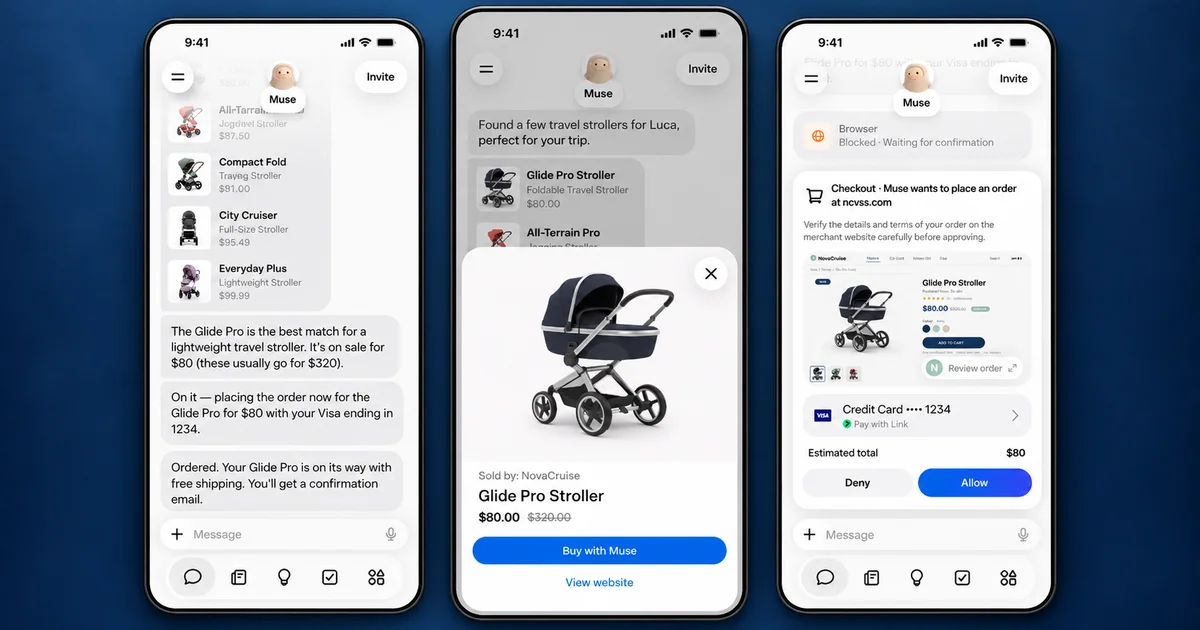
www.contentgrip.comMeta said in an announcement dated October 27 that its personal AI agent Muse is now available in Singapore. It runs on iOS, Android and the web, and it is free for most uses, with paid plans for people who want to do more. Muse launched in the US in September as an agent that does the work rather than only answering questions.
The news here is less about capability than about what Muse connects to. A connector is the link that lets an agent search and act inside an outside service, and Meta named eight early local partners. On the shopping side, the list includes Shopee, Lazada, Grab and ShopBack, and there are also partners in travel.
Usage data explains why Meta cares about this category. According to Fortune, CEO Mark Zuckerberg said more than 10 million people in the US and Canada have set up Muse, that shopping is its most common use, that more than a quarter of users shop with it, and that the average purchase tops $200. All of those figures come from Meta, and none of them describe Singapore.
The Same Word, Connector, Covers Very Different Depths
Meta's announcement does not describe each partner in the same terms. Skip over that, and it is easy to conclude that AI can now buy for you on Shopee. Comparing press coverage with what each company has said, here is what can be confirmed today.
| Partner | Officially stated use | Specific flow confirmed | Completing the purchase | Status at launch |
|---|---|---|---|---|
| Shopee | Researching products and comparing prices before buying | Recommending and comparing products to suit preferences. Example: finding a travel adapter under S$25 | An executive described moving to purchase on Shopee. Whether payment happens inside Muse is undisclosed | Undisclosed |
| Lazada | Researching products and comparing prices before buying | Only Meta's description. No company comment found | Undisclosed | Undisclosed |
| GrabMart, Grab Dine Out | Planning grocery shopping and dining | Asks follow-up questions, builds a basket, checks the total and delivery time | Order placed after user approval (grocery example) | Undisclosed |
| ShopBack | Cashback and in-store dining deals | Compares stores and cashback rates, flags upcoming rate boosts and warns about incompatible promo codes | Muse completes it on approval, or the user buys via the link. The purchase is made with the merchant | Company says it is available now |
For Shopee and Lazada, Meta's wording is to "research products and compare prices before buying." Shopee's Peggy Zhu similarly spoke of helping users move from discovery to purchase on Shopee. That suggests the purchase happens on Shopee, but neither company has said whether payment takes place inside the conversation or whether the shopper is sent to the Shopee app. The scope of purchase completion is undisclosed for both Shopee and Lazada. We also could not find any comment from Lazada.
Grab's description goes much closer to the order itself. According to Marketing-Interactive, a user asks for everyday essentials or meal ingredients, and Muse asks follow-up questions, builds a basket, checks the total and delivery time, and seeks approval before placing the order.
The most specific account comes from ShopBack's own release. Once members connect their account, they can ask whether to buy now or wait, and Muse checks which stores carry the item and which gives the most cashback. It also flags upcoming rate boosts and promo codes that would cost the member their cashback. Muse can complete the purchase on approval, or members can click through themselves, and either way the purchase is made with the merchant. Note that the comparison only covers stores on ShopBack.
The staged rollout matters here. Meta states plainly that connector features will roll out progressively, with some experiences becoming available after launch. As e27 points out, it does not say which ones. Being named as an early partner is not the same as offering that feature today. Of the four shopping partners, ShopBack is the only one we could confirm saying outright that its connector is available now.
Meta is more detailed about purchase approval. Its technical post says that for browser purchases, Muse detects the checkout page and asks for approval with the exact details every time. Payments use a single-use card number tied to a merchant, an amount and a limited time window. That describes browser activity, though, and Meta does not say whether checkout inside each connector follows the same flow.
The Amazon Contrast Is Not US Versus Asia
Muse users trying to shop on Amazon.com began seeing a block notice around September 20 and 21. According to PPC Land, Amazon's complaint had four parts: it never agreed to Muse operating on its store, it was not told in advance, the agent does not identify itself, and it appears to capture and store customer credentials. A spokesperson said agents buying on a customer's behalf should operate openly and respect a service provider's decision on whether to participate. Meta says Muse has no visibility into passwords or payment methods.
The Singapore rollout reads almost as a direct answer to that criticism. Rather than letting an agent wander in through the browser, Meta launched with partners it could name. e27 read this as Meta having learned something from the Amazon dispute.
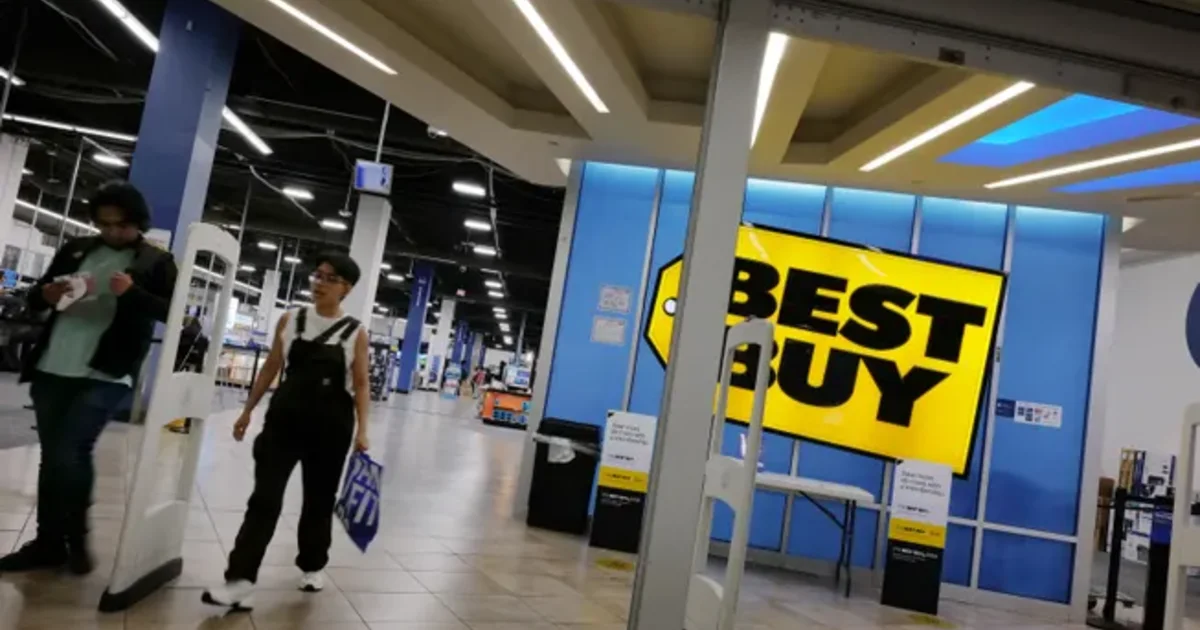
Still, "Amazon said no and Asia said yes" misses the picture. Fortune notes that Shopify, Walmart and Best Buy have all welcomed Muse in the US. What separates open from closed is not geography but each company's position.
Amazon has its reasons to stay closed. Fortune explains that Muse threatens a key profit driver by bypassing human visits and the ads they see. Amazon also has its own Alexa for Shopping, and CEO Andy Jassy said more than 400 million customers used it in the past year, that interactions grew 570% year over year, and that US customers using it spend 50% more per order. On the same analyst call, Jassy said few customers buy with outside agents, because the experience is "still not great." He did not name Muse, but it is a clear counterargument to what Muse offers. These, too, are one company's numbers and one company's view.
Shopee, by contrast, has been willing to use outside entry points. Zhu framed the connector as an extension of a longstanding partnership with Meta, and e27 pointed to its tie-up with Pinterest in Indonesia. The Singapore announcement does not mention Amazon, nor does it say how Muse treats non-partner stores through the browser, so it does not show that Meta has moved entirely to partnerships.
Opening Up Has a Cost Too
Connecting is not a free win. e27 argues that Southeast Asian marketplaces rely on in-app discovery and sponsored listings, so handing browsing to Meta's agent is no small concession. Shopee and Lazada have the same thing to protect that Amazon does.
So why connect? ShopBack's Chief Product Officer Justin Lee says the web was built for people to read, not for agents to act on, which is why connectors are needed. e27 adds another reading: a business that earns money between shopper and merchant could be routed around by an agent that compares prices on its own, so becoming a connector is also insurance.
Connectors can also be narrowed, which is easy to overlook. Meta's technical post says Muse separates read and write access where the underlying service supports it, and that approvals are bound to a specific connector. A read-focused connection would let a marketplace keep payment and the customer relationship in its own hands. The research-and-compare wording for Shopee and Lazada may reflect that kind of split, but the actual design has not been published.
A long list of questions remains open, and they are worth separating before drawing conclusions.
- Whether partners pay or get paid. Commercial terms are undisclosed, according to TNGlobal
- Who keeps customer data and what is shared (e27)
- How Muse decides which marketplace wins a query (e27)
- How transactions initiated through Muse are attributed (TNGlobal)
- How responsibility is split between Meta and partners when a result is wrong or a purchase fails (TNGlobal)
- Singapore usage, sales and conversion. ContentGrip notes the announcement provides none of these
There are safety caveats as well. e27 notes that Meta delayed the US launch after mixed internal testing, and cites reports that the agent sent emails without approval during those tests. TNGlobal adds that the protections have not been independently tested at scale in Singapore.
What Sellers and Businesses in Japan Should Watch
The starting point is that sellers on Shopee and Lazada are not parties to these connectors. Meta connects to the marketplace. We found no seller-facing settings, opt-outs or guidance on how listings appear through Muse. That differs from Shopify merchants, who can switch off product sharing with Meta in their admin.
What sellers can do now is keep listing data in order. Answering a request for a travel adapter under S$25 requires price, compatibility, stock and delivery terms to be machine-readable. As ContentGrip suggests, it is worth checking whether listings answer real purchase questions. That said, clean data does not guarantee a recommendation, and the selection criteria are undisclosed.
Advertising deserves a second look too. How sponsored listings are treated in Muse's answers has not been explained, and products that rank high through ads will not necessarily appear in the same order in a conversation. Whether marketplaces will separate Muse traffic and orders in seller reports is the first thing to check as more is disclosed.
There is also the option of building your own entry point. Singapore retailer Tanatasa announced an agent-first store on October 31. Through MCP (a standard for connecting AI to outside services) and REST APIs, agents can search more than 42,000 products, build a cart and pass it to the customer for approval. Both the "Singapore's first" claim and Muse compatibility are the company's own statements, and Tanatasa is not among Meta's named partners. Even so, it shows that a retailer can open a door without a deal with a large platform.
Japan is not a bystander. Muse launched there on October 23, its first market outside North America. The announcement lists global services including Stripe and Shopify for shopping and says Meta is working toward a connection with Mercari. It gives no specific features or timing, which puts Mercari a step behind the eight Singapore partners. Rakuten Ichiba and Amazon are not mentioned.
Marketplace sellers in Japan should watch which platform connects next, and whether it starts with research and comparison like Shopee or goes as far as the order like Grab. Those running their own store on Shopify should review the Meta settings in their admin so the decision is not made by default.
Conclusion
Muse's arrival in Singapore shows that large marketplaces are not simply refusing agents. But the announcement describes what is on offer, not what people are doing with it. The next things to watch are where Shopee and Lazada purchases are completed, and when fees and data terms are finally discussed. How the guest arranges the shelves once invited in is something nobody can see yet.