Walmart Adds Six Features to AI Shopping Agent Sparky: Handwritten Lists to Carts, Flashing Shelf Labels with Shop to Light, and Spanish and French for Canada and Mexico
Walmart's AI shopping agent Sparky now turns photos and handwritten lists into carts, builds recipes, suggests healthier swaps, lights up shelf labels in store, and speaks Spanish and French. What the wider entry points mean for brands and ecommerce merchants.

Key Takeaways
- On October 30, 2026, Walmart added six capabilities to its AI shopping agent Sparky: photos and handwritten lists turned into carts, recipes with one-tap ingredients, healthier swaps, in-store search linked to Shop to Light shelf labels, and Spanish and French support
- Most of the new features start from a note, a photo, or a meal plan rather than a product name, and route the shopper either to an online cart or to a specific spot on a store shelf
- Sparky now decides which product fills generic lines such as "paper plates" or "broth" more often, so brands and merchants need to think about both getting into purchase history and being chosen on product information
Walmart Adds Six Features to Sparky Ahead of the Holidays

Retailer rolls out new AI capabilities ahead of holidays
progressivegrocer.comOn Friday, October 30, 2026 (U.S. time), Walmart announced six new capabilities for its AI shopping agent Sparky in a newsroom post titled "Sparky Makes Holiday Magic Real." The timing is deliberate. According to Chain Store Age, Walmart's first Black Friday sale starts November 12.
The post opens with the line that the holidays turn one shopping list into five. There is the gift for someone who needs nothing, the dinner that just grew by six guests, and the school party that is somehow tomorrow. Walmart's pitch is that Sparky shortens these multi-step missions.
Here are the six features at a glance.
| New feature | Input | What Sparky returns |
|---|---|---|
| Show Sparky a picture of the problem | Photos or screenshots (a stained sweater, a look to recreate) | Identifies what is needed, recommends products, delivery in as little as 30 minutes |
| Handwritten lists to a cart | A photo of a handwritten list, or a list exported from the Notes app | A cart matched item by item (alternatives when items are unavailable) |
| In-store wayfinding with Shop to Light | The item a shopper wants to find in store | An aisle pin on the store map, and a shelf label that lights up via 'Flash price tag' |
| Tell Sparky your culinary vision | Group size, budget, dietary needs | Step-by-step recipes and ready-to-buy ingredients |
| Healthier swaps | A recipe, or items already in the cart | Lower-sugar or lower-calorie alternatives |
| Spanish and French | Text in Spanish or French | Replies in the same language (also available in Mexico and Canada) |
We have previously covered Sparky's super agent vision and Walmart's Agent Gateway for outside agents. This announcement points in a different direction. It is not about connecting to other agents. It widens what Sparky can take in and where its answers land.
A Handwritten Note Becomes a Cart
Of the six features, Walmart describes the handwritten list with the most enthusiasm. Shoppers photograph a handwritten list, or export a list from the Notes app, and Sparky matches each line to a product and builds a cart. The official post names gift lists, party supply lists, and even children's handwritten Christmas lists as examples.
Walmart's sample screens show how it works. In the example transcribed by PPC Land, Sparky replies that the Glad trash bags the shopper bought before are out of stock, that the list is for the shopper's usual store, and that it recommended options for items the shopper has not bought before. The resulting list holds nine items totaling $64.21.
Three mechanisms sit inside that reply. The first is matching against purchase history: if the shopper bought a product before, it becomes the default for that word on the list. The second is a stock check at one specific store. The third is Sparky choosing a product on its own where no history exists.
For brands, that difference matters a great deal. If a note just says "paper plates," a brand already in the shopper's history is picked automatically, while every other brand competes for a recommendation slot. Walmart has not explained how Sparky ranks options for items with no history.
Photos are not limited to lists. Shoppers can show Sparky hot cocoa spilled on a sweater, cranberry sauce on a tablecloth, or a look they want to recreate, and Sparky identifies what they need, recommends products, and offers delivery in as little as 30 minutes. According to PPC Land, the sample screen first explains how to treat the stain and only then shows stain removers under "Sparky's Picks."
Walmart is not first with handwritten list recognition. PPC Land notes that Amazon added it to Rufus on iOS in November 2025. The difference is that Walmart ties the feature directly to store-level inventory and 30-minute delivery.
From the Screen to the Shelf: Shop to Light
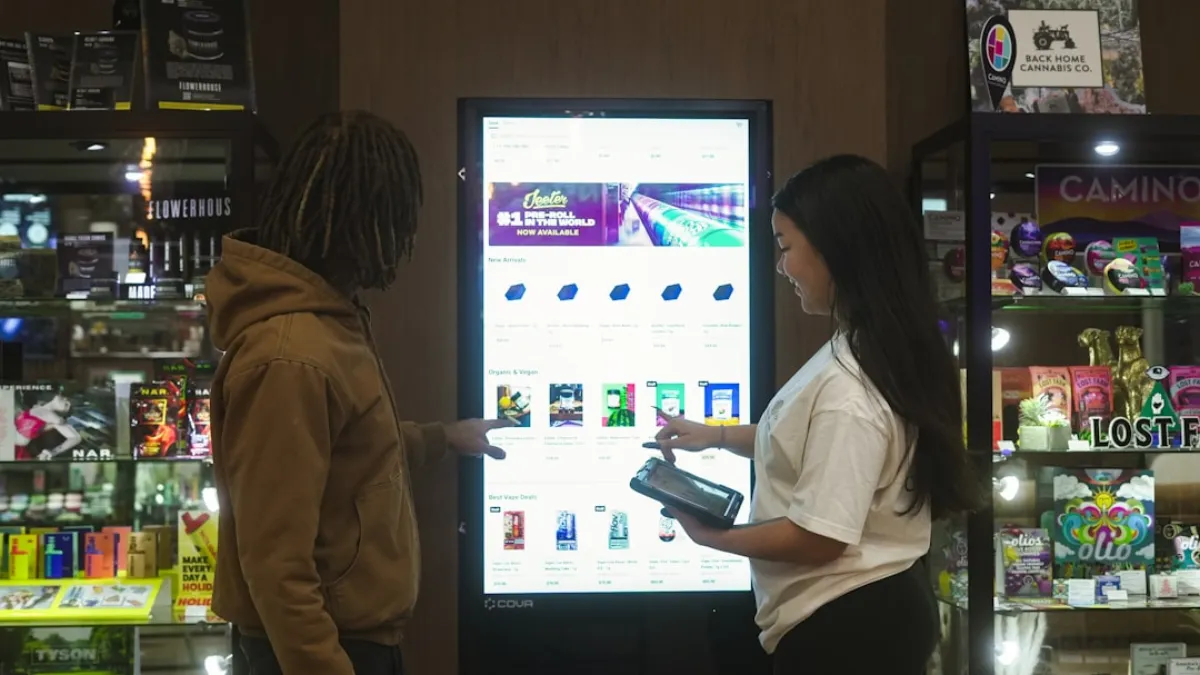
The third feature takes Sparky beyond the phone screen. In a store, a shopper asks Sparky for an item and gets an aisle pin on the store map. Once in the aisle, tapping "Flash price tag" makes the electronic shelf label (ESL) light up to show exactly where the product is.
The foundation is Shop to Light, which Walmart launched this fall. According to Progressive Grocer, Walmart has finished rolling out electronic shelf labels across its entire U.S. store network, and Shop to Light uses the LED already built into each label. The same LEDs power Pick to Light, which guides associates to items for online orders, and Stock to Light, which shows where restocked products belong. Walmart wrote that none of it is particularly high-tech, and that this is the point.
Until now, Shop to Light lived in the Walmart app. Folding it into Sparky links planning a menu, turning a list into a cart, and finding a shelf into one conversation. Online shoppers get delivery, and store shoppers get a light on the shelf. One agent now covers both counters.
Electronic shelf labels have drawn concern. Responding to fears of individualized pricing, CEO John Furner wrote in a September 25 open letter that Walmart prices the product, not the person, and pledged that information shared with Sparky will not be used to raise prices or bury cheaper options. In the same letter, he said the labels exist to make shelf prices match the register and to spare associates from swapping paper tags.
Recipes and Swaps: When a Category Word Picks the Product
The fourth and fifth features target grocery trips. Shoppers describe the group size, budget, and dietary needs, and Sparky generates step-by-step recipes and can add all the ingredients to the cart. The official post candidly notes that Sparky cannot help with the cooking.
PPC Land describes a concrete example. Asked to plan Friendsgiving for 15 people, two of them vegetarian, on a $125 budget, Sparky first checks purchase history, finds no close matches, and builds the menu from scratch. It treats turkey, at about $1.78 per serving, as the budget anchor and scales the sides to fit.
Swaps work on two levels. Sparky suggests healthier ingredients for a recipe, and it also suggests alternatives to items already sitting in the cart. Walmart's example request is a lower-sugar alternative to marshmallows.
This is where brands should pay the most attention. Sparky chooses both the ingredients on the recipe cards and the replacement candidates for cart items. PPC Land points out that none of the product cards in the sample screens is marked as sponsored, and that the post does not say whether a replacement can come from another brand or whether any placement is paid.
Languages and Three New Groups of Shoppers
The sixth feature adds Spanish and French. Sparky detects the input language and replies in kind. The post adds that the feature is also available in Mexico and Canada, which makes it groundwork for expansion abroad.
That expansion is already under way. According to The Canadian Press via BNN Bloomberg, Sparky launched in Canada on the same day, October 30, more than a year after its U.S. debut. Andrew Go, vice president of e-commerce at Walmart Canada, highlighted its ability to plan lists around a budget or an occasion such as a holiday meal.
Mexico came earlier. Expansión reported on September 24 that Sparky was available in the Walmart de México app. Karthicka Krishnasamy, vice president of eCommerce at Walmart de México, said she expects the biggest change to be a shift from product-based search to intent-based shopping. The same article reports that Walmart de México's e-commerce net sales grew 15.4% year over year in the first half of 2026.
In the U.S., Sparky is also scaling to Sam's Club members. A footnote says voice capabilities are expected to launch chainwide by the end of the year.
What the Announcement Leaves Out
The post sticks to features and offers almost no numbers. PPC Land notes that it includes no executive quotes, no usage figures, no per-feature launch dates, and no store count for Shop to Light. The expansion to Canada, Mexico, and Sam's Club also comes without dates.
Data handling is another gap. The new features rely on images of shoppers' homes, clothing, and handwriting. The post does not say how those images are stored, how long they are kept, or whether they shape later recommendations. With children's handwritten lists among the examples, this question will come up.
Usage, however, is clearly growing. According to PPC Land, Walmart said in February that about half of its app users had engaged with Sparky and that their average order value was roughly 35% higher than other customers' (our earlier coverage). By August, the number of Sparky users was up 70% year over year. Rivals are moving too. Chain Store Age notes that Amazon just added more than 100 shopping actions to its Alexa for Shopping voice assistant.
What It Means for Ecommerce Merchants
What the six features share is that the agent gets involved before the customer knows a product name. "Paper plates" on a note, "broth" in a recipe, a stain in a photo. Each is a category or a problem, not a brand. Sparky decides which product fills it.
For brands selling at Walmart, being bought once and entering purchase history becomes more valuable. The ranking criteria are undisclosed, but for items without history, price, availability, and accurate product information are what brands have to compete with. And because of swap suggestions, a product in the cart is not guaranteed to stay there.
Merchants running their own stores should not treat this as someone else's problem. If shopping starts from handwritten notes and photos, product pages need information that tells an agent what a product is for and what it can replace. For merchants with physical stores, Walmart's design, which carries online guidance all the way to a shelf location, shows the value of connecting store and online inventory and location data.
Conclusion
Walmart's announcement turns Sparky from a chat that answers questions into a counter that takes notes, photos, and menus and routes them to a cart or a shelf. With Spanish and French support arriving alongside Canada and Mexico, that counter now crosses borders.
The next things to watch are how ads enter the product slots Sparky fills, and how Walmart explains its handling of image data. How much shoppers use handwritten lists and Shop to Light during the holiday rush will show whether an agent can become the front door of the store.