Meesho's AI Already Drives 75% of E-commerce Orders: Betting on Understanding Bharat to Take On Google and OpenAI
India's social commerce giant Meesho says its in-house AI engine PRISM already powers over 75% of all orders. Chief Data Scientist Debdoot Mukherjee reframes shopping as a conversation with a neighborhood shopkeeper, making deep understanding of Bharat shoppers the core differentiator.

Key Takeaways
- Meesho's in-house AI engine PRISM already drives over 75% of all orders on the platform
- Instead of search bars and product lists, Meesho aims to recreate a conversation with a neighborhood shopkeeper
- As Google and OpenAI move into AI commerce, understanding Bharat shoppers becomes the sharpest differentiator
Meesho shows what "shopping without search" looks like today

Meesho is using AI to rethink how India's next-billion shoppers discover and buy products.
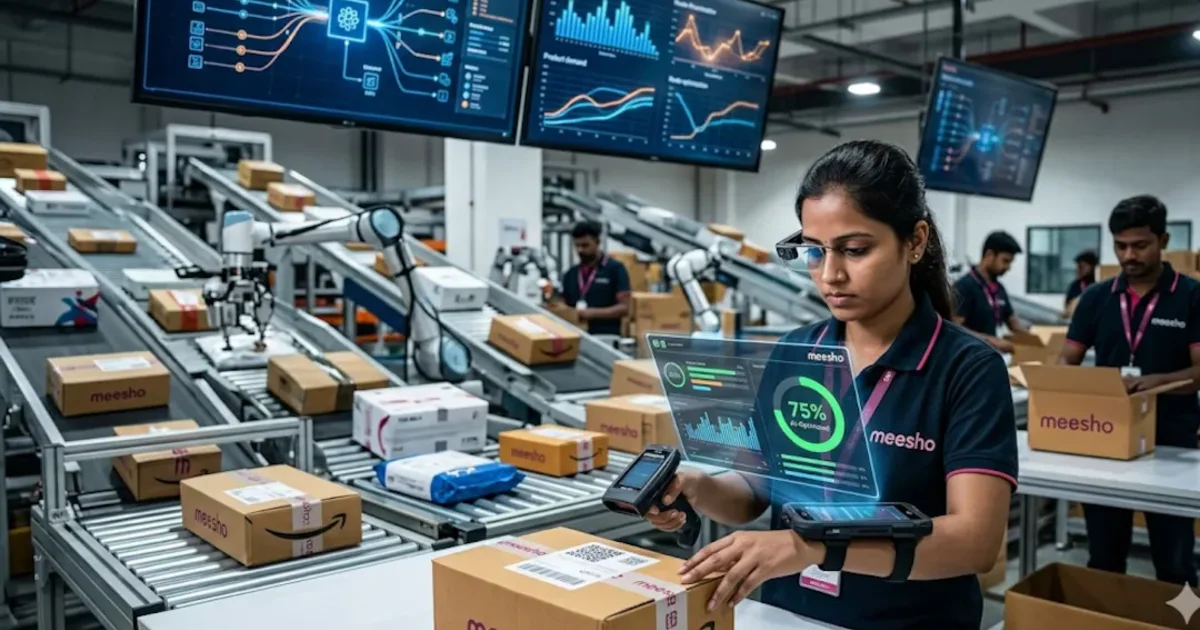
analyticsindiamag.comIndia's social commerce giant Meesho has revealed that its in-house AI engine, PRISM, now drives more than 75% of orders on its platform. These are purchases that originate from AI-generated personalized product feeds rather than keyword search. The figure makes clear that AI recommendation has shifted from a helper feature to the main path to purchase.
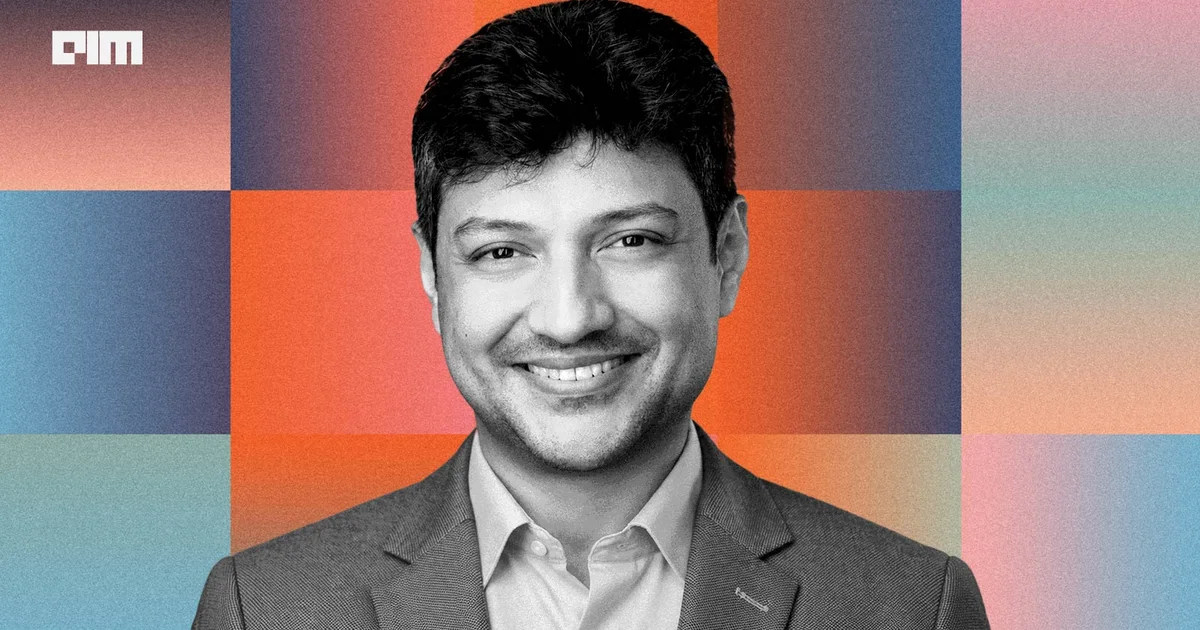
Leading this effort is Debdoot Mukherjee, Chief Data Scientist and Head of AI and Demand Engineering. He questions the very UX of e-commerce, which traces its lineage to the American supermarket. "You start with a product listing page, move to a product details page, add items to a cart, and finally check out. It is inspired by how supermarkets work in the US," he says, arguing that this premise is overdue for a rethink.
What Mukherjee puts in its place is the conversation with a neighborhood shopkeeper in India. "When we walk into a store in India, the shopkeeper has already assessed what kind of customer we might be. Shopping is conversational." The shift from discovery that begins at a search bar to discovery offered after the shopper is understood sits at the heart of Meesho's design philosophy.
Inside the PRISM bet
PRISM stands for Personalised Ranking & Intent Signal Module, a system that reads behavioral, transactional, and contextual signals. According to CIOL, it is built from more than 100 AI ranking models, trained on over 400 trillion input signals, and executes 6 trillion inferences a day within milliseconds. That engine generates a distinct product feed for each of Meesho's 264 million annual transacting users.
Making this scale viable is BharatMLStack, the company's own ML platform. It is designed to support high-throughput AI workloads at far lower inference cost than conventional cloud infrastructure, providing the foundation to run massive personalization in a thin-margin market. A built-in LLM-powered engine called Trendpulse surfaces emerging demand patterns across regions early.
What stands out is that this technology is explicitly built for "the next hundred million." Speaking of those coming online for the first time, Mukherjee says they "will not search, they will discover. They will not type, they will speak, browse, and expect technology to meet them where they are." The idea is to optimize not for users who can master a search-first UX, but for users who do not take it for granted.
Why understanding "Bharat" becomes the weapon
The key word here is "Bharat." It refers to the emerging shopper base living in Tier 2 and Tier 3 cities and rural areas, as distinct from India's large metros. These are people who use WhatsApp and Facebook daily yet feel friction with conventional e-commerce interfaces. Meesho treats this group not as a periphery but as the center.
Its emblem is the voice shopping assistant Vaani. According to Social Samosa, Vaani is built on Google's Gemini models and was announced in May 2026 under a partnership with Google Cloud. It lets shoppers find products by voice in Hindi and English, targeting users in Tier 2 and Tier 3 cities who dislike typing. It also understands both speech and what appears on the screen through multimodal capabilities.
The results are already showing in the numbers. Users who interact with Vaani convert at a 22% higher rate and are less likely to return or cancel orders. In its first month, 1.5 million people used the assistant. The hypothesis that removing the "typing problem" through voice itself lowers the barrier to entry for emerging shoppers is being borne out by early data. Support for more than 10 Indian languages extends the same line of thinking.
The axis of competition with global giants
Behind Meesho's urgency lies a shifting competitive landscape in AI commerce. Giants like Google and OpenAI are moving to fold the purchase experience into search and conversation. If a general-purpose AI assistant controls the entry point of "where and what to buy," e-commerce platforms risk being relegated to subcontractors.
Meesho's answer is not the sheer scale of its technology but deep understanding of a specific user base. How Bharat shoppers discover, what makes them hesitate, and in what words they want to be addressed. This contextual knowledge is hard to derive from a generalized model trained on broad data. When Mukherjee says "the player that truly understands the user and comes up with innovations that are user-first will win in this market," this conviction is the backdrop.
Competition also continues with Amazon and Walmart-owned Flipkart. Meesho began in 2015 as social commerce capturing first-time buyers via WhatsApp and has since grown into a full marketplace. That distinct origin now feeds directly into its differentiation around understanding Bharat, fitting naturally with the discovery-led model of the AI era rather than fighting over search-savvy urban users.
An IPO that validated the growth story
The investment in technology was rewarded in capital markets as well. According to TechCrunch, Meesho listed on the NSE and BSE on December 10, 2025, opening at a 46% premium over its issue price. It raised roughly $606 million in one of India's most closely watched large e-commerce listings, with 234.2 million transacting users over the trailing 12 months.
At listing, existing investors SoftBank, Prosus, and Fidelity had not sold any shares. Expectation for a growth story rooted in the emerging shopper base drew strong demand from both institutions and retail investors. The discovery-led purchase model is being priced in not as a technical experiment but as the core of business value.
Conclusion
What Meesho's case shows is that the outcome of AI commerce is not decided by model size alone. Even after reaching a state where AI drives 75% of all orders, what the company stresses is not the scale of its technology but its understanding of one specific user base, Bharat. Discovery that does not assume search, conversation that does not assume typing, and contextual knowledge that general models struggle to capture. Tying these together forms its axis of differentiation against the global giants.
In markets including Japan, agentic commerce is likewise moving to fold purchasing into search and conversation. The question then becomes how deeply, and for whom, a company truly understands the act of shopping. Meesho's bet offers one clear answer to that question.