DoorDash Says Third-Party AI Agents Have Produced Only Several Hundred Orders, and Amazon Agrees: What the Gap With In-House Agents Means for Merchants
On their earnings calls, DoorDash and Amazon played down outside AI agents and promoted their own. How to read the numbers, the caveats, and where merchants should invest first.

Key Takeaways
- DoorDash CEO Tony Xu said on October 29 that third-party AI agents have produced only several hundred orders in total, against 993 million total orders in the third quarter. The same day, Amazon CEO Andy Jassy said few customers are shopping through outside agents
- The numbers both companies gave for their own agents are far larger, with order values about 50% higher in each case. The gap comes down to who holds purchase history, shipping addresses, and payment details. But both companies have reasons to play down outside agents, and Meta is making the opposite case
- A practical split for merchants: build the on-site agent first for replenishment categories, and prepare for discovery through outside agents in high-consideration categories. Decide who owns stockouts and refunds before opening any new channel
Several Hundred Orders, Against Nearly a Billion a Quarter
But it's still early days for the relatively new e-commerce use case.
arstechnica.comOn DoorDash's third-quarter earnings call on October 29, co-founder and CEO Tony Xu put a number on outside AI agents: "several hundred orders" since they have been up and running. The prompt was an analyst asking how much of the food category DoorDash would cede to general-purpose agents such as Meta's Muse. Total orders for the same quarter were 993 million, up 28% year over year. The two figures cover different periods, so a precise ratio would mislead, but the difference in scale needs no calculation.
Ars Technica's write-up brought the remark wide attention, though the call itself was more nuanced. Xu said a company should neither resist where technology is heading nor fool itself about where it is today. He added that simple tasks like ordering food still come straight to the DoorDash app, and that the company is working with outside partners to learn which features actually drive incremental orders.
Amazon's call that same Thursday covered similar ground. The takeaway is not that nobody uses agents. It is that the numbers these companies report for outside agents and for their own agents are wildly different.
Why the In-House Numbers Look So Much Bigger
Set the two companies' disclosures side by side and the pattern is plain.
| Item | DoorDash | Amazon |
|---|---|---|
| View of outside agents | Several hundred orders in total, against 993 million total orders in Q3 alone | Few customers shop this way yet, and the experience is no more convenient than going directly to a retailer |
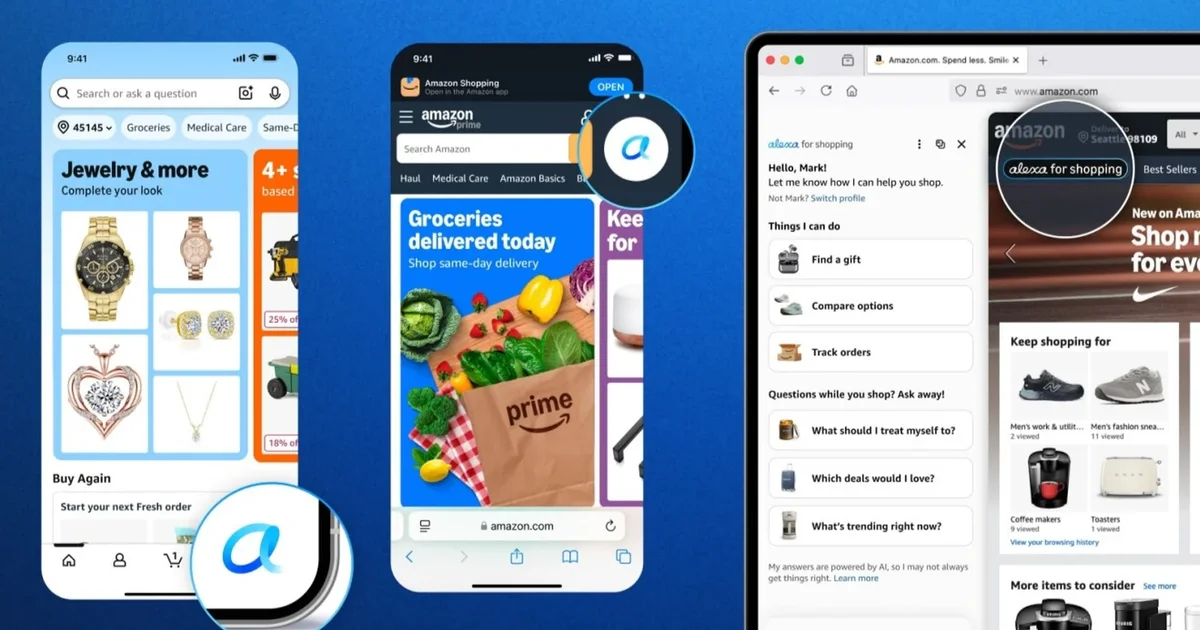
| In-house agents | Ask DoorDash, Text DoorDash | Alexa for Shopping |
| Disclosed results | Grocery baskets built 5 times faster, with nearly 50% higher basket value and about 60% more unique items | More than 400 million users in the past 12 months, interactions up 570% year over year, 50% more spend per order |
| Basis of comparison | Same consumers' traditional orders (grocery orders, August through early September) | U.S. users versus non-users |
| Stance toward outsiders | Corporate MCP connector in limited beta | Blocked Muse. Expects to work with horizontal agents but says its own will be primary |
What stands out in DoorDash's figures is that the setting is groceries rather than restaurants. According to the Text DoorDash announcement, grocery baskets are built five times faster with Ask DoorDash, and those orders average nearly 50% higher basket value and about 60% more unique items. More than 30% of grocery orders through Ask DoorDash are routine restocks. Remembering what a shopper usually buys and scanning a store's shelves in real time for cheaper equivalents is what produces those numbers.
Amazon makes the same argument. On the call, Jassy stressed that Alexa for Shopping already has a customer's history, shipping address, and payment information, so a shopper can simply ask it to buy. PYMNTS reaches a similar conclusion: AI may take over discovery, but at the moment of purchase the advantage sits with whoever holds stored credentials, known identity, delivery expectations, loyalty benefits, and a returns process.
So the gap is less about model quality than about who owns the customer data and the transaction infrastructure. An outside agent does not know what "the usual" means, and it has to ask elsewhere about inventory and addresses.
There is precedent. Walmart said in March that purchases completed inside ChatGPT converted at one-third the rate of those that clicked out to its website. Meanwhile, it reported that users of its own Sparky assistant have average order values 35% higher than non-users.
The in-house numbers need careful reading too. Amazon's 50% compares users with non-users, so it cannot rule out that people who already spend more are the ones using Alexa for Shopping. Walmart's 35% has the same problem. DoorDash's comparison against the same consumers' traditional orders is stronger, but it covers only August through early September. None of these figures proves that an agent raised sales.
The Context of Amazon's Remarks
Amazon is more than a second example once you look at where the comment came from. Jassy raised the topic while discussing advertising. He posed the question himself, whether external horizontal agents are meaningfully affecting Amazon Ads, and answered no. His reason was that few customers shop that way yet, because the experience is no better or more convenient than going directly to a retailer and ordering with one click.
Fortune reports that Amazon blocked Muse from its store about a month earlier (see our piece on Muse's payment rails). Fortune describes Muse as a threat because it bypasses human visits and the advertising those visits see. Amazon's third-quarter ad performance came in weaker than expected, so Jassy was speaking at a moment when he needed to calm investors.
Even so, he did not rule outsiders out. As Retail Dive reported, he said Amazon anticipates working with horizontal agents while believing Alexa for Shopping will be the primary agent customers use to shop Amazon. In-house agents can also carry ads. Amazon plans to start Branded Conversations, a conversational ad format, in the U.S. in January 2027, which makes keeping the shopping entry point in-house a revenue question as well.
Why the Numbers Cannot Be Taken at Face Value
Four clear caveats apply to everything above.
Timing is the biggest. DoorDash's MCP connector launched on September 30, less than a month before the call. MCP (Model Context Protocol) is an open standard for connecting AI applications to outside services, and DoorDash is offering the connector as a limited beta for companies ordering for their own employees. Early beta partners include Vercel and Cognition, and the main use so far is corporate lunches.
That does not explain everything, though. DoorDash launched a ChatGPT app for building grocery lists in December 2025 and joined tests of Gemini's task automation in March. In the ChatGPT flow, checkout happens in the DoorDash app. Which channels the several hundred orders cover is undisclosed, and orders that finish in the app may well be counted as app orders.
Use case matters just as much. Xu himself said he sees potential in long-consideration purchases and in work done proactively in the background on a shopper's behalf. Food ordering is simple enough that delegating it has little payoff, so the same conclusion cannot be stretched to high-consideration categories.
Motive cannot be ignored either. Both companies own a shopping destination and an ad business, and describing outside agents as small suits them when talking to investors. One DoorDash analyst asked directly how the advertising business would evolve as consumers shop through agents. Xu said there could be ad opportunities inside agents, but that at current volumes the value is not there yet.
There is also a counterargument. Meta CEO Mark Zuckerberg says shopping is Muse's most common use, with more than a quarter of users engaging in it and an average purchase size above $200. More than 10 million people in the U.S. and Canada have set up the assistant, and volumes were high enough that Meta had to ask Stripe to raise credit limits. Shopify, Walmart, and Best Buy are on the welcoming side. These are company claims too, and total transaction value is undisclosed, but they make it hard to say nobody buys through outside agents. An average above $200 also fits Xu's view that bigger considered purchases are where agents have promise.
The Hard Part Comes After the Order
For merchants, the most useful thing Xu said was not the order count. It was that placing an order for food or groceries is not the difficult step. The difficult step is making sure it arrives as expected, and handling things when they go wrong, which he said is where staying inside DoorDash's own product has proved its worth.
He has numbers behind that view. Deliveries from DoorDash's own DashMart inventory are near perfect, Xu said, while accuracy from third-party stores sits in the low 90s. Even DoorDash's logistics cannot fully see someone else's shelves. The same day, the company announced an acquisition of Instacart at an equity value of about $17 billion, expected to close at the end of 2027 or in the first half of 2028, subject to stockholder and regulatory approvals. Xu framed the deal around managing inventory for retailers, adding software, and increasing network density.
When an agent's order hits a stockout, who picks the substitute, and who handles the refund? The answer differs by channel. With DoorDash's connector, employees sign in to their own accounts and accept the terms, local businesses fulfill the order, and DoorDash handles delivery. For Shopify merchants selling through Meta, the merchant remains the seller of record and keeps shipping, returns, and customer service. Even when an agent is the front door, the cleanup often stays with the store.
What Merchants Should Decide First
It would be premature to conclude that outside-agent readiness can wait indefinitely. But these numbers do help when someone asks where to invest first, and the answer turns on the type of product.
For repeat categories such as groceries, household goods, and consumables, building the on-site agent first makes sense. As Ask DoorDash's restock share suggests, what works is reordering from history and proposing cheaper substitutes, and neither runs without your own data. Start by making purchase history and inventory available to the agent.
Outside agents move up the list for categories that shoppers research at length, such as appliances, furniture, and expensive gifts. Even there, product data deserves investment before checkout. PYMNTS found that willingness to let an agent both shop and buy fell from 32% in September 2025 to 24% in August 2026. It also reports that Amazon takes 59% of consumers' most recent AI-assisted purchases, though it notes that this measure comes from separate distributions rather than a tracked funnel. Opening discovery to outside agents while returning shoppers to a familiar place to buy matches how people behave today.
Three decisions are worth making before opening a new channel:
- Measurement: track outside-agent orders by channel, and watch stockout, contact, and return rates alongside order value. Measure your own agent on the same customers before and after, not users against non-users
- Responsibility: write down in partner terms and policies who decides and who pays for stockouts, substitutions, refunds, and late deliveries
- Scope: follow DoorDash's approach and start with low-risk uses such as recurring business orders, then widen from there
There is no need to panic about falling behind. In the same PYMNTS research, 87% of merchants see agentic commerce as an opportunity, but only 23% say they are very or fully prepared to integrate with AI platforms. Most are in the same position.
Conclusion
Several hundred orders does not prove outside agents have failed. It reflects the current balance of power, in which the company's own app wins simple tasks and whoever owns the transaction infrastructure holds the advantage.
The holiday season is the next test. Watch whether outside agents like Muse disclose transaction value for high-consideration purchases, and how far DoorDash and Amazon loosen their terms with outside partners. If either moves, the explanations given on these calls will be tested.