Alibaba's 1688 Opens the Accio AI Workbench to 100M+ Buyers and 1M Factories, Putting AI Agents on Both Sides of Wholesale
1688 has opened Accio to all buyers and factories. We explain the sourcing assistant, the e-commerce manager agent and the seller assistant tailored to each factory type, and what it means for businesses sourcing from China.

Key Takeaways
- On October 13, 2026, 1688, Alibaba's wholesale sourcing platform, opened the Accio AI workbench to all of its users. The rollout covers more than 100 million annual active buyers and more than 1 million factories.
- Buyers get agents that link sourcing with multi-channel store operations, while factories get a "1688 seller assistant" tailored to their business type. The design places AI agents on both sides of the wholesale transaction.
- For Japanese e-commerce sellers and manufacturers sourcing from China, more first replies and quotes will come from AI. They will need to send structured specifications and reconfirm AI answers before treating them as contract terms.
The Entry Point to Wholesale Is Now an AI Workbench
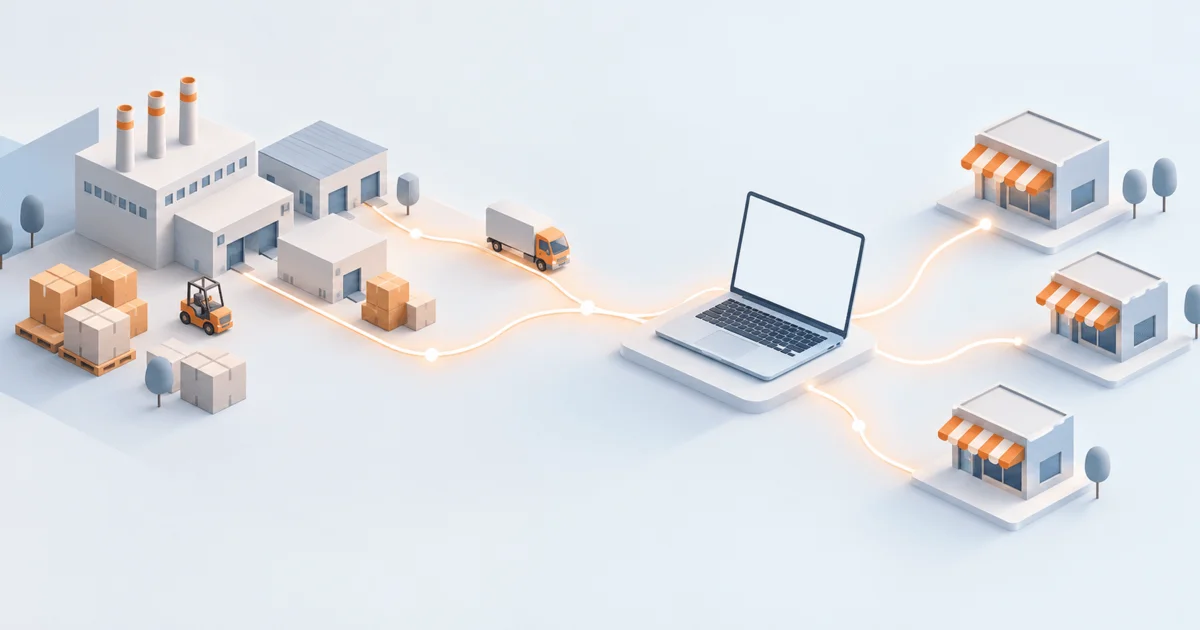
Alibaba's 1688 now lets its buyers and source factories use the Accio AI workbench, with a sourcing assistant spanning 128 countries and regions and a new 1688 assistant for sellers.
pandaily.comMore than 100 million buyers and more than 1 million factories. Almost everyone who uses 1688, the backbone of Chinese wholesale, has been handed an AI agent workbench at once.
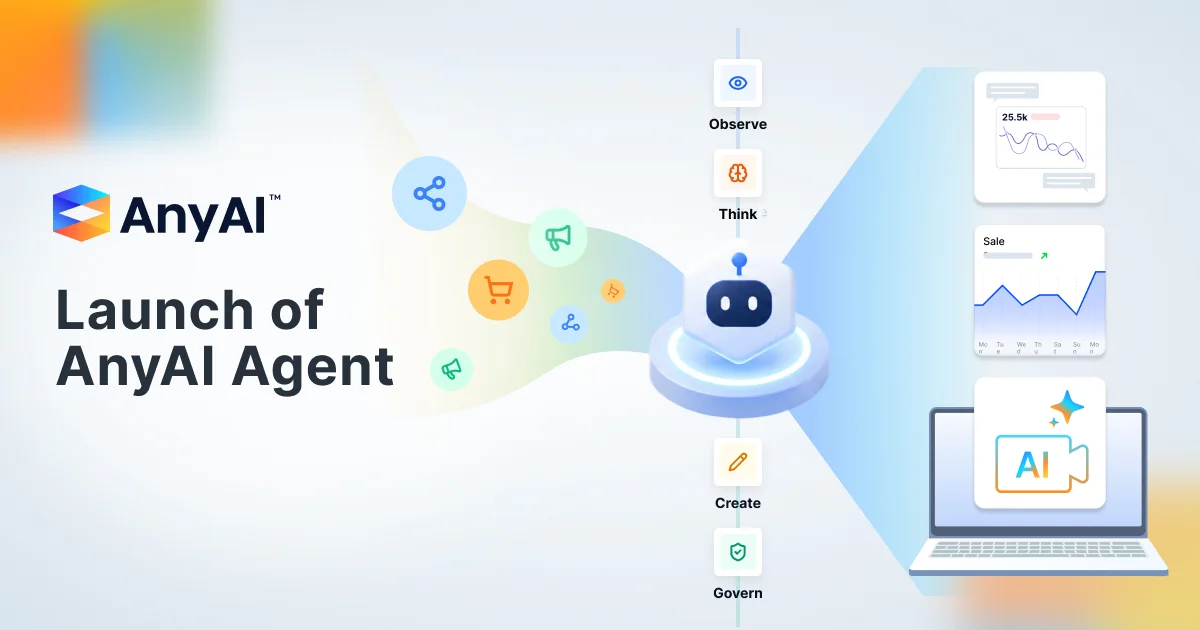
According to Pandaily and Sina Tech, 1688 announced on October 13 that it had fully integrated Accio, Alibaba's AI workbench for e-commerce. Buyers can sign in to Accio with their existing 1688 accounts. Sellers install the "1688 seller assistant" (1688生意助手 in Chinese) inside Accio and link their store to start using it.
Accio began in November 2024 as an AI search engine that Alibaba.com built for overseas B2B buyers. It later expanded into Accio Work, an agent platform that carries out business tasks on its own (see our explainer on Accio Work for the background). According to Leiphone, Accio says it is used by 10 million small and medium-sized businesses worldwide and covers the full chain from finding products and stocking up to closing orders, repeat purchases and store operations.
This is not the first connection between the two. DTM reported in June 2026 that official 1688 plugins for sourcing and selling had been added to Accio Work. At that stage, merchants had to adopt Accio Work themselves and then add the plugins. Now the 1688 account itself is the entry point, and Accio becomes the default workbench for every user.
Buyer Side: Running Sourcing and Sales From One Screen
Most 1688 buyers are small businesses with a handful of staff, many of them one-person operations. They source on 1688 and sell on Taobao, Tmall, Xiaohongshu, Pinduoduo and Douyin (the Chinese version of TikTok), as well as through cross-border marketplaces and instant retail. Sourcing happens on 1688, sales happen across several marketplaces, and advertising runs in yet another dashboard. That fragmentation is their daily reality.
Accio offers this group two agents.
The first is a sourcing assistant. It spans both 1688 and Alibaba.com, letting buyers find suppliers, compare prices and send inquiries across 128 countries and regions. Being able to compare domestic wholesale and overseas supply in a single search is what sets it apart from 1688 as it was.
The second is an "e-commerce manager" agent (电商管家 in Chinese). It connects to stores on Taobao, Tmall, Douyin, Pinduoduo and JD.com so that purchasing and store operations happen in the same workspace. The launch coincides with preparation for the Double 11 shopping festival, and the features lean toward that. They include automatic aggregation of data from multiple marketplaces, a store diagnosis that outputs the day's priority actions, ad analysis that traces problems to the product, the campaign or the budget, and generation of full sets of marketing images from original product photos.
The point not to miss is that the agent touches both sourcing data and sales data at the same time. It can see which products are selling and running low, and in the same workspace find a replenishment source and send an inquiry. Decisions that used to require a person to move back and forth between two dashboards are now connected inside one agent.
Seller Side: A Different Agent for Each Type of Factory
The factory side is where the design intent shows most clearly.
The 1688 seller assistant connects directly to the merchant back end and draws on the B2B transaction data 1688 has built up over the years. According to Leiphone, a single natural-language instruction lets it work autonomously across spotting trending products, creating images and publishing listings, analyzing ads, responding to prospective buyers, managing several stores and supporting business decisions.
More important is that 1688 did not treat factories as one group. It changed the agent's role by business type.
| Factory type | Main challenge | Role of the agent |
|---|---|---|
| Spot stock (wholesale, dropshipping, distribution) | Speed of new launches and operating efficiency | One-click product detail pages and automatic listing, batch optimization of images and titles |
| Custom manufacturing (light and deep customization) | Handling technical inquiries and converting them | Learns internal materials to answer on processes, lead times and quotes, researches buyers, follows up on leads 24/7 |
| Cross-border (domestic plus overseas, multi-marketplace) | Managing multiple stores and making business decisions | Connects directly to multi-marketplace data and sends a daily dashboard showing profit and loss by store |
For spot-stock factories, the contest is how quickly they can launch new products, and the agent's job is to automate listing work. Custom manufacturers are entirely different. Buyers want to know about processes, lead times and quotes, and whether a factory can answer those questions decides whether it wins the order. Accio says it learns the company's internal materials to answer technical questions, researches buyers' backgrounds to uncover demand, and follows up on every lead around the clock.
In custom manufacturing, then, the agent takes over the first move of the sales rep. From the buyer's side, an inquiry sent late at night will get an immediate reply grounded in the factory's own materials.
What Changes When Agents Stand on Both Sides
The buyer's inquiry is sent by an agent, and the seller's reply comes from an agent. With this full rollout, that pattern will become common inside 1688.
On the Alibaba.com side, the Accio Work plugin "Accio Sourcing Toolkit" launched in July with features that negotiate price, lead time and minimum order quantity on the buyer's behalf (our analysis). The buyer's agent sends the terms, and the factory's agent replies based on its internal materials. The exchanges that come before a human approves a deal are moving closer to agent-to-agent conversations.
Behind this is a reorganization. According to Yicai and Jiemian, on September 8 Alibaba merged 1688, its domestic wholesale business, and Alibaba.com, its cross-border wholesale business, into a single operation led by Zhang Kuo. In its earnings reports the two businesses are also grouped into one segment, "Global Wholesale." The same reports said more than 50,000 merchants were paying for Accio Work on Alibaba.com.
A Caiwen article published on NetEase noted that AI is positioned as the "connector" between the supply and buyers of the two wholesale platforms. The sourcing assistant's ability to handle 1688 and Alibaba.com in a single search is the first concrete form of that integration. A factory takes domestic wholesale orders and overseas inquiries at the same time from one product range, and Accio is the tool meant to run that work.
Caveats on the Numbers and the Real Impact
Even so, the announced figures should not be taken at face value.
"More than 100 million active buyers" is not the number of people who have started using Accio. According to IT Home, 1688's annual active buyers had already passed 100 million as of February 2025. The figure describes the pool of users who now have access. Accio's 10 million businesses is also the company's own claim, and its definition of usage has not been disclosed. Pricing for 1688 users has not been disclosed either.
Quality control remains an open question. Zhang Yi, CEO of iiMedia Research, told Yicai that connecting domestic and overseas supply and markets increases the risk of uneven product quality and of quality-control and compliance problems, and that simply syncing product ranges can cause confused quotes and fulfillment mismatches. In his view, the cost of governing the platform will also rise.
Hangzhou.com.cn likewise wrote that whether AI really reduces the burden on small merchants will be tested during Double 11. Being made available and being used over time are different things, and any assessment will have to wait for post-festival results.
Implications for Japanese E-commerce Sellers and Manufacturers
For Japanese e-commerce sellers who source products from China, the change will first appear on the other side of the inquiry. More questions sent to factories will be answered instantly by agents trained on the factories' materials. Speed is an advantage, but a lead time or quote returned by AI is not necessarily a commitment from the factory. A practical step is to set an internal rule that key terms are confirmed in writing with a human contact.
How inquiries are written will also change. When the counterpart is an agent, requests that spell out material, dimensions, quantity, target delivery date and inspection criteria item by item get more accurate answers. The assumption that a person on the other side will fill in vague requests with their own judgment will hold less often.
Japanese manufacturers that sell through cross-border B2B are affected as well. The sourcing assistant lets 1688 buyers compare overseas suppliers on Alibaba.com in the same search. Japanese companies listed on Alibaba.com may start appearing in searches by small Chinese e-commerce sellers. However, the conditions under which overseas sellers appear in results have not been disclosed. For now, the preparation available is to organize product information so that search agents can read it easily.
Conclusion
1688's full rollout is a large-scale deployment that places AI agents on both sides of wholesale transactions at once. Buyers run sourcing and sales from one workbench, and factories hand listing work and the first move in sales to agents matched to their business type.
The next thing to watch is how many merchants keep using it after Double 11. Alongside that, there is the question of who confirms the terms agreed in agent-to-agent exchanges, and where. The working norms for that should start to emerge from 1688, a very large testing ground.