ChatGPT Ads Reaches 31 European Markets, and Ads Now Appear in 32% of Answers
OpenAI expands ChatGPT Ads to 31 European markets on August 24. What the Free and Go restriction means, why context hints are not keywords, what measured ad frequency shows, and what e-commerce teams should do next.

Key Takeaways
- OpenAI begins serving ChatGPT Ads in 31 European markets on August 24, including Germany, France, Spain, Italy and the Netherlands. Counting from the February U.S. pilot and the eight markets that followed, this single announcement adds more countries than every prior international launch combined
- Promptwatch measured ChatGPT Search responses over roughly 90 days and found ads in 32.4% of them over the most recent seven days. The figure was zero until May 27, which shows how quickly ad inventory on the AI answer surface has come online
- Of the responses that carried an ad, 73.3% came from organic prompts that named no brand. Japan has been serving ads since June, so the practical task is designing paid placement and organic visibility for the same answer surface
Thirty-one European markets, starting August 24
From Monday, people using ChatGPT for free across Europe will start seeing a "Sponsored" label on their screens.
ChatGPT Ads is expanding to 31 European markets. Learn how advertisers can reach people as they explore, compare and decide.
openai.comAccording to the announcement OpenAI published on August 18, the rollout covers 31 countries including Germany, France, Spain, Italy, Sweden, Norway, Denmark, the Netherlands and Austria. Poland and Ireland are on the list too, which effectively takes in the whole EEA in one wave. Since the February pilot in the United States, OpenAI has added Canada, Australia, New Zealand, the United Kingdom, Mexico, Brazil, Japan and South Korea. The 31 new markets outnumber every earlier international launch put together.
The eligibility rules have not changed. Ads appear only for people on the free tier and on Go, the low-cost plan priced at 7.99 euros per month. Plus, Pro, Business, Enterprise and Education stay ad-free, and accounts predicted to belong to users under 18 are excluded from the ad system entirely. Europe does offer a free plan without ads, but it comes with fewer daily messages and no image generation or deep research, which makes the ad-supported version the practical default.
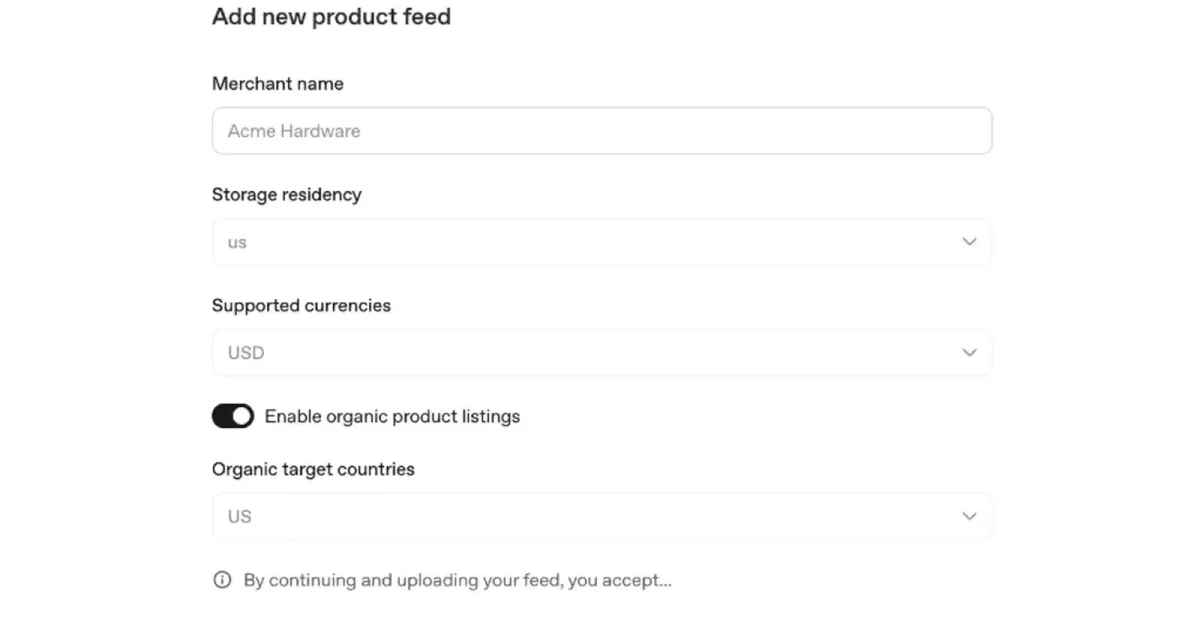
Buying access is still narrow. At launch, campaigns run through OpenAI's Ads Solutions team, agency partners and technology partners, with self-service through Ads Manager expected later this summer. The specific date for self-service access in Europe has not been disclosed.
From zero on May 27 to roughly a third of answers
The expansion headline matters less to e-commerce operators than the measured delivery data underneath it.
Promptwatch, which tracks visibility in AI search, published a study on August 18 that counted ChatGPT Search responses every day between May 20 and August 17 and recorded whether an ad appeared.
| Measurement window | Share of responses containing an ad | Change vs. prior window |
|---|---|---|
| Past 7 days | 32.4% | +12.5% |
| Past 30 days | 29.6% | +22.6% |
| Past 90 days | 20.1% | Baseline (0% until May 27) |
| Single-day high | 43.9% | Peak during the measurement period |
The shape of the ramp is unusual. The first ads were observed on May 27, at 1.69% of measured responses. The rate spiked briefly at the end of June, crossed 30% on July 1, and has stayed near that level since. In under three months, ad inventory went from nothing to close to a third of answers.
The scope of the number needs to be read narrowly. Promptwatch counts only responses where ChatGPT ran a web search, returned at least one citation, and allowed full ad extraction. That is neither all ChatGPT conversations nor a country-level benchmark. The French e-commerce publication ecommerce-nation flagged the same caveat. Treating this figure as a target for your own exposure would be a mistake.
The composition matters more. Among ad-bearing responses over the most recent seven days, 73.3% came from organic prompts that mentioned no brand. Brand-specific prompts accounted for 18.0% and competitor comparisons for 8.6%. As Promptwatch itself notes, this is the volume mix of observed ad-bearing responses, not the probability that a given prompt type triggers an ad. Even so, the center of gravity sits well before branded search. The competition starts while a shopper is still assembling criteria, before they know which brands to compare.
Daily variance is worth noting too. The peak reached 43.9%, while quieter days sat in the low twenties. Running a handful of prompts on a single day tells you about that day only. Visibility audits need to span several days by design.
You are not buying keywords, you are buying conversational context
The part most likely to trip up practitioners is how this surface is bought.
Per OpenAI's help center, ads render below the response and consist of an advertiser name, favicon, headline, copy, landing page and image. Selection draws on the context and intent of the current conversation, the landing page, the ad copy, and advertiser-supplied context hints.
Those context hints behave nothing like Google Ads keywords. At the ad group level, advertisers describe in natural language the conversations, topics and situations where their product might be relevant. They are not exact-match keywords and they do not guarantee delivery into any specific conversation. Porting an existing search keyword list rarely works. What transfers is not the phrasing but a description of the problems, constraints and decision criteria your product answers.
Buying and measurement have moved closer to familiar territory. The platform supports CPM and CPC, with a recommended starting maximum bid of three to five dollars per click, and selection runs through a relevance-weighted second-price auction. OpenAI says it has since added conversion optimization, geo-targeting, custom audiences, the OpenAI Pixel, a Conversions API and third-party measurement integrations. UTM parameters persist through ad clicks, so cost per acquisition can be compared against existing channels in the analytics stack you already run.
Victor Batista, senior director of paid media at Jellyfish, described the difference from the pilot period this way.
The ad platform that we are using now is not the platform that was released as a pilot at all. It has actually grown massively.
The two layers behind the word "consent"
Coverage of the European rollout leans on the idea of a consent-first design, but the actual structure has two distinct layers.
What launches in Europe on August 24 is contextual advertising. Selection uses the current conversation topic, approximate location, device type, time of day and language. Past chats and stored memories are excluded. For this processing, OpenAI relies on legitimate interest under the GDPR. In other words, one layer begins without asking, and only the personalized layer requires a separate opt-in.
Exits from that layer are limited. Declining personalization does not remove ads; it changes which ads appear. Removing them entirely means moving to a paid plan. Clara Westbrook, head of data privacy at Arbor Law, told Tech Times that restricting ads to the basic tiers could leave users feeling pressured onto a paid plan if they do not want their data used for advertising at all. The European Data Protection Board's 2024 opinion on "consent or pay" models examined whether offering a paid ad-free alternative satisfies the requirement that consent be freely given, and the Irish Data Protection Commission, as lead supervisory authority, has not publicly addressed whether OpenAI's design clears that bar.
For advertisers, that unresolved question is inventory risk. Delivery conditions in Europe could shift with a future regulatory ruling. Copying a U.S. setup into Europe without accounting for that is premature.
What Japanese e-commerce teams should watch
For Japan this is not a foreign story. Japan was named as an expansion market on May 7 alongside the U.K., South Korea, Brazil and Mexico, and delivery began in June. Japanese merchants are roughly two months ahead of the road Europe starts walking this week.
That head start makes the early European observations usable in reverse.
First, paid placement and organic visibility stack on the same answer surface. Ads render below the response, and OpenAI states plainly that advertising does not influence the answer itself. The corollary is that whether your brand gets recommended in the body of the answer cannot be bought. We laid out that split previously in our comparison of agentic commerce and ChatGPT ads; the European data adds a new variable, which is the pace at which ad inventory is filling in. If ads appear in roughly a third of answers and your brand is absent from the other side of the page, you are absent in both paid and organic terms.
Second, the assets you need differ from search advertising. Context hints are descriptions of conversations, and the landing page is itself a selection signal. Product feed hygiene was covered in how feed management moved into the Ads Manager and in our write-up when feed-driven ads first launched. What is newly required is an articulated inventory of the situations your products answer: which frustrations, which constraints, which comparison axes lead someone to choose you. That is separate work from cleaning up product data.
Third, measurement framing. With UTM parameters, the OpenAI Pixel and a Conversions API available, judging this channel on click-through rate alone would be a waste. Cost per acquisition and new-customer share, compared side by side with existing channels, is the sounder read. If most traffic arrives from organic prompts, the numbers will behave differently from branded-search harvesting, and blending the two will distort the decision.
OpenAI has not published CPM levels or expected reach by country for the European launch, and the size of its Japanese ad revenue is likewise undisclosed. Treating this as a channel ready for line-item budgeting alongside established platforms would be getting ahead of the disclosed facts.
Conclusion
The count of 31 markets matters less than the slope: ads went from zero on May 27 to roughly a third of answers in under three months. And most of those ads appear in conversations where no brand has been named yet.
Who wins the conversation before the brand comes up, and whether you win it with a paid slot or with the answer itself. For Japanese e-commerce operators, that question is already live.