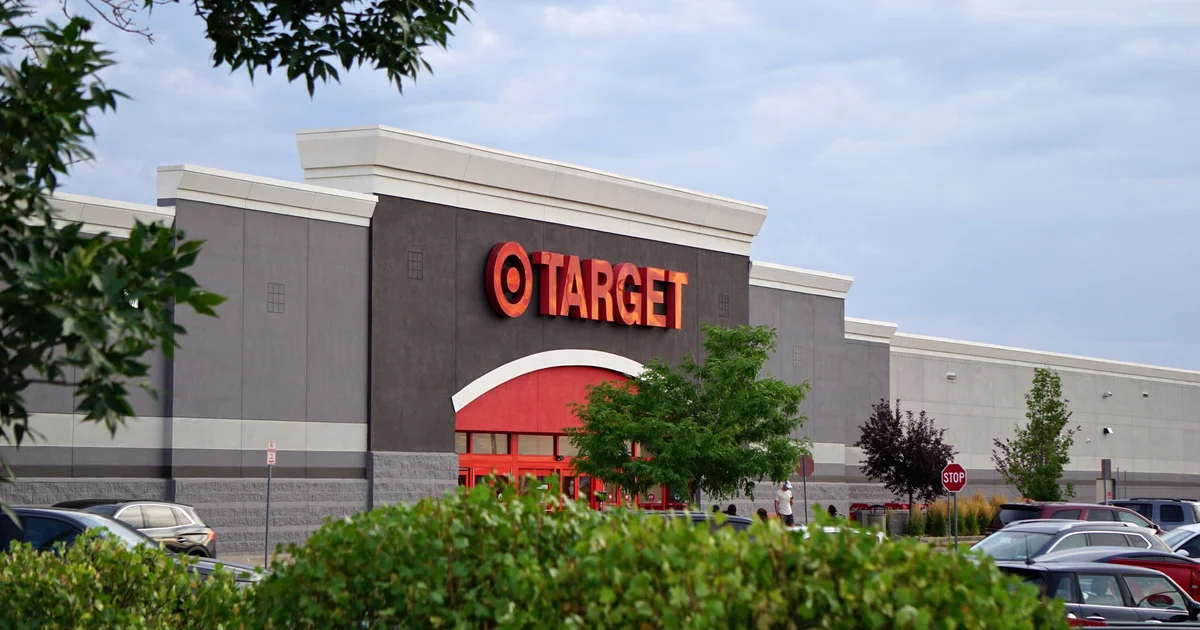
Target's Q2 AI Disclosures: 3.5x Industry AI Traffic Growth, but the Wish List Conversion Lift Matters More
A close read of the two AI numbers Target disclosed on its Q2 2026 earnings call: what the 3.5x industry benchmark actually compares against, what drove the nearly 20% back-to-school conversion lift, and where e-commerce teams should invest first.

Key Takeaways
- On its August 19 second-quarter earnings call, Target disclosed that digital traffic sourced from external AI platforms such as ChatGPT and Google Gemini is growing more than 3.5 times the industry rate. In the same sentence, CEO Michael Fiddelke described that traffic as "still small in total today"
- The more useful number for e-commerce teams is the other one. AI-powered teacher and college wish lists drove creations up more than 50% year over year, items added more than doubled, and conversion across key back-to-school pages improved by nearly 20%. That result came from AI recommendations inside Target's own app, not from external AI referrals
- The denominator behind the 3.5x figure was never disclosed. External AI traffic is worth measuring and preparing for, but the practical sequence is to start with AI recommendations on your own surfaces, where the effect can actually be tested
Two AI Numbers of Very Different Character
Target's fiscal second-quarter results, announced on August 19, showed net sales of $26.5 billion, up 5.3% year over year. Comparable sales rose 3.8% and traffic rose 3.6%, beating the Wall Street estimate of 2.4% comparable growth, and the stock closed up 4% that day. On the earnings call, Fiddelke touched on two AI-related figures.

As more consumers begin to explore the benefits of agentic shopping, Target's digital traffic sourced from external AI platforms is growing more than 3.5 times the industry.
aimmediahouse.comThe first concerns inbound traffic from external AI platforms. On the call, Fiddelke put it this way.
Earlier this year, we became one of only a small number of retailers to partner initially with OpenAI, Google Gemini, and other leading platforms to shape the future of agentic commerce. While still small in total today, as more consumers begin to explore the benefits of agentic shopping, Target's digital traffic sourced from external AI platforms is growing more than 3.5 times the industry as compared to a year ago.
The second concerns AI built into Target's own digital experience. For the back-to-school season, the company launched AI-powered teacher and college wish lists. Fiddelke reported that total wish list creations were up more than 50% year over year, items added to those lists more than doubled, and conversion across key back-to-school pages improved by nearly 20%.
The first number makes the better headline. The second carries more weight, because the distance between the retailer and the result is much shorter.
| Disclosed metric | Figure | Context and caveats |
|---|---|---|
| Growth in digital traffic sourced from external AI platforms | More than 3.5x the industry (YoY) | The definition and the underlying industry figure are undisclosed. Target itself called the channel 'still small in total' |
| AI-powered wish list creations | Up more than 50% YoY | New teacher and college feature. Whether an equivalent existed a year ago is undisclosed |
| Items added to those wish lists | More than doubled | Outpaced the growth in list creations, so items per list rose as well |
| Conversion across key back-to-school pages | Up nearly 20% | The same quarter included price cuts on 10,000+ items, in-stock gains and a major collaboration. AI's isolated contribution is undisclosed |
| Q2 net sales | $26.5 billion (up 5.3% YoY) | Comparable sales up 3.8%, traffic up 3.6%. A $994 million pretax tariff refund lifted earnings |
What Exactly Does "3.5 Times the Industry" Compare Against
When a metric arrives as a multiple, the denominator is the first thing to check. Target disclosed neither the definition of the industry it compared against nor the underlying industry figure. Only the multiple survives.
There is a plausible benchmark nearby. Adobe Analytics reported that AI-sourced traffic to U.S. retail sites grew 138% year over year in May 2026, and 1,324% cumulatively since Adobe began tracking in October 2024. In the same dataset, AI-referred visits converted 54% better than non-AI sources and were worth 53% more per visit. The source article pairs that Adobe page with a figure of 393% growth in Q1 2026, but the 393% came from an earlier Adobe release covering the first quarter, while the 54% conversion comparison is based on May data. The two are separated in time and should be read separately.
That Target outpaces the industry average is consistent with its earlier disclosures. In a June fact sheet, the company said AI-sourced traffic grew 2,000% year over year in Q1, against roughly 400% for retail overall. Having built purchase-complete experiences across Google, ChatGPT and Microsoft Copilot early, Target plausibly captures a disproportionate share of whatever agentic traffic currently exists.
The absolute scale still calls for restraint. According to Bain & Company's analysis, AI now accounts for up to a quarter of referral traffic at some retailers while remaining less than 1% of total traffic. Fiddelke's qualifier is best read against that baseline. A 3.5x growth rate on top of a sub-1% base does not move a quarter's revenue.
Measurement adds another layer of uncertainty. Transitions from AI assistants often drop referrer data, so a share of them lands in analytics as direct traffic. Every published growth rate carries its own methodology inside it. We covered the state of the receiving end in our piece on Adobe's machine readability data.
The AI That Worked Was Inside Target's Own App
The wish list numbers are a different kind of evidence. They are not about the growth rate of an external platform. They describe a feature Target built on its own surface and the effect it had on its own conversion rate.
Here is how Fiddelke described it. For the back-to-school and back-to-college season, the company introduced AI-powered teacher and college wish lists along with more personalized content on the app home screen. The result was wish list creations up more than 50% year over year, items added to those lists more than doubling, and conversion across key back-to-school pages up nearly 20%. Because items grew faster than creations, the average number of items per list rose as well.
On mechanics, the source article reports, attributed to the company, that the feature personalizes recommendations based on grade level, subject requirements and purchase history, surfacing products at the right moment in the shopping journey rather than presenting a generic catalog. A teacher assembling classroom supplies or a first-year student outfitting a dorm faces a long list, a high risk of forgetting something, and no clear sense of how many items the trip should contain. That is a wide target for recommendation, and a natural fit for AI.
The implication is that investment in AI commerce is not only about being found by external assistants. Bain's research found that consumers trust retailer-owned agents three times more than third-party agents, while roughly half remain uncomfortable handing an entire transaction to AI. A design in which AI assists on your own surface and the shopper still decides sits comfortably with where consumer sentiment currently is.
Treating the full 20% lift as an AI result would be too quick, though. In the same quarter, Target held 95% of its school supplies assortment at or below last year's prices, cut prices on more than 10,000 items over twelve months, pushed in-stock levels on top items to multi-year highs, and ran its largest limited-time collaboration ever with LoveShackFancy. Several forces pushed the same pages, and the share attributable to the AI wish lists is undisclosed. Whether an equivalent feature existed a year ago is also unstated, which leaves the baseline for the 50% comparison unverifiable.
The Rest of the Quarter Deserves a Look Too
Reading the AI figures in isolation would distort the picture, so the underlying results are worth noting.
The largest swing factor on earnings was a tariff refund. As CNBC reported, the quarter included a $994 million pretax benefit and a $752 million boost to net earnings, or $1.65 per share. The raised full-year EPS range of $9.90 to $10.90 also contains roughly $1.65 of that one-time benefit. Comparable sales growth of 3.8% reflects operating improvement, but the profit picture leans heavily on a non-recurring item.
The category mix is uneven. Food, beauty and toys grew, while apparel and home stayed roughly flat, and Fiddelke said on the call that work in those two categories will continue "into 2027 and beyond." He told reporters that "to be clear, we have much more work to do" and that "two strong quarters is not the goal." Even alongside 8.7% digital comparable growth and more than 25% growth in same-day delivery, the recovery is not yet settled.
Inside Retail acknowledged two consecutive quarters of growth while noting that the recovery remains fragile, with apparel and home barely growing and a nearly $1 billion tariff refund flattering earnings. The AI disclosures are one encouraging item within that context, not the explanation for the quarter.
Where E-Commerce Teams Should Start
The practical takeaway from this quarter is about sequencing.
Start with AI on your own surfaces. What Target's wish lists demonstrated is that inserting AI recommendations into a purchase with many items, high risk of omission, and a deadline shows up as a conversion lift. Back-to-school is the obvious case, but the same shape appears elsewhere: moving house, gifting seasons, recurring business supply replenishment, recipe-level basket building. Look for occasions where a shopper must assemble multiple items across categories and finds it laborious to do alone. The advantage is that verification stays in your hands, since an A/B test settles the question.
External AI platforms warrant measurement and groundwork for now. Confirm whether AI-sourced sessions are being misfiled as direct traffic, and get referrers separated cleanly. Then check whether price, inventory and specifications appear in the pre-JavaScript HTML of your product pages. That work overlaps with conventional SEO and performance improvement, so it is not spending aimed solely at a sub-1% channel.
Target also brings on Chandhu Nair, previously of Lowe's, as its first Chief AI Officer effective August 24. It is a structural response to a domain that tends to scatter across departments, and the back-end implementations, including the supply chain digital twin Proxima and the trend forecasting tool Target Trend Brain, will likely consolidate under it.
Closing Thoughts
The two figures Target published capture where AI commerce currently stands. Traffic from external AI grows at an eye-catching rate on a base that is still tiny, measured against a benchmark the company chose not to define. AI recommendations built into its own surfaces, meanwhile, delivered a nearly 20% improvement in a direct commercial metric.
Novelty on one side, compounding improvement on the other. Get the order right and there is no need to chase both at once. Heading into the holiday season, mapping out where the tedious, many-item purchases live in your own catalog is a good way to find the next move.