
AI Commerce News Digest (July 27, 2026)
A roundup of AI commerce news for July 27, 2026, covering Visa and Lianlian's first live B2B agentic transaction in Greater China, Samsung's Gemini Intelligence rollout, and Experian's expanding Agent Trust ecosystem.


Key Takeaways
- Visa and Lianlian complete Greater China's first live B2B agentic transaction
- Samsung ships Gemini Intelligence on new Galaxy devices, automating up to the payment step
- Trust and identity verification emerge as the shared theme across agentic commerce
Here is the AI commerce news roundup for July 27, 2026. Across the past several days, the clearest pattern was an effort to establish, through technology, who an AI agent represents and how far it is allowed to go. Visa and Experian each advanced their own ways of vouching for an agent's identity and authority, while Samsung shipped a design that pauses for user approval just before payment as a standard device feature. At the same time, payments executives in India describe commerce platforms that are in no hurry to open their checkout flows. The more trust infrastructure matures, the more the decision shifts to the retailers who must accept it.
Today's Top Stories
Visa and Lianlian complete Greater China's first live B2B agentic transaction
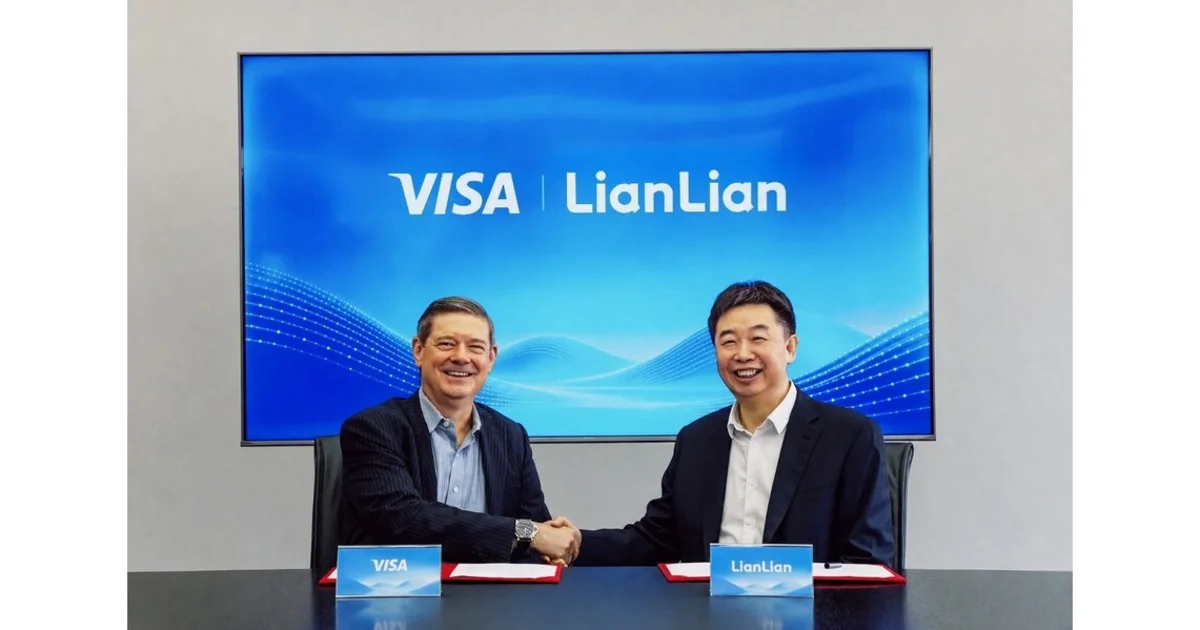
/PRNewswire/ -- Visa (NYSE: V), a global leader in digital payments, and Lianlian DigiTech Co., Ltd. ('Lianlian'), an AI-native global financial infrastructure...
www.prnewswire.comVisa and Lianlian DigiTech (HKEX: 2598) announced on July 24 that they had completed the first live B2B agentic transaction in Greater China using LoopXPay, Lianlian's AI agent. The agent sourced a product sample from a supplier and completed the purchase within a single workflow.
The sequence began with identifying the purchasing requirement, then moved through recommending suitable suppliers, comparing options, placing the order and executing the payment. What matters is that the entire run stayed within pre-defined spending controls and approval parameters. For small and medium sized businesses without dedicated procurement teams, that compresses the time spent on sourcing and paying.
Alongside the transaction, LoopXPay was registered in Visa's Agentic Directory. The directory supports the implementation of Visa's Trusted Agent Protocol and lets participating businesses and merchants identify verified AI agents. Removing the need for each merchant to judge an agent independently is no small implementation detail.
Darren Parslow, Global Head of Visa Commercial Solutions, framed trust as a critical enabler of adoption. The two companies are now exploring an expansion into procurement, digital advertising optimization and B2B platform payments.
Samsung makes Gemini Intelligence standard on new Galaxy devices

Samsung has debuted 'Gemini Intelligence' on the Galaxy Z Fold8 and Flip8, fully embracing agentic AI that links over 40 apps to execute tasks.
finance.biggo.comSamsung unveiled the Galaxy Z Fold8, Fold8 Ultra and Flip8 at a Galaxy Unpacked event held in London on July 22. The headline change is the debut of Gemini Intelligence, which shifts phone AI from answering questions to carrying out work across multiple apps.
In the demonstrated flow, the AI narrows candidates against the user's schedule and preferences, connects to the apps needed in sequence, and proceeds right up to the payment step, where the user reviews the details and gives final approval. Samsung describes the integration as spanning more than 40 apps.
Google specified in a footnote to its blog post that supported apps are based on those available in the U.S. and South Korea, and are limited to selected apps, devices and markets. It also restricted the feature to users aged 18 and over and advised keeping a close eye on it and stopping it if necessary. That is the developer acknowledging that execution-oriented AI remains early.
Apple announced its next-generation Siri AI at WWDC26 and plans a beta within the year. In the EU it will be available only on Mac and Vision Pro, and in China not until regulatory requirements are resolved. For merchants, an agent resident on the device is both a new point of contact and a question of whether their own app makes the supported list.
Full article: Gemini Intelligence Automates 40+ Apps: What an OS-Level Agent Execution Layer Means for Merchants
Agentic Commerce
Coinbase opens USDC payments from AI agents to businesses

Coinbase rolled out AI agent payment support through Coinbase Business, enabling autonomous software to pay merchants in USDC using the x402 open payment standard.
news.bitcoin.comCoinbase began letting businesses accept USDC payments directly from AI agents through Coinbase Business on July 24. The feature runs on x402, the open payment standard Coinbase developed for machine-to-machine transactions.
Businesses can accept the payment, manage and reconcile the transaction, and convert the funds inside their existing Coinbase Business account, without standing up a separate checkout flow. Coinbase says roughly 5,000 business customers are on the product, which has processed about $1 billion in combined payment and trading volume.
The company also introduced real-time trading features for agent accounts and released an x402 software development kit so developers can add agent payments to APIs and services with minimal code. Early adoption is concentrated in digital services such as APIs, cloud storage, domain names and online tools. Physical goods have yet to follow, but the receiving side of autonomous payment is taking shape.
Fastly joins Experian's Agent Trust ecosystem
New collaboration helps enterprises verify AI agents, authorize transactions in real time, and transform autonomous traffic into a trusted business opportunity.
finance.yahoo.comExperian announced on July 24 that Fastly (NASDAQ: FSLY), the edge cloud platform, had joined its Agent Trust ecosystem. The aim is to verify AI agent identity and authorize transactions before requests ever reach an organization's applications.
At the centre sits Human to Agent Binding, which securely connects verified individuals, their devices and the AI agents acting on their behalf. Fastly's programmable edge evaluates agent identity, delegated authority, intent and payment credentials before requests hit backend systems. Because it integrates with existing APIs, authentication systems and payment workflows, businesses do not have to rearchitect their applications.
Kathleen Peters, Chief Innovation Officer at Experian, called agentic commerce one of the most significant shifts in digital commerce since the rise of mobile. The announcement cited Salesforce research that AI agents influenced $262 billion in 2025 holiday sales, and Imperva data showing 53 percent of all web traffic is automated. The framing treats automated traffic as an authenticated commerce channel rather than something to block outright.
Checkout access becomes the roadblock for AI commerce in India

Marketplaces fear autonomous agents could bypass discovery and recommendations.
www.business-standard.comBusiness Standard reported on July 26 that Indian digital payments companies building infrastructure for AI agents to shop and transact autonomously are running into a key hurdle. Digital commerce platforms, they say, are in no hurry to open their checkout flows to those agents.
Senior payments executives quoted by the paper put fully autonomous commerce, from discovery to checkout, at least two to three years away. They caution that if commerce platforms remain closed, the entire model may struggle to take off.
One executive captured the dynamic bluntly, noting that across events and conferences it is the payments companies talking about agentic commerce, not the commerce players. The marketplaces' concern is that autonomous agents bypass their own discovery and recommendation layers. Wariness about who controls the entry point to a transaction is hardly unique to India.
The real risk in agentic commerce is losing pricing power

As AI agents take over product discovery, marketers risk losing pricing power and customer relationships unless they own the underlying data.
martech.orgMarTech published a piece on July 24 pushing back on how narrowly the agentic commerce conversation has been framed inside marketing teams, where it has collapsed into a single question about getting the AI to recommend you. Author Ana Mourão argues that is the wrong place to start.
The core of the argument is the gap between being read by an algorithm and being chosen by a person. Citing strategist Jess Graham, the article frames a brand an agent purchases as procurement, and a brand a customer asks for by name as something earned. A brand can be perfectly legible to the machine and completely absent from the human.
The piece also contrasts OpenAI's Instant Checkout, which went live in September 2025 and was pulled in March 2026, with Google's Universal Commerce Protocol, which continues to expand. The checkout layer is still taking shape, while agents already sit in the discovery layer. To an agent optimizing on price, ratings and delivery, an undifferentiated brand reads as a commodity.
Corporate Moves and Partnerships
The Very Group partners with UiPath to rebuild pricing with agentic AI

UiPath has announced a three-year partnership with The Very Group to revamp its pricing strategy using agentic AI.
retailtechinnovationhub.comUiPath announced in mid-July a three-year partnership with The Very Group, the UK online retailer, to overhaul its pricing strategy using agentic AI. The two will implement an AI powered, agentic pricing solution intended to bring faster and more transparent decision-making across the retailer's brands.
Sam Wright, Chief Customer and Commercial Officer at The Very Group, noted that the company carries a range of over 200,000 products and that pricing is one of the most powerful levers in retail. Combining that expertise with UiPath's data is meant to keep the retailer ahead of shifting consumer demand when making pricing and merchandising calls.
Catherine Frame, Director of Retail Solutions at UiPath, emphasised pairing automation with intelligent, explainable decision-making. The more pricing is delegated to an algorithm, the more the ability to explain why a price landed where it did becomes a condition of audit and trust. Buy-side agents comparing prices and sell-side agents setting them are now emerging at the same time.
Full article: UiPath and The Very Group Sign Three-Year Deal to Price 200,000+ Products with Agentic AI
TikTok tests a Prime-style paid membership

TikTok is reportedly testing a membership program for U.S. shoppers, similar to Amazon Prime.
www.pymnts.comPYMNTS reported on July 26 that TikTok is testing a membership program for U.S. shoppers along the lines of Amazon Prime, citing a July 24 Business Insider report based on screenshots of the offering.
The program is called TikTok Shop Plus and offers perks such as free shipping, discounts and coupons. In one example cited, a hair product that normally sells for $57 was marked down by $10 for Plus members, who also received free three-day shipping. TikTok is testing price points of $6, $10 and $15 a month.
A former TikTok Shop employee told Business Insider that a membership program could help keep users from leaving the app to buy. TikTok, they said, watched a lot of its bottom-funnel buyers go over to Amazon. The company has already moved in Amazon's direction with full-service shipping and fulfillment for merchants and faster delivery windows.
Consumer Behavior
74% of U.S. consumers have already used an AI agent to shop, CI&T finds
CI&T launched its Retail Tech Report: Agentic Commerce Edition, examining how purchase pathways are evolving and what motivates consumers adopting agentic commerce.
www.martechcube.comCI&T released its consumer research, the Retail Tech Report: Agentic Commerce Edition, on July 24. The study examines how modern purchase pathways are evolving and what motivates the consumers adopting agentic commerce.
The headline finding is that 90% of respondents have either used an AI agent when shopping or are open to doing so. Some 74% have already used one, and 63% of those who have not are open to it.
Sentiment among users is also reported: 78% say AI makes them smarter shoppers. As adoption spreads, it appears to take hold first in the upstream work of comparing options and organizing information.
In Southeast Asia, AI is spreading but human trust still closes the sale

Artificial intelligence is rapidly becoming part of Southeast Asia's online shopping journey, but consumers continue to place greater trust in people than algorithms.
www.marketing-interactive.comimpact.com, working with Cube and dentsu, published its eCommerce influencer and affiliate marketing in Southeast Asia 2026 report. It draws on 2,400 consumers across Singapore, Malaysia, Indonesia, Thailand, Vietnam and the Philippines.
One in four consumers (24%) now uses generative AI tools such as ChatGPT, Gemini and Claude to support shopping decisions. Yet recommendations from family and friends remain the most influential purchase driver at 2.42 out of four, ahead of online reviews (2.36) and creators (1.98). Adoption varies widely: Vietnam leads at 34% for product discovery while Singapore trails at 14%.
Marketplaces still dominate discovery, with 71% of respondents finding new products there, and 88% complete their purchases on those platforms. The report predicts that by the end of 2027, one in five Southeast Asian online shoppers will complete a purchase natively through a generative AI platform, and urges brands to take up Generative Engine Optimization.
Advertising and Retail Media
First movers gain from what LLMs remember, says DaVinci Commerce's Nesamoney
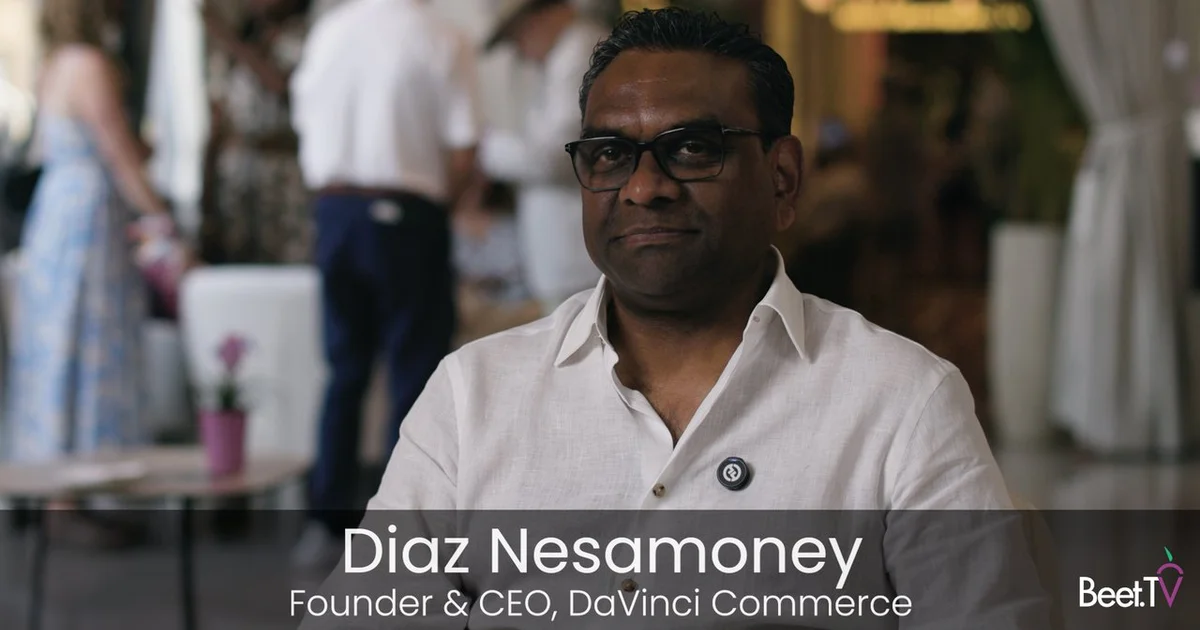
LLMs remember consumer behavior patterns and brand interactions, creating competitive advantages through accumulated data for brands that move early.
www.beet.tvBeet.TV published an interview on July 26 with Diaz Nesamoney, founder and CEO of DaVinci Commerce. Where search engines index pages, he argues, large language models learn from consumer interactions, so accumulated behavioral data turns into competitive advantage.
Nesamoney says the early reading of agentic commerce, fixated on autonomous purchasing and instant checkout, was wrong about what would stick. "I don't want agents buying stuff for me by themselves. I want to see, understand the product, colors, size," he said. By his count, more than 500 agentic storefronts now operate on ChatGPT.
The obstacle he highlights is product description. AI agents cannot perceive products visually and depend entirely on data, yet camping equipment listings, for instance, rarely explain how the gear is actually used on a trip. The impact varies by category: considered purchases such as cameras and clothing face the greatest disruption, while commodity items like toilet paper need far less detail.
Global E-Commerce
TikTok Shop's 24-hour response rule now governs seller visibility

TikTok Shop now requires all sellers to maintain a strict 24-Hour Response Rate to customer inquiries, with visibility penalties for falling short.
tribuneonlineng.comTikTok Shop now requires every seller to maintain a 24-hour response rate to customer inquiries, with escalating restrictions for those who fall short.
Dropping below a 90% response rate triggers a formal warning and places the account under algorithmic scrutiny. Falling below 85% triggers additional enforcement, including violation points and a reduced Account Health Rating, which lead to product delistings and suspension from campaigns.
The platform's logic is that a seller who cannot answer messages is likely to struggle with shipping and returns as well. Because customer experience signals feed directly into For You placement and search rankings, viral video alone no longer sustains sales. Operational quality in the inbox now converts directly into traffic.
Shein posts a quarterly loss ahead of its Hong Kong IPO

Shein swung to a $99 million quarterly loss due to slowing sales after the U.S. removed an import duty exemption on small packages and a one-time accounting charge.
kfgo.comShein's pre-IPO financial filings, published on July 26, showed a $99 million net loss for the first quarter of 2026, against net income of $395 million a year earlier. The company won approval from the China Securities Regulatory Commission for its Hong Kong listing on July 10, and this filing sets up investor roadshows and bookbuilding.
Part of the loss reflects an accounting change under which Shein took a $328 million fair-value charge on convertible redeemable preferred shares. The company also said the removal of the U.S. de minimis exemption in May 2025 had an adverse impact on sales in its largest market. Chinese-origin products it ships to the U.S. now face tax rates ranging from 10% to 87.5%.
The European Union imposed a €3 fee on low-value e-commerce imports this month. The draft prospectus does not disclose the size of the share sale, the offer price, the listing timetable or expected proceeds. Reuters reported this month that Shein was seeking a $40 billion to $50 billion valuation, well below the $100 billion reported in a 2022 funding round.
Logistics and Fulfillment
USPS raises marketplace seller rates again

eBay warned sellers of some higher Ground Advantage package rates taking effect on July 25th outside of the July 12 postal rate changes.
www.ecommercebytes.comeBay warned sellers on July 24 that USPS would raise Ground Advantage rates the next day. Shipments weighing 3 to 5 lbs increase by $0.10 across zones 1 through 8.
The change sits outside the postal rate revisions that took effect on July 12. USPS does not publicly announce rate changes for USPS Connect eCommerce, the program through which marketplaces and postage providers offer discounted rates, which is how a change can land with almost no notice.
For sellers who do not use calculated shipping, including those offering free shipping, the lack of advance notice is costly. On eBay's community boards, one seller said the concerning part was not the ten cents but that USPS can now implement changes with less than 24 hours' notice. eBay acknowledged the increased frequency of rate changes this year and said it is working with USPS to keep sellers informed.
Summary
Taken together, these few days show the agentic commerce question moving from whether agents work to who they represent and how far they may act. Visa's Agentic Directory and Experian's Human to Agent Binding both point the same way: giving agents verifiable identity and authority. Samsung's decision to pause for human approval just before payment is the device-side answer to the same question.
The hesitation voiced by India's payments industry exposes the weak point in that picture. However mature the trust infrastructure becomes, it is retailers who decide whether to open checkout. Concern about agents bypassing a merchant's own discovery and recommendation layers is not confined to one market. Combined with the pricing power problem MarTech raised, this is the moment to define the terms of acceptance rather than inherit them.
Worth watching next: how far Visa and Lianlian extend into procurement and advertising optimization, and how quickly the supported app list for Gemini Intelligence grows.