AI Commerce News Digest (September 1, 2026)
From the FTC lawsuit over Amazon's ad auctions to ChatGPT Ads hitting a $1 billion run rate and how brands earn Walmart Sparky recommendations, here is the September 1 roundup for retail and e-commerce.

Key Takeaways
- The FTC and 22 states sued Amazon over its ad auctions, alleging more than $20 billion in overcharges
- ChatGPT Ads reached a $1 billion annualized run rate roughly 200 days after launch
- AI assistant purchases are creating competition for recommendations that no ad budget can buy
Here is the AI commerce news roundup for September 1. Today brought major moves on both sides of the AI shopping surface: where assistants recommend products, and how that surface gets monetized. The US Federal Trade Commission sued Amazon over its advertising auctions, while OpenAI disclosed that its ad business has reached a $1 billion annualized run rate. Yesterday's Best Buy story was about how a retailer uses AI touchpoints. Today the question shifted to how the AI touchpoint itself earns money, and who supervises it.
Top Stories Today
How brands earn recommendations from Walmart's Sparky, with the citation mix revealed
Azoma reveals how brands can improve Walmart Sparky product visibility, boost AI shopping agent discovery, and drive retail media revenue.
www.martechcube.comAzoma, an agentic commerce optimization platform, published a practical breakdown of how brands get their products recommended by Walmart's generative AI assistant, Sparky. Based on its analysis of millions of shopping agent citations, Sparky's source mix is 36% earned media, 30% brand.com, 27% retailer content, 5% UGC and 2% affiliate sites.
The context comes from Walmart's second quarter earnings call on August 20. CEO John Furner said the number of Sparky users is up 70% year over year, and that customers who shop with Sparky spend 40% more per order than those who do not. Worldwide e-commerce grew 23% in the same quarter.
Put the two together and the implication is clear. There is no paid placement inside a Sparky recommendation. Visibility depends entirely on how present your information is across the sources the assistant reads. A brand that has only optimized its Walmart listing is covering roughly a quarter of the citation surface.
Full article: What It Takes to Get Recommended by Walmart Sparky: Over 70% of Its Citations Sit Outside the Retailer Listing
FTC and 22 states sue Amazon over alleged hidden surcharges in ad auctions

The FTC sued Amazon, alleging the company misled advertisers through a deceptive auctioning system.
www.cnbc.comOn August 31, the Federal Trade Commission sued Amazon in the US District Court for the Western District of Washington, alleging the company "secretly and systematically overcharged" advertisers. Attorneys general from 22 states joined the complaint. The FTC argues Amazon may have taken in more than $20 billion through hidden surcharges dating back to a 2019 change in its auction rules.
At issue is the gap between how Amazon described its second-price auction and how it worked. Amazon told advertisers they pay only the minimum amount needed to win the auction. The FTC alleges that in 2019 Amazon added an undisclosed floor it called a "soft reserve price," which pushed ad prices up. The complaint cites internal messages in which an executive allegedly acknowledged using an "invented auction participant" to raise prices.
Amazon called the suit "misguided" in a company blog post and said the complaint includes no evidence of consumer price increases. The company also said its auction systems saved advertisers $8 billion between 2021 and 2025.
Amazon's advertising business booked more than $68 billion in revenue last year, third globally behind Google and Meta. For merchants who have shifted budget into retail media, having the basis for bid pricing tested in court is not a side story.
Advertising and Retail Media
ChatGPT Ads hits a $1 billion annualized run rate about 200 days after launch

OpenAI says its ChatGPT Ads business has reached $1 billion in annualized revenue run rate, used by tens of thousands of advertisers.
www.pymnts.comOpenAI said on August 31 that its ChatGPT advertising business has reached a $1 billion annualized revenue run rate, roughly 200 days after launch. The company said its advertiser base now numbers in the tens of thousands and that advertisers outside the US represent a growing share of revenue.
The path to that number is worth noting. ChatGPT introduced Instant Checkout in September 2025 and shelved it about six months later. The idea of completing a purchase inside the chat was pulled back, while the model of placing ads earlier in the consideration stage scaled first.
OpenAI says ads are clearly labeled, kept separate from answers, and do not influence those answers. For merchants, that means visibility on AI surfaces is splitting into two layers: organic recommendation and disclosed advertising. Deciding how much to invest in each requires a different plan than traditional search advertising.
Full article: ChatGPT Ads Hits a $1 Billion Run Rate in 200 Days: The Revenue Model OpenAI Chose After Instant Checkout
LG CNS targets the US market with agentic AI ad optimization platform LG Optapex

LG CNS showcased 'LG Optapex', an Amazon-specialized e-commerce ad optimization solution, at ASD Market Week in Las Vegas.
www.manilatimes.netLG CNS showcased LG Optapex, its Amazon-focused advertising optimization solution, at ASD Market Week in Las Vegas from August 25 to 27, as it pushes to reach Amazon sellers across North America.
Optapex pairs agentic AI for strategy design with mathematical optimization. It analyses per-product sales history, click-through and conversion rates, inventory levels and time-of-day purchase patterns, then calculates optimal bids by time slot and campaign budget. During execution, an AI agent handles real-time budget adjustments and keyword monitoring, and generates a cause analysis report when performance shifts sharply.
The product launched in North America in the first half of 2025 and is used by roughly 190 companies across the US, South Korea, China and other markets. LG CNS cites a US gaming gear seller that improved ROAS by about 40%, and a UK beauty seller whose ad-attributed revenue rose eightfold. These figures come from the company and have not been independently verified.
Payments and Fintech
Passkeys are not enough: agentic transactions demand proof of authorization

Passkeys can authenticate users, but agentic commerce also requires proof of what an AI agent was authorised to purchase.
www.frontier-enterprise.comAt the inaugural FIDO Authenticate APAC conference in Singapore, experts from Google, Mastercard and PayPal discussed authentication in the agent era on a panel titled "Enabling Trusted, Simple Interactions in the Agent Era," organised by the FIDO Alliance.
The problem they framed is precise. When an AI agent buys something, verifying the human is not enough. Merchants, banks and card networks also need to determine what the agent was authorized to buy, up to what amount, and at which merchant. The delegation often happens before the user knows the final product, merchant or price, which is what separates this from conventional authentication.
PayPal has run FIDO-based authentication for over a decade and reports a higher conversion rate among passkey users than among those using traditional methods. That counters the assumption that stronger authentication always costs conversion, though whether it carries over to agent-delegated purchases is still being tested.
Full article: Passkeys Are Not Enough: The Authorization Proof AI Agent Payments Need, and How Merchants Should Prepare
Global E-commerce Trends
US e-commerce reaches $340.2 billion in Q2 as AI assistants move toward placing orders

U.S. Census Bureau data puts Q2 2026 e-commerce at $340.2B. As AI assistants move into checkout, teams need to tighten product data, routing, and governance.
www.marketscale.comUS retail e-commerce sales reached $340.2 billion in the second quarter of 2026, up 3.8% from the first quarter and 12.2% year over year, according to the US Census Bureau. On a seasonally adjusted basis, e-commerce accounted for 17.1% of total retail sales. Total retail grew 6.7% over the same period, so online is expanding at nearly twice the pace.
The sharper point is what is happening inside that growth. AI assistants are shifting from answering questions to building baskets and placing orders, and assistant-driven revenue is starting to appear as a line in earnings discussions.
That puts the burden on systems of record rather than on model quality. Incomplete product attributes, stale inventory and pricing rules scattered across departments all surface the moment an assistant proposes a substitute or promises a delivery date. Defining what approvals the agent respects, which substitutions it may make, and where exceptions land is order management work wearing an AI label.
Shein prices Hong Kong IPO, raising $1.74 billion at a $26.5 billion valuation

Shein priced its Hong Kong IPO at HK$48.56 per share, raising about $1.74 billion at a roughly $26.5 billion valuation, down some 73% from its 2022 peak.
ouispeakfashion.comShein priced its Hong Kong IPO at HK$48.56 per share, raising about $1.74 billion at a valuation of roughly $26.5 billion. That is down around 73% from the company's 2022 peak. Trading begins on September 1.
Last week the company was reported to be targeting a $27 billion listing, followed by reports of a valuation decline. This pricing settles where it landed. Slowing growth plus tariff and regulatory pressure are now reflected in the number.
France applies a levy to ultra-fast fashion, rising to nearly €20 per item by 2030

Starting this week, France will charge a penalty on cheaply made clothing sold by ultra-fast fashion retailers, with the fee reaching nearly €20 per item by 2030.
www.france24.comFrance begins charging a levy this week on cheaply made clothing sold by ultra-fast fashion retailers. The fee scales up over time, reaching close to €20 per item by 2030, and targets platforms such as Shein and Temu.
That the measure takes effect the same week Shein lists is a fitting illustration of how policy is eroding the price advantage of cross-border low-cost retail. Sellers working the value tier in Europe will need to rebuild their landed price models to include duties and this levy.
Consumer Trends
Australia's ACCC warns that AI-built ghost stores are harder to spot

The consumer watchdog says AI tools, helping scammers generate websites, imagery, and product descriptions, will further challenge businesses and consumers.
www.smartcompany.com.auThe Australian Competition and Consumer Commission warned that shoppers can no longer rely on appearance alone to judge whether an online business is legitimate. So-called ghost stores pose as local Australian businesses while operating overseas and drop-shipping low-quality goods.
The ACCC took action against four ghost stores last year over misleading location claims. Its new warning focuses on how generative AI now produces convincing websites, ads, product imagery, reviews and marketing copy in minutes.
For legitimate merchants, this raises the cost of defending against impersonation. Building a strong body of first-party brand information on your own site and official channels helps AI assistants cite you correctly, and it also gives shoppers something to check against a fake.
Company News and Partnerships
Atorie raises $9.5 million for a direct-to-manufacturer marketplace

Los Angeles-based fashion-tech company Atorie has raised $9.5 million in seed funding, according to an announcement on August 27.
ouispeakfashion.comLos Angeles fashion-tech startup Atorie raised $9.5 million in seed funding. The round included Andreessen Horowitz's a16z Speedrun, Night Capital and Jeremy Liew of Lightspeed Ventures.
Founded in 2024 by Redouane Ramdani and Luis Angulo, Atorie runs a marketplace that connects high-quality manufacturers directly with shoppers. a16z describes it as an "Affordable Luxury Marketplace," built to let manufacturers sell straight to consumers and strip out the brand markup in between.
Mytheresa doubles down on human service with more personal shoppers
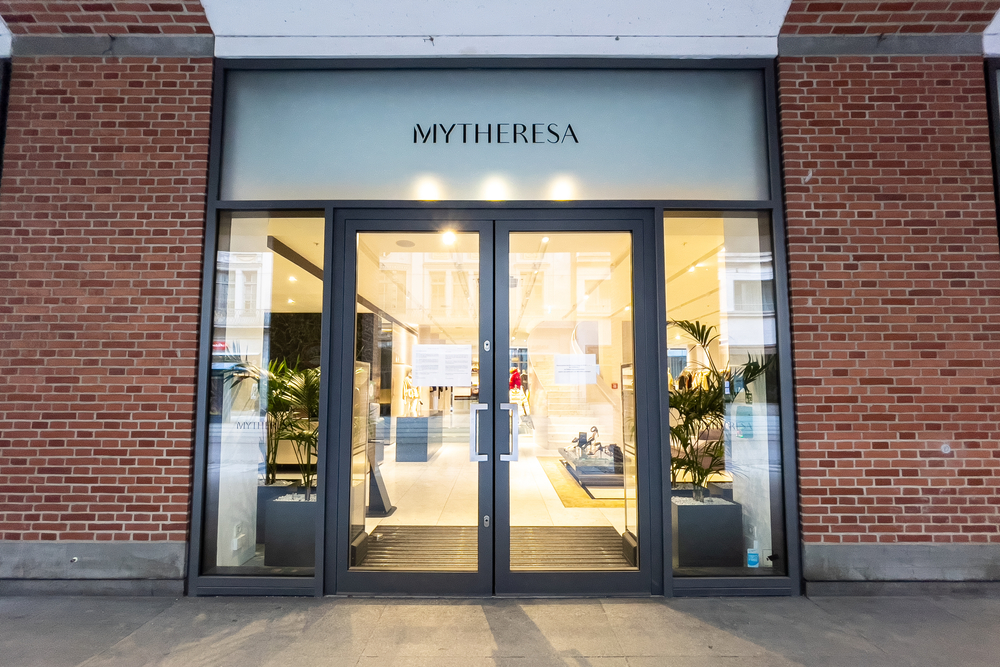
E-commerce company Mytheresa wants to place greater emphasis on human interaction and is therefore hiring more personal shoppers.
www.retaildetail.euGerman luxury e-commerce platform Mytheresa is hiring more personal shoppers. The company employs about 1,600 people and already has roughly 100 personal shoppers handling customer interactions.
In the fiscal year that began in July, it plans to stand up new teams in Hong Kong, Singapore and the Middle East, while expanding teams in Europe, the US and Shanghai. CEO Francis Belin told Dutch business paper FD that no technology is going to replace emotions and relationships.
The choice to invest in the opposite direction from service automation is instructive at the high end. Where the line falls between work that automates well and work that gains value from a human depends heavily on price tier.
Logistics and Fulfillment
Amazon expands Pan-EU FBA listing requirements to the Netherlands and Belgium

Amazon is requiring sellers to offer all their Pan-European FBA products on its Dutch and Belgian marketplaces.
ecommercenews.euAmazon will require sellers who want to keep using Pan-European FBA to offer all their products on Amazon.nl from September 3. From February 26, 2027, an active offer in Belgium will also be required at the point of enrollment in Pan-EU FBA.
Pan-EU FBA has until now required listings in Germany, France, Italy and Spain. Since mid-2025, newly added products also had to be listed on Amazon.nl. This change extends that to existing products. Items without a detail page on Amazon.nl or Amazon.com.be are exempt, so sellers do not need to create those pages themselves.
Amazon ranks second in both the Netherlands and Belgium behind local leader Bol. The requirement effectively channels cross-border sellers' inventory into both storefronts. Merchants selling in Europe should review their listing settings ahead of the September 3 deadline.
Conclusion
The thread running through today is the separation of AI recommendation from AI advertising. As Sparky's citation mix shows, the recommendation side cannot be bought. Meanwhile ChatGPT Ads at $1 billion demonstrates how quickly the disclosed ad slot turns into a business. The FTC complaint asks a related question: whether the pricing of those ad slots has scaled without anyone able to verify it.
Near term, watch Shein's first day of trading and how France's levy shows up in cross-border pricing. As agent-driven purchases grow, the question of which protocol carries proof of authorization also deserves attention.