ChatGPT Ads Hits a $1 Billion Run Rate in 200 Days: The Revenue Model OpenAI Chose After Instant Checkout
OpenAI says ChatGPT Ads reached a $1 billion annualized run rate. What the pivot from Instant Checkout to advertising means, why analysts call it a missed target, and what the measured data says about AI-referred traffic.

Key Takeaways
- On August 31, OpenAI announced that ChatGPT Ads reached a $1 billion annualized revenue run rate in under 200 days after launch. Self-service buying through Ads Manager opened the same day across India, Europe, the Middle East and North Africa
- The company that shelved Instant Checkout after six months has now built a billion-dollar run rate on advertising. OpenAI's revenue base has settled on influencing purchases rather than completing them, and the number confirms it
- An annualized run rate is not money actually received. Analysts argue OpenAI will miss its own $2.5 billion target for the year, so merchants should judge this surface by their own measured results, not by the headline figure
A $1 Billion Run Rate in Under 200 Days
For an advertising business, the speed of the ramp is the striking part.
OpenAI says its ChatGPT Ads business has reached $1 billion in annualized revenue run rate. 'The platform is now used by tens of thousands of advertisers and continues to expand globally.'
www.pymnts.comAccording to the official announcement published on August 31, ChatGPT Ads reached a $1 billion annualized revenue run rate in less than 200 days from launch. Tens of thousands of advertisers now use the platform, and delivery spans more than 40 countries. From that day, advertisers in India, Europe, the Middle East and North Africa can buy directly through Ads Manager.
An annualized run rate extrapolates recent performance across twelve months. It is not $1 billion actually collected over a year. That distinction turns out to be the fault line in how the news is being read.
The path to the number was short and stepped. The pilot began in the United States in February, and within six weeks it crossed $100 million annualized, CNBC reported. On May 5, OpenAI removed the $50,000 minimum spend and opened a self-service Ads Manager, and smaller businesses flowed in. OpenAI itself says SMBs have represented a material share of the business since Ads Manager arrived.
The platform's mechanics have changed as well. CPC and outcome-optimized bidding now account for the majority of campaigns, and Pixel plus the Conversions API have settled in as the measurement foundation. The ecosystem has grown past 50 technology and measurement partners. As evidence of results, OpenAI cites one e-commerce advertiser reaching 3x return on ad spend over 28 days, and one technology partner reporting that more than 80% of ad-driven ChatGPT traffic came from new customers. These are examples OpenAI selected, and the advertiser names and product categories are undisclosed.
OpenAI frames the milestone against its IPO preparation. Advertising is one pillar of a diversified model alongside consumer subscriptions, enterprise offerings and usage-based APIs, and it funds the free tier that serves more than a billion weekly active users.
How the Company That Shelved Checkout Ended Up Selling Ads
A year ago, OpenAI was betting somewhere else entirely.
Instant Checkout, launched in September 2025, let people complete a purchase without leaving the conversation. It started with Etsy sellers in the United States, and by November Walmart had put roughly 200,000 products into the path. It was described as the finished form of agentic commerce.
That ended in practice on March 24, 2026. OpenAI said the initial version had not delivered the flexibility it aspired to, that merchants could use their own checkout experiences, and that the company would focus on product discovery instead, as TechCrunch reported. Internally, staff had recognized that ChatGPT users were researching products but not completing purchases inside the platform, The Information reported.
Walmart produced the most concrete figure. Daniel Danker, the retailer's executive vice president of product and design, told Wired that purchases completed inside ChatGPT converted at one-third the rate of click-throughs to Walmart.com, calling the in-chat experience "unsatisfying" in that interview. The cause sat with the experience rather than the technology. No familiar brand environment, no visible return policy, none of the security signals shoppers expect at the moment of payment. People want familiar surroundings precisely at the last step.
What matters is that Walmart did not leave. After pulling back from Instant Checkout, it embedded its own shopping assistant, Sparky, inside ChatGPT and Google Gemini, letting users sign into Walmart accounts, sync carts and complete payment within Walmart's own system, MarTech reported. Stay on the conversational surface, bring the transaction home. That judgment lines up with where OpenAI's own revenue design landed.
Completing purchases drags along real-time inventory and price synchronization, state-by-state sales tax collection and remittance, and returns handling, all of it thin-margin obligation. Advertising carries none of that. Selling exposure means OpenAI holds no inventory, accepts no returns and handles no tax. PYMNTS framed the shift by noting that the failure of Instant Checkout does not mean ChatGPT lacks value for retailers, and that the platform may simply be better at influencing a purchase than completing one.
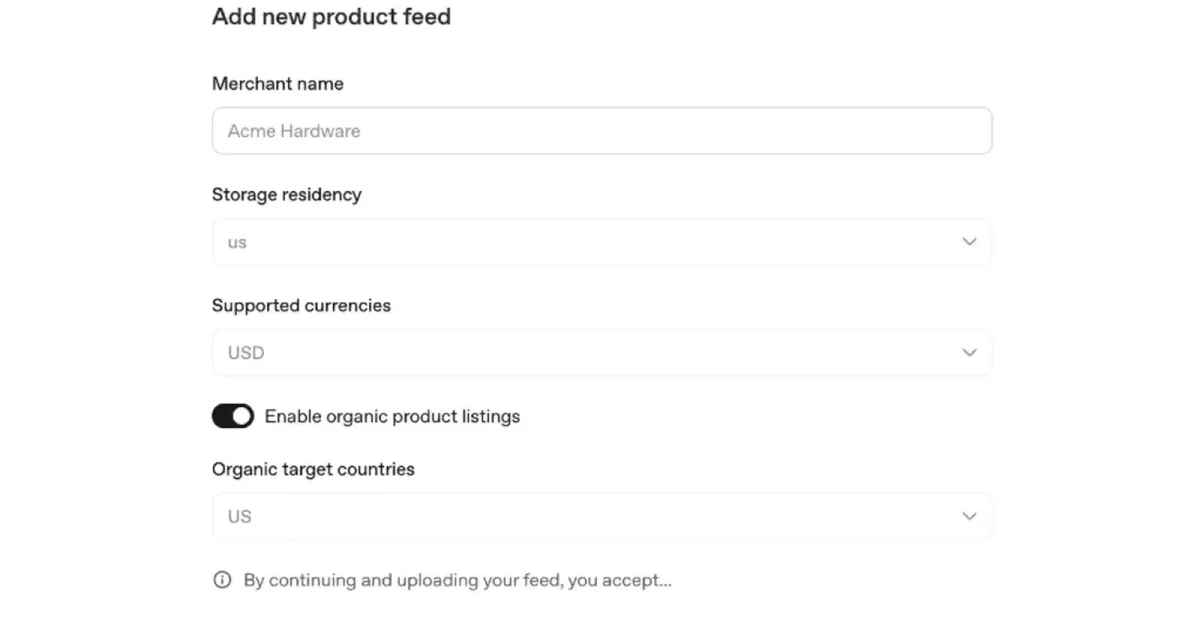
The mechanics of how product feed management moved into Ads Manager are covered in our article on ChatGPT Ads Manager adding product feed support. This $1 billion figure is the first large number showing that the pivot has turned into actual money.
The Reservations Inside the Billion
Judging this from the announcement alone would be a mistake.
This announcement is both incredibly impressive and terribly disappointing.
Elliott's point goes to the nature of the metric. In April, OpenAI told investors it expected the ad business to bring in $2.5 billion this year, rising to $100 billion by the end of the decade, as PYMNTS reported. If the company is only now reaching $1 billion in run rate rather than realized revenue, eight months into the year, hitting $2.5 billion is all but impossible in his view. The same number proves both the speed and the shortfall.
Advertiser experience is split too. Peter Jaffray of Choice OMG, a Canadian agency, ran a small campaign targeting Ontario and Alberta and told MediaPost he received more impressions than expected but a clickthrough rate of roughly 0.6%, against the 2% he would normally see on search ads. The clicks came from real people rather than bots, but no interested buyers followed.
There are opposite reports. Evan Engler of Common Thread Collective wrote on LinkedIn that OpenAI's new Max Results bid strategy drove clear improvements in CPC, CPM and CTR, to the point where the channel now competes with Meta and Google. One client saw clicks rise more than 50% on the first day, CTR up 108%, with CPC down 19% and CPM down 17%. Engler himself notes that spend volumes differ enough to make direct comparison difficult.
Between those two reports sits the question merchants actually need to answer. Jaffray posed it in reply to Engler: when someone sees an ad, asks ChatGPT a follow-up question, and converts three days later through branded search, no channel can cleanly claim that conversion. Improving upper-funnel metrics and increasing revenue are separate claims. OpenAI expanding to more than 50 measurement partners, and calling Pixel and the Conversions API foundational, reads as an attempt to close exactly this gap.
What AI-Referred Traffic Actually Sells
Before the question of ad quality comes a more basic one: do people who arrive from AI surfaces buy at all. Third-party measurement exists here.
Visibility Labs analyzed GA4 data from 94 e-commerce sites from January to December 2025, and found that ChatGPT referral traffic converted 31% better than non-branded organic search. The firm explains this as intent compression. Users narrow their criteria inside ChatGPT before clicking through, so they arrive at the product page closer to purchase than a search visitor still comparing options.
| Metric | ChatGPT referral | Non-branded organic search | Difference |
|---|---|---|---|
| Conversion rate | 1.81% | 1.39% | +31% |
| Average order value | $204 | $238 | -14.3% |
| Revenue per session | $3.65 | $3.30 | +10.6% |
| Revenue in period | $474,000 | $32.1M | 1.48% of non-branded organic |
The last row is the one not to skip. Despite winning on both conversion rate and revenue per session, ChatGPT referrals produced only 1.48% of what non-branded organic did, rising to 2.2% in the second half of 2025. Traffic grew 1,079% across the year, but the growth began to flatten around August. As of 2025, this was a small channel with strong unit economics.
More recently, Adobe Digital Insights found that in March 2026 visitors arriving from AI assistants converted 42% better than non-AI traffic. The direction agrees, though the sample construction differs between studies, so there is no guarantee your own numbers will match.
Visibility Labs also flagged a measurement caveat that matters. Many people who discover a product through ChatGPT then search the brand name on Google before buying. That conversion lands in branded organic, and the AI contribution disappears from the ledger. The firm recommends post-purchase surveys. Reading GA4 alone biases you toward underestimating the AI surface.
Turning the Number Into an Investment Decision
Looking at who is actually buying ads changes the picture.
Similarweb data showed the top impression-share advertisers on ChatGPT were Monday.com, Shopify, Jotform, Resume.io and Cursor, with those five alone taking about 17% of global impressions. Eight of the top ten were B2B SaaS, productivity or developer companies, and no major retailer appeared at all. Given that ChatGPT's largest user group skews toward professionals and developers aged 25 to 34, that is a natural outcome.
Retail's absence is a plumbing problem more than an appetite problem. Retail ad operations were built around keyword bidding, product listing feeds and catalog-based targeting. Those assets do not connect directly to a system that infers intent from an unfolding conversation. Similarweb found that 83% of the queries that triggered ChatGPT ads would never have activated a keyword-based ad. Bringing an existing keyword list produces no inventory.
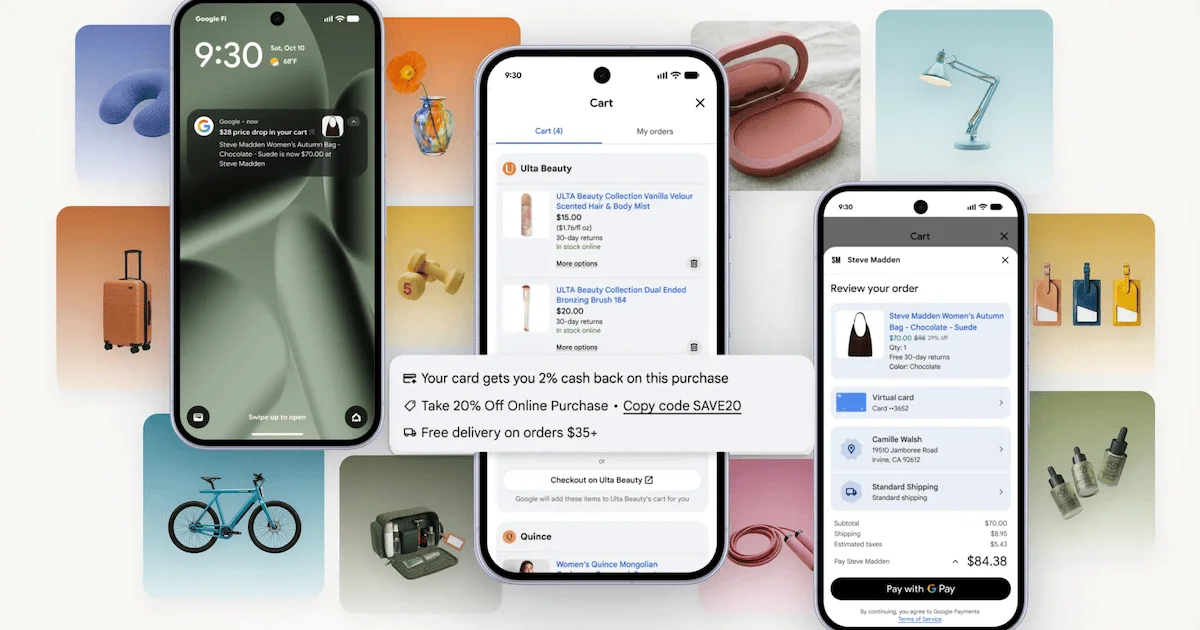
The competitive picture is moving too. Google is piloting AI-powered Shopping ads for AI Mode, along with Direct Offers, which inserts personalized discounts into conversations where it detects high purchase intent. Ad inventory on AI answer surfaces is not exclusive to OpenAI. Whether product data readiness should come before ad budget is covered in our article on prioritizing agentic commerce over ChatGPT Ads.
The practical list is short. Install Pixel and the Conversions API so AI-surface traffic enters your own measurement. Add a post-purchase survey asking where the customer first heard about the product, to recover the contribution GA4 cannot see. Then run small test campaigns and judge them on post-purchase gross margin rather than CTR or CPC. A billion dollars proves people are on this surface. It does not prove your products sell there. Delivery has already started in Japan, and market-by-market conditions are covered in our article on the expansion into 31 European markets.
Conclusion
OpenAI gave up, for now, on becoming the company that completes the purchase, and built a billion-dollar run rate selling the surface where purchases are influenced. Arriving barely five months after Instant Checkout was pulled, the number shows that AI answer surfaces work as ad inventory.
At the same time, analysts say the $2.5 billion internal target is out of reach, and agencies are reporting clickthrough rates as low as 0.6%. There is still distance between a large number and your own products selling.
What to watch next is whether the new formats and measurement capabilities OpenAI has promised can recover the contribution that currently leaks into branded search. Only once that gap closes does this become a channel merchants can compare against the others.